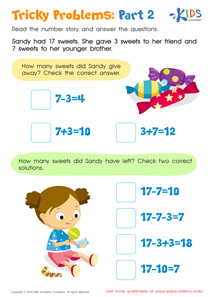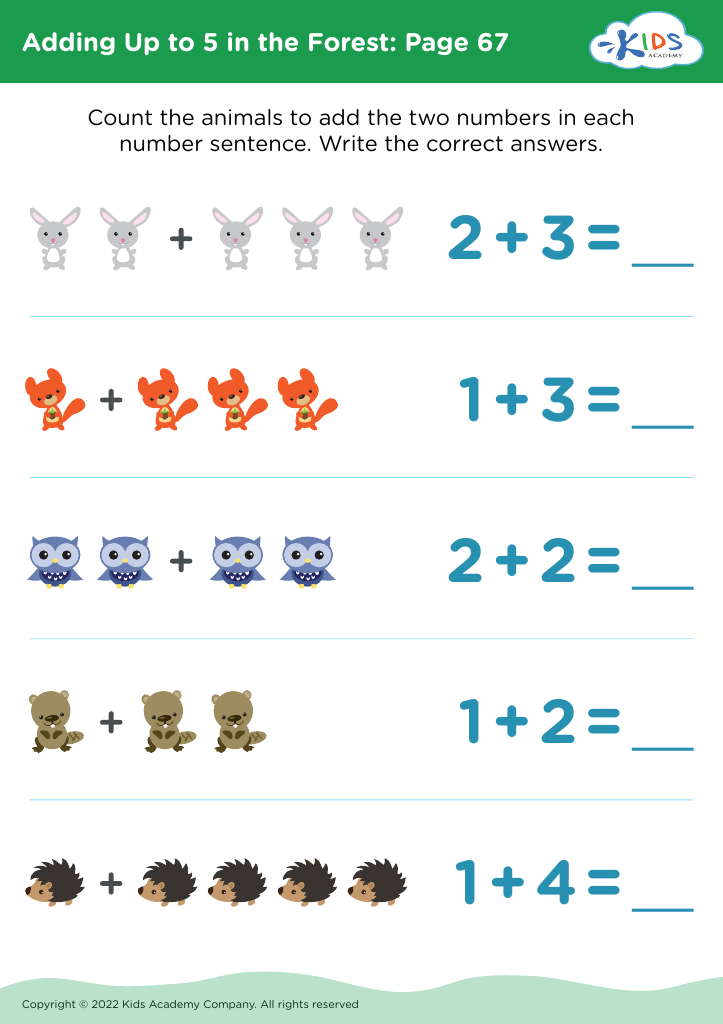
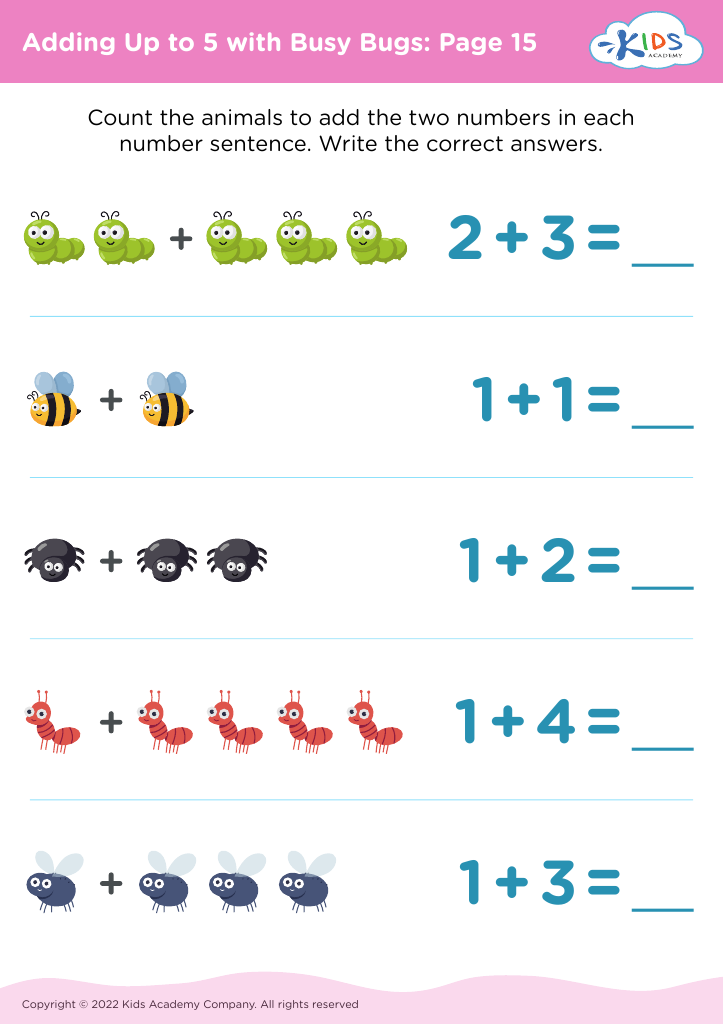



Addition Practice for preschoolers, especially with sums up to 5, is crucial for several reasons. Firstly, early mathematics lays the foundation for future academic success. Mastering simple addition helps young learners develop critical thinking and problem-solving skills. When children learn to add, they not only grasp number concepts but also enhance their ability to understand patterns and relationships.
Additionally, addition practice fosters confidence in children. As they master adding small numbers, they gain a sense of achievement that boosts their motivation to tackle more complex challenges later on. Furthermore, engaging in addition activities can enhance fine motor skills, especially when using manipulatives like counting blocks or fingers, combining academic learning with physical development.
For teachers and parents, monitoring progress in addition practice can provide valuable insights into a child's cognitive development and learning style. It allows for personalized support to cater to individual needs. Ultimately, the early introduction to addition helps mold well-rounded learners who will have stronger overall mathematical understanding as they mature. Involving parents in this process encourages a collaborative learning environment, reinforcing skills both at school and home. Therefore, Addition Practice is not merely an academic task but a stepping stone to lifelong learning.