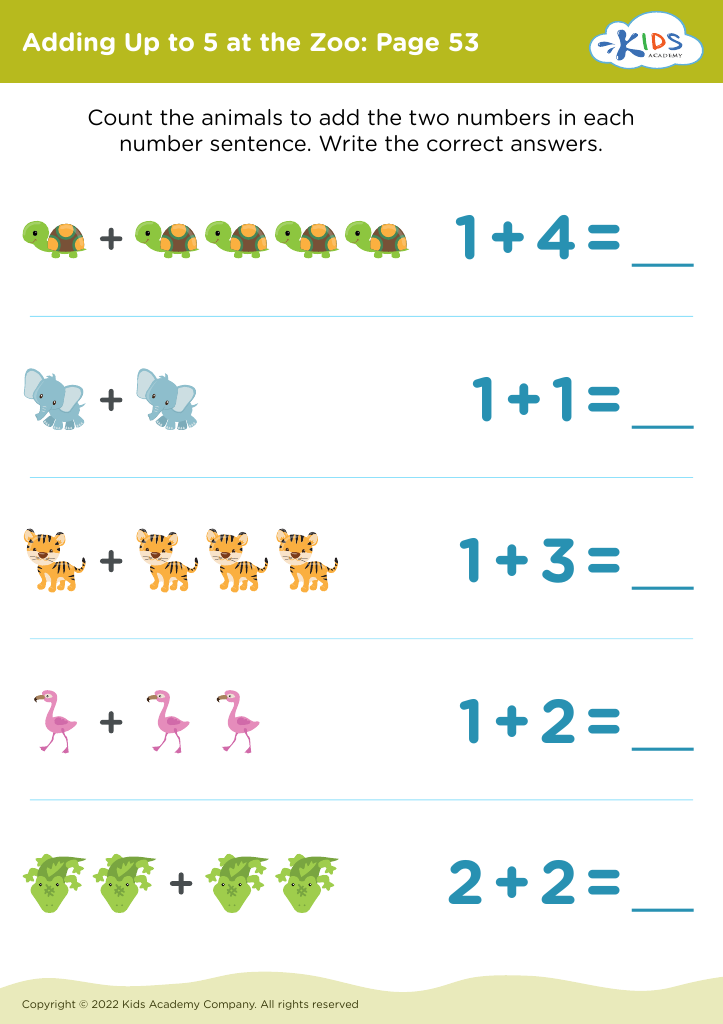
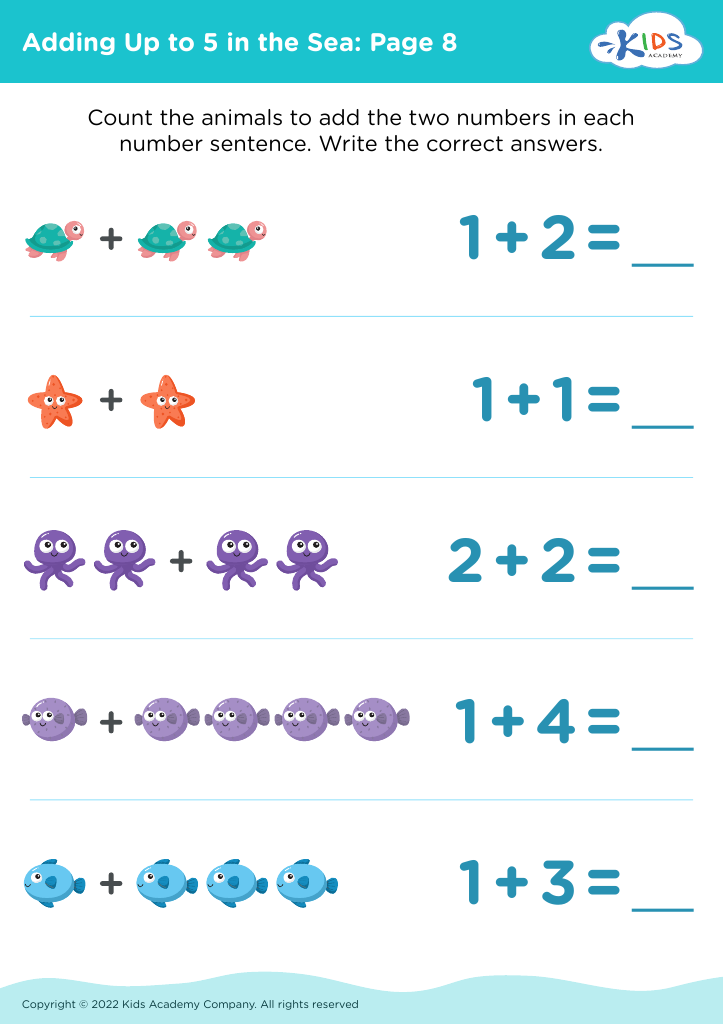
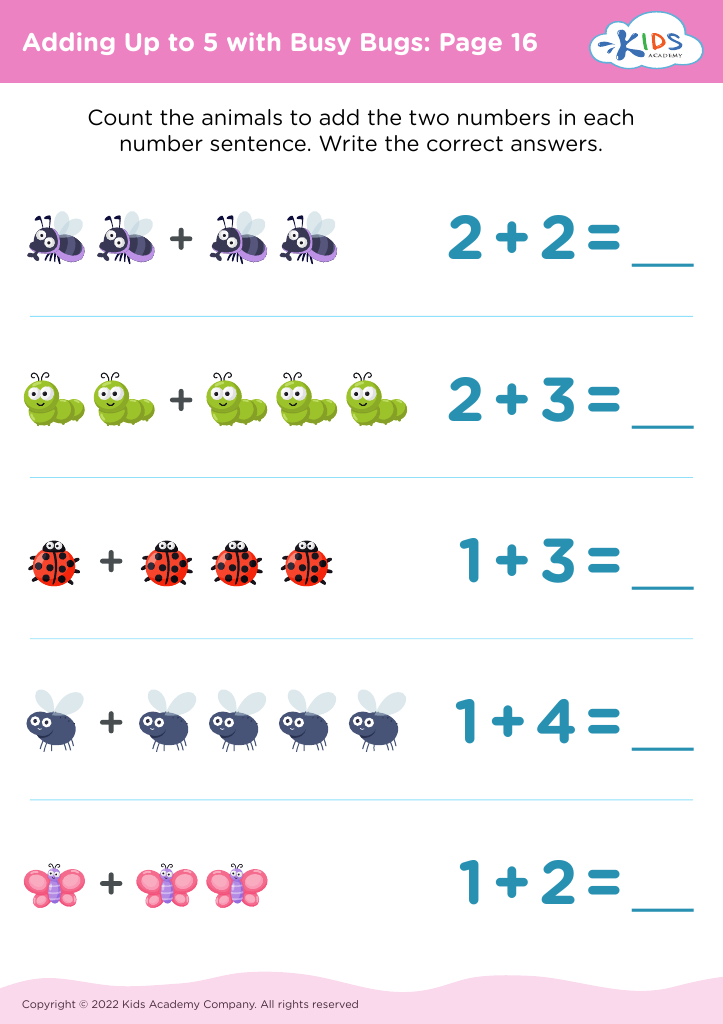
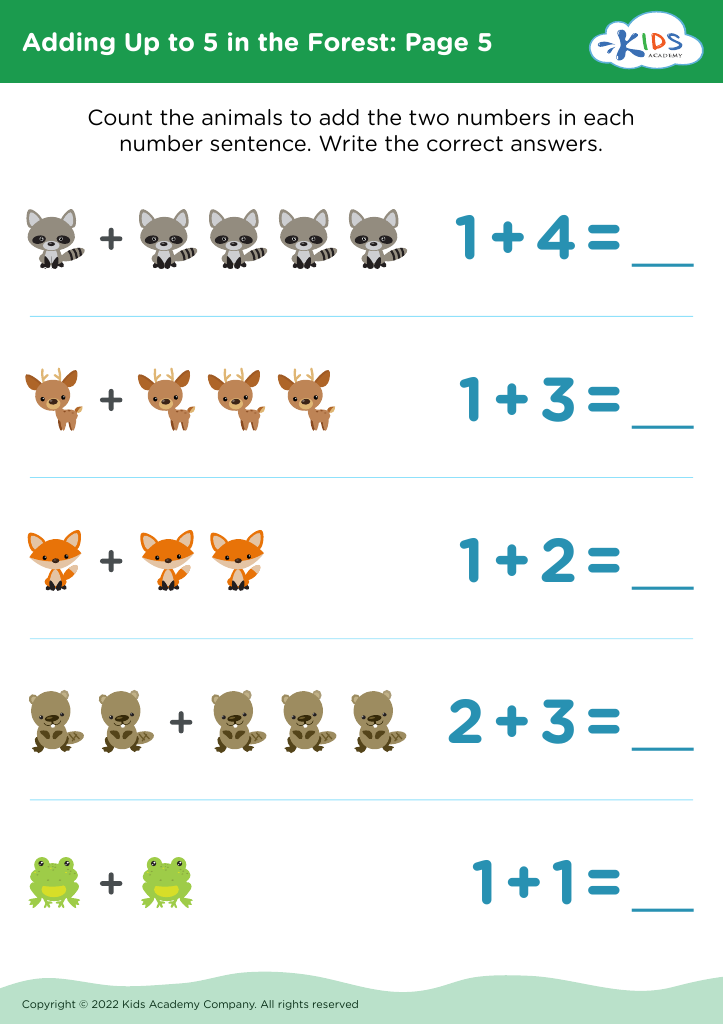
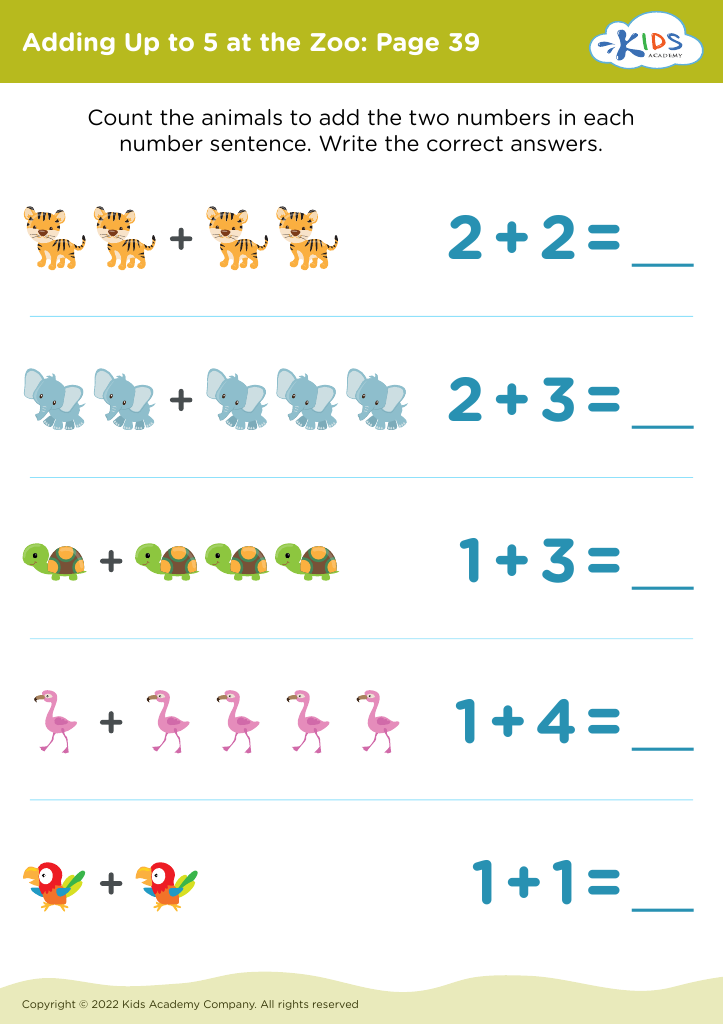
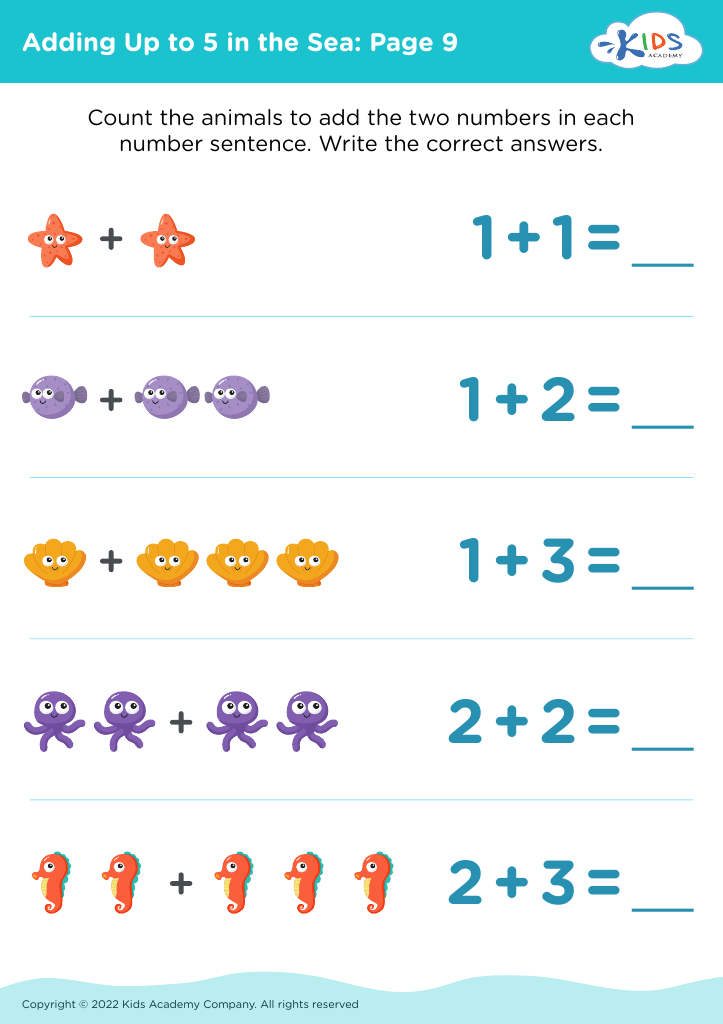



Developing addition skills, such as adding up to 5, in preschool is essential for several reasons. Firstly, a strong foundation in early math sets the stage for future academic success, as math concepts are cumulatively built over time. Understanding basic addition helps children develop problem-solving skills and logical thinking, crucial competencies not just in math but in everyday life situations.
Additionally, mastering addition up to 5 enhances cognitive development by engaging young minds and encouraging them to explore numerical relationships. It also boosts confidence as children experience the joy of understanding and solving math problems, fostering a positive attitude towards learning.
Moreover, addition skills support essential life skills. Children learn to count, group objects, and make comparisons, which are vital for activities like shopping or sharing. They will interact with concepts of quantity through play and real-world scenarios, enhancing their social and mathematical skills simultaneously.
Lastly, involving parents and teachers in nurturing these skills ensures a consistent, supportive learning environment. When they engage in fun activities, such as counting games or simple math puzzles, it deepens bonds and demonstrates the importance of learning both at home and in school. Emphasizing these skills equips children with tools for lifelong learning.