Addition up to 5 Preschool Adding Up to 5 Worksheets
4 filtered results
-
From - To
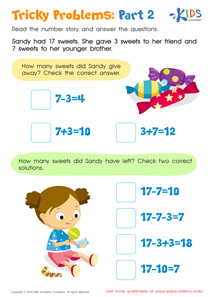
Welcome to our Addition up to 5 worksheets, designed specifically for preschoolers! These engaging and colorful worksheets help young learners master basic addition skills by combining objects, numbers, and fun illustrations. Each worksheet progressively builds on your child’s understanding of adding up to 5 through hands-on activities and visual support. Ideal for both classroom use and at-home practice, our worksheets encourage a love for math while fostering critical thinking and problem-solving abilities. Join in on the fun as your little ones develop foundational math skills, confidence, and a sense of achievement with these interactive addition exercises today!
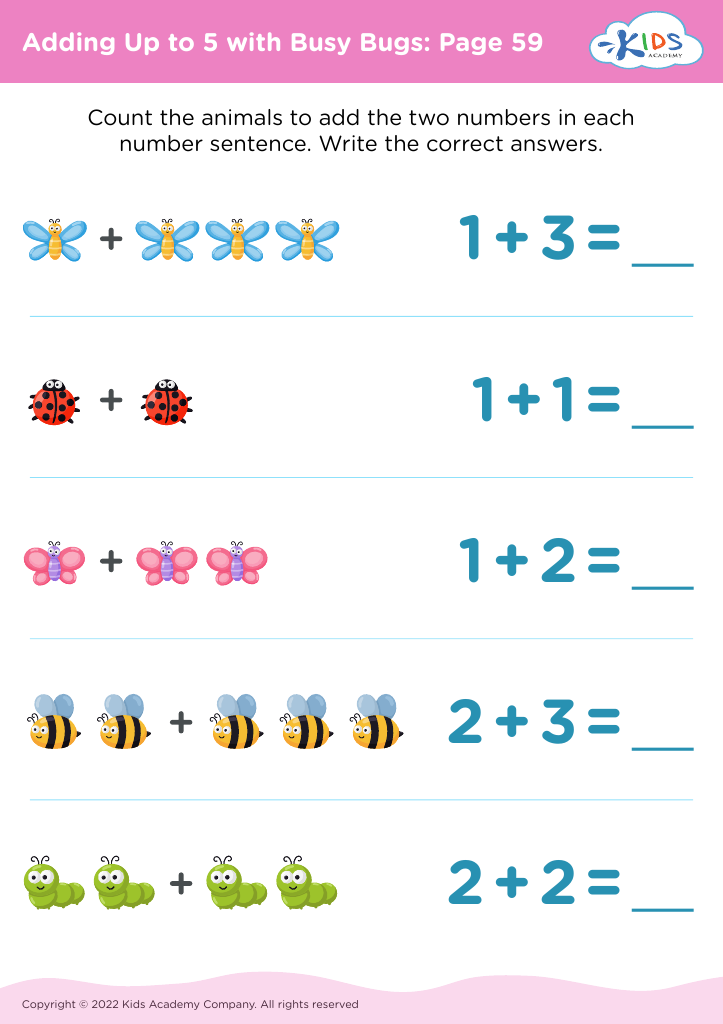
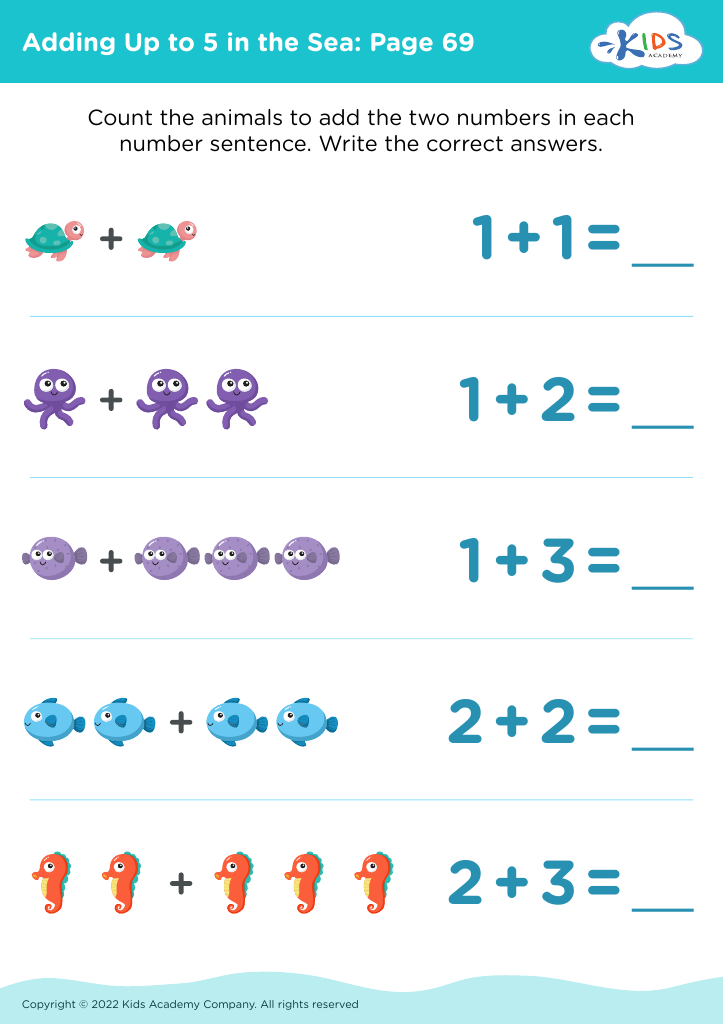
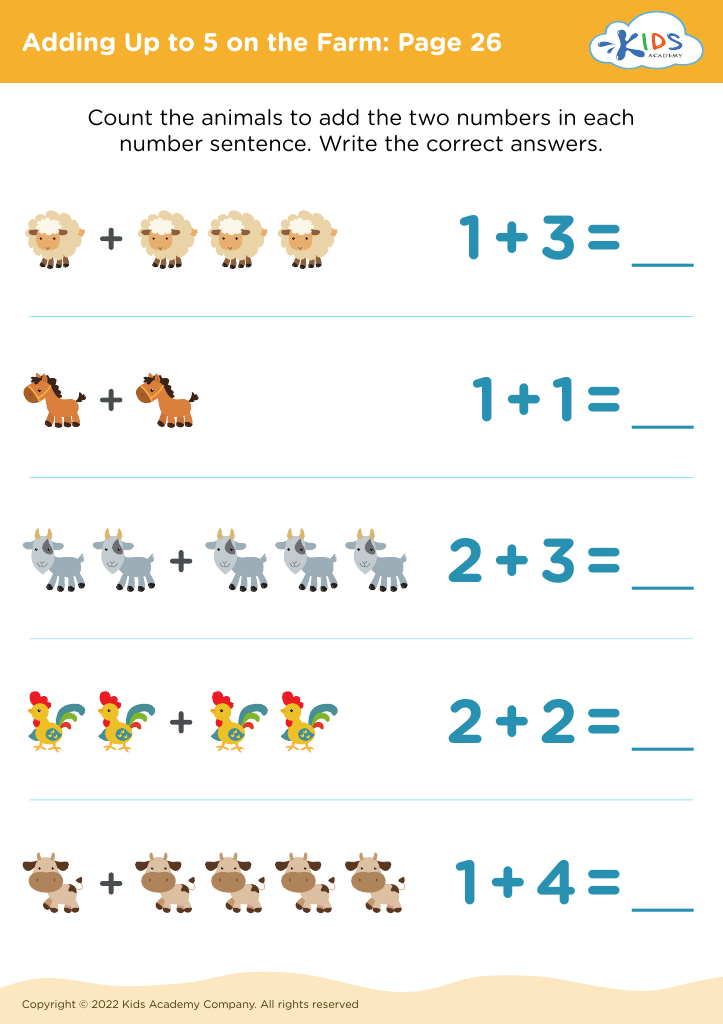
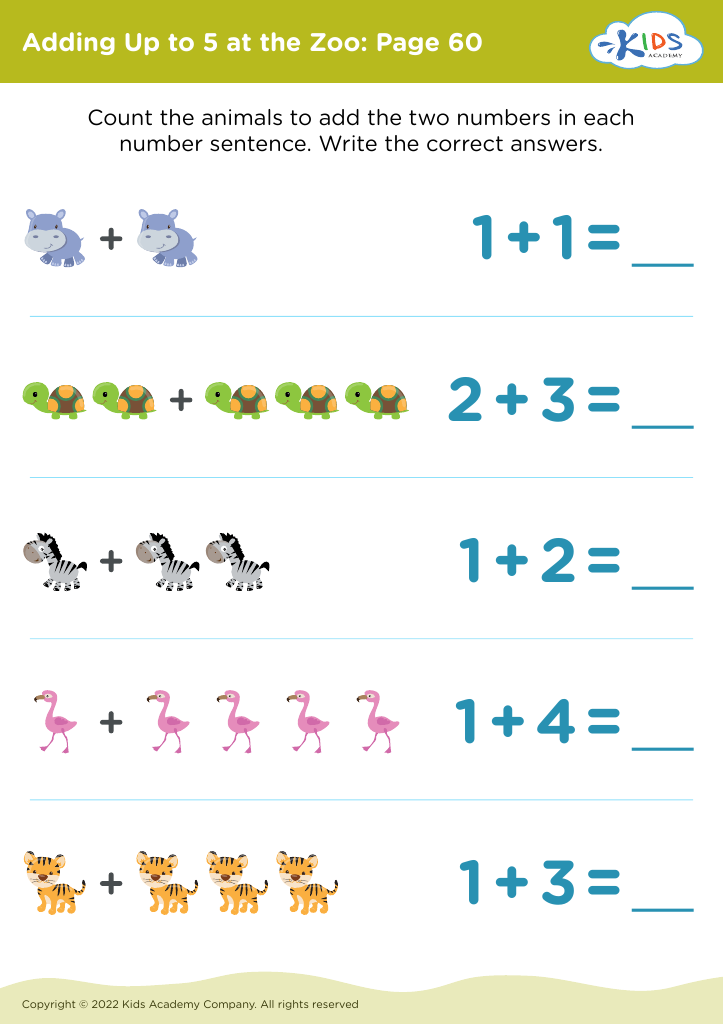


Learning addition up to 5 is crucial for preschoolers as it lays the foundation for essential mathematical skills that they will use throughout their education. Understanding basic addition strengthens cognitive development by enhancing logical thinking and problem-solving abilities. When children engage with simple addition, they begin to recognize patterns and relationships between numbers, which are important for later, more complex concepts.
Moreover, addition at this early stage promotes confidence and fosters a positive attitude toward mathematics. When children successfully learn to add small numbers, they experience a sense of achievement, encouraging them to explore more mathematical challenges. This confidence can lead to a lifelong interest in math and related disciplines.
Parents and teachers play a pivotal role in this learning process. They can create engaging environments that incorporate playful activities, such as counting objects, using toys, or singing number songs, turning learning into an enjoyable experience. Additionally, early mastery of addition forms the groundwork for future math skills, such as subtraction, multiplication, and beyond. By prioritizing this early learning, parents and teachers are investing in children's academic growth and overall development, equipping them with the tools they need for success in their educational journey.