Basic arithmetic practice Preschool Adding Up to 5 Worksheets
8 filtered results
-
From - To
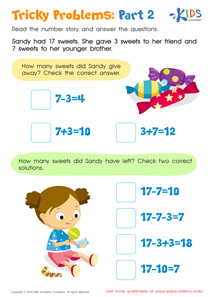
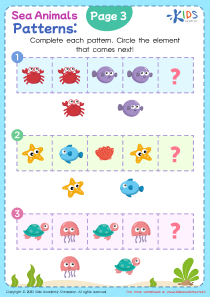
Welcome to our "Basic Arithmetic Practice: Preschool Adding Up to 5 Worksheets" page! Here, young learners can explore essential math skills through fun and engaging worksheets designed specifically for preschoolers. These worksheets help children grasp the fundamentals of addition by counting, adding various visual elements, and solving simple math problems involving numbers up to 5. Ideal for at-home practice or classroom activities, our resources are crafted to build confidence in early math skills while promoting a love for learning. Download and print our vibrant worksheets to support your child's mathematical journey today!
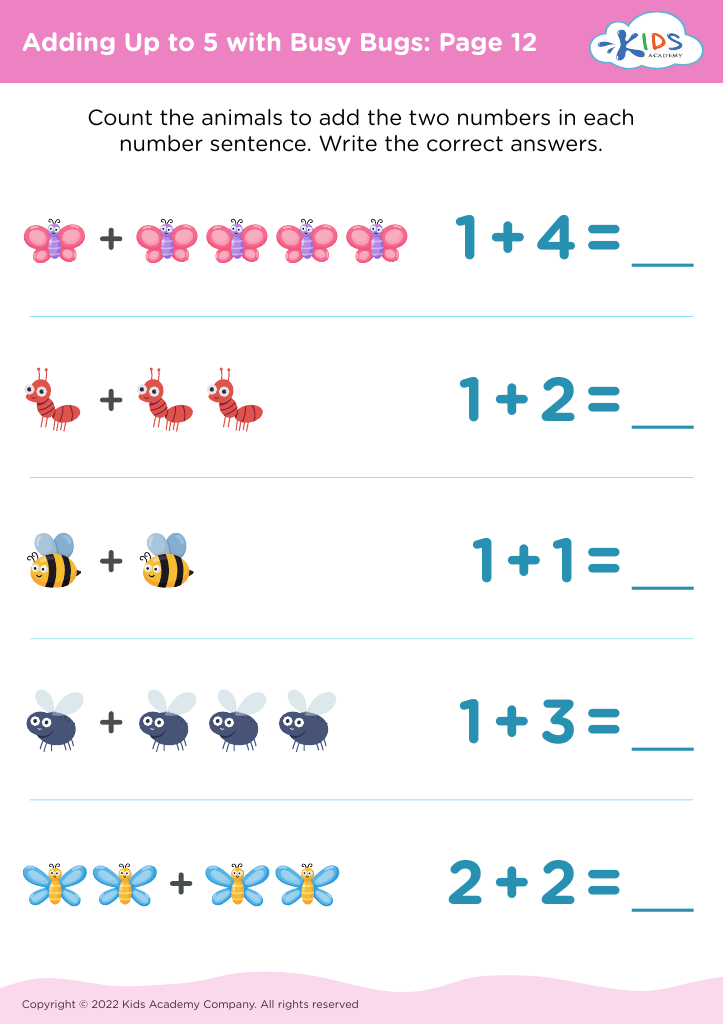
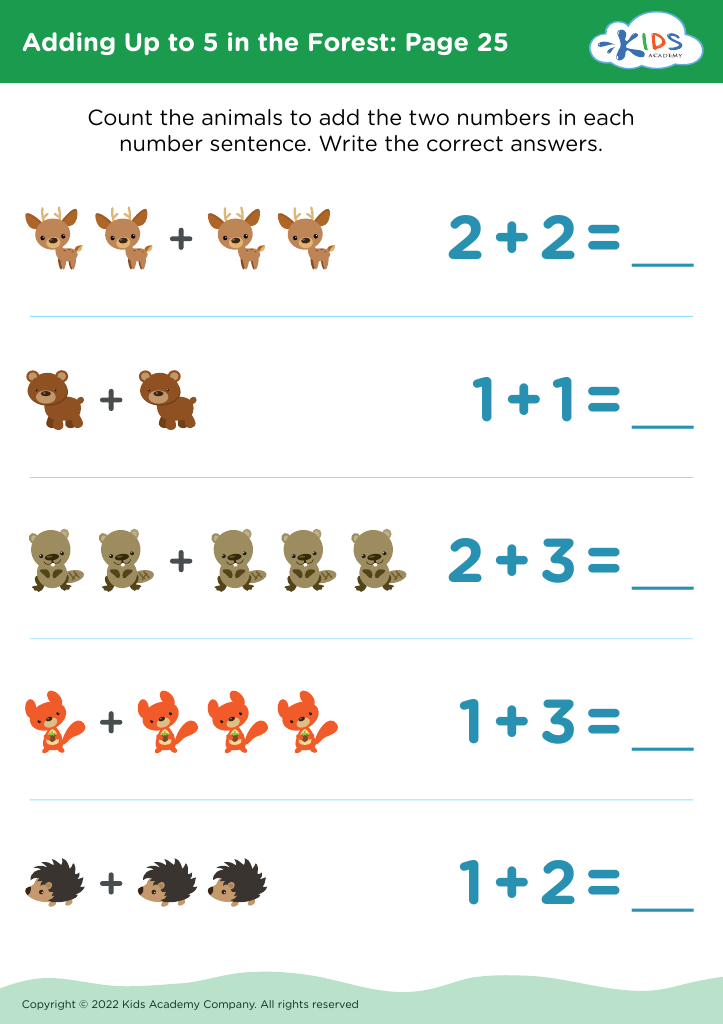
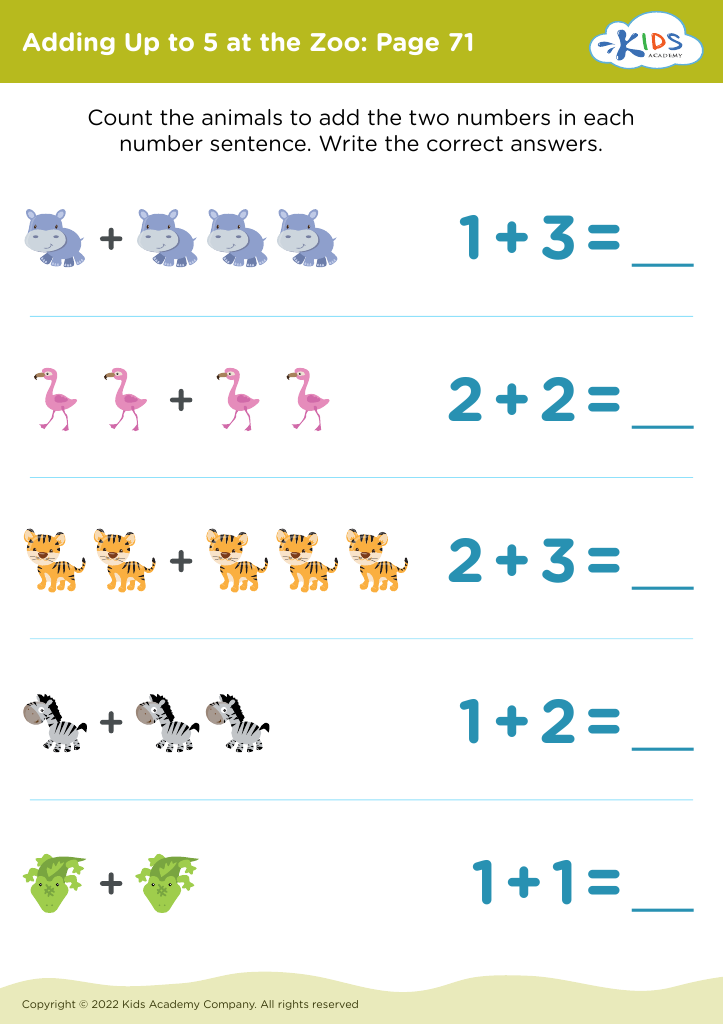
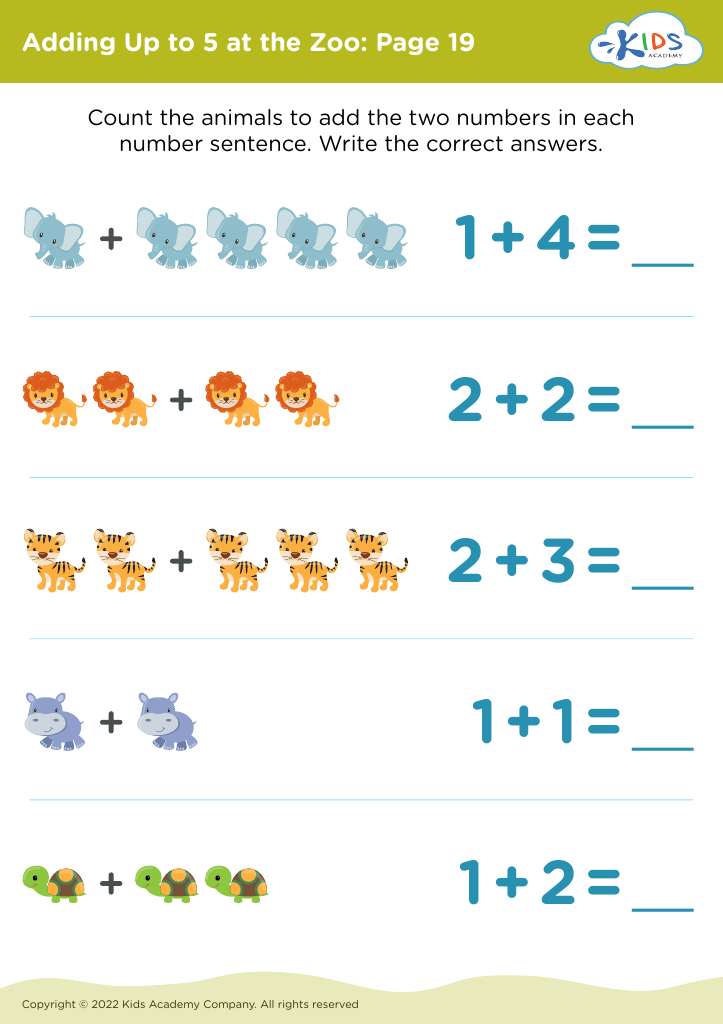
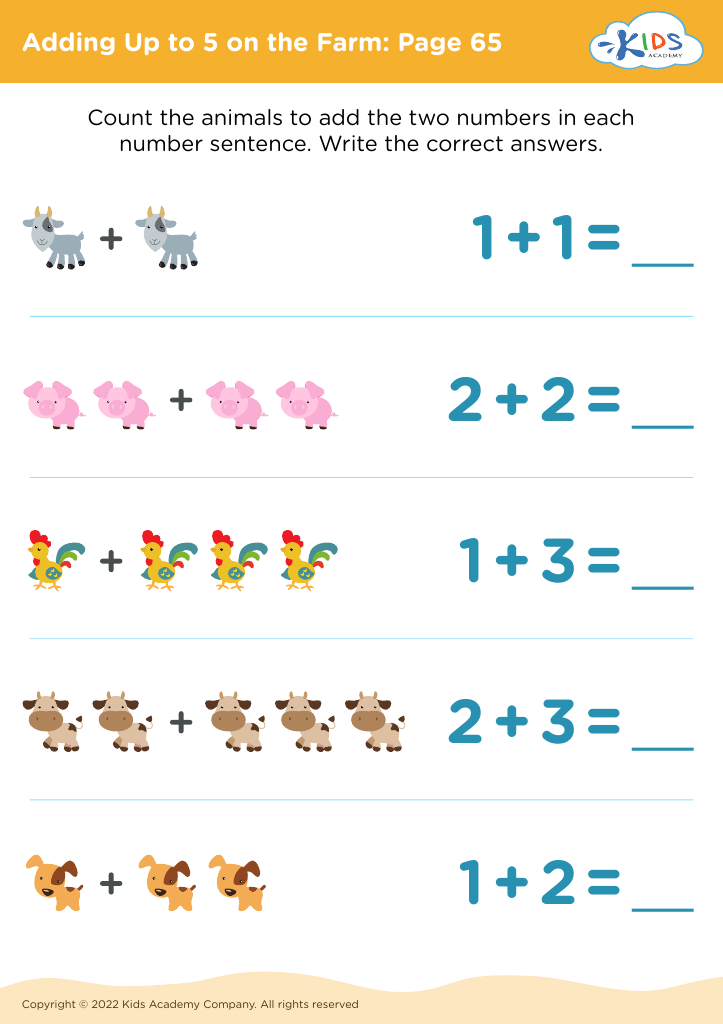
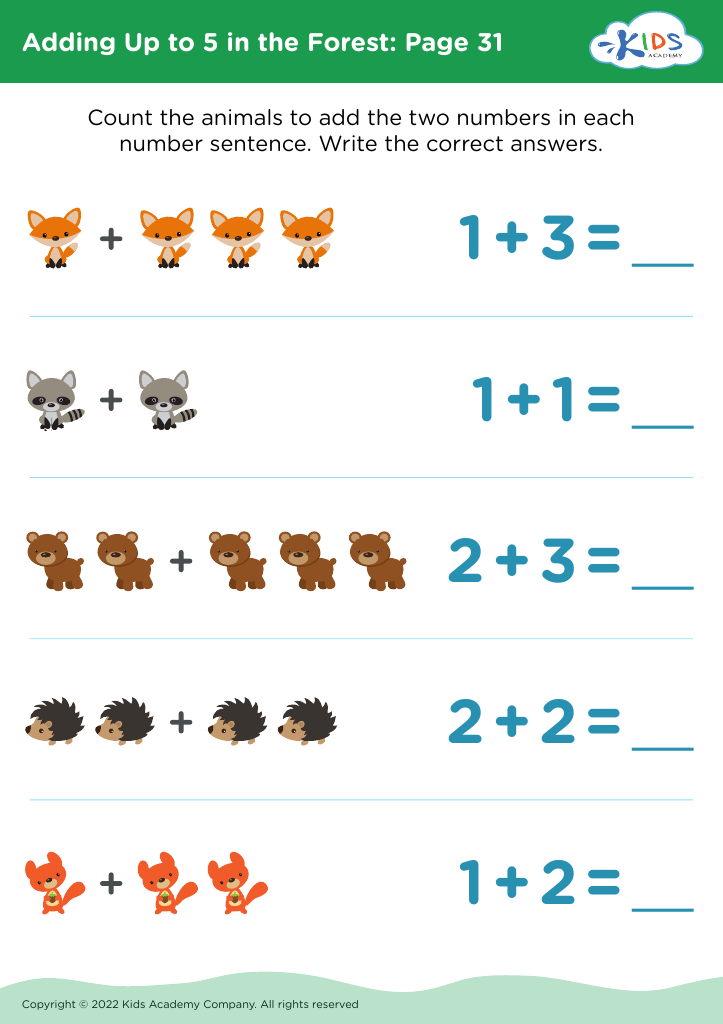
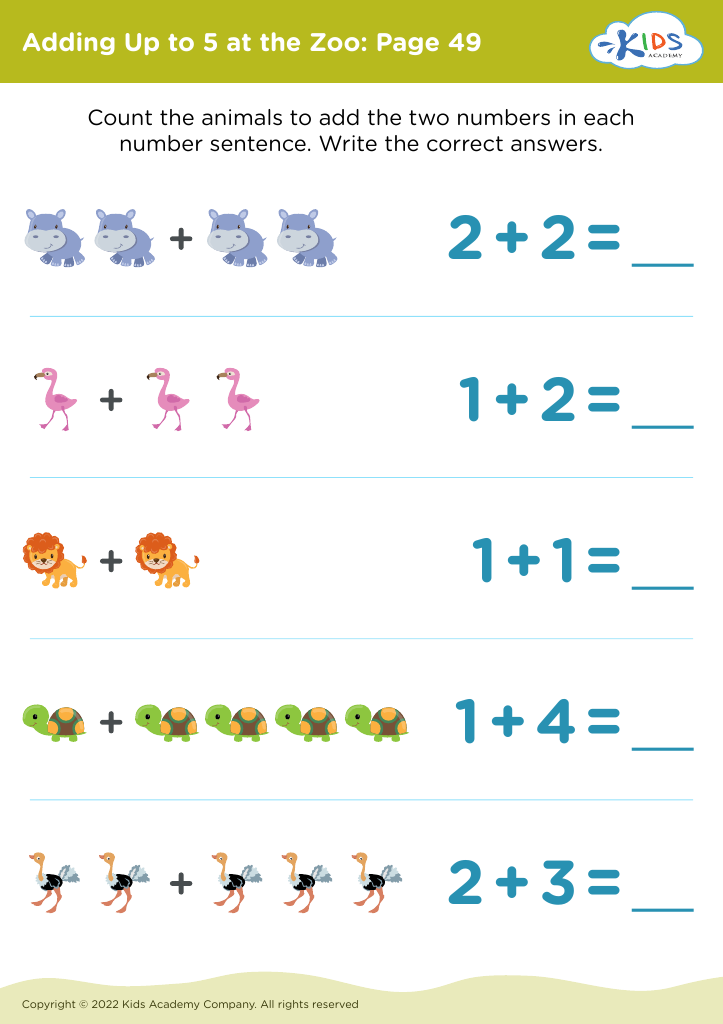
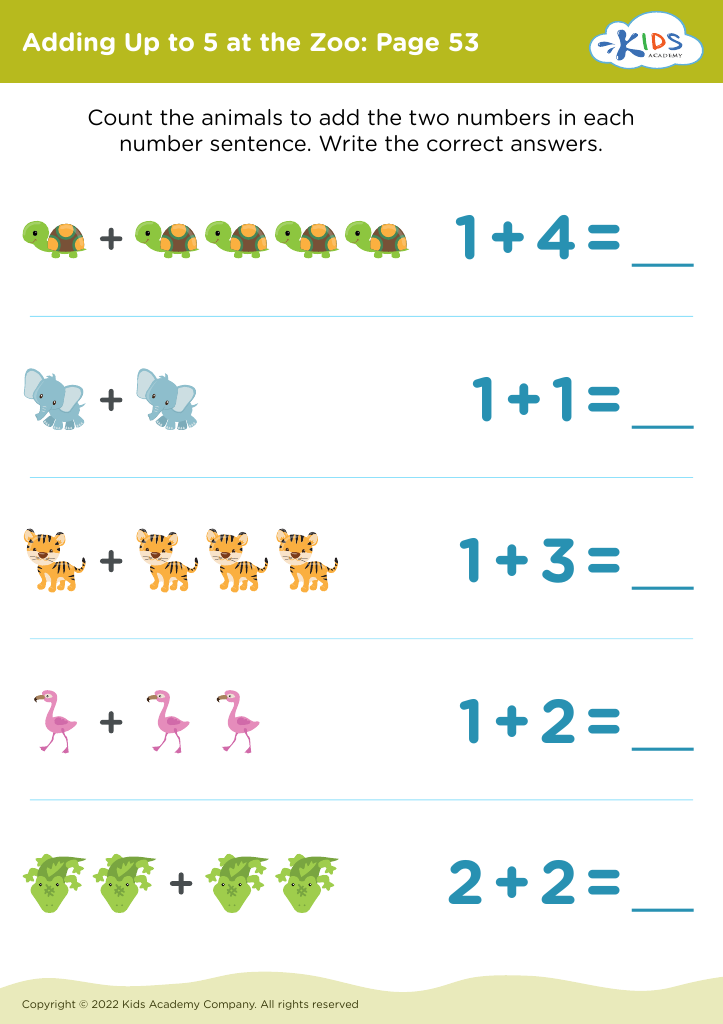


Basic arithmetic practice, such as adding numbers up to 5, is fundamental for preschoolers as it lays the groundwork for their future mathematical understanding. For parents and teachers, fostering these early skills is crucial because they promote cognitive development, problem-solving abilities, and logical reasoning.
Introducing concepts like addition helps young children grasp essential math skills in a concrete way. When children practice adding up to 5, they develop number sense—understanding how quantities relate to each other. This foundational knowledge supports their ability to recognize patterns and relationships in mathematics as they progress in their education. Furthermore, these early experiences create confidence, setting a positive attitude toward math, which is important, as children often form attitudes about subjects early on.
Engaging in addition games or activities can also enhance fine motor skills and improve memory retention, as these methods often involve hands-on learning. Parents and teachers working together to provide consistent opportunities for practicing basic arithmetic can further enrich the learning experience. By prioritizing early math skills, caregivers can cultivate a loving and stimulating atmosphere that encourages curiosity and a lifelong love for learning. In turn, this sets the stage for their successful future academic journey.