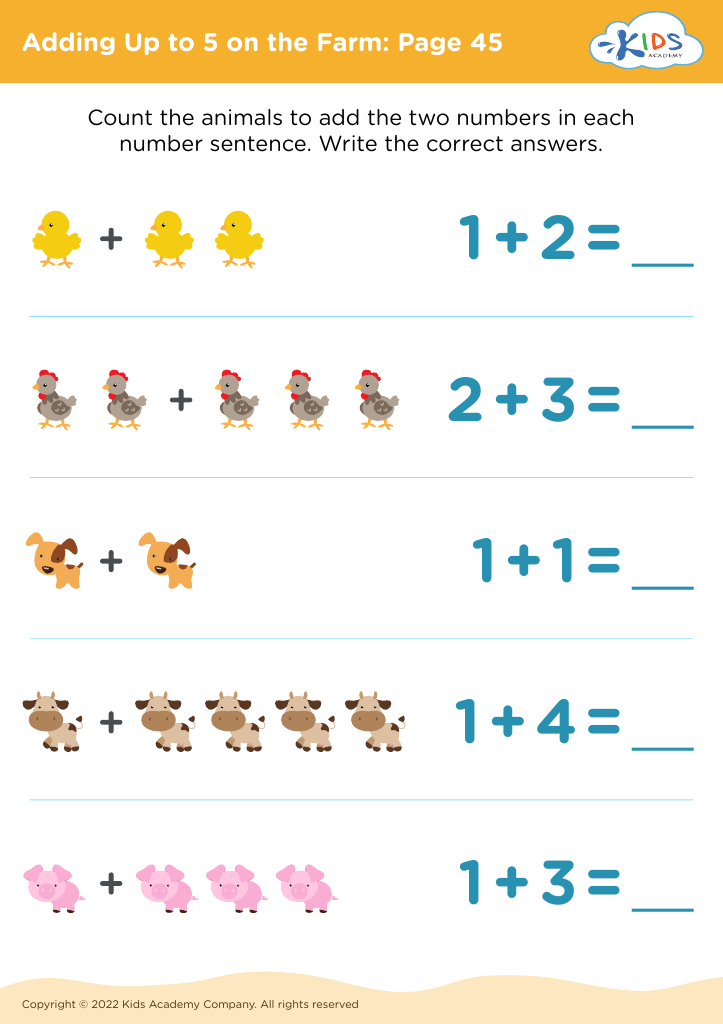
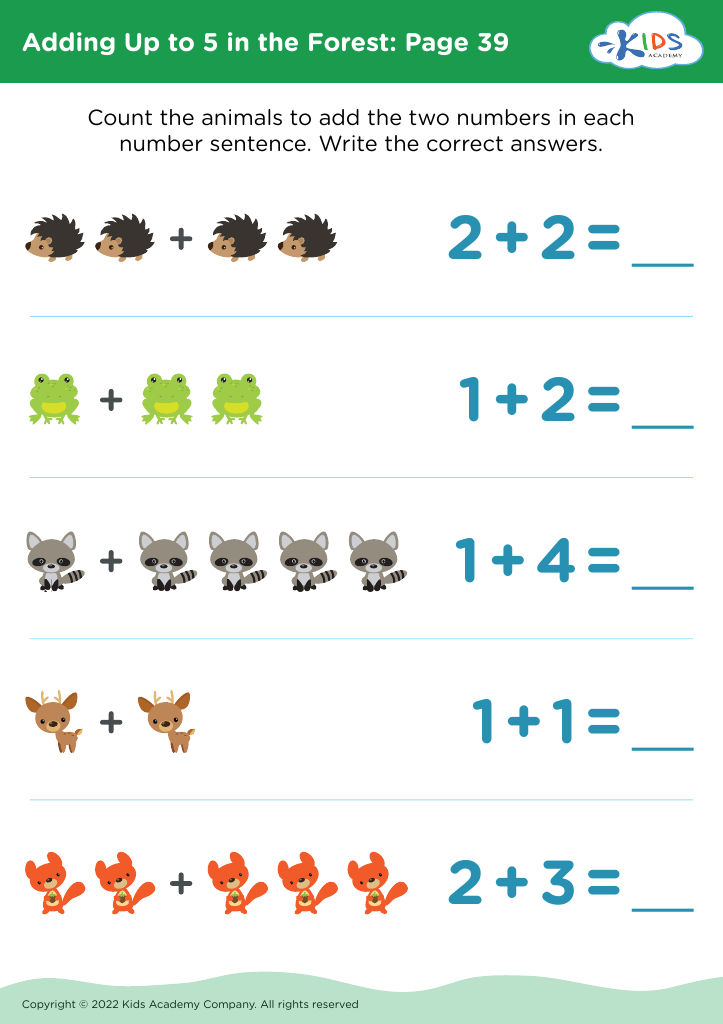
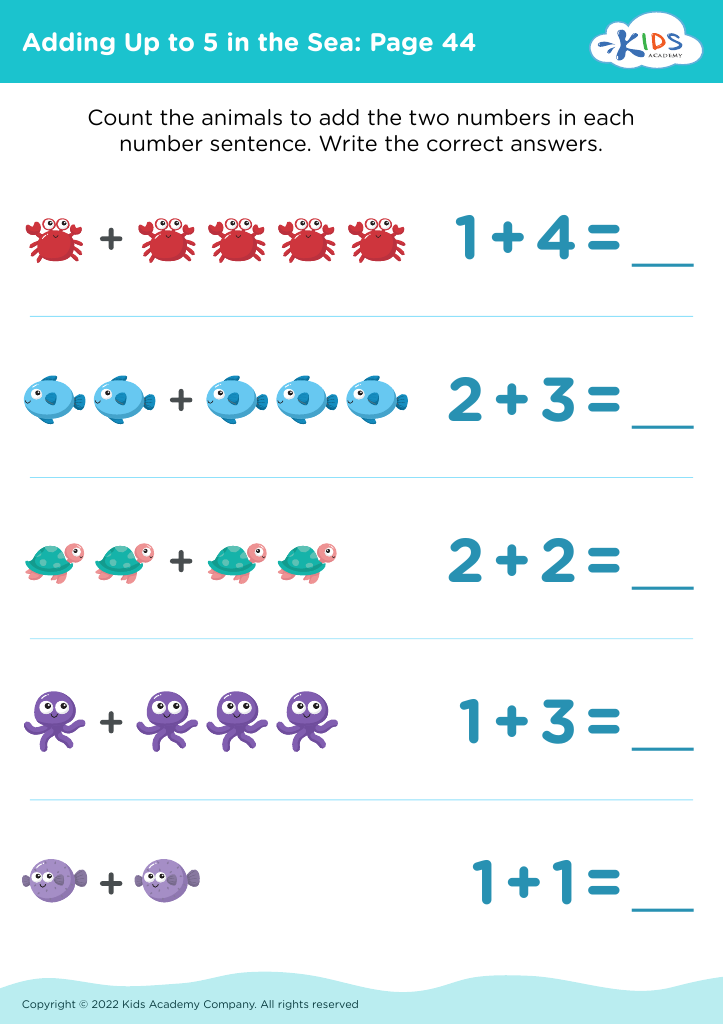
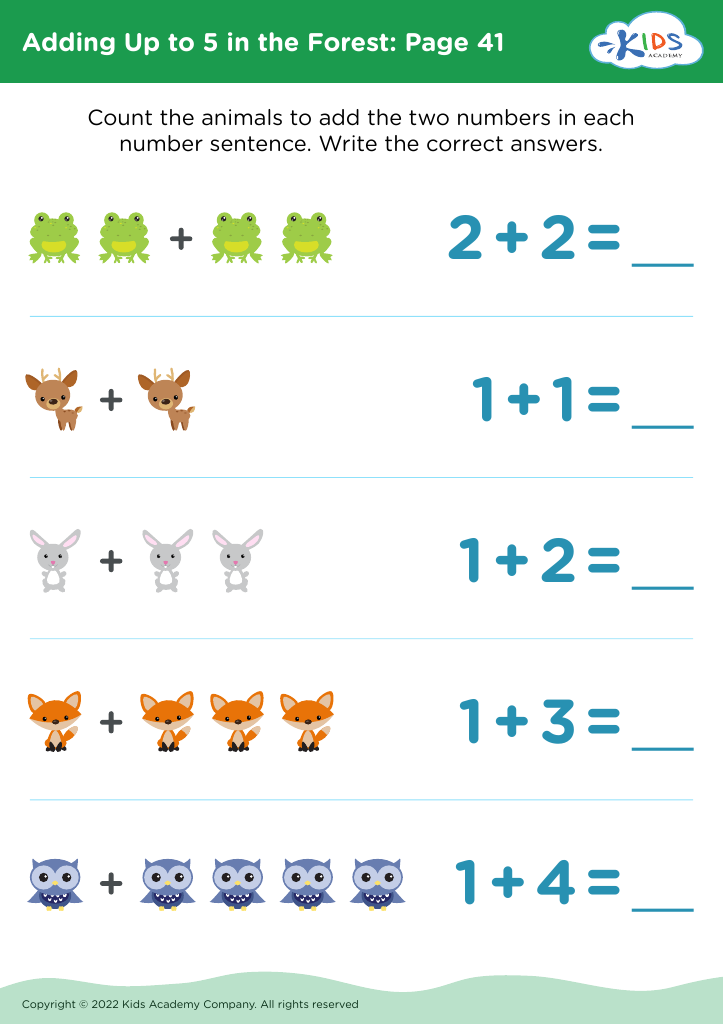



Fine motor skills are crucial for preschoolers, as they form the foundation for numerous everyday tasks and academic activities. Mastering these skills allows children to develop hand-eye coordination, which is essential not just for writing but also for tasks like buttoning clothes, using utensils, and manipulating small objects. When it comes to learning mathematical concepts like adding up to 5, fine motor skills play a significant role in building a child's confidence and competence.
Activities that promote cutting, drawing, or threading help strengthen the small muscles in the hands and fingers, which are vital when children begin to work with manipulatives such as counters or blocks during math activities. Engaging in hands-on experiences enables preschoolers to physically manipulate objects as they grasp the concept of addition, laying an essential groundwork for more complex mathematical ideas later on.
Moreover, parents and teachers who prioritize fine motor skill development can encourage problem-solving and critical thinking skills in young learners. As children successfully navigate the challenge of adding up to 5, they also enhance their cognitive abilities, leading to improved overall learning outcomes. Thus, investing time and care into fine motor skill development not only fosters independence but also cultivates a positive attitude towards learning.