Math problem-solving Preschool Adding Up to 5 Worksheets
3 filtered results
-
From - To
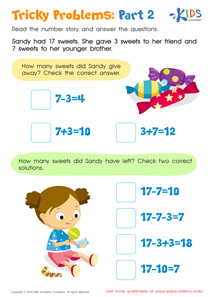
Introduce your little mathematicians to the world of numbers with our engaging "Math Problem-Solving Preschool Adding Up to 5 Worksheets." Tailored for young learners, these worksheets help children build foundational math skills through fun and interactive problem-solving activities. Each worksheet is designed to encourage critical thinking, enticing kids to explore the concept of addition in a playful manner. As they practice adding up to 5, children will develop confidence and fluency in their math abilities. Perfect for home or classroom use, these worksheets make learning math an enjoyable adventure. Download now to inspire a love for numbers in your preschoolers!
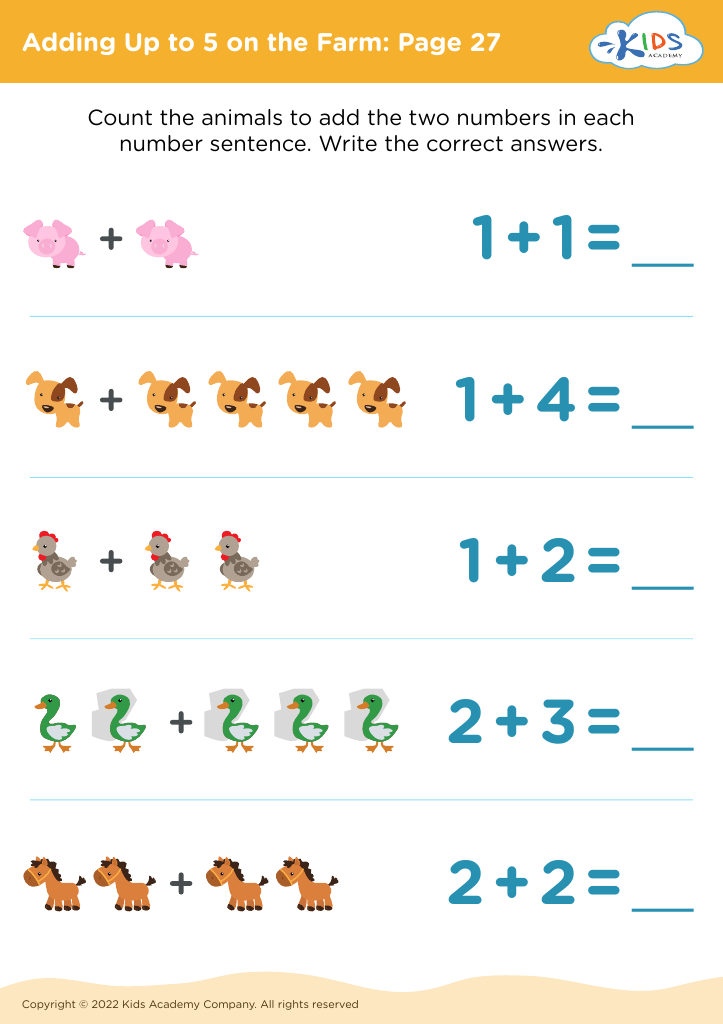
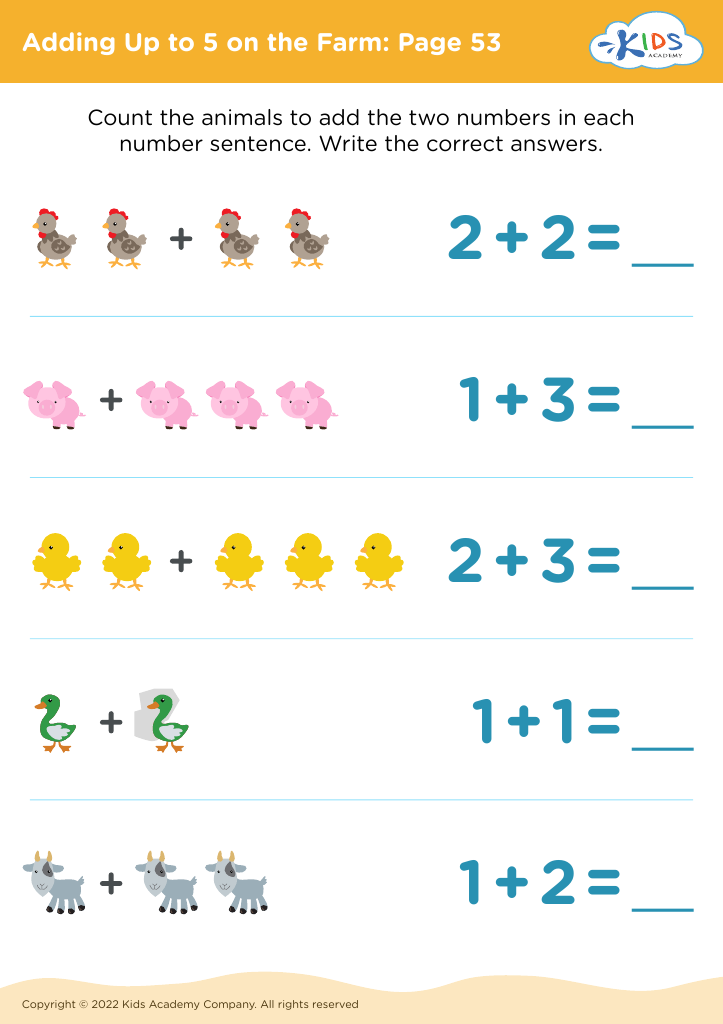
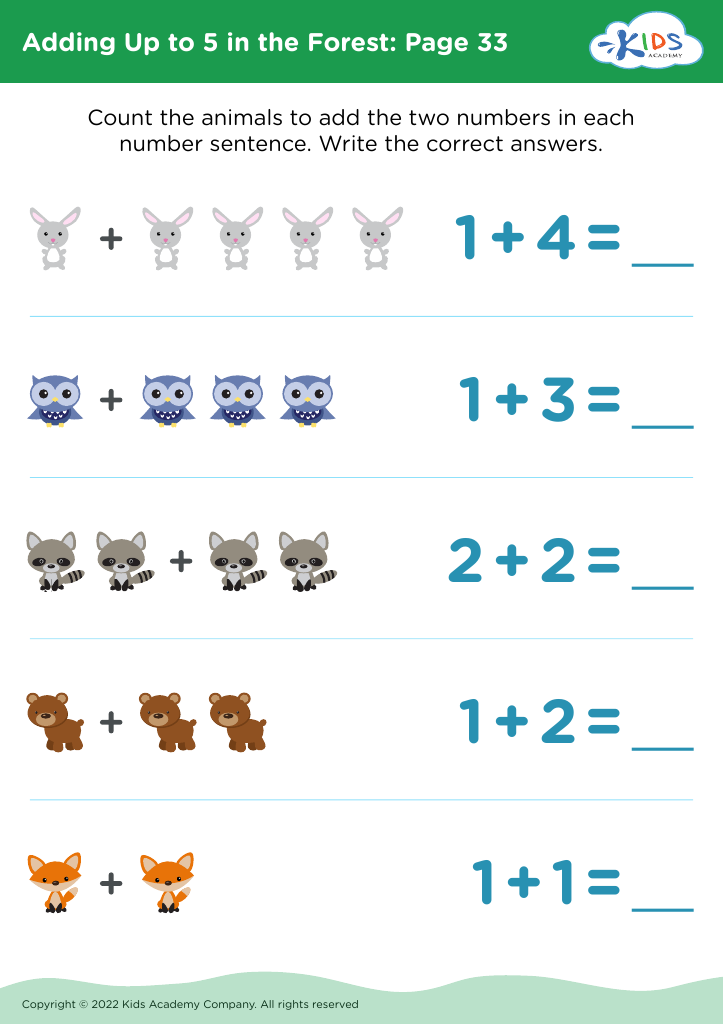


Parents and teachers should care about "Math problem-solving Preschool Adding Up to 5" because early mathematical experiences lay the foundation for a child's future learning and cognitive development. Engaging children with simple addition helps them develop critical thinking, enhances their problem-solving skills, and fosters numerical fluency. Understanding how to make combinations that total five instills a concrete grasp of number relationships, essential for tackling more complex math concepts later.
Moreover, math problem-solving in preschool encourages a love for mathematics by making it fun and interactive. When children work with concrete objects, visual aids, and engaging activities, they learn through play, making the learning experience enjoyable. It also supports their social development as they learn to collaborate and communicate their thought processes with peers.
Additionally, early exposure to math helps identify and address learning difficulties early on. Teachers and parents can use this crucial time to build confidence and positive attitudes towards math, which can influence a child's future academic pursuits. By valuing and promoting early math skills through activities that involve adding up to five, caregivers play an essential role in shaping confident, capable learners ready for more complex mathematical challenges.