Nature appreciation Preschool Adding Up to 5 Worksheets
5 filtered results
-
From - To
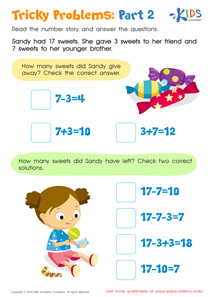
Introduce young learners to the wonders of nature while building fundamental math skills with our "Nature Appreciation Preschool Adding Up to 5 Worksheets." Designed for preschoolers, these engaging worksheets combine nature themes with simple addition problems. As children explore fun scenarios featuring plants, animals, and outdoor adventures, they'll practice adding numbers up to 5, enhancing both their mathematical abilities and love for the environment. Perfect for playful learning at home or in the classroom, these worksheets encourage sensory interaction with nature and foster essential cognitive development. Fuel your child's curiosity for math and the natural world, one fun activity at a time!
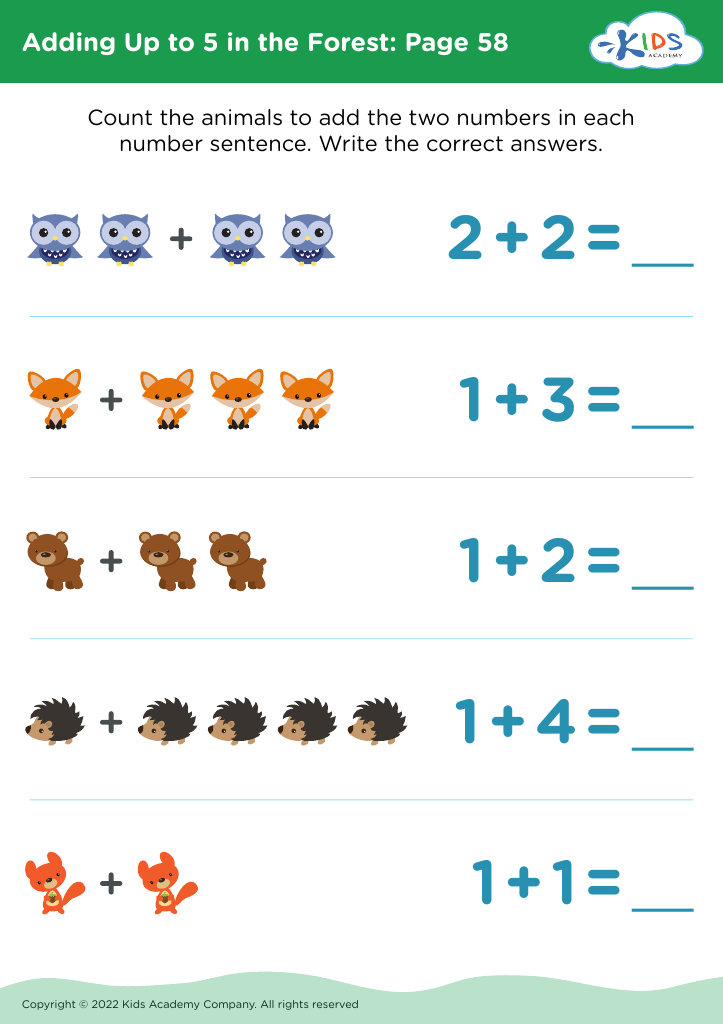
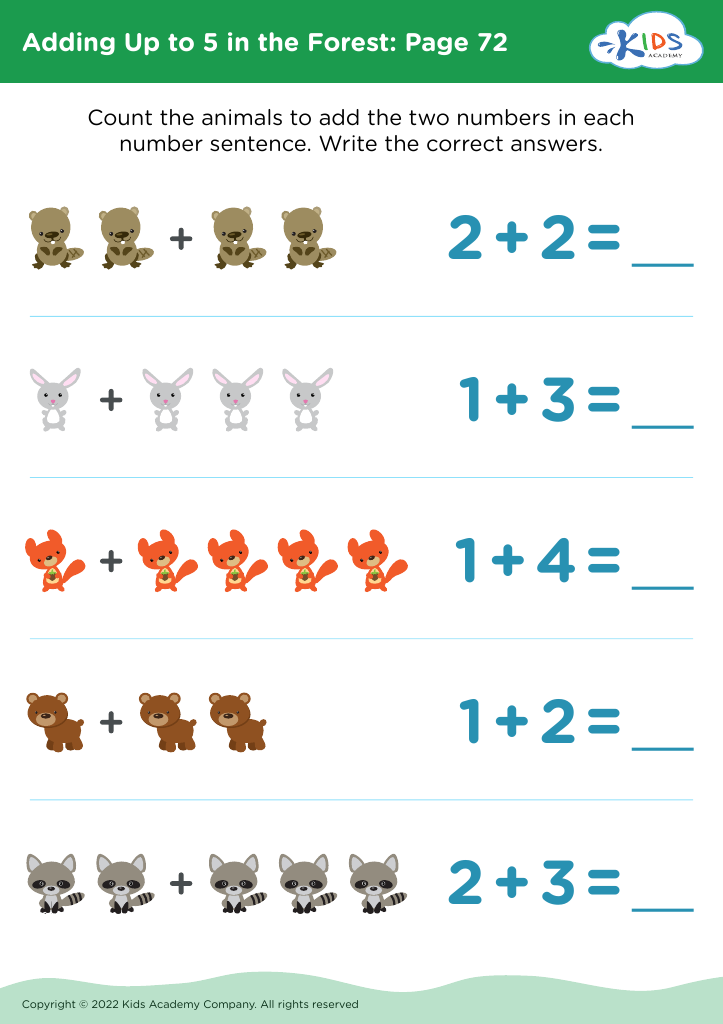
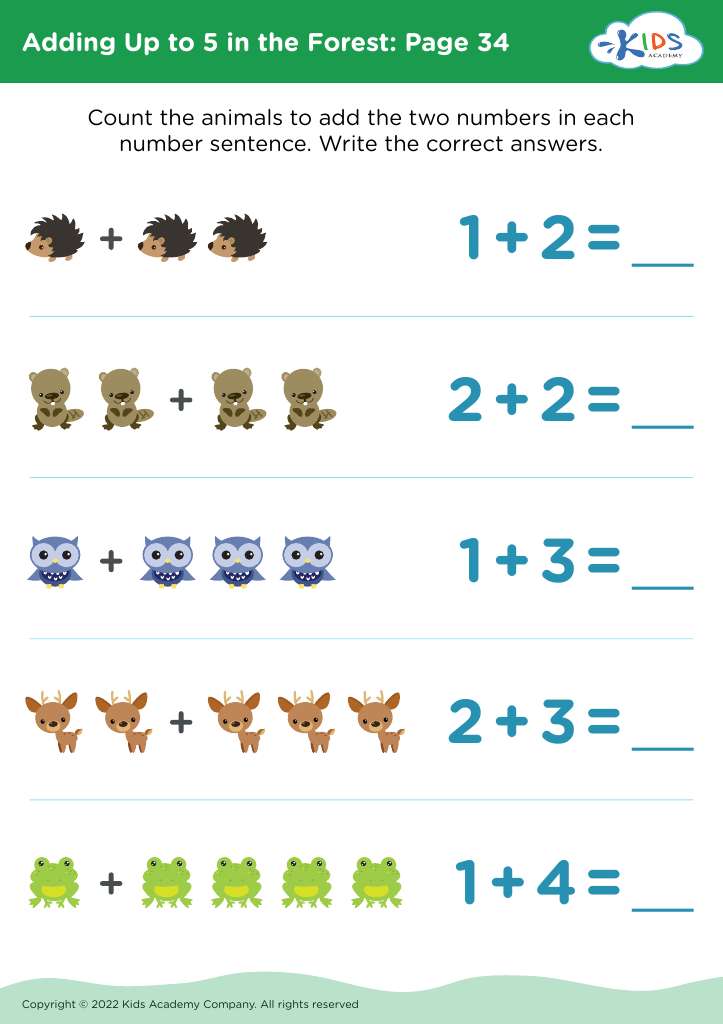
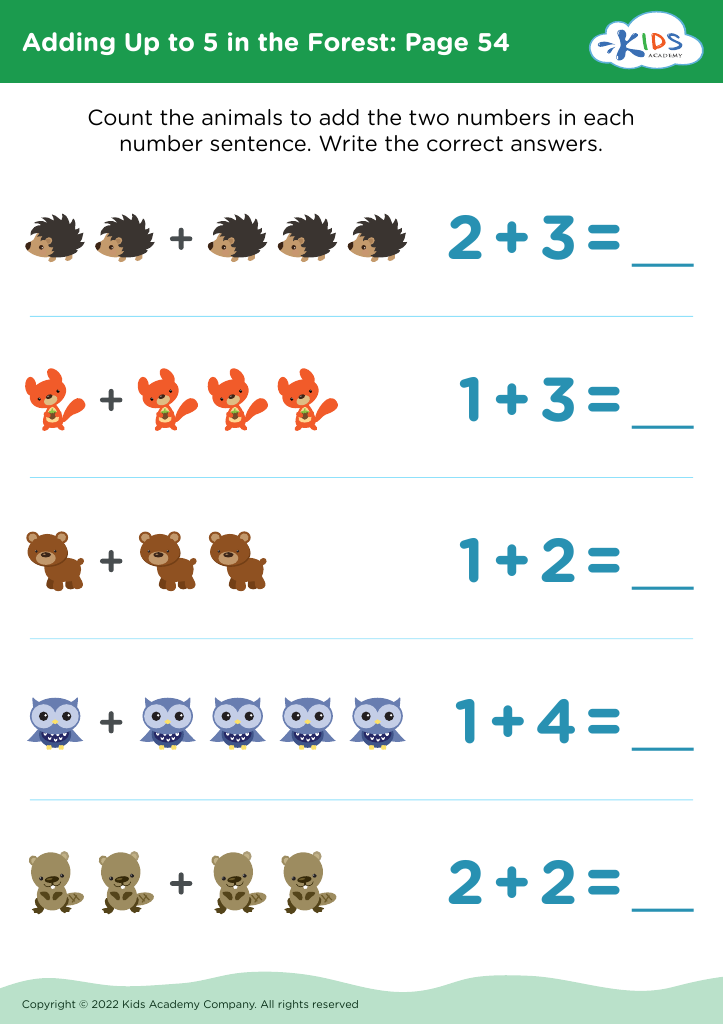
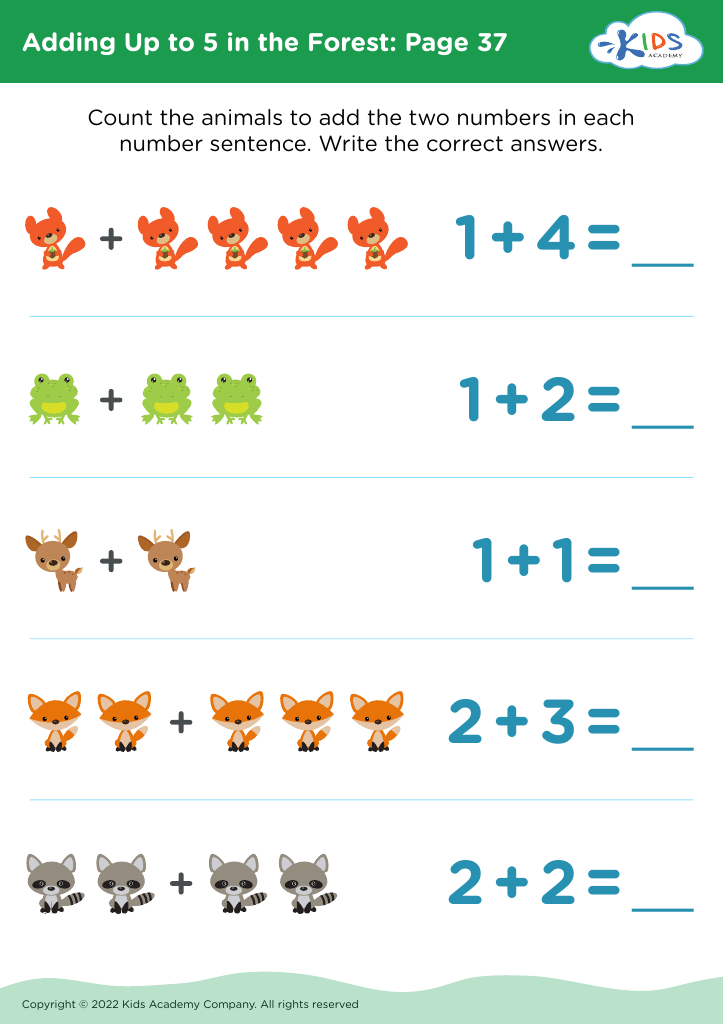


Nature appreciation and early math skills, such as adding up to 5, are foundational in a child’s education. Both can be greatly beneficial when integrated within a preschool curriculum.
Parents and teachers should care because nature appreciation fosters a sense of wonder, creativity, and respect for the environment. Engaging with nature from a young age helps children develop sensory awareness and physical health through outdoor activities. Additionally, nature-based learning can reduce stress and encourage a lifelong love of the environment, instilling responsibility and sustainability values early on.
Combining nature appreciation with mathematical concepts offers remarkable educational advantages. When children practice adding numbers up to 5 through activities like counting stones, leaves, or flowers, they get a hands-on, visual understanding of numbers and their relationships. This method can be more engaging and memorable compared to traditional indoor, paper-based math exercises.
Integrating these experiences satisfies young children's natural curiosity, making learning more relevant and enjoyable. It scaffolds core skills such as counting, problem-solving, and critical thinking within a meaningful context. Consequently, nature appreciation activities combined with basic arithmetic prepare children both academically and spiritually, fostering well-rounded, empathetic, and educated individuals. Thus, parents and teachers should embrace and prioritize this holistic approach to early childhood education.