Filters

349 filtered results

Clear all filters
Favorites
With answer key
Interactive

349 filtered results

Difficulty Level

Grade


Check out this FREE Preschool Trial Lesson on Adding Up to 5!

L

Favorites
With answer key
Interactive
  • Preschool
  • Number Recognition
  • Adding Up to 5
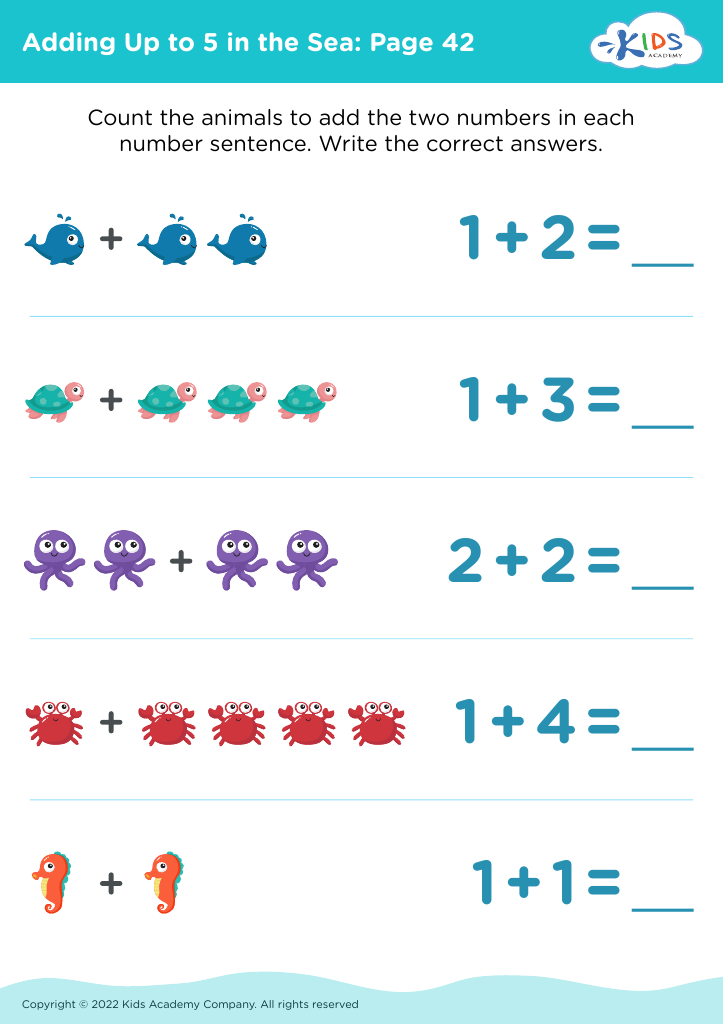
Adding Up to 5 in the Sea: Page 42
Worksheet
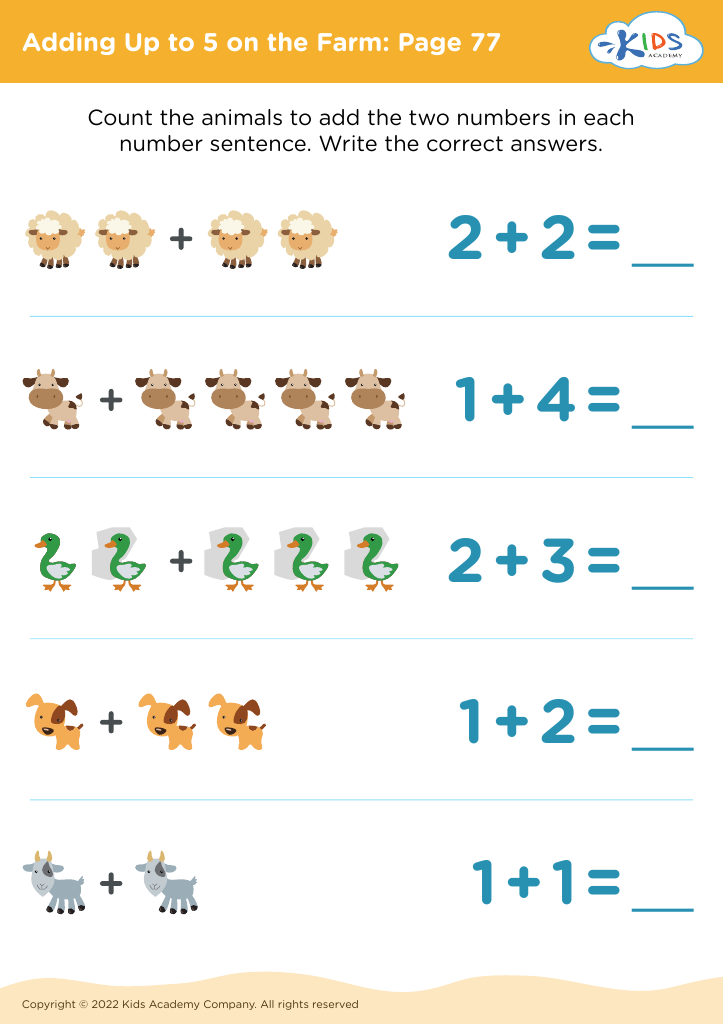
Adding Up to 5 on the Farm: Page 77
Worksheet
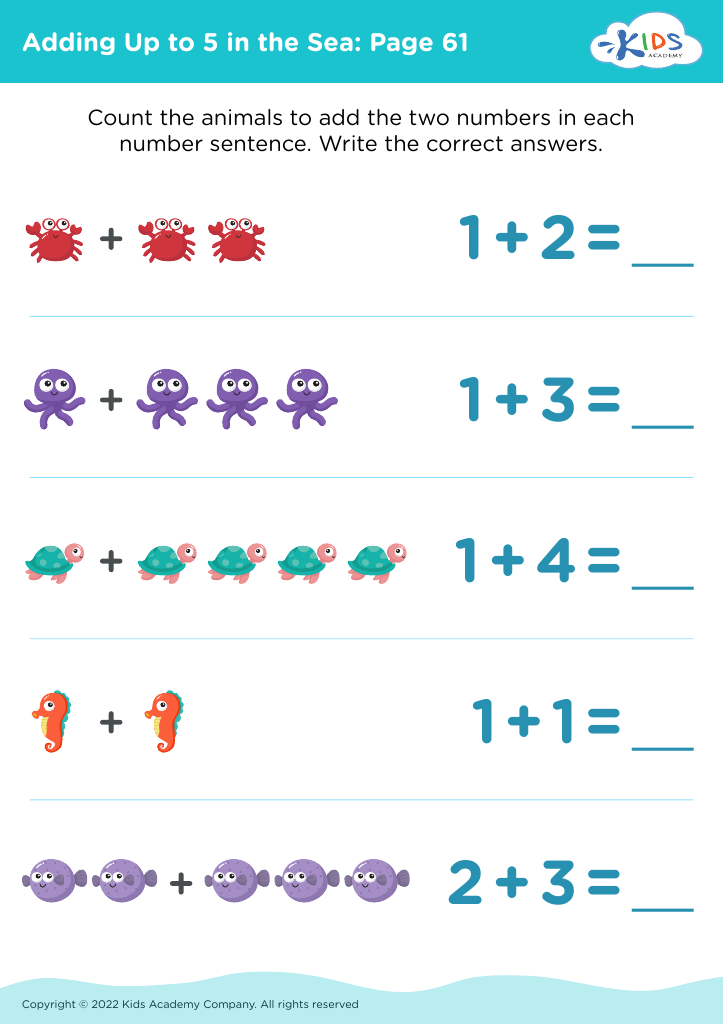
Adding Up to 5 in the Sea: Page 61
Worksheet
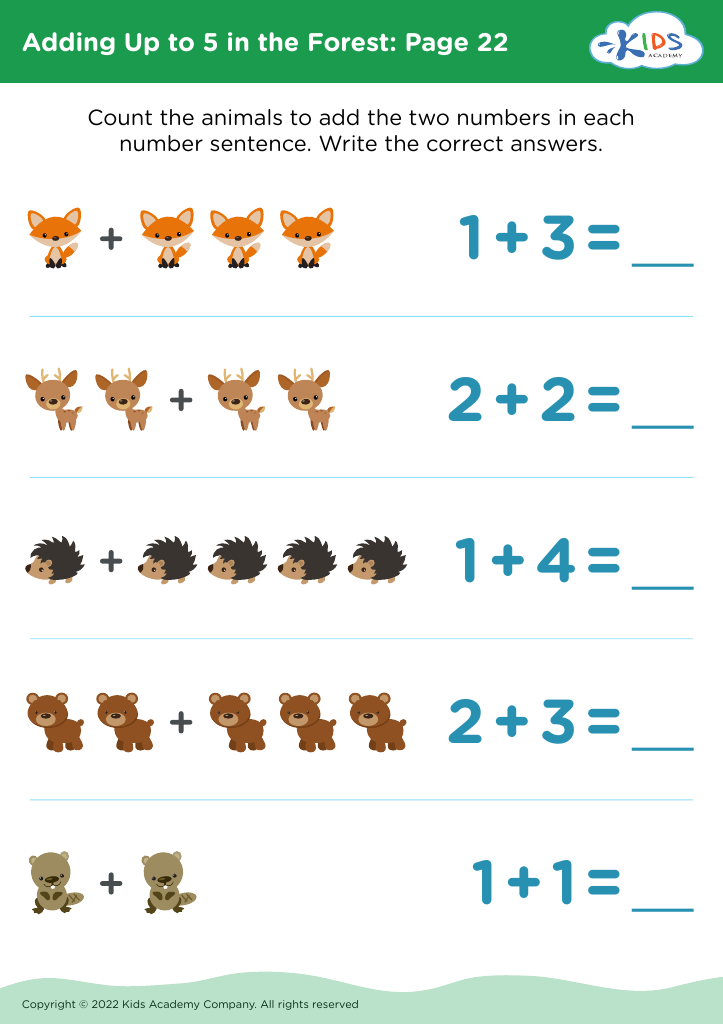
Adding Up to 5 in the Forest: Page 22
Worksheet
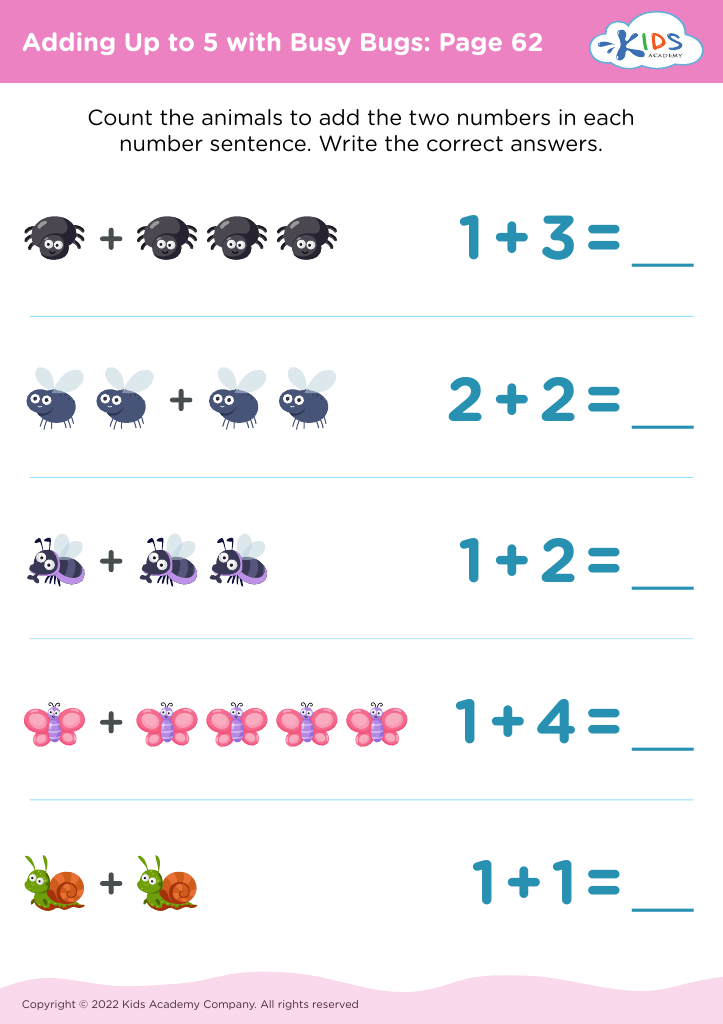
Adding Up to 5 with Busy Bugs: Page 62
Worksheet
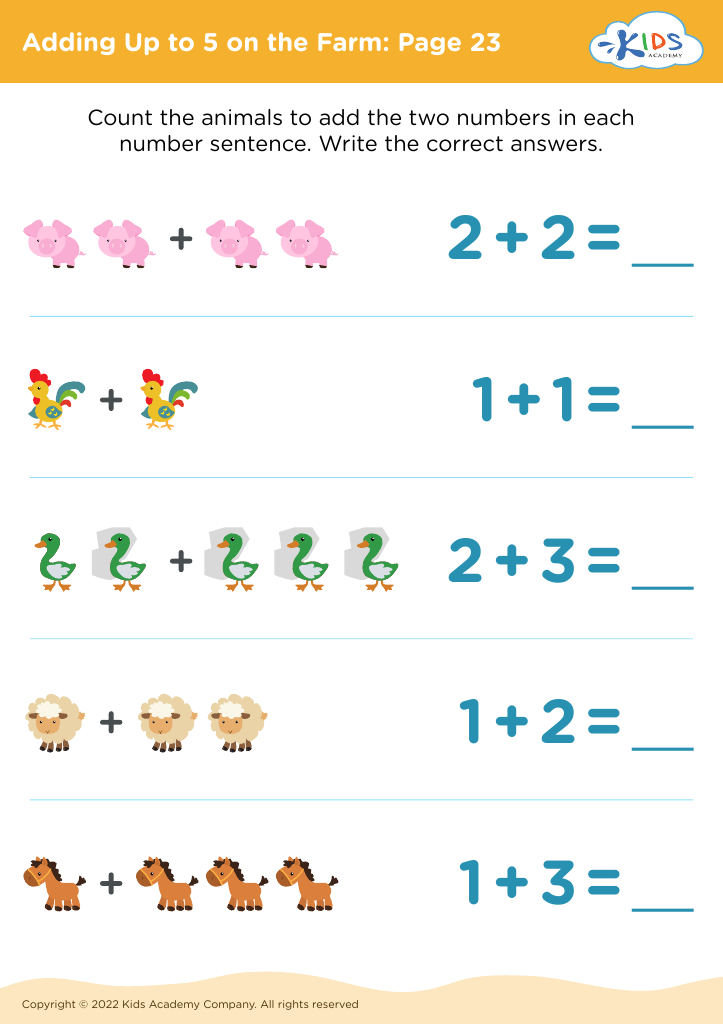
Adding Up to 5 on the Farm: Page 23
Worksheet
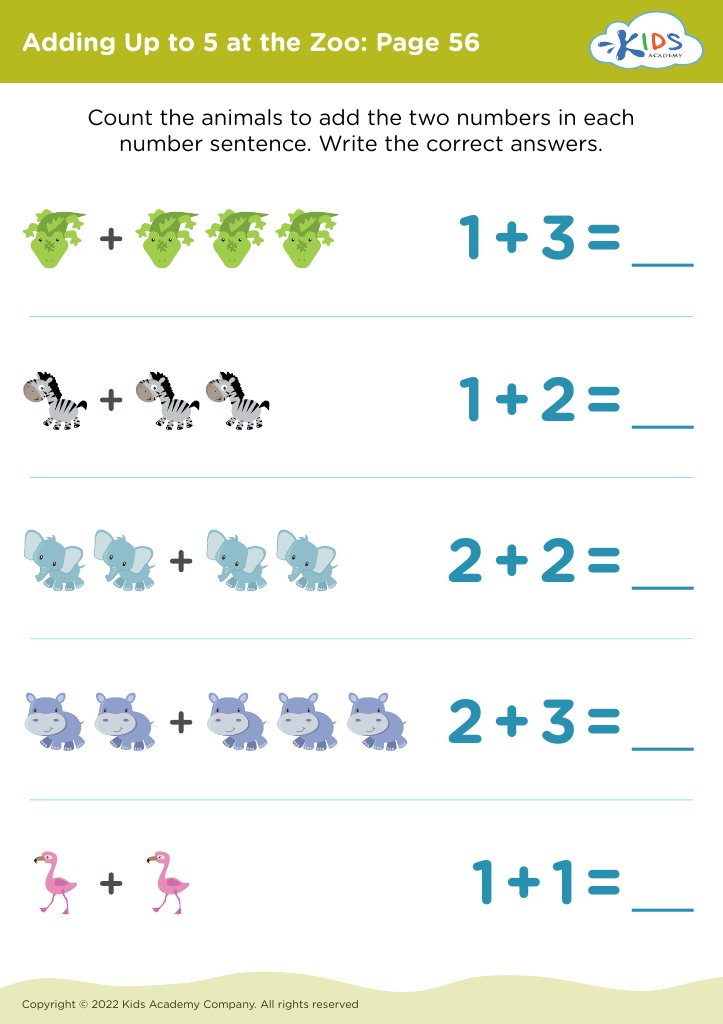
Adding Up to 5 at the Zoo: Page 56
Worksheet
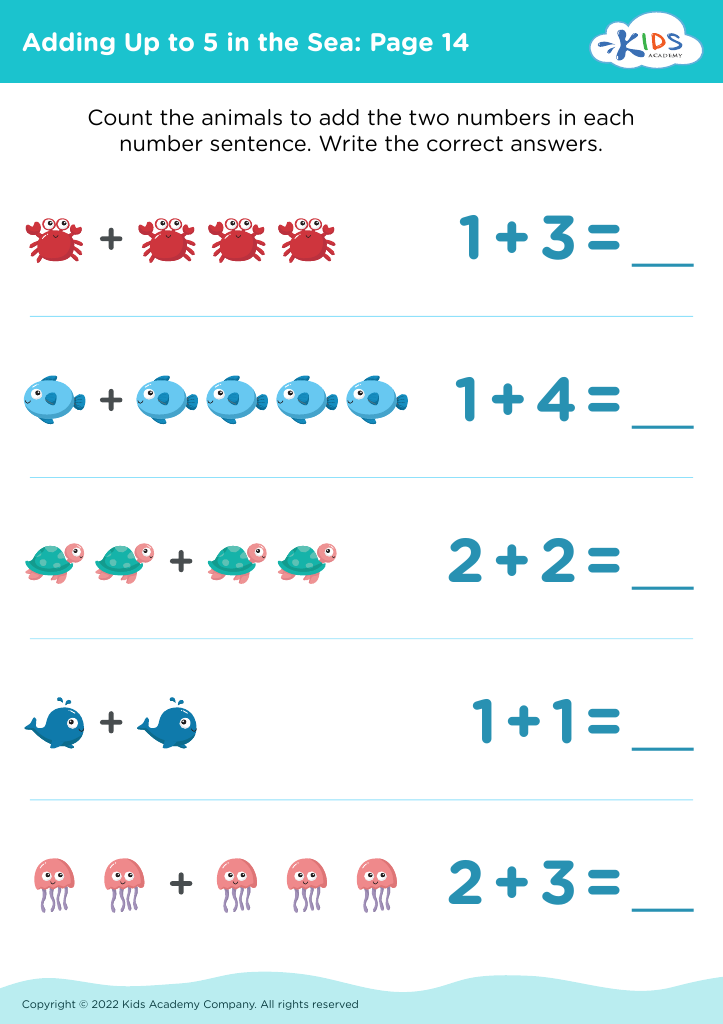
Adding Up to 5 in the Sea: Page 14
Worksheet
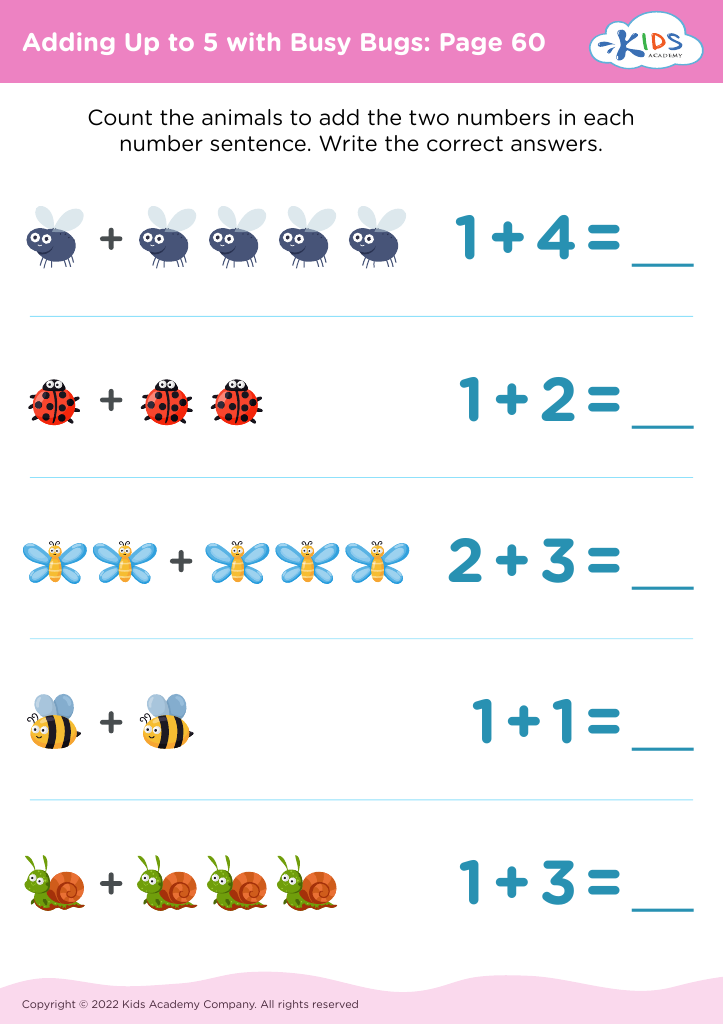
Adding Up to 5 with Busy Bugs: Page 60
Worksheet
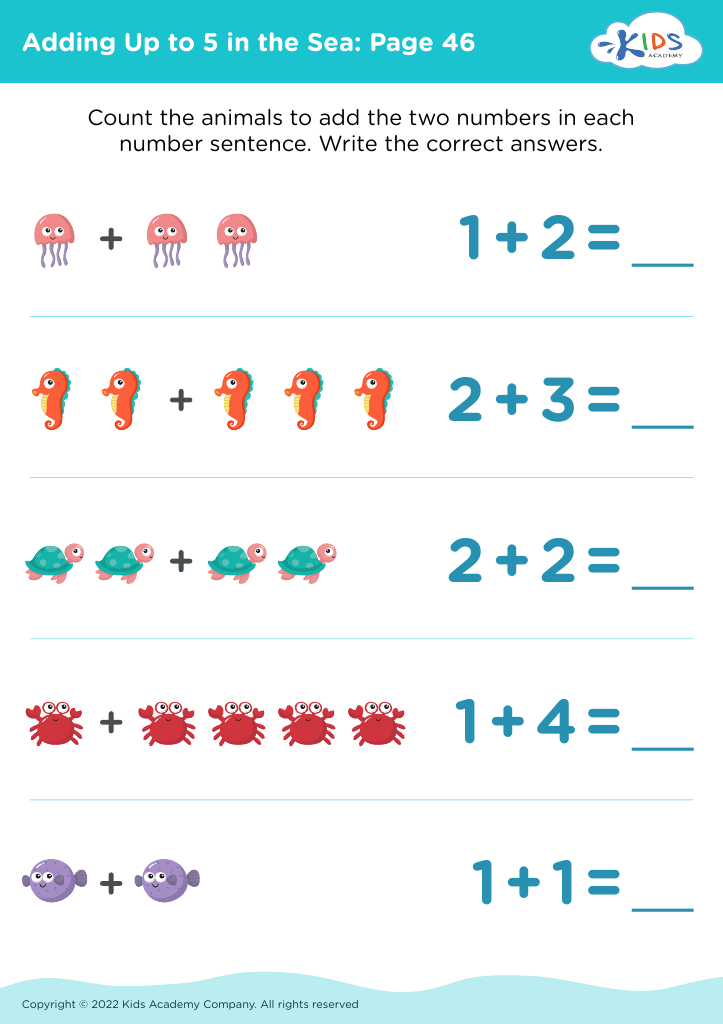
Adding Up to 5 in the Sea: Page 46
Worksheet
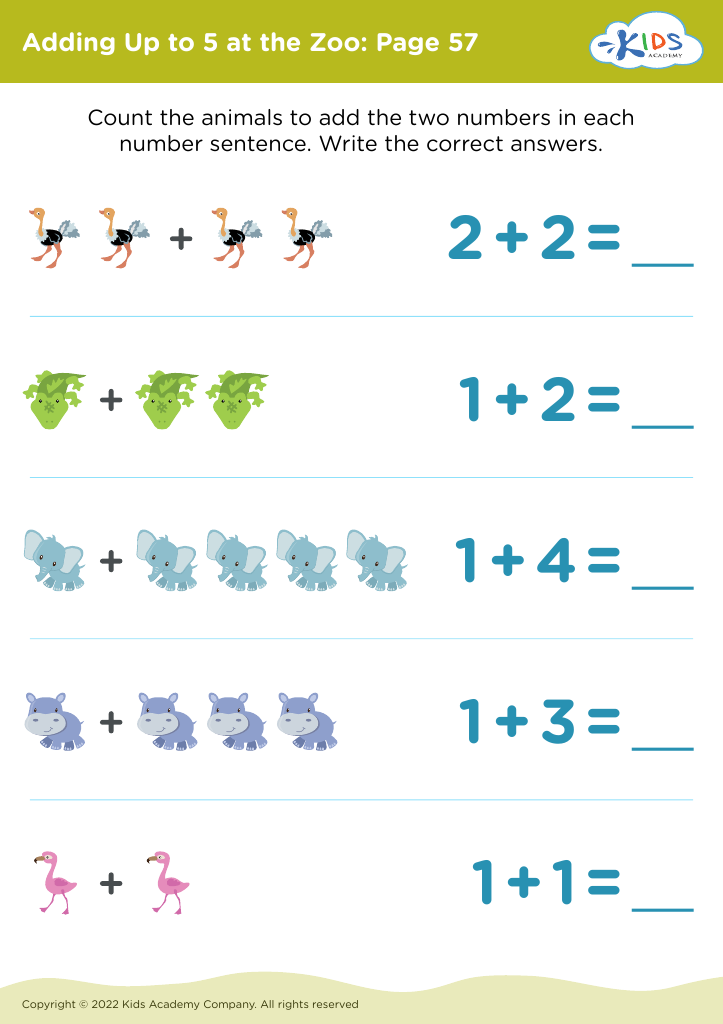
Adding Up to 5 at the Zoo: Page 57
Worksheet
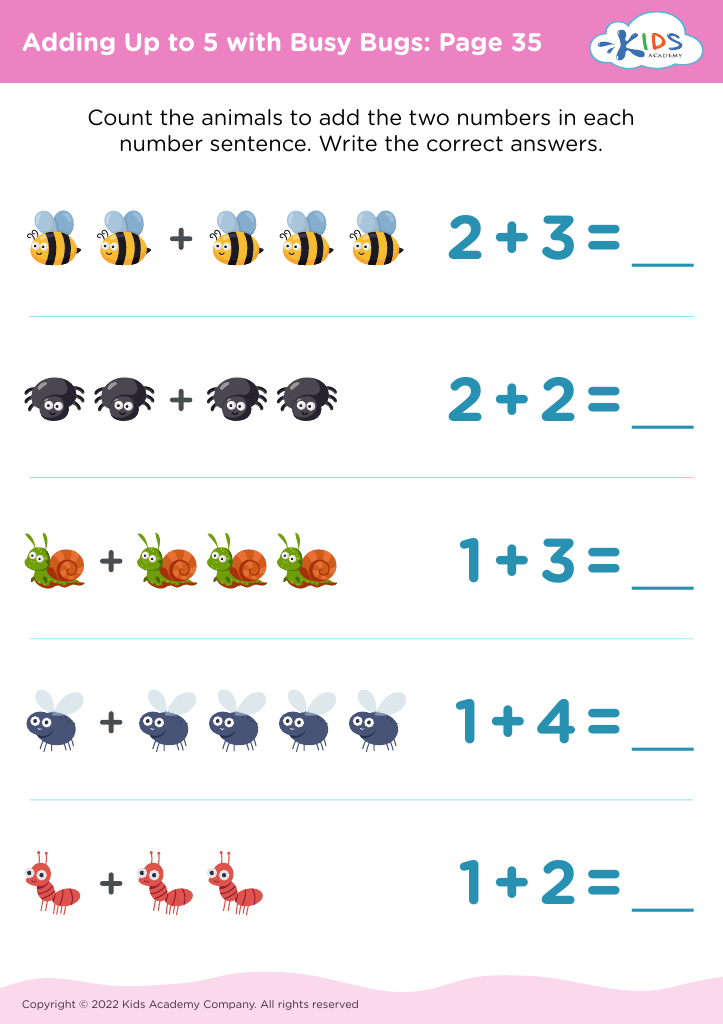
Adding Up to 5 with Busy Bugs: Page 35
Worksheet
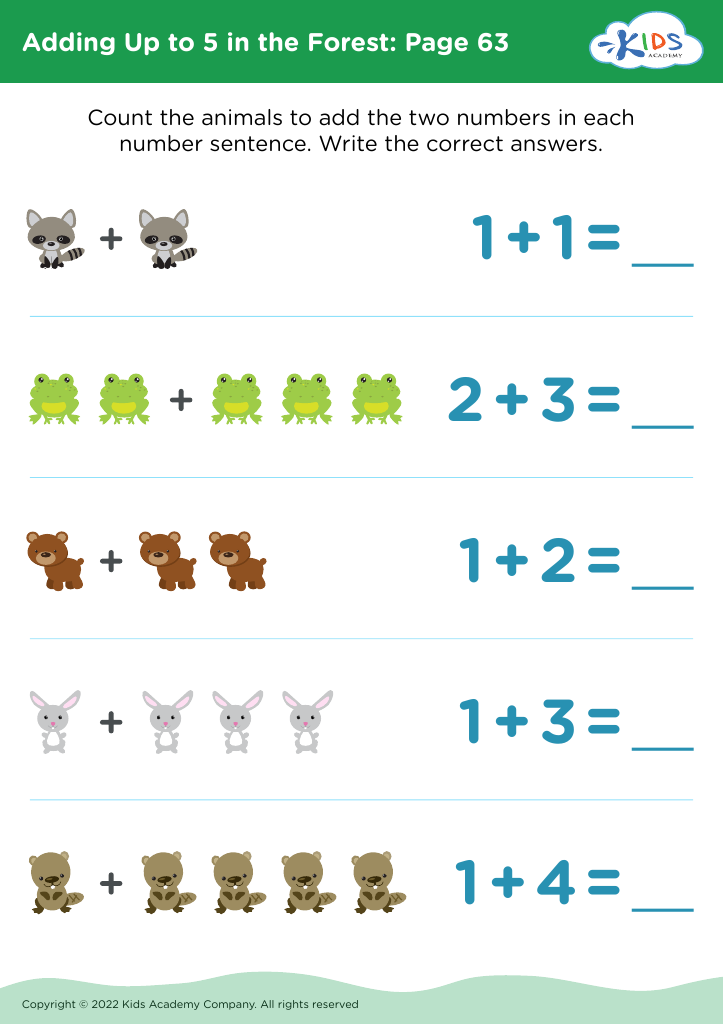
Adding Up to 5 in the Forest: Page 63
Worksheet
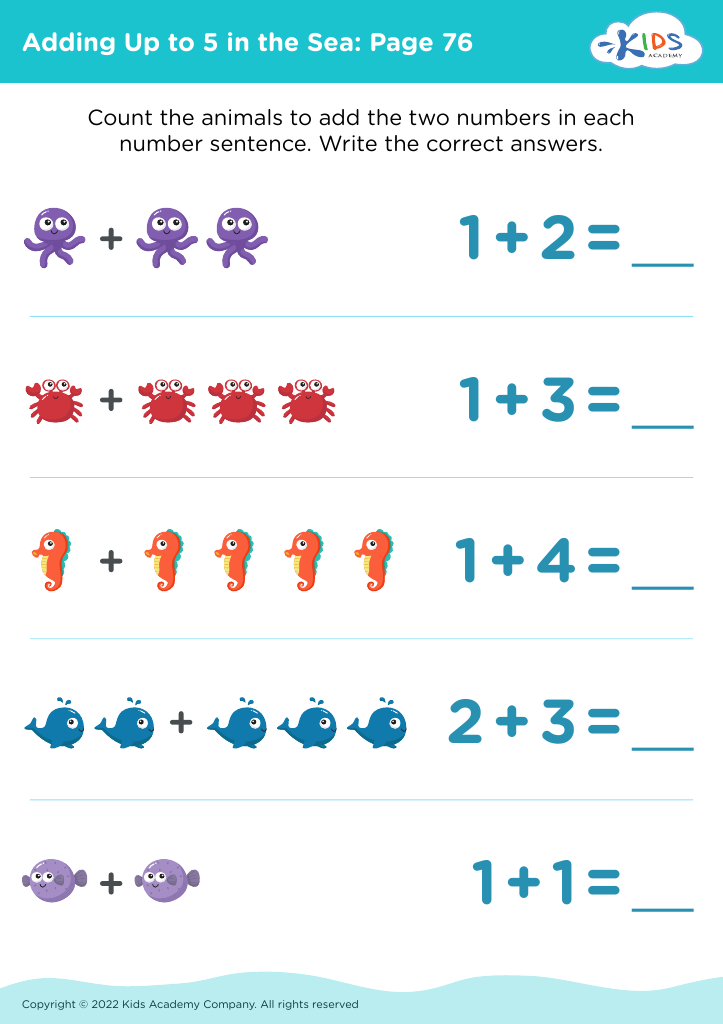
Adding Up to 5 in the Sea: Page 76
Worksheet
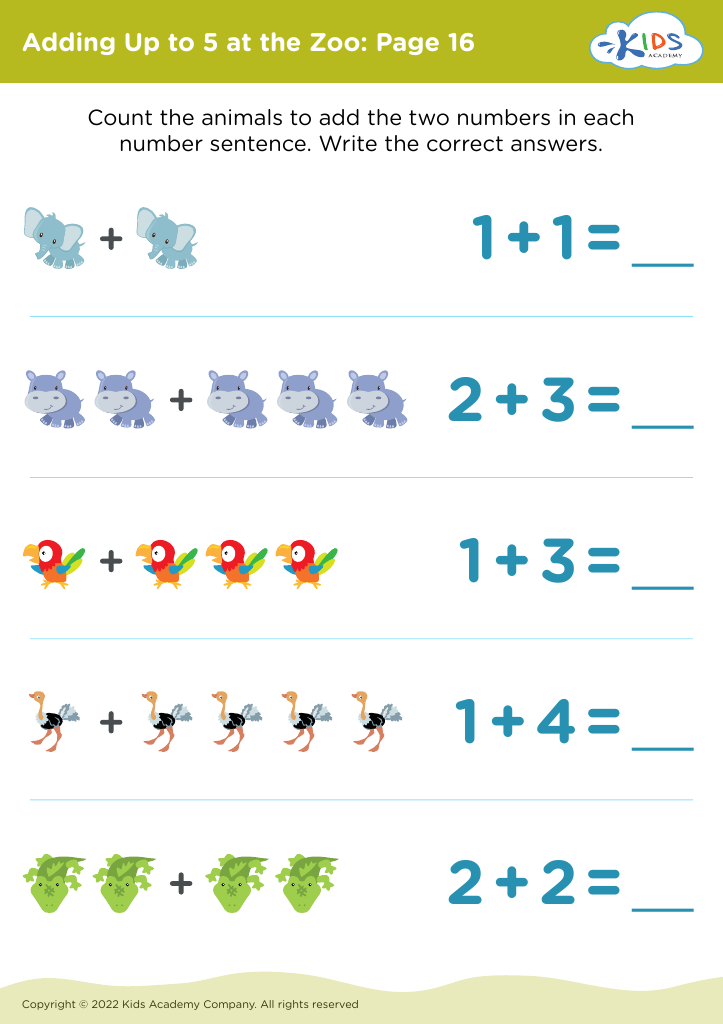
Adding Up to 5 at the Zoo: Page 16
Worksheet
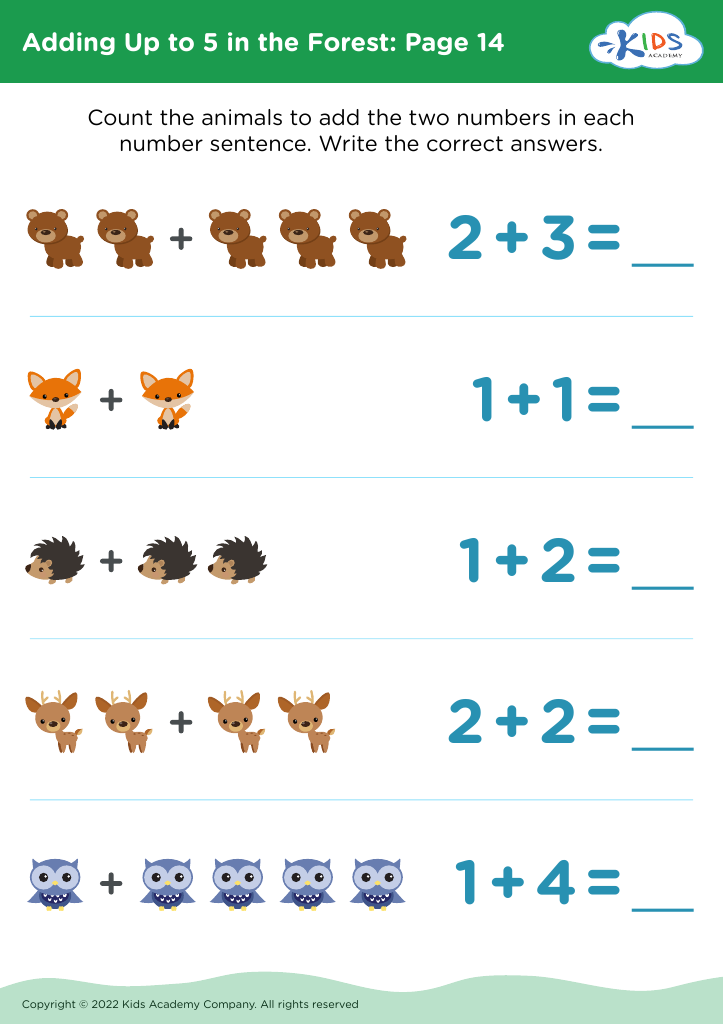
Adding Up to 5 in the Forest: Page 14
Worksheet
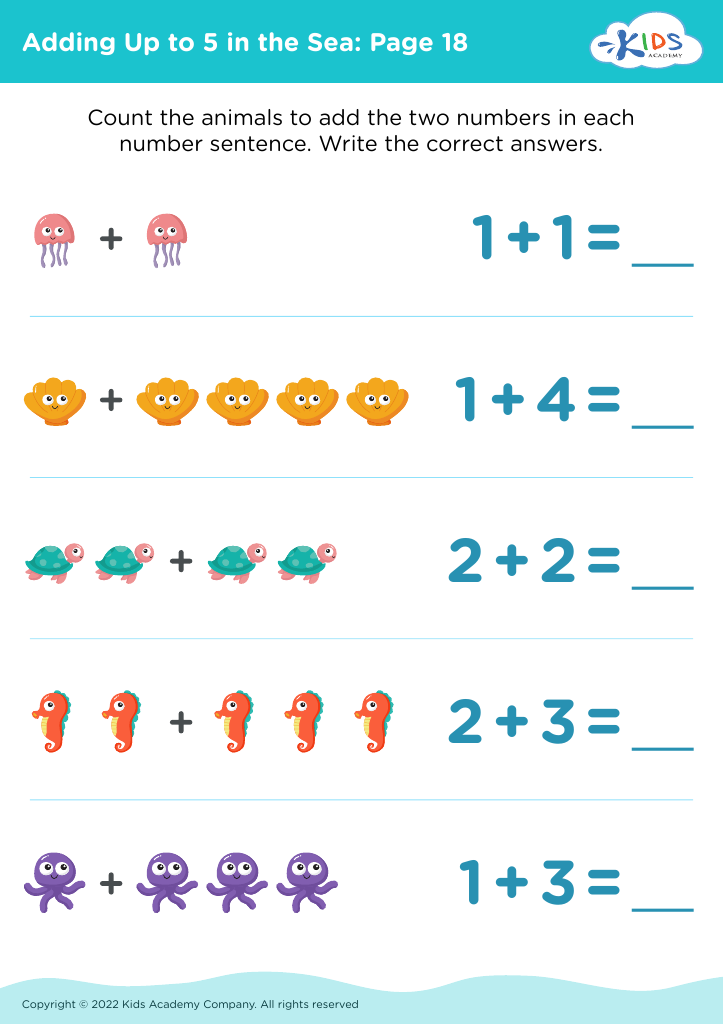
Adding Up to 5 in the Sea: Page 18
Worksheet
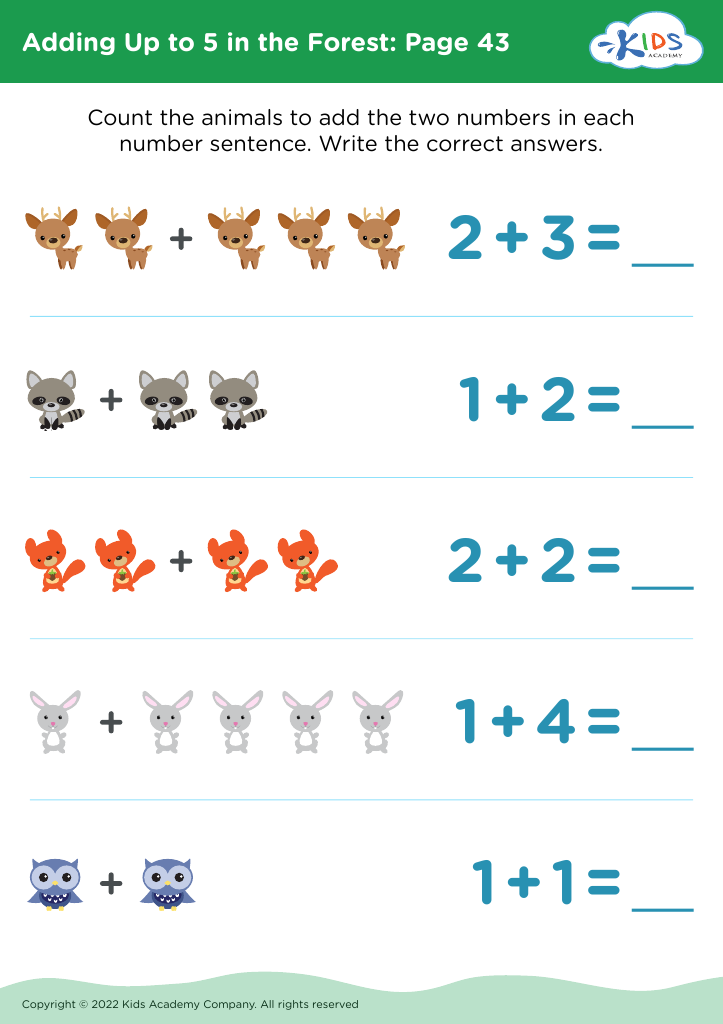
Adding Up to 5 in the Forest: Page 43
Worksheet
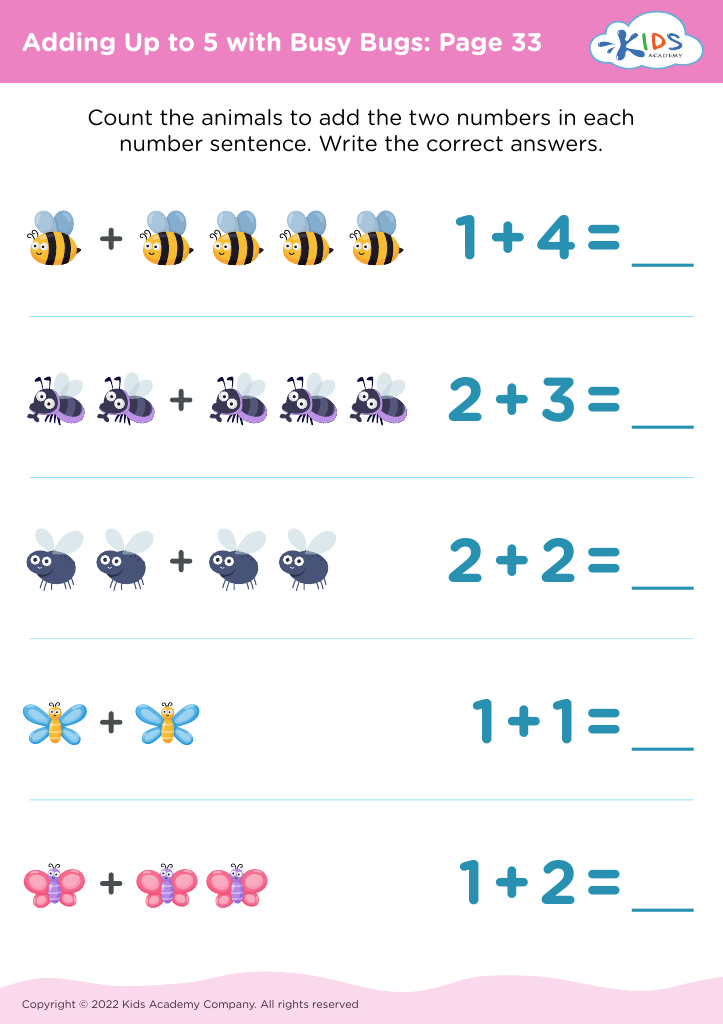
Adding Up to 5 with Busy Bugs: Page 33
Worksheet
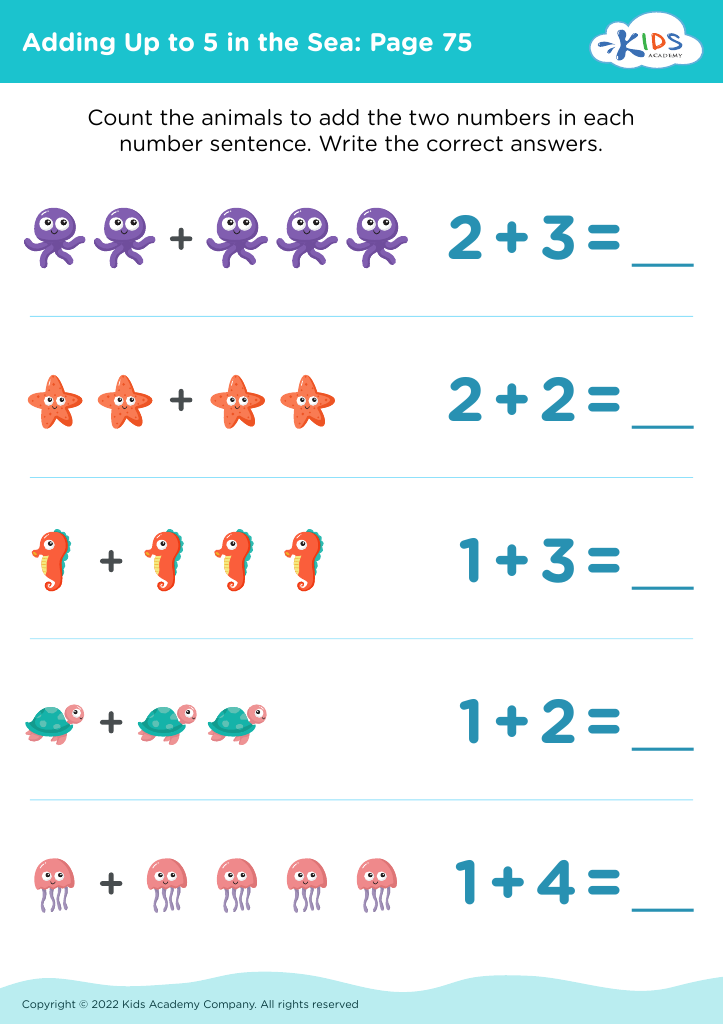
Adding Up to 5 in the Sea: Page 75
Worksheet
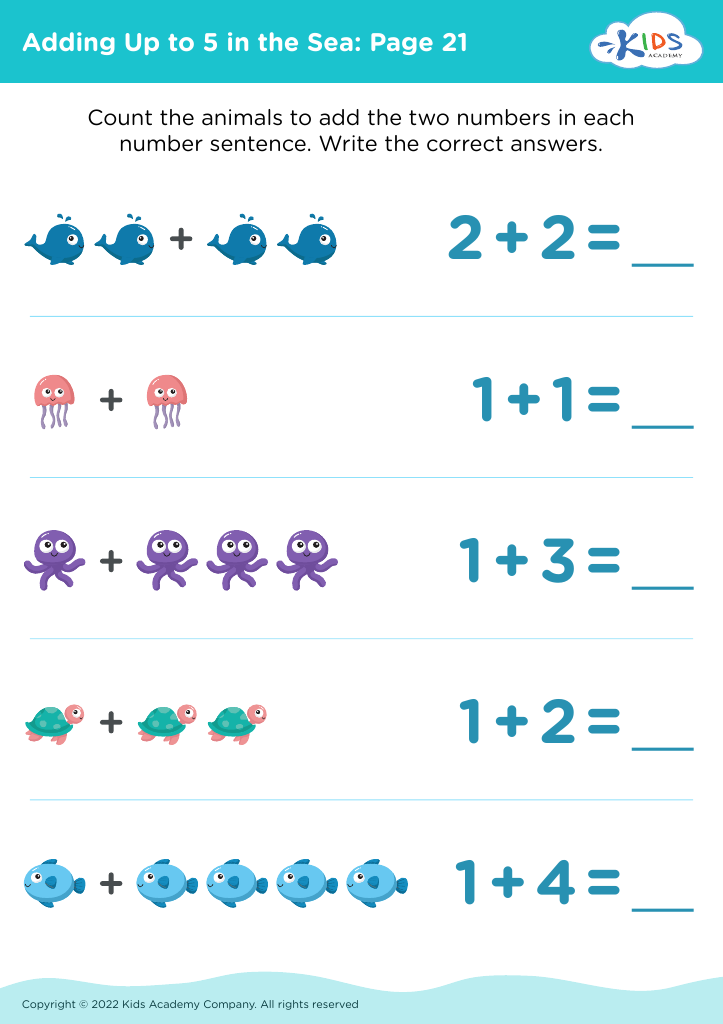
Adding Up to 5 in the Sea: Page 21
Worksheet
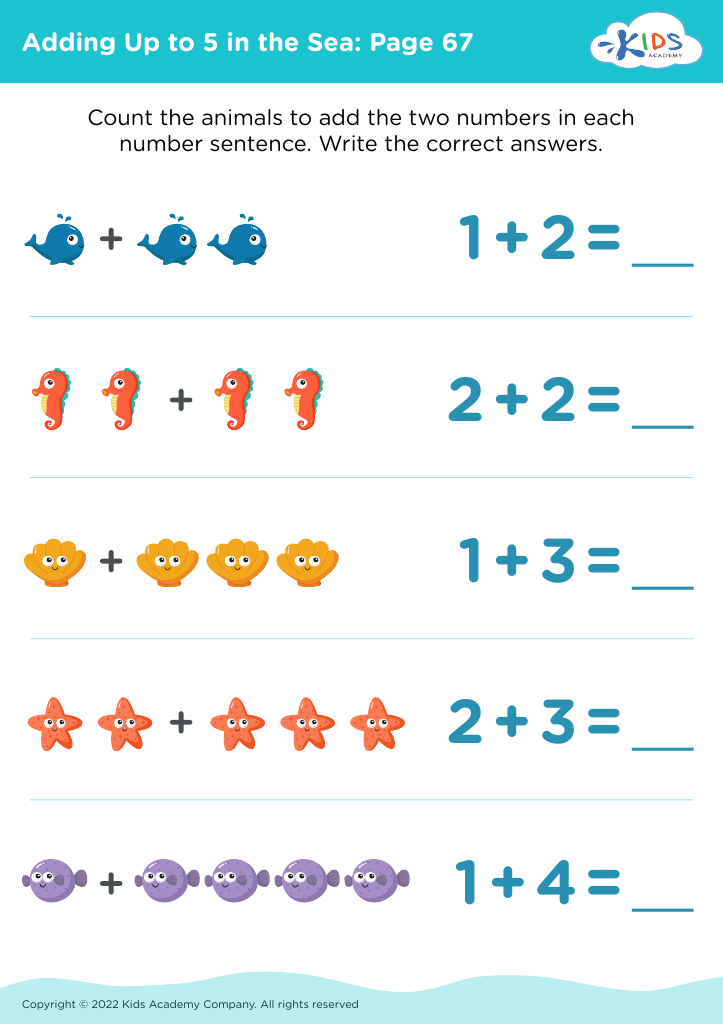
Adding Up to 5 in the Sea: Page 67
Worksheet
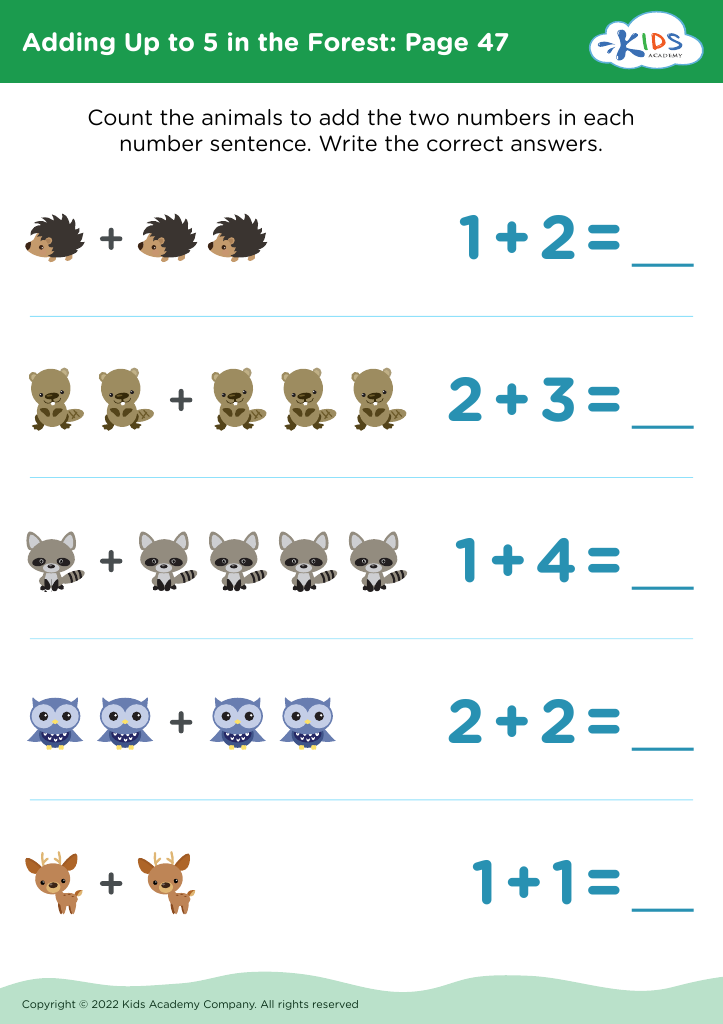
Adding Up to 5 in the Forest: Page 47
Worksheet
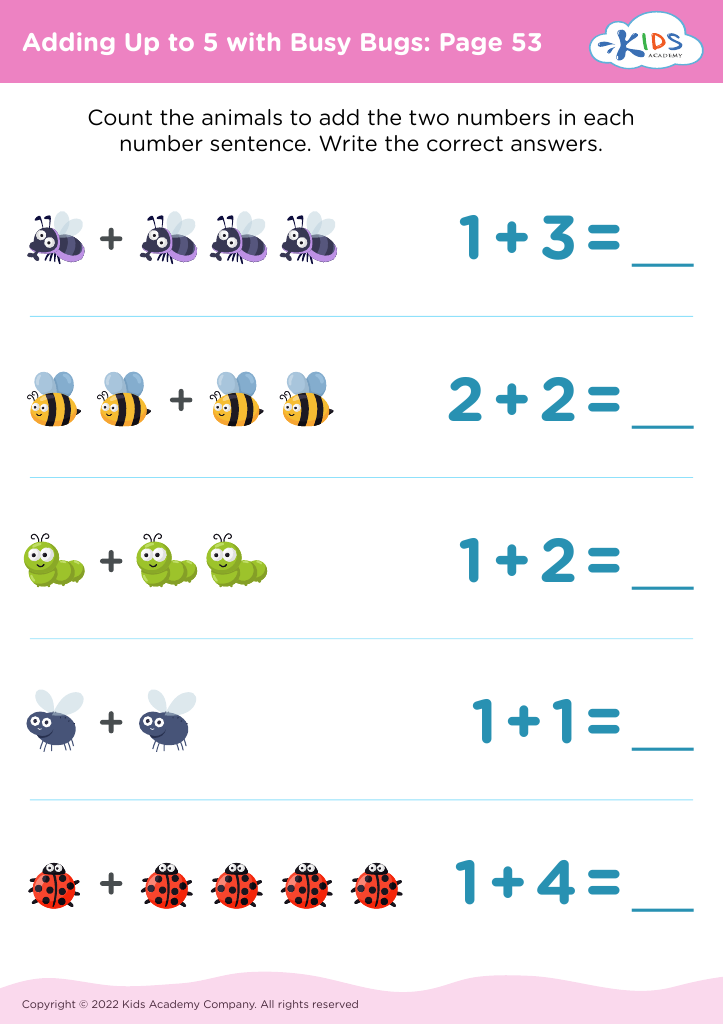
Adding Up to 5 with Busy Bugs: Page 53
Worksheet


Number recognition, particularly for the numbers 1 through 5, serves as the foundation for a child’s mathematical understanding and overall cognitive development. Parents and teachers should prioritize this aspect of early learning for several reasons. Firstly, recognizing numbers aids in developing a child's ability to count, which is crucial not just for mathematics, but for daily activities like reporting one's age or understanding time.

Moreover, mastering number recognition promotes confidence. When children know their numbers, they feel empowered to participate in classroom activities, reinforce their social skills, and engage eagerly with peers. Counting up to 5 introduces basic addition concepts; this sets the stage for complex arithmetic later on. Early familiarity with these numbers also enhances problem-solving abilities as children learn to associate numbers with quantities, thereby improving their logical thinking.

Additionally, fostering number recognition nurtures a child’s curiosity and interest in the world around them. By incorporating fun, playful activities like games, songs, and storytelling, parents and teachers can create enriching environments that promote lifelong learning. Overall, investing time and attention in number recognition leads to a solid mathematical foundation, encouraging children to explore and interact more profoundly with their environment, ultimately fostering their academic success.