Understanding number relationships Preschool Adding Up to 5 Worksheets
3 filtered results
-
From - To
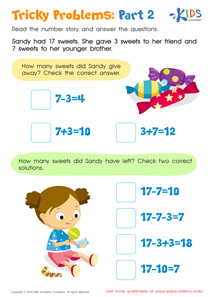
Explore our "Understanding Number Relationships: Preschool Adding Up to 5 Worksheets" designed to nurture early math skills in young learners. These engaging worksheets help children grasp essential concepts of addition, focusing on numbers up to 5. Through colorful illustrations and interactive activities, preschoolers will gain a strong foundation in number relationships, enhancing their counting and problem-solving abilities. Our activities promote hands-on learning, allowing children to visually and practically understand how numbers combine to create sums. Ideal for teachers and parents, these worksheets make learning fun and accessible, ensuring children develop confidence and proficiency in early math concepts. Start your young mathematicians on their journey today!
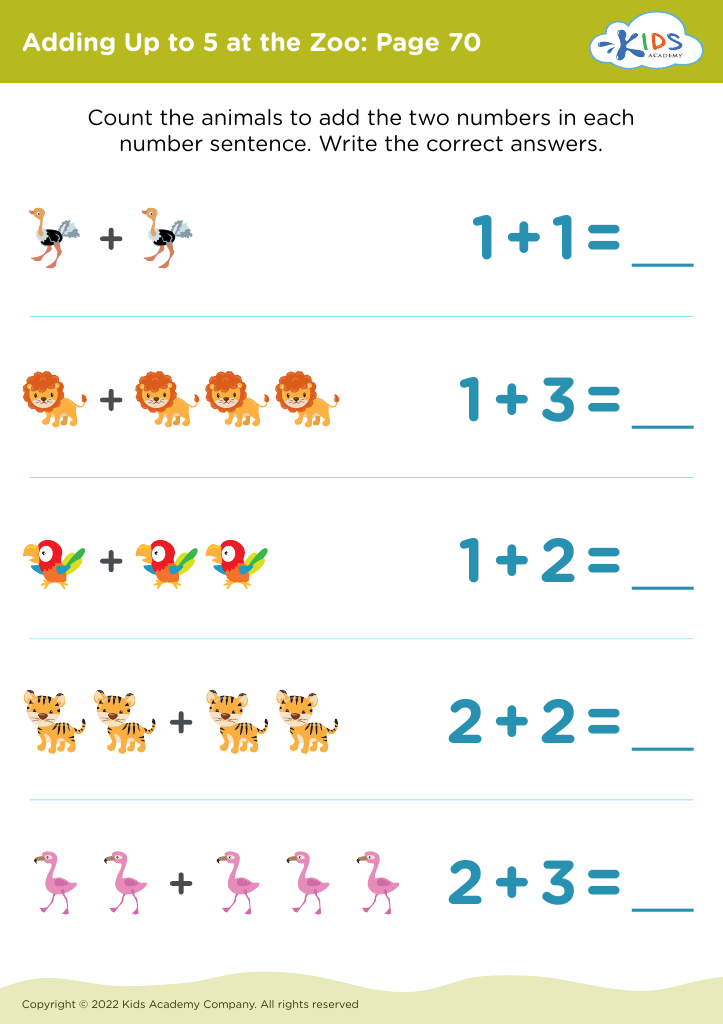
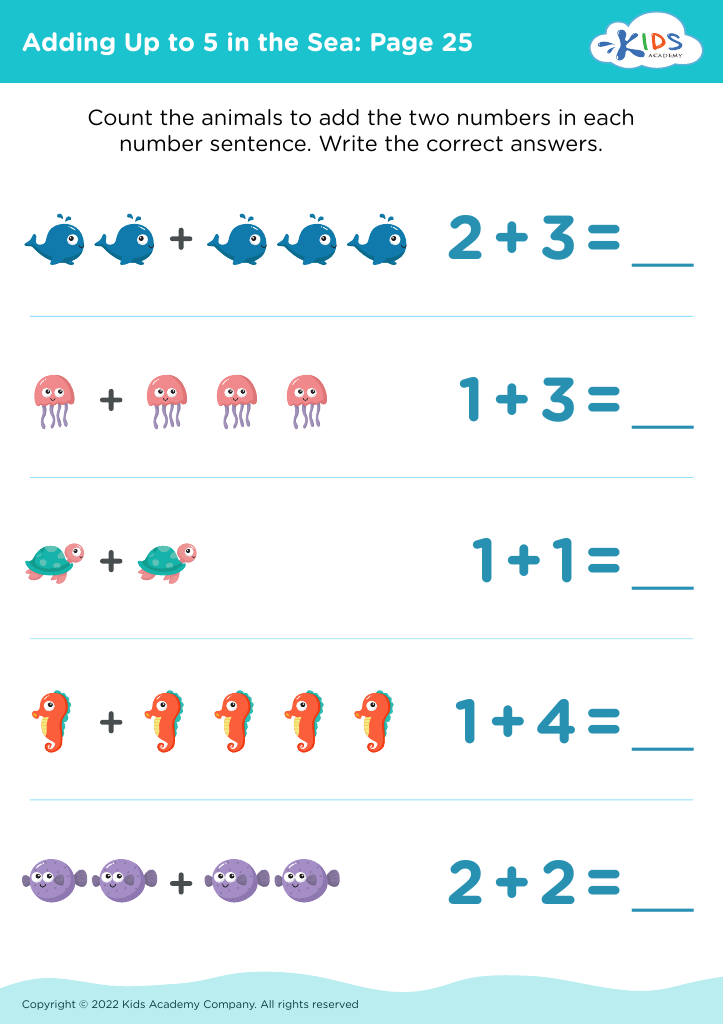
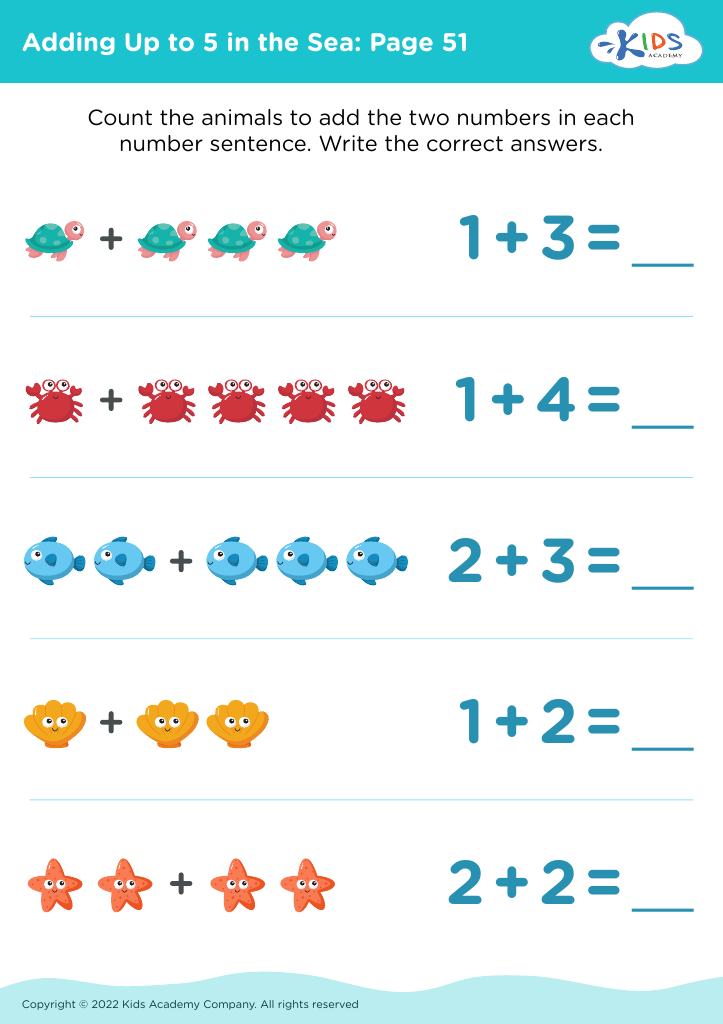


Understanding number relationships is fundamental for preschool children as they begin their mathematical journey, and it serves as a crucial foundation for future learning. When children grasp how numbers operate, particularly in simple addition scenarios such as adding up to 5, they build essential skills like counting, comparing quantities, and problem-solving.
For parents and teachers, nurturing this understanding is vital because it not only enhances children's cognitive development but also promotes confidence in their math abilities. Early experiences with numbers foster a positive attitude towards mathematics, helping to counteract any anxiety that may form later in more complex topics.
Moreover, learning to add up to 5 allows children to encounter concepts like symbolism and mathematical operations while engaging with concrete materials such as toys or visual aids. These tangible experiences make abstract ideas more relatable and enjoyable.
Furthermore, understanding number relationships supports literacy development, as children learn to communicate their mathematical thinking using specific vocabulary. By focusing on these early mathematical concepts, parents and teachers can create rich environments that bolster overall learning and set the stage for academic success, ensuring children develop a lifelong love for math.