Visual Perception Skills Preschool Adding Up to 5 Worksheets
4 filtered results
-
From - To
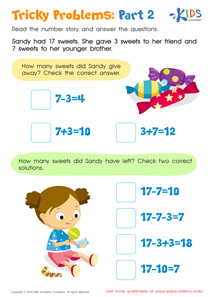
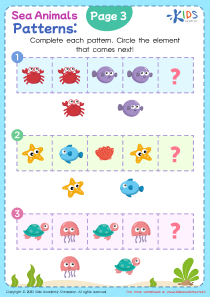
Enhance your preschooler's learning journey with our engaging "Visual Perception Skills Preschool Adding Up to 5 Worksheets." Designed to support early math skills, these worksheets bolster visual perception, helping children recognize numbers and understand quantities through fun activities. Young learners will develop essential skills in counting, matching, and problem-solving as they explore various visual exercises. With a focus on adding up to 5, these interactive worksheets make learning enjoyable and effective. Perfect for parents and educators, they provide a valuable resource to pave the way for a solid mathematical foundation. Start building your child’s skills today with our printable worksheets!
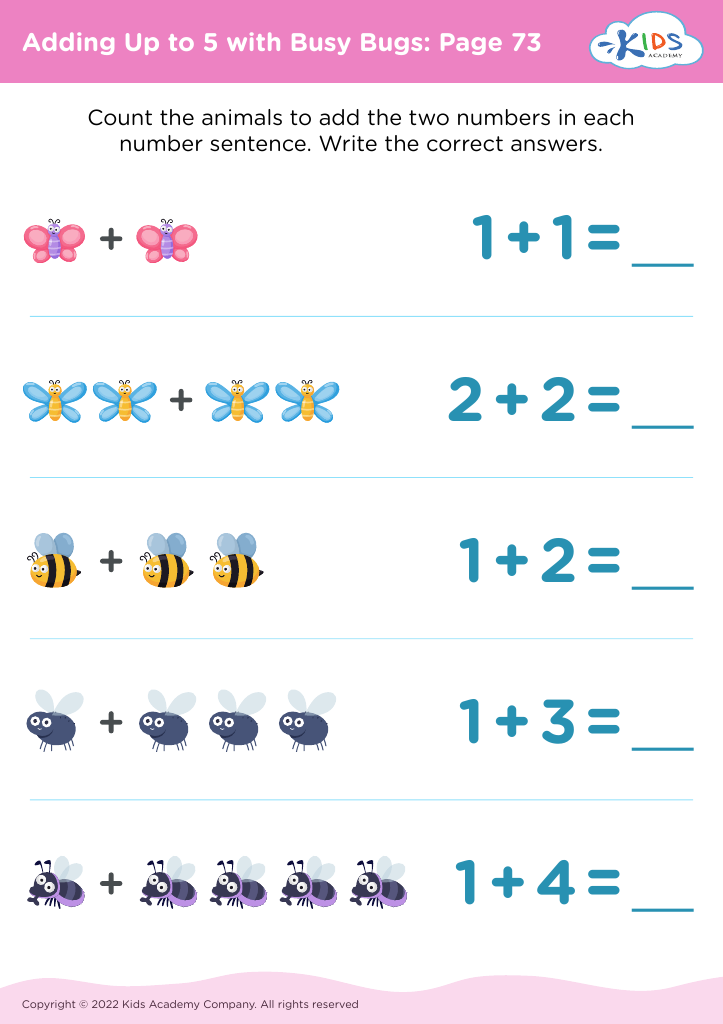
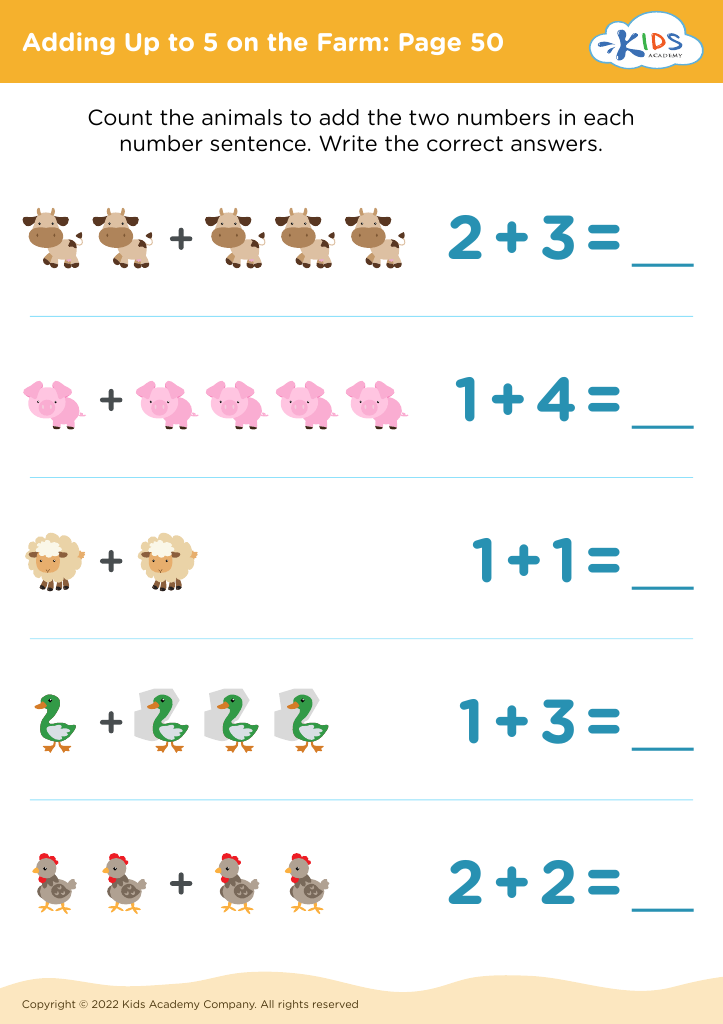
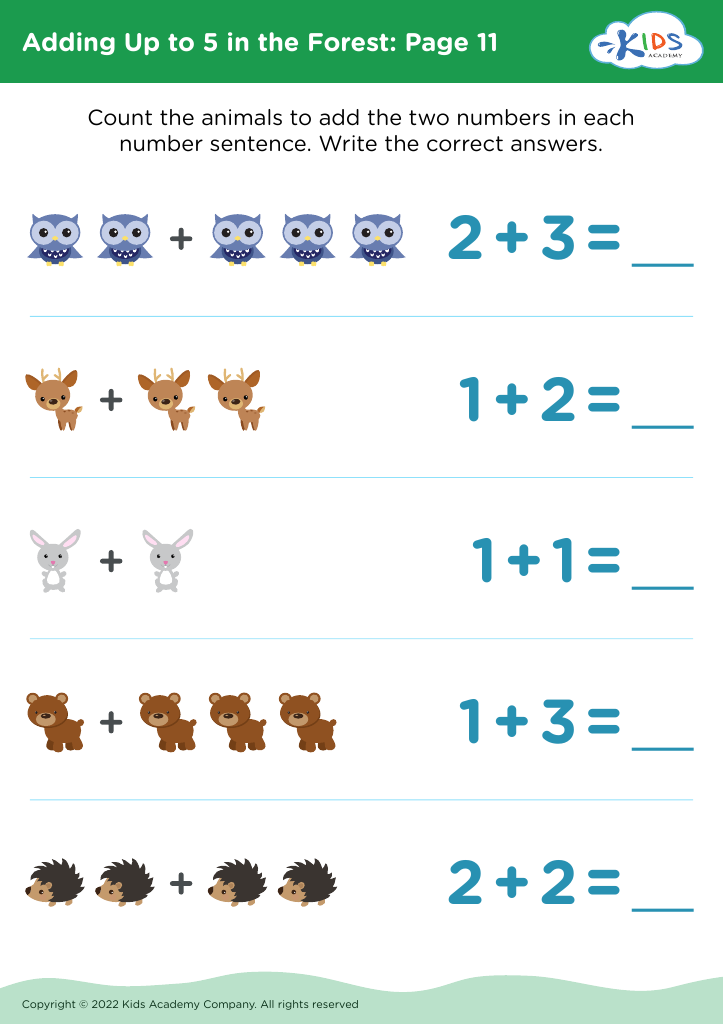
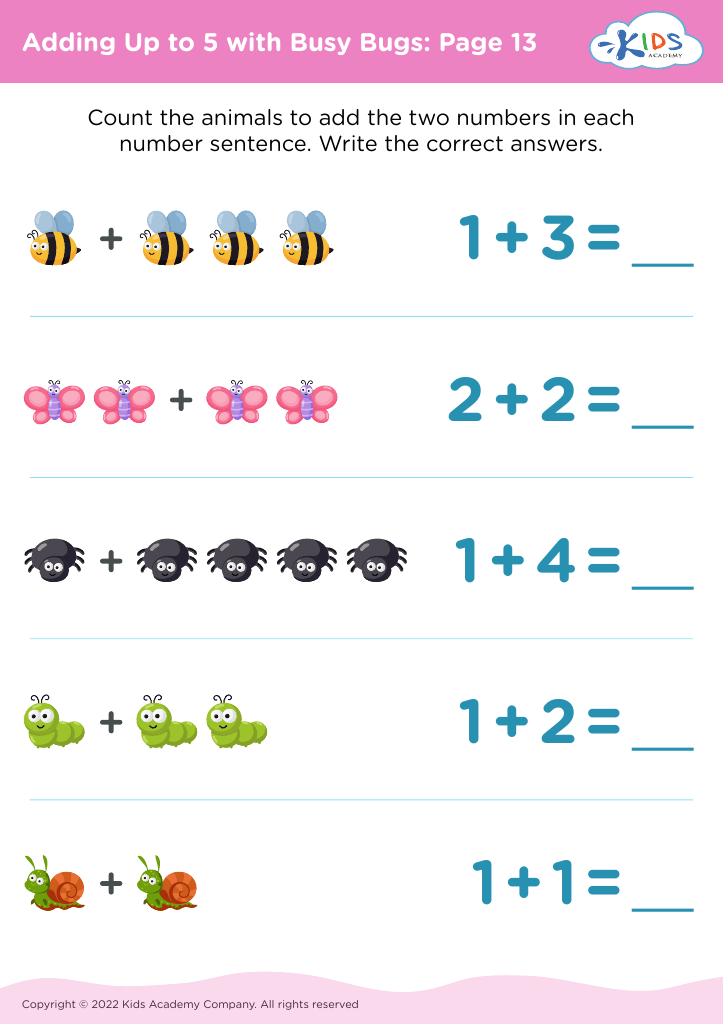


Visual perception skills are crucial for young children's learning, particularly in preschool settings where foundational mathematics begins. These skills involve the ability to interpret and make sense of visual information, which is essential for understanding concepts like numbers and quantities. When children practice adding up to 5, they not only learn mathematical operations but also strengthen their visual perception abilities.
Parents and teachers should care because strong visual perception skills directly impact children's academic success, particularly in subjects that rely on arithmetic. Mastering addition through visual aids like counting blocks or number lines helps children recognize patterns, develop spatial awareness, and improve problem-solving skills. These cognitive abilities lay the groundwork for more complex mathematics later on.
Additionally, fostering visual perception skills encourages children to be more observant and perceptive individuals, aiding them in everyday situations beyond academics. Engaging young learners with activities that involve visual recognition and manipulation can make learning enjoyable and memorable. This development supports a child's self-confidence and motivates them to explore further academic challenges. Overall, nurturing visual perception skills is essential for academic readiness and lifelong learning success.