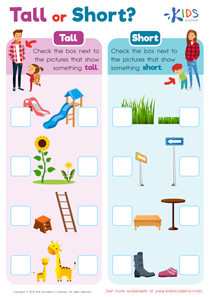
Basic arithmetic comprehension Preschool Addition & Subtraction Worksheets
4 filtered results
-
From - To
Enhance your child's basic arithmetic skills with our Preschool Addition & Subtraction Worksheets. Specially designed for young learners, these engaging worksheets help preschoolers grasp fundamental math concepts through fun activities and exercises. Each worksheet is crafted to develop a solid understanding of addition and subtraction, boosting your child's confidence and math proficiency. Ideal for both classroom use and homeschooling, our worksheets provide a strong foundation for future math success, preparing little ones for more advanced challenges. Start their arithmetic journey with worksheets that captivate and educate. Visit our page for free, printable resources.
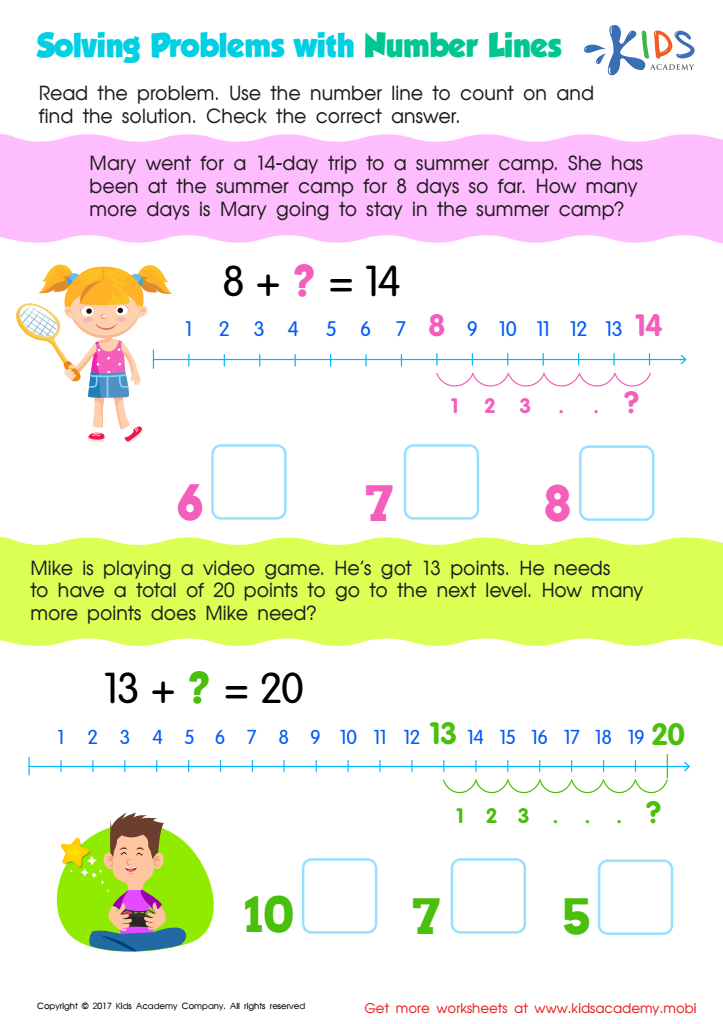
Solving Problems: Number Lines Worksheet
 Assign to My Students
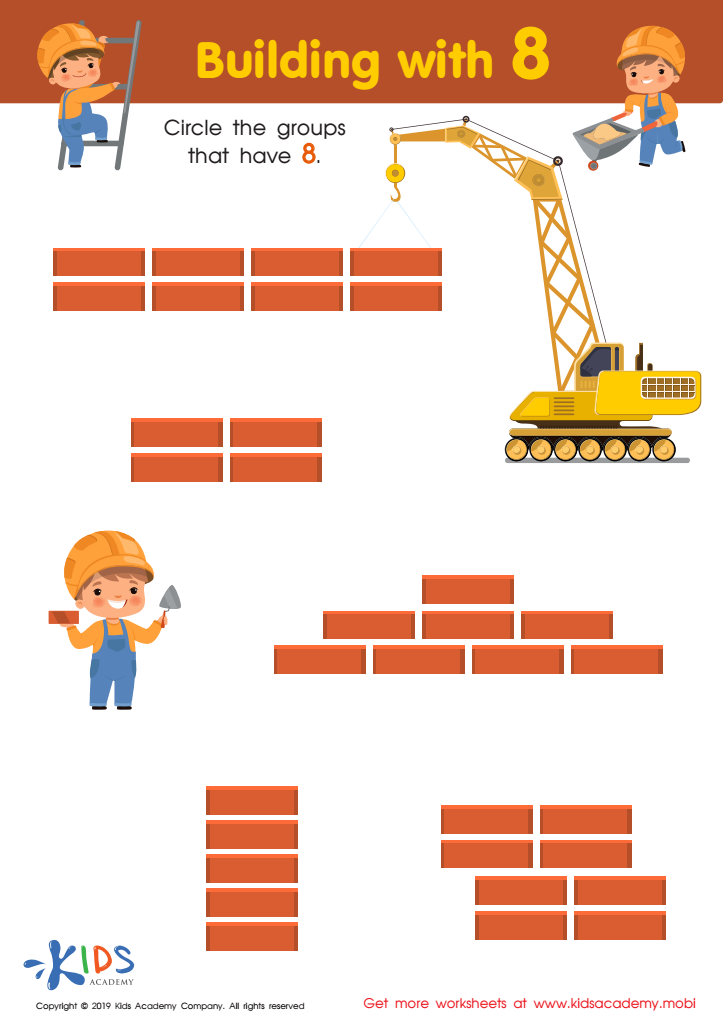
Building with 8 Worksheet
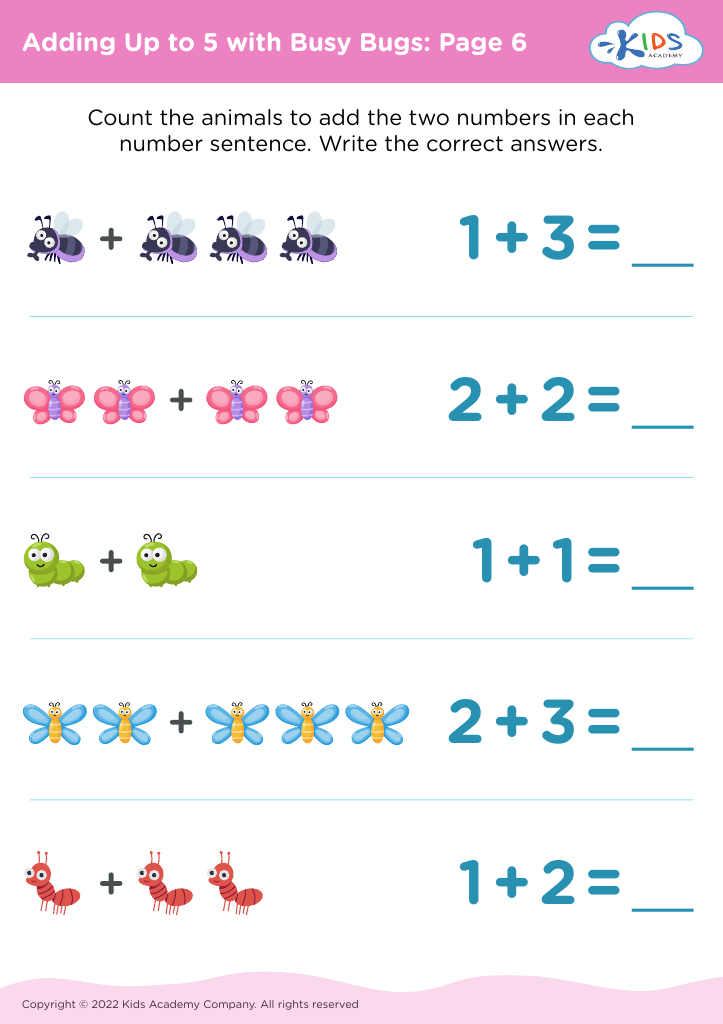
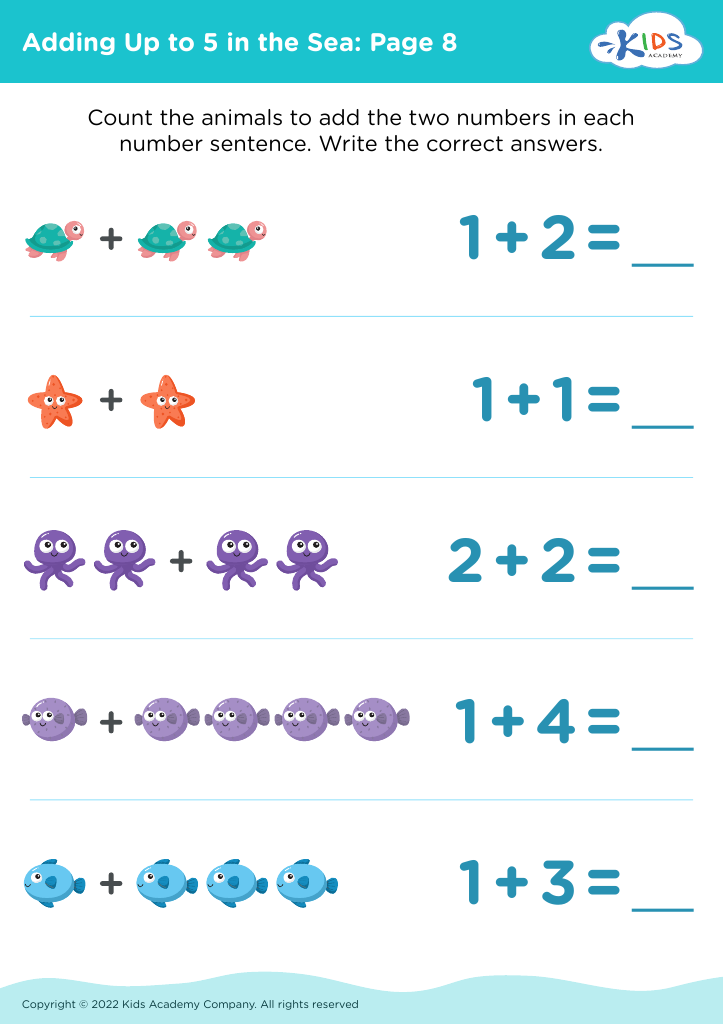








Understanding basic arithmetic concepts like addition and subtraction during preschool is foundational for children's overall mathematical development. Parents and teachers should prioritize these skills for several reasons. Firstly, early exposure to arithmetic nurtures critical thinking and problem-solving abilities. When children learn these basic operations, they start recognizing patterns, making connections, and predicting outcomes, which enhances cognitive development.
Additionally, grasping addition and subtraction at a young age builds confidence in children. For instance, when they can successfully count and manipulate small sets of objects, it boosts their self-esteem and eagerness to engage with more complex mathematical concepts later on. This early mastery provides a strong groundwork, making future learning experiences less intimidating and more rewarding.
Moreover, arithmetic skills are essential for everyday life. From a young age, children begin to see how math is used in real-world situations—like sharing toys or snacks, counting steps, or setting up simple board games. This practical application helps them understand the value and relevance of what they're learning.
Lastly, fostering early arithmetic skills promotes academic preparedness and achievement. Children who enter grade school with a solid understanding of basic math are better equipped to meet kindergarten and first-grade benchmarks. Thus, parents and teachers play a crucial role in laying a foundation for lifelong numeracy and a positive attitude towards learning math.