Understanding number value Preschool Addition & Subtraction Worksheets
3 filtered results
-
From - To
Explore our "Understanding Number Value" Preschool Addition & Subtraction Worksheets to help your child build a strong foundation in early math skills. These engaging worksheets are designed to introduce young learners to the concepts of addition and subtraction while enhancing their understanding of number values. Featuring colorful visuals and interactive activities, kids will enjoy practicing simple math problems that promote critical thinking! Ideal for preschool or pre-K classrooms and at-home learning, these resources provide a fun-filled way to reinforce math fluency and confidence in young learners. Encourage your child's love for numbers with our free, easy-to-use worksheets today!
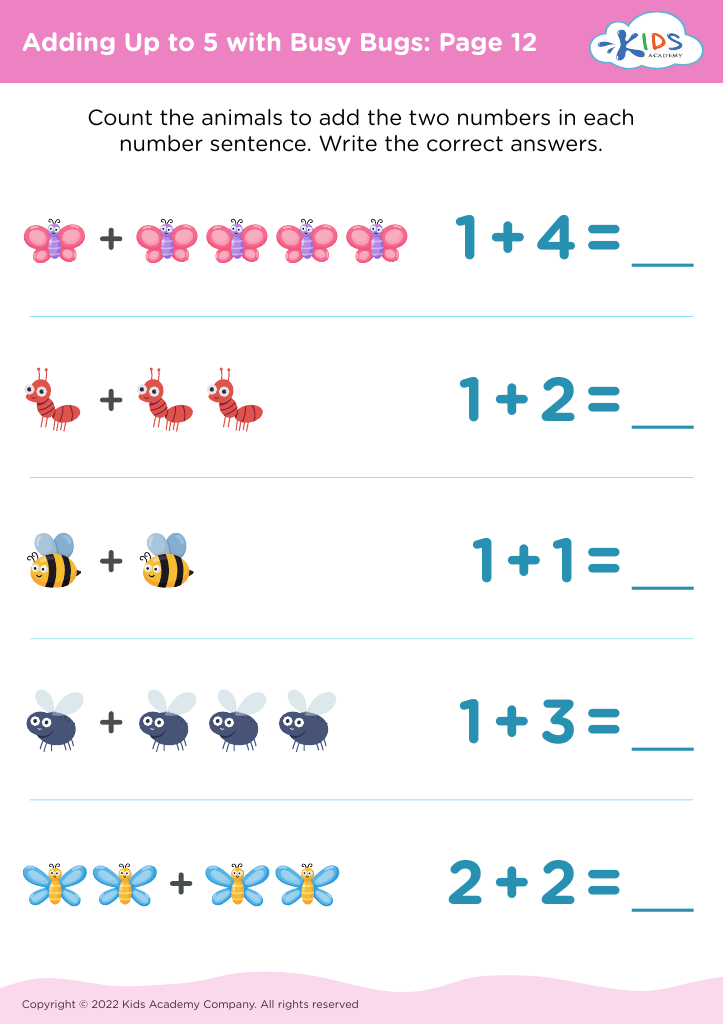
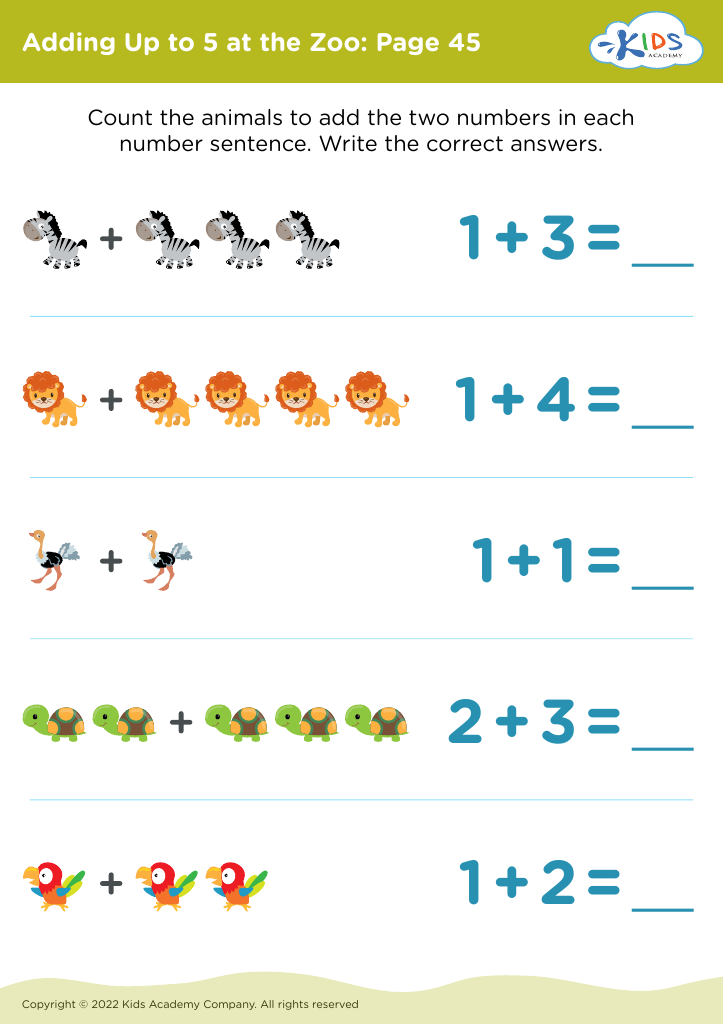
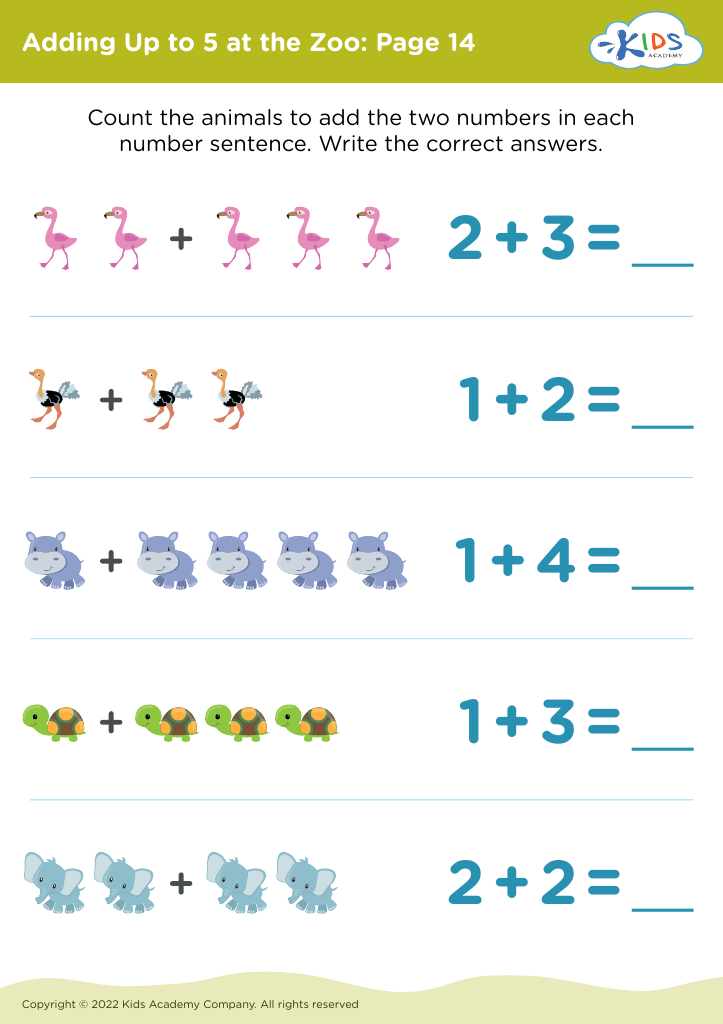








Understanding number value in preschool addition and subtraction is crucial for young learners as it lays a solid foundation for future mathematical success. When parents and teachers emphasize this concept, they foster a child’s cognitive development and critical thinking skills.
First, grasping number value helps children recognize the significance of numbers in their daily lives, making math relatable and engaging. For example, understanding that “3” is more than “2” enables children to compare quantities and develop problem-solving skills.
Additionally, mastering basic addition and subtraction at an early age boosts confidence. Children who are comfortable with these operations can tackle more complex mathematical concepts in later grades. This early confidence reduces math anxiety, promoting a lifelong positive attitude toward learning.
Moreover, as children experiment with numbers, they improve fine motor skills and hand-eye coordination through activities like counting objects or using manipulatives.
Lastly, early exposure to these concepts strengthens communication skills. Learners articulate their thought processes, learn to share ideas with peers, and develop collaborative skills.
In essence, focusing on number value in preschool addition and subtraction not only prepares children for future academic challenges but also supports their overall cognitive and social development.