Visual learning reinforcement Preschool Addition & Subtraction Worksheets
6 filtered results
-
From - To
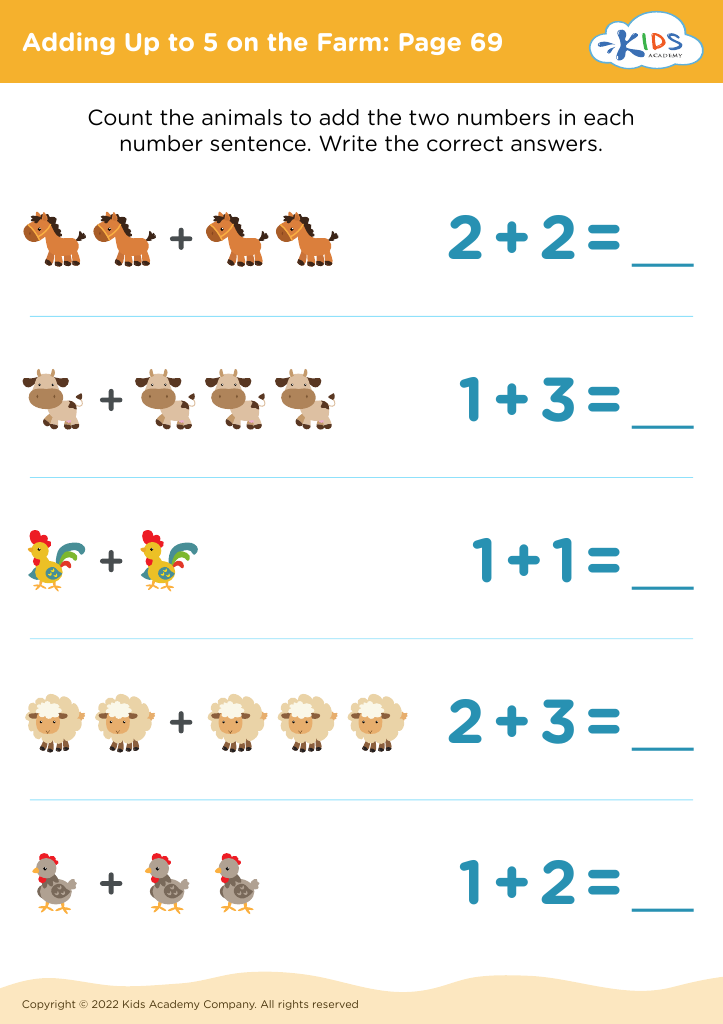
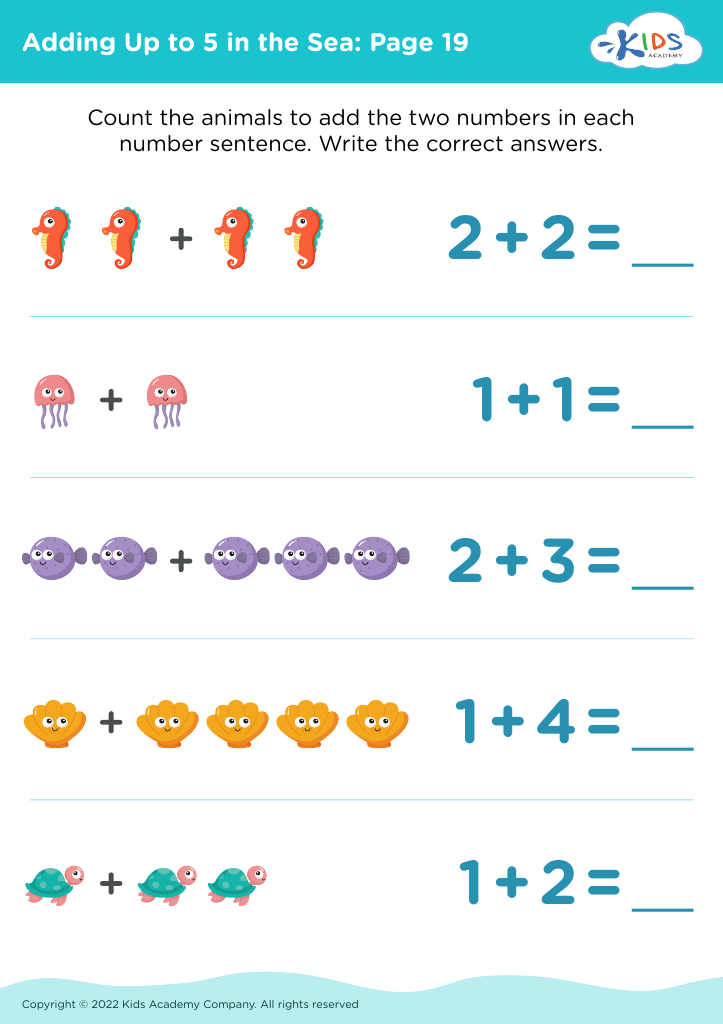
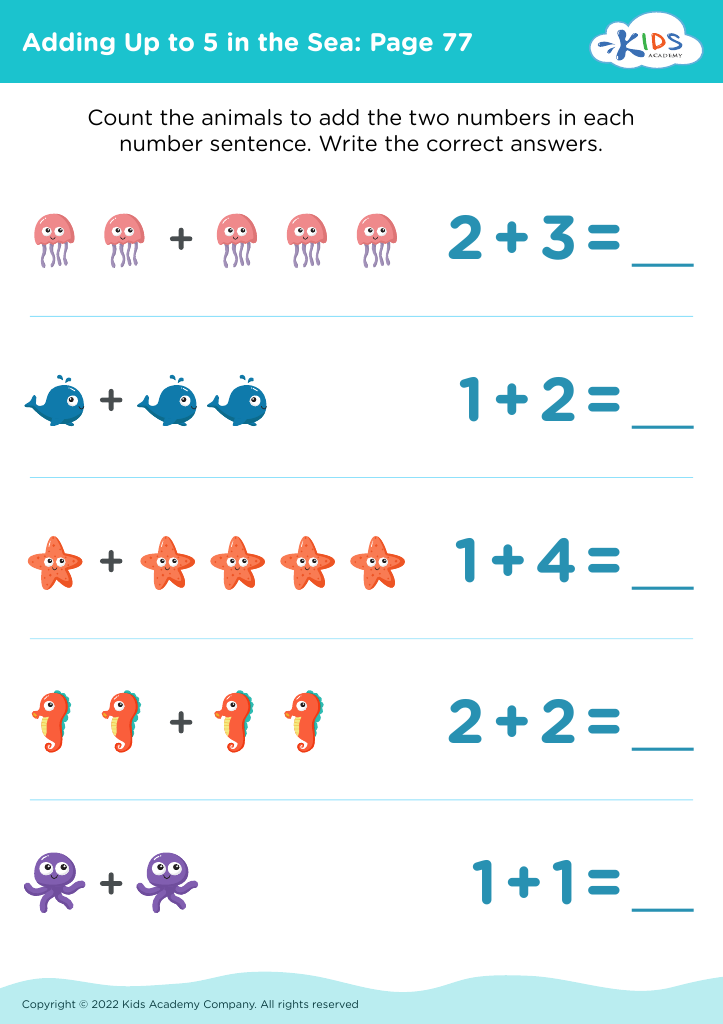
Boost your preschooler's math skills with our "Visual Learning Reinforcement Preschool Addition & Subtraction Worksheets." Specially designed by educational experts, these engaging worksheets use colorful visuals and interactive activities to help young learners grasp basic math concepts with ease. Ideal for ages 3-5, each worksheet builds a strong foundation in addition and subtraction, enhancing cognitive development and fostering a love for math. With eye-catching graphics and supportive instructions, these resources make learning a fun and successful experience for children. Perfect for both classroom and at-home use. Ignite your child's numerical understanding today!
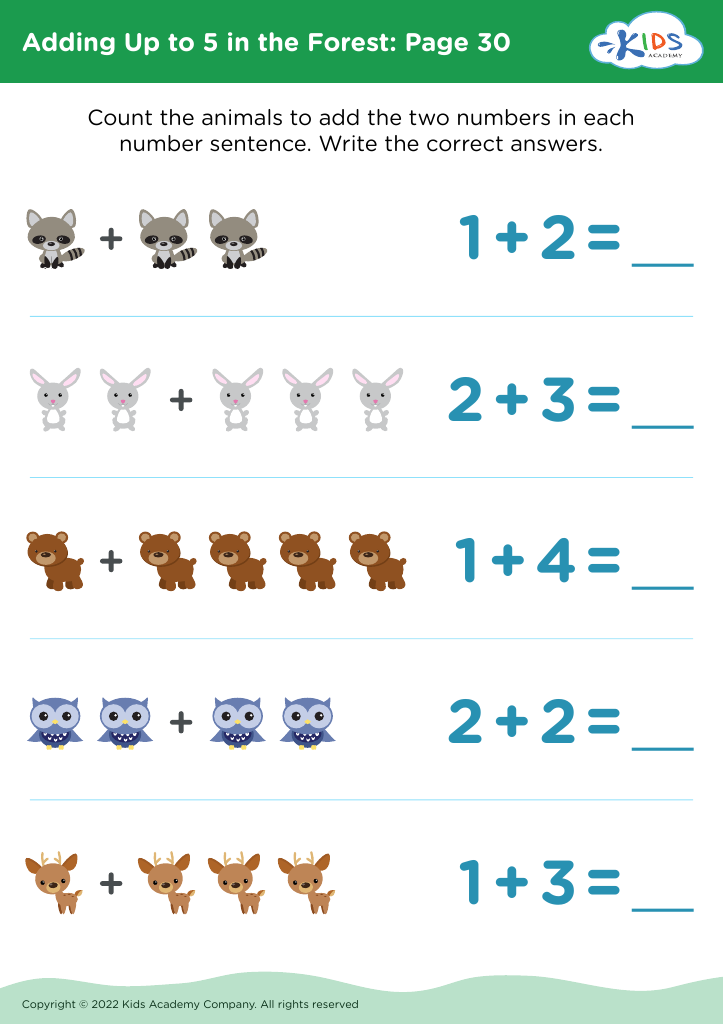
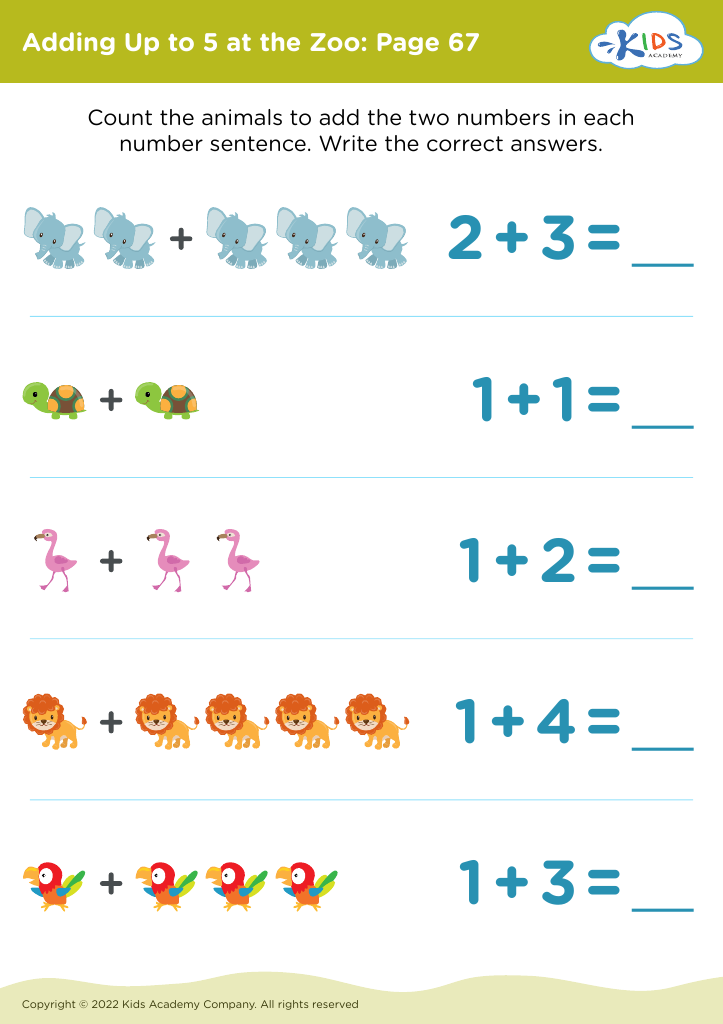
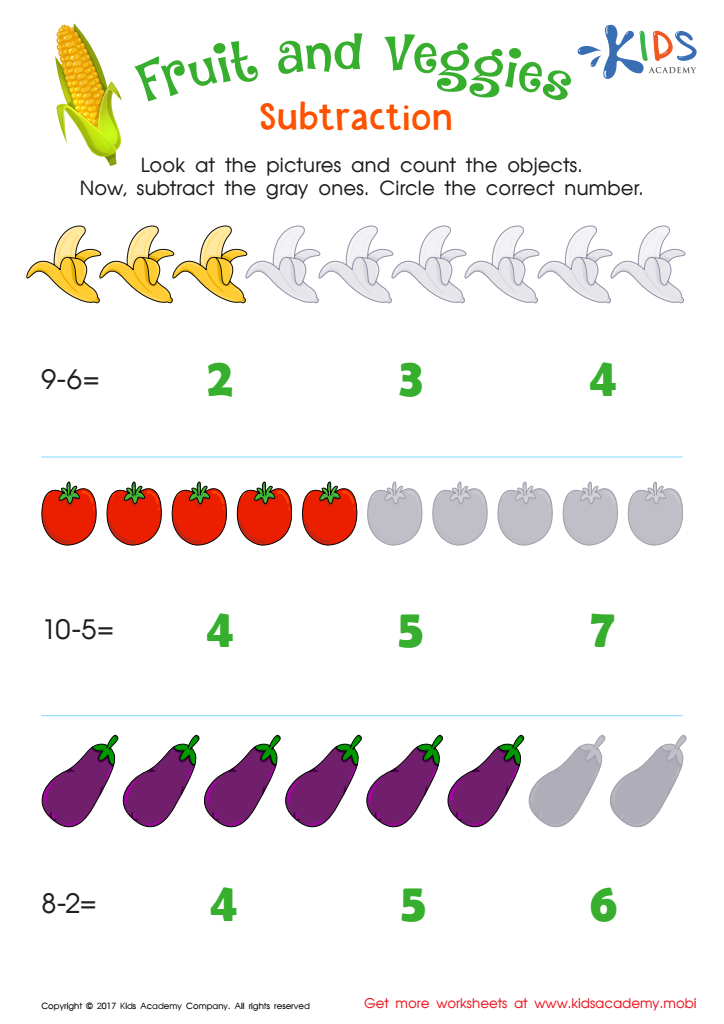
Fruit and Veggies Subtraction Worksheet
 Assign to My Students








Visual learning reinforcement in preschool addition and subtraction is crucial for a child’s early mathematical development, making the learning process more engaging and effective. Parents and teachers should care about this because it caters to young learners' cognitive and sensory development. Visual tools, like counting blocks, colorful charts, and interactive games, can transform abstract concepts into tangible, understandable components.
Children in preschool are often visual learners who grasp new information more readily when it is presented visually. Seeing concrete objects grouped together helps children understand the principles of addition and subtraction fundamentally rather than mechanically memorizing equations. This aids in the development of critical thinking and problem-solving skills from an early age.
Furthermore, visual learning incorporates multiple senses, helping children retain information longer and better. When these visual methods are consistently used, they create a strong foundation for future learning, contributing to higher academic achievement.
Incorporating visual aids also supports diverse learning needs and addresses potential learning difficulties early. This ensures no child is left behind due to struggles with traditional teaching methods. Overall, visual learning reinforcement empowers children with confidence and a solid understanding of basic math, fostering a positive attitude towards more complex math later on.