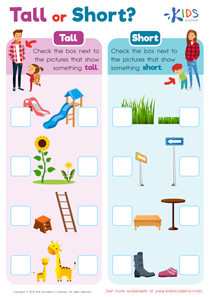
Spatial awareness Preschool Numbers Worksheets
3 filtered results
-
From - To
Enhance your preschooler's spatial awareness with our engaging Spatial Awareness Preschool Numbers Worksheets! Designed to make learning fun, these worksheets combine number recognition with essential spatial and visual skills. Children will explore concepts like shapes, positions, and dimensions through interactive activities that captivate their interest. Each worksheet is tailored to promote critical thinking and problem-solving, helping young learners understand how numbers relate to their surroundings. Perfect for at-home practice or classroom use, our worksheets encourage creativity and hands-on learning. Download our free resources today and watch your child's confidence soar as they master numbers and develop vital spatial awareness skills!
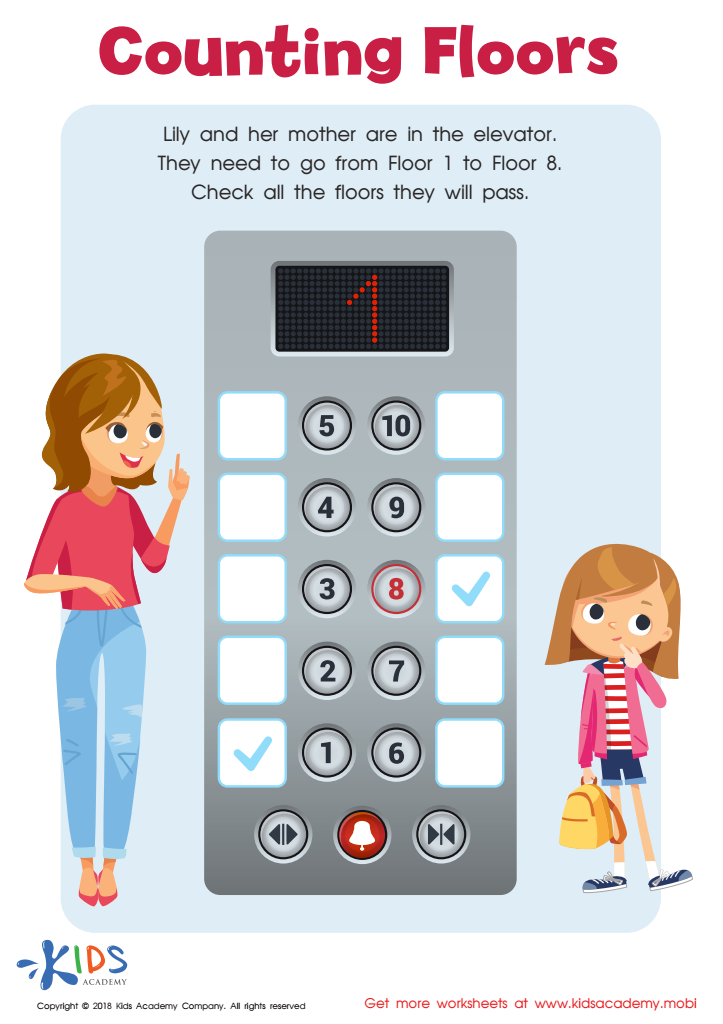
Counting Floors Worksheet
 Assign to My Students
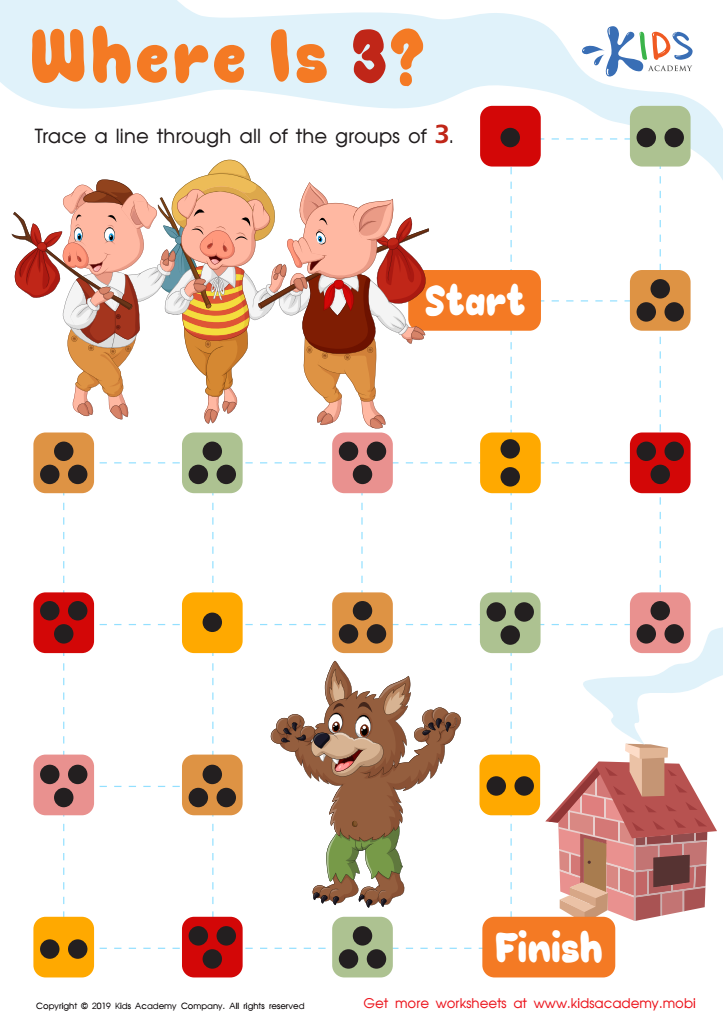
Where Is 3? Worksheet
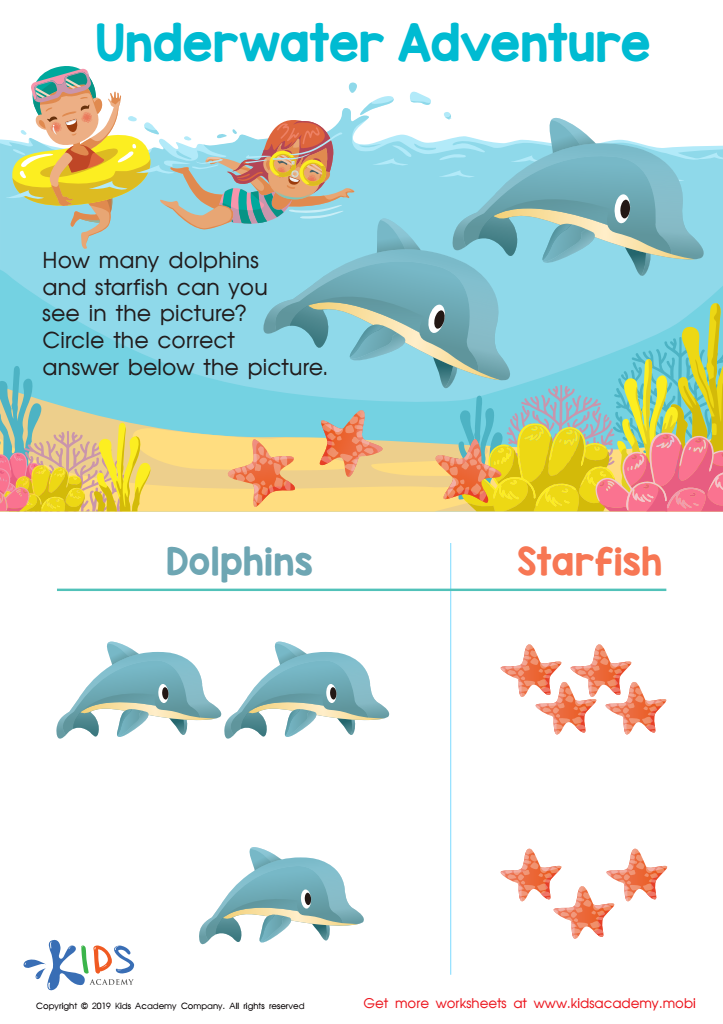
Underwater Adventure Worksheet








Spatial awareness is a crucial cognitive skill that refers to the ability to understand and interact with our environment. In preschoolers, cultivating spatial awareness is deeply intertwined with their understanding of numbers and mathematics. When teachers and parents prioritize spatial awareness, they help children develop essential skills such as counting, measuring, and recognizing shapes and patterns.
Understanding numbers is not just about memorizing; it involves visualizing quantities, comparing sizes, and grasping relationships between objects. Activities that enhance spatial awareness, like building blocks, puzzles, and outdoor play, allow preschoolers to explore these concepts in a hands-on manner, making learning more engaging and effective.
Furthermore, a strong foundation in spatial awareness can positively influence a child's future academic success, especially in subjects like geometry and mathematics. Children with developed spatial skills are often better equipped to tackle complex problem-solving scenarios in later grades.
Ultimately, when parents and teachers focus on nurturing these skills in preschool years, they are laying the groundwork for not only numeracy and cognitive development but also for critical thinking and creativity, both of which are essential for lifelong learning and adaptability in an increasingly complex world.