Color Identification Preschool Matching Worksheets
3 filtered results
-
From - To
Enhance your child's color recognition skills with our Color Identification Preschool Matching Worksheets! Perfect for young learners, these engaging and interactive worksheets feature vibrant images that help preschoolers identify and match colors. Designed by experts, our worksheets make learning fun and effective, supporting early development in a playful way. Ideal for home or classroom use, each activity fosters cognitive and fine motor skills while building a strong foundation for future learning. Explore our collection today to give your preschooler a colorful head start in their educational journey! Visit Kids Academy now to download and print for free.
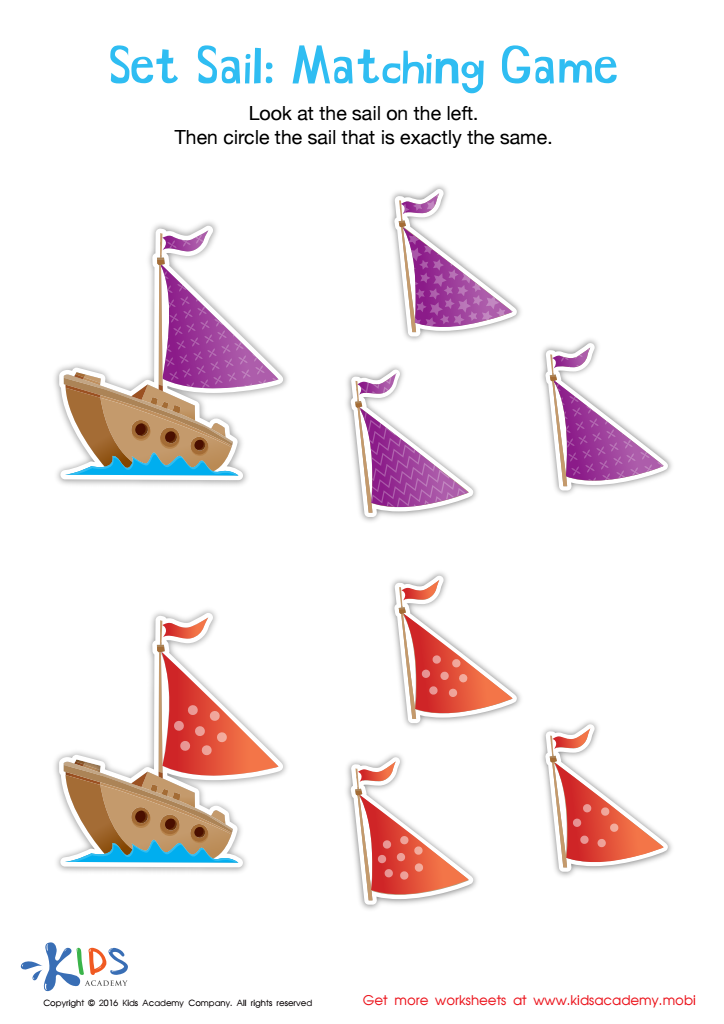
Set Sail Worksheet
 Assign to My Students
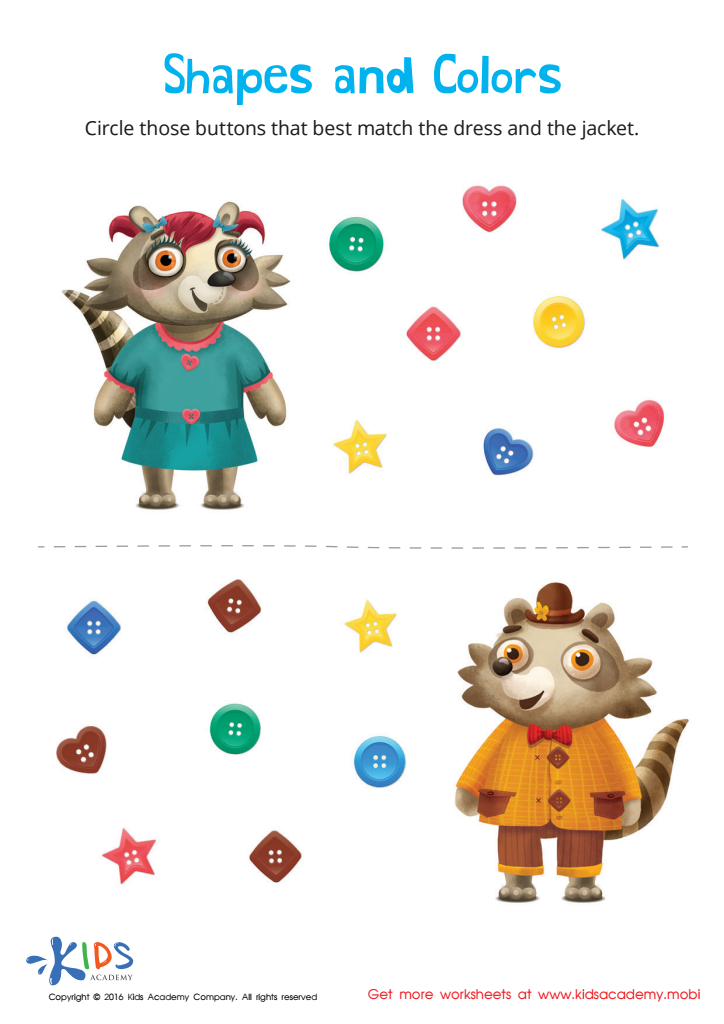
Matching: Shapes and Colors Worksheet








Color identification and matching are foundational skills that play a crucial role in early childhood development and learning. These skills are not just about recognizing and naming colors; they contribute to a child's cognitive, social, and emotional growth.
Firstly, learning to identify and match colors enhances a child's visual discrimination abilities. This is essential for more complex tasks such as reading and distinguishing shapes, patterns, and letters. Enhanced visual discrimination lays the groundwork for early literacy and numeracy.
Secondly, color recognition is directly linked to language development. When children learn the names of colors, they expand their vocabulary and language skills. Describing and classifying colors promote communication skills and concept learning.
Additionally, engaging in color identification and matching activities can foster fine motor skills. Picking, sorting, and placing colored items require hand-eye coordination and dexterity, which are vital for writing and other precision tasks.
Socially, color games encourage cooperative play and teamwork. Kids learn to take turns, share resources, and collaborate towards a common goal, all of which are important social interactions.
Emotionally, success in these activities can boost a child's confidence and self-esteem, making them eager to tackle new challenges.
Hence, parents and teachers should care about color identification and matching as they are integral to multiple areas of a child's all-round development.