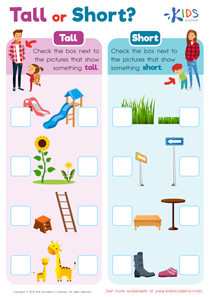
Counting practice Preschool Word Problems Worksheets
5 filtered results
-
From - To
Enhance your preschooler's math skills with our engaging Counting Practice Word Problems Worksheets! Designed for young learners, these worksheets provide a fun way to develop critical thinking and counting skills through relatable, real-world scenarios. Each activity encourages children to solve simple problems, fostering a love for math from an early age. With colorful illustrations and easy-to-understand language, these worksheets make learning enjoyable and accessible. Perfect for both classroom use and at-home practice, our Counting Practice Word Problems strengthen your child’s numerical literacy and problem-solving abilities. Download now to spark your child's enthusiasm for learning and set the foundation for future success!
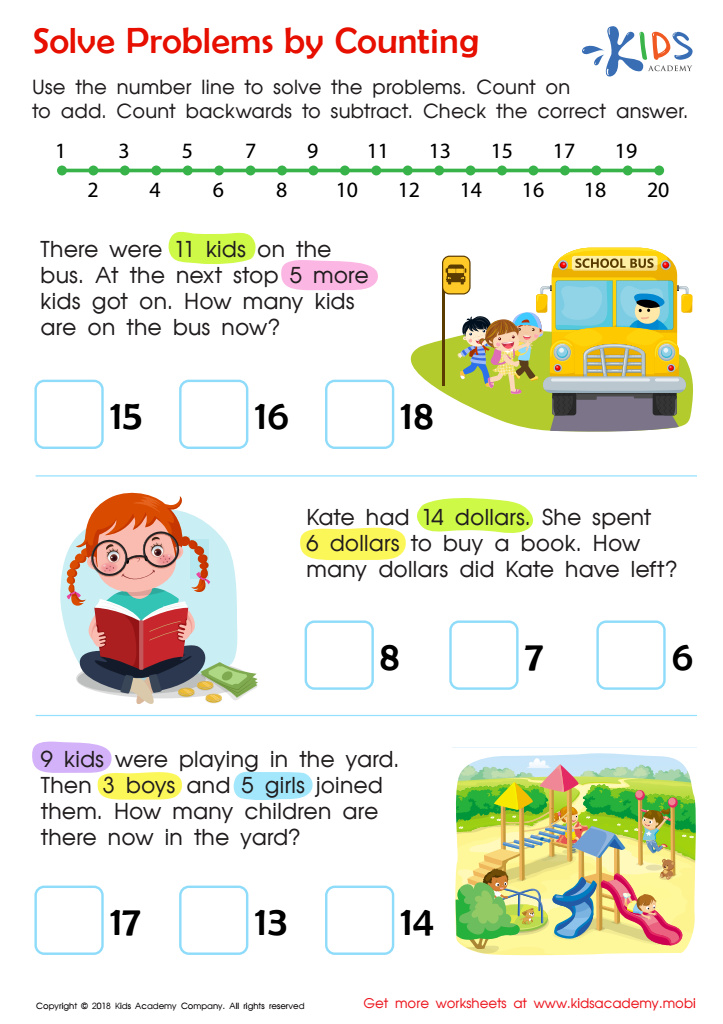
Solve Problems by Counting Worksheet
 Assign to My Students
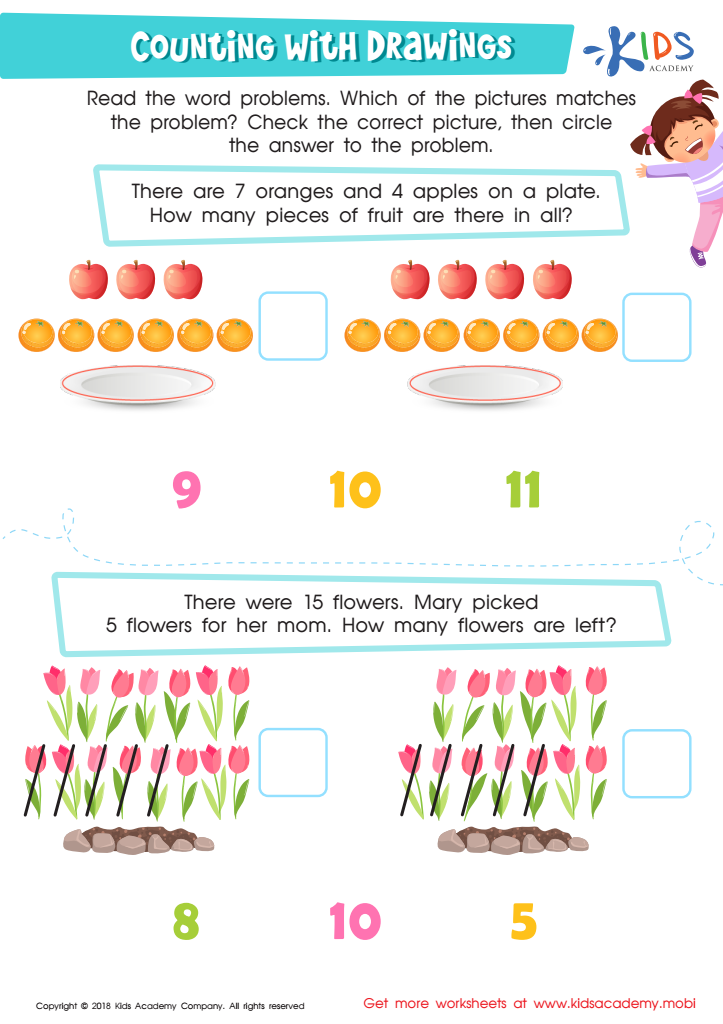
Counting with Drawings: Fruits & Chocolates Worksheet
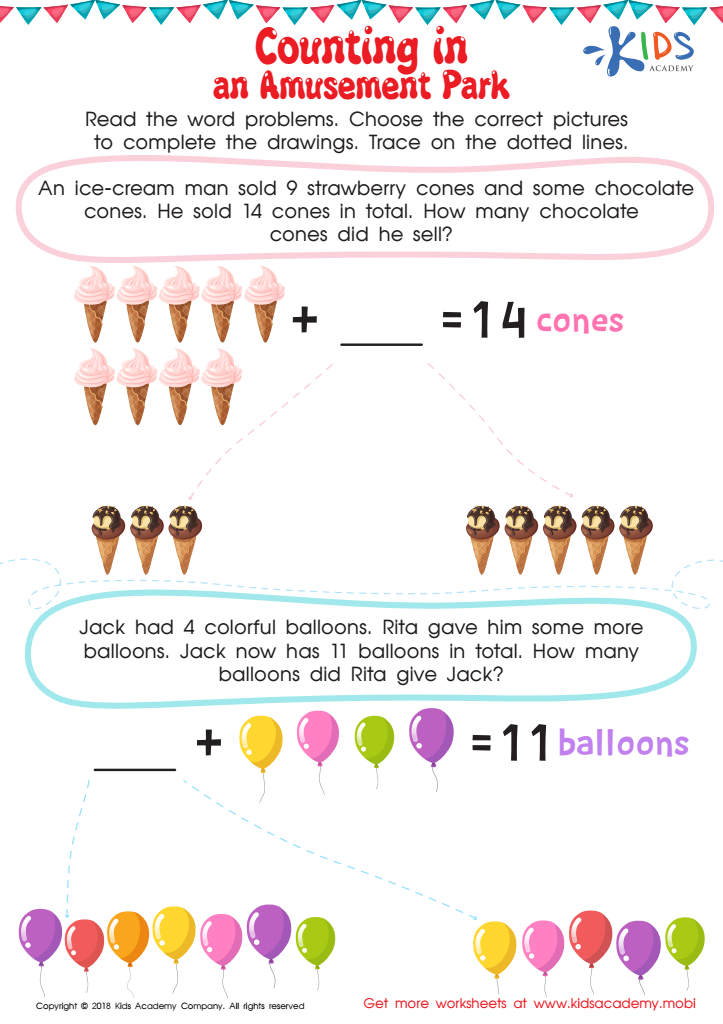
Counting in an Amusement Park Worksheet
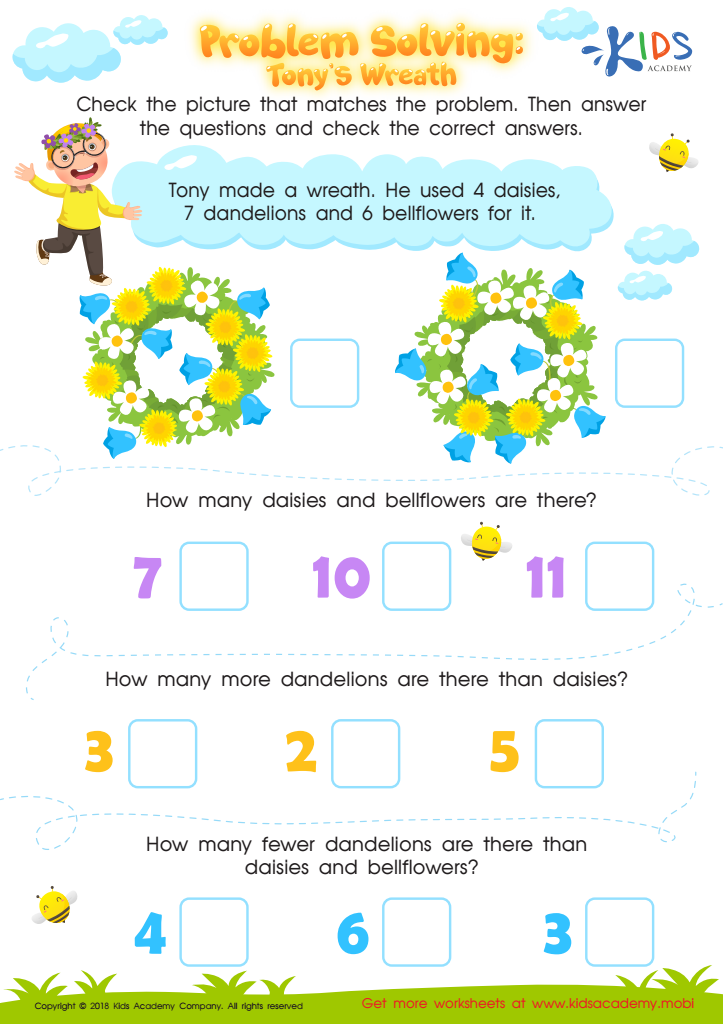
Problem Solving: Tony's Wreath Worksheet
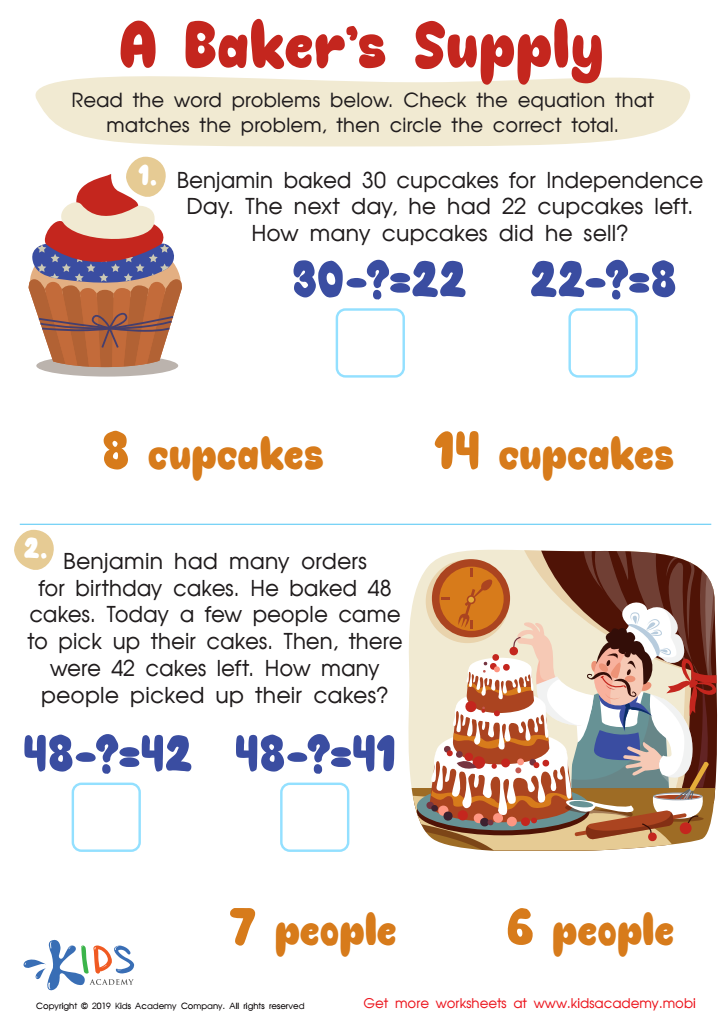
A Baker's Supply Worksheet








Counting practice through preschool word problems is essential for young learners as it lays the foundational skills necessary for future mathematical understanding and problem-solving abilities. Engaging children with word problems enhances their critical thinking and comprehension skills, as they must interpret language and context to find solutions.
This practice also fosters a love for learning by making math relatable and enjoyable. By incorporating real-life scenarios—like sharing snacks or counting toys—children can see the relevance of math through their everyday experiences. Moreover, word problems build language skills as they learn to express their thoughts and communicate their reasoning while working through problems.
For parents and teachers, supporting such practices at home and in the classroom is vital. It creates opportunities for interactive learning where adults can guide and encourage children, reinforcing both social and cognitive development. Word problems additionally cater to diverse learning styles, allowing children to manipulate objects, draw pictures, or verbally share their thought processes.
Overall, counting practice in the form of word problems helps nurture curious, confident learners who are better prepared for more complex mathematical concepts in the future. Investing time in these activities is an investment in children’s educational success.