Coloring skills Preschool Reading Worksheets
3 filtered results
-
From - To
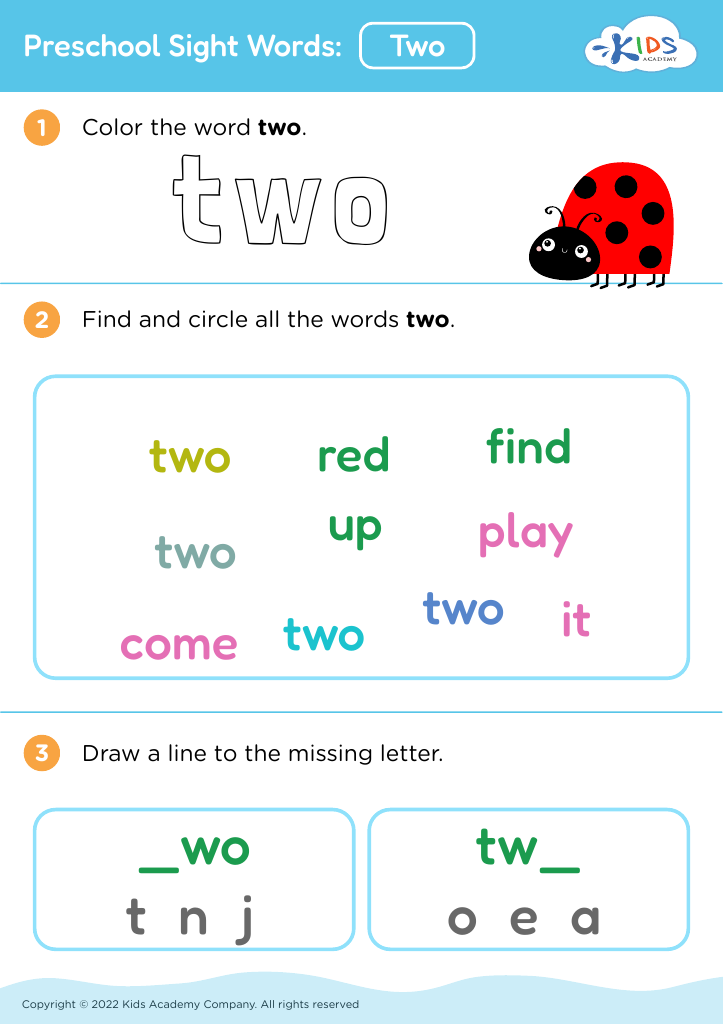
Discover a vibrant collection of Coloring Skills Preschool Reading Worksheets designed to engage young learners and enhance their reading readiness. These fun, interactive worksheets encourage preschoolers to practice important skills while exploring colors and creativity. Each worksheet integrates color exploration with early literacy components, such as letter recognition, vocabulary enhancement, and fine motor skill development. Perfect for home or classroom use, our worksheets make learning enjoyable and foster a love for reading. Dive into this colorful world of printable resources and watch your little ones thrive as they sharpen their coloring skills and build a strong foundation for reading success!
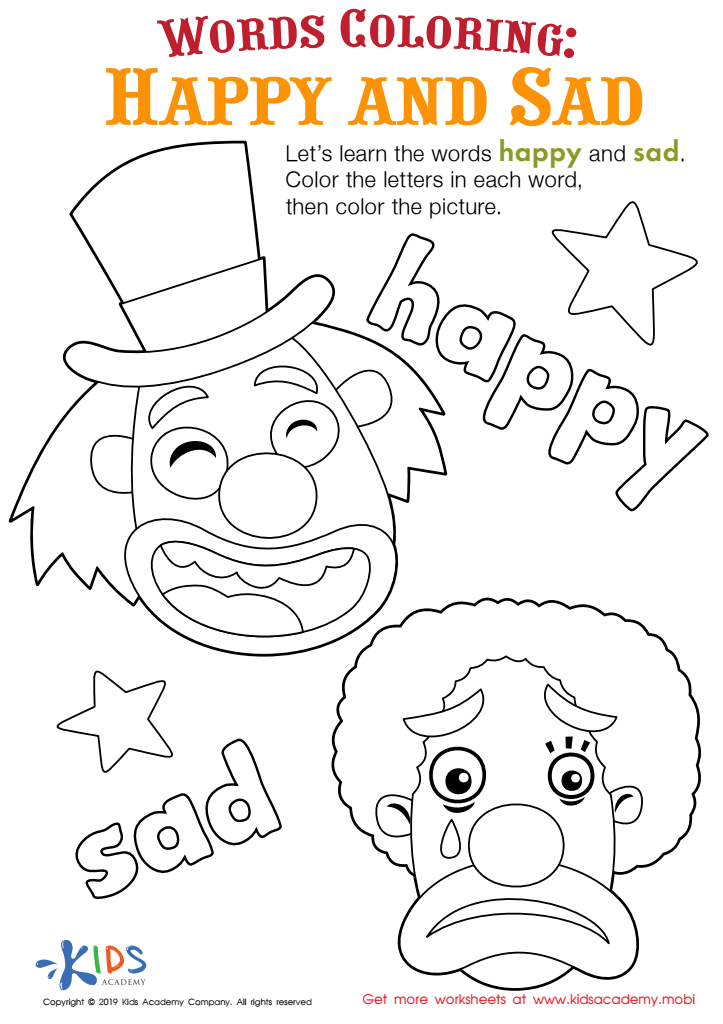
Happy and Sad Words Coloring Worksheet
 Assign to My Students
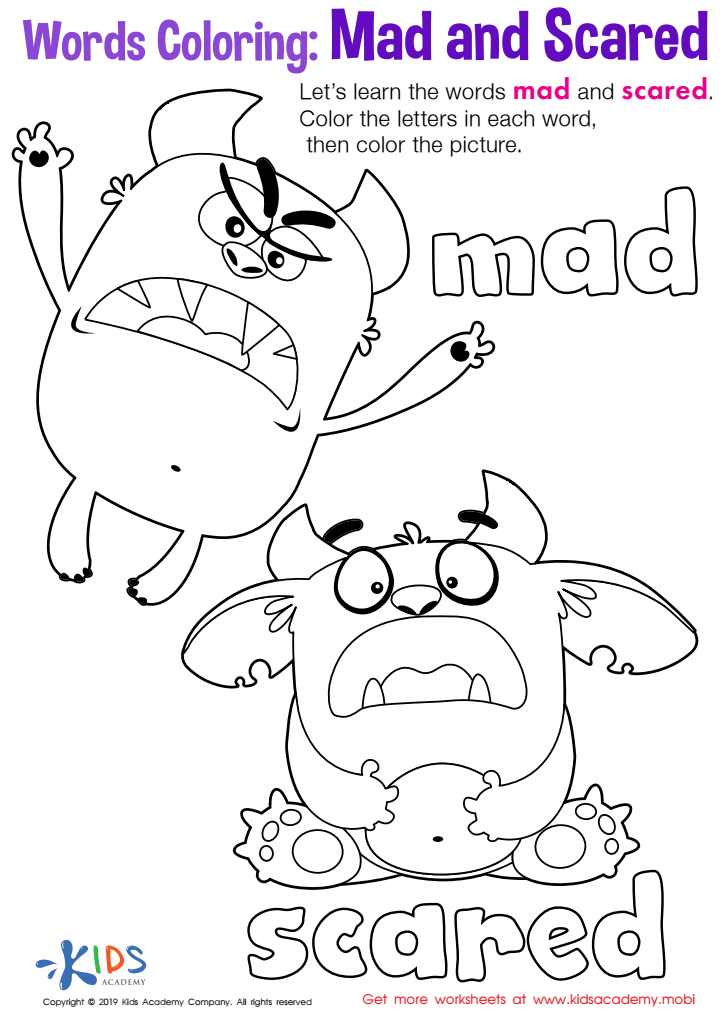
Mad and Scared Words Coloring Worksheet
Assign to My Students



.jpg)




Coloring skills play a crucial role in preschool reading development for several reasons, making it essential for parents and teachers to prioritize this activity. First, coloring enhances fine motor skills, which are vital for holding pencils and turning pages—skills directly linked to the ability to read and write. Improved dexterity allows children to better control writing instruments, laying the groundwork for effective handwriting and expressiveness in their literacy activities.
Second, coloring encourages creativity and self-expression, allowing children to visualize and interpret stories beyond the written word. This imaginative engagement fosters comprehension, as children are more likely to create connections between illustrations and text. Moreover, through coloring, children develop focus and patience, which are crucial traits for attentive reading.
Additionally, coloring activities often involve conversations about colors, shapes, and themes, enriching vocabulary and language skills. By discussing their artwork, children practice articulation and language use in context, feeding into both oral and written language acquisition.
Ultimately, fostering coloring skills is not merely a pastime; it is an integral part of children's learning journey that multiplies their chances of becoming proficient readers, making it imperative for parents and teachers to support and encourage these activities.