Logical Reasoning Preschool Reading Worksheets
6 filtered results
Difficulty Level
Grade
Age
-
From - To
Subject
Activity
Standards
Nurture your child's cognitive development with our "Logical Reasoning Preschool Reading Worksheets." Tailored for young learners, these engaging activities bolster critical thinking and problem-solving skills in a fun and interactive way. Kids will delight in solving puzzles, matching exercises, and identifying patterns, all crafted to foster logical thinking and enhance early reading comprehension. Our worksheets not only stimulate intellectual growth but also prepare preschoolers for future academic success. Ideal for at-home practice or classroom use, each worksheet is designed by education experts to support your child's journey towards becoming a confident and adept reader. Start your child's learning adventure today!
Favorites
With answer key
Interactive
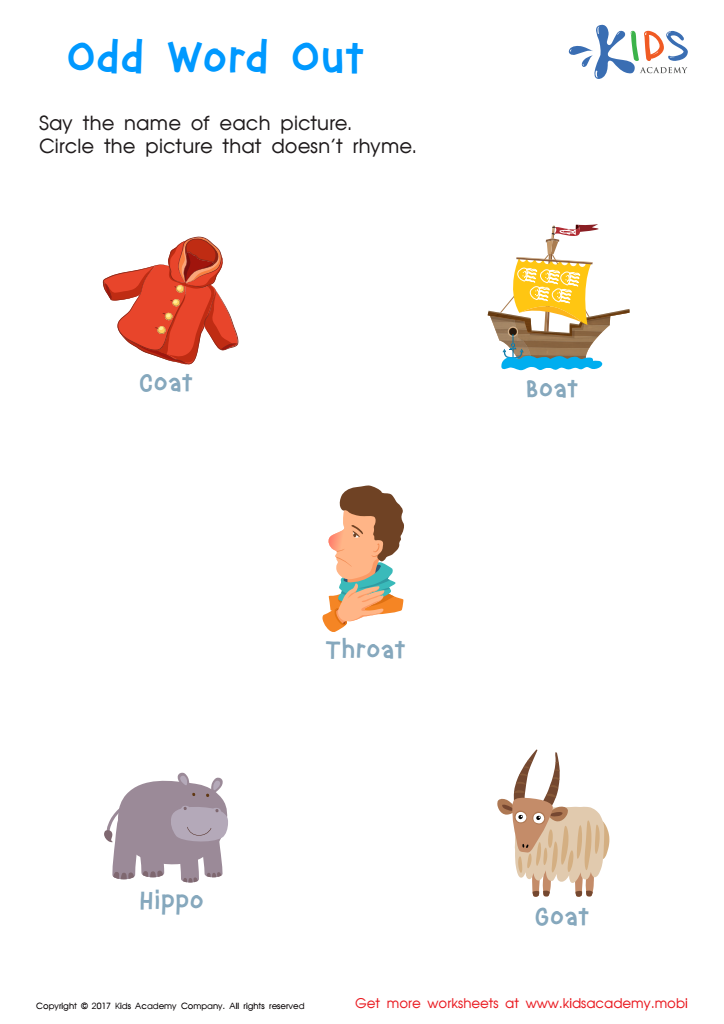
Odd Word Out Rhyming Worksheet
Try this worksheet to help your child practice finding odd words out and build their knowledge of rhyming words. They'll use problem solving and create their own words with enough room to write them down!
 Assign to My Students
Odd Word Out Rhyming Worksheet
Worksheet
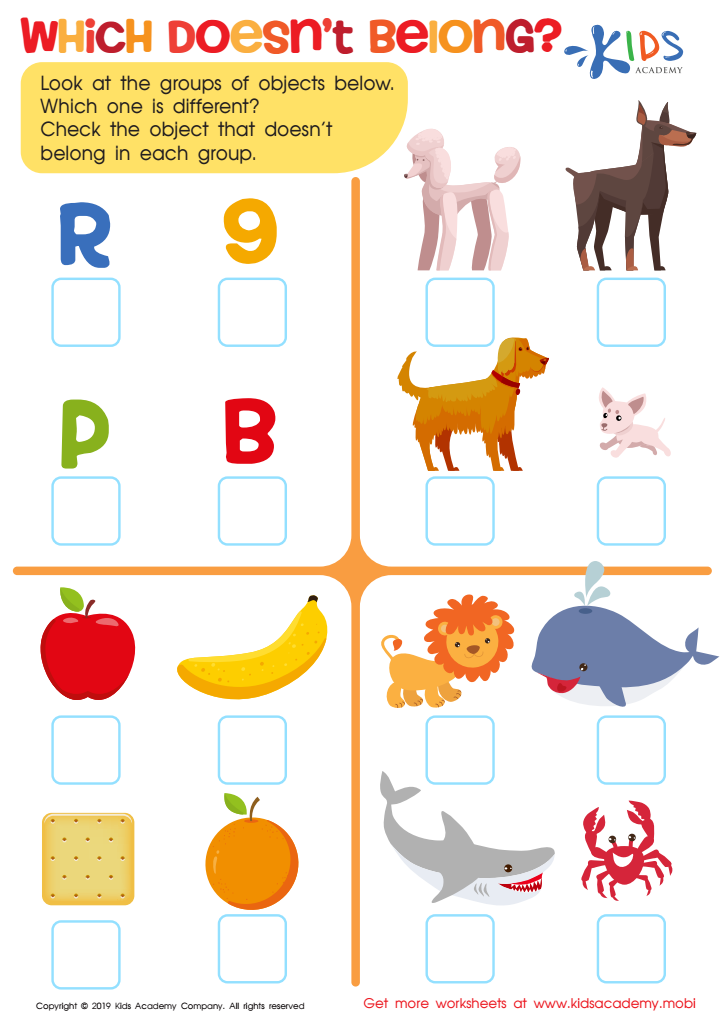
Which Doesn't Belong? Worksheet
This engaging worksheet helps preschoolers recognize similar and different attributes of common words, using brightly-colored pictures. They analyze the items in each category and check off what is different. For extra practice, have them explain their reasoning verbally! Sorting and classifying are important skills to learn.
Which Doesn't Belong? Worksheet
Worksheet
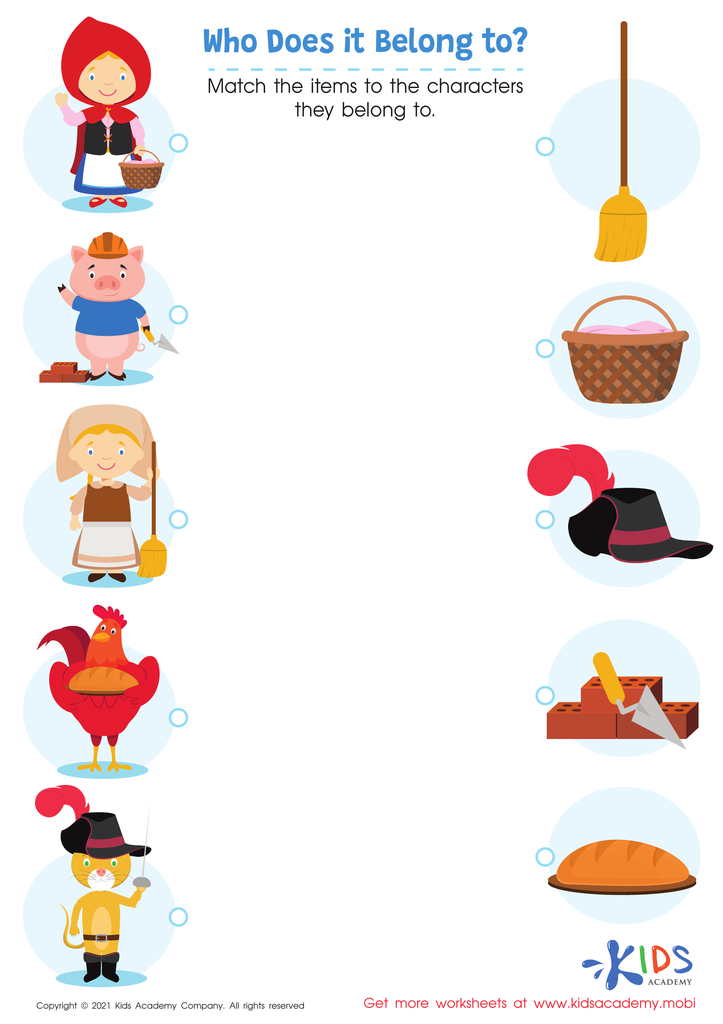
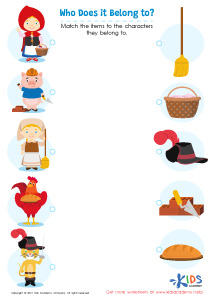
Who Does It Belong To? Worksheet
The summer season is here, and with it comes a variety of activities that can help you beat the heat. Going to the beach, taking a dip in the pool, and having a picnic in the park are some popular choices.
Summer is here! Beat the heat with activities like going to the beach, swimming, and picnicking in the park. Enjoy!
Who Does It Belong To? Worksheet
Worksheet
Join Kids Academy for Free
Who is primarily going to use this learning content?








Logical reasoning is foundational for cognitive development, and nurturing it from a young age can create long-lasting benefits. Parents and teachers who emphasize logical reasoning in preschool reading effectively equip children with problem-solving skills that are transferable to various aspects of life and academic pursuits.
Providing children with opportunities to engage in logical reasoning helps them understand the sequence, cause and effect, and relational thinking. When children learn to recognize patterns, make predictions, and draw conclusions in the context of a story, they are developing critical thinking skills that form the cornerstone of future learning in math, science, and other disciplines.
Moreover, fostering logical reasoning in reading encourages active engagement. It transform the reading process into an interactive dialogue where children are not just passive listeners but also active thinkers. This engagement promotes a deeper comprehension of text, as children connect story elements, infer meanings, and ask questions. Critical inquiry prepared in a supportive environment propels children towards a lifelong love for learning.
Lastly, emphasizing logical reasoning in preschool sets a positive educational trajectory. Children who have developed strong reasoning skills tend to perform better academically, handle challenges more adeptly, and exhibit greater creativity. By investing in this area, parents and teachers are investing in the child's overall intellectual growth and the critical capacity for thoughtful, logical decision-making.