Vocabulary development Preschool Reading Worksheets
3 filtered results
Difficulty Level
Grade
Age
-
From - To
Subject
Activity
Standards
Enhance your preschooler's vocabulary with our engaging reading worksheets designed for vocabulary development! These printable resources foster language skills through fun activities tailored to young learners. Each worksheet features vibrant illustrations and interactive exercises that encourage children to identify, match, and use new words in context. By exploring various themes and topics, young minds will expand their word bank and become confident communicators. Perfect for at-home learning or to supplement classroom instruction, our vocabulary development worksheets make reading enjoyable. Dive into the world of words with Kids Academy and watch your child's language skills flourish today!
Favorites
With answer key
Interactive
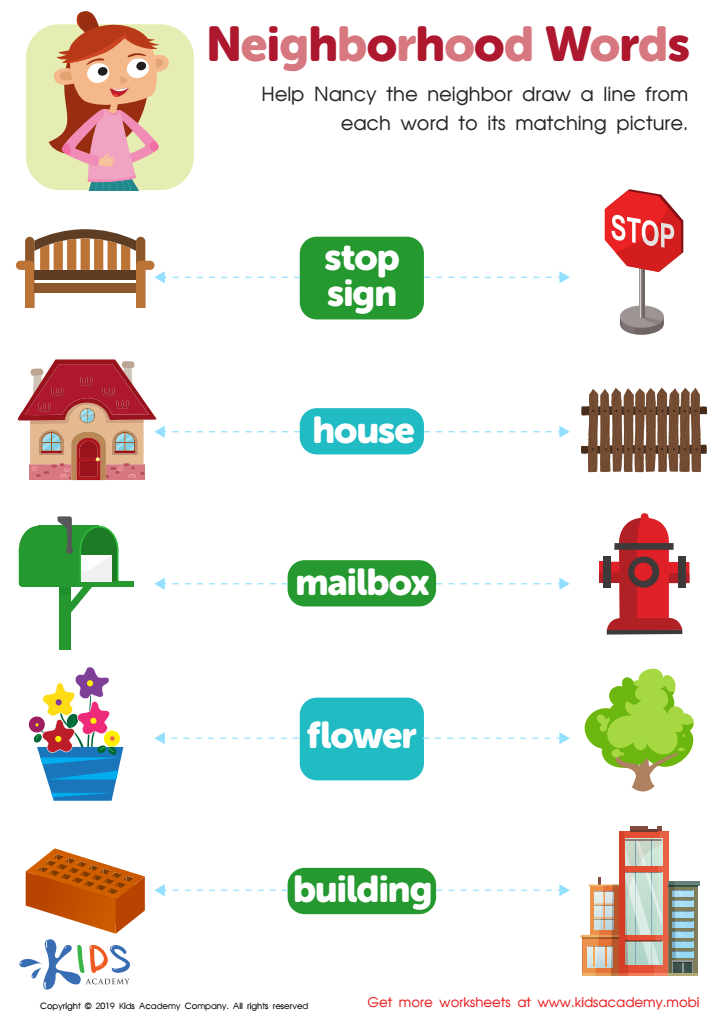
Neighborhood Words Worksheet
Help preschoolers develop life skills and familiarize them with words and concepts with this worksheet! It'll also boost their fine motor skills as they trace lines to match pictures with the words. They'll learn new words and feel more confident in their reading.
 Assign to My Students
Neighborhood Words Worksheet
Worksheet
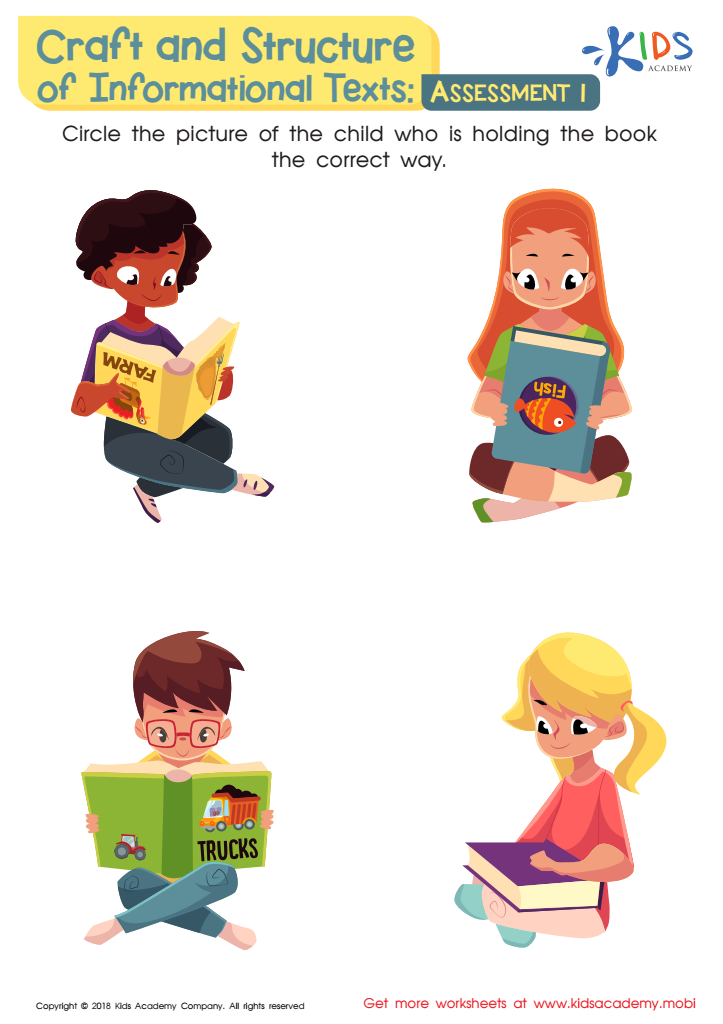
Craft and Structure of Informational Texts: Assessment 1 Worksheet
Young children need to know how to hold books correctly when they start reading. This assessment worksheet helps them show they know what to do. They'll look at the pictures and circle the child who is holding the book correctly. It's a great way to tell they are well on their way to becoming lifetime readers!
Craft and Structure of Informational Texts: Assessment 1 Worksheet
Worksheet
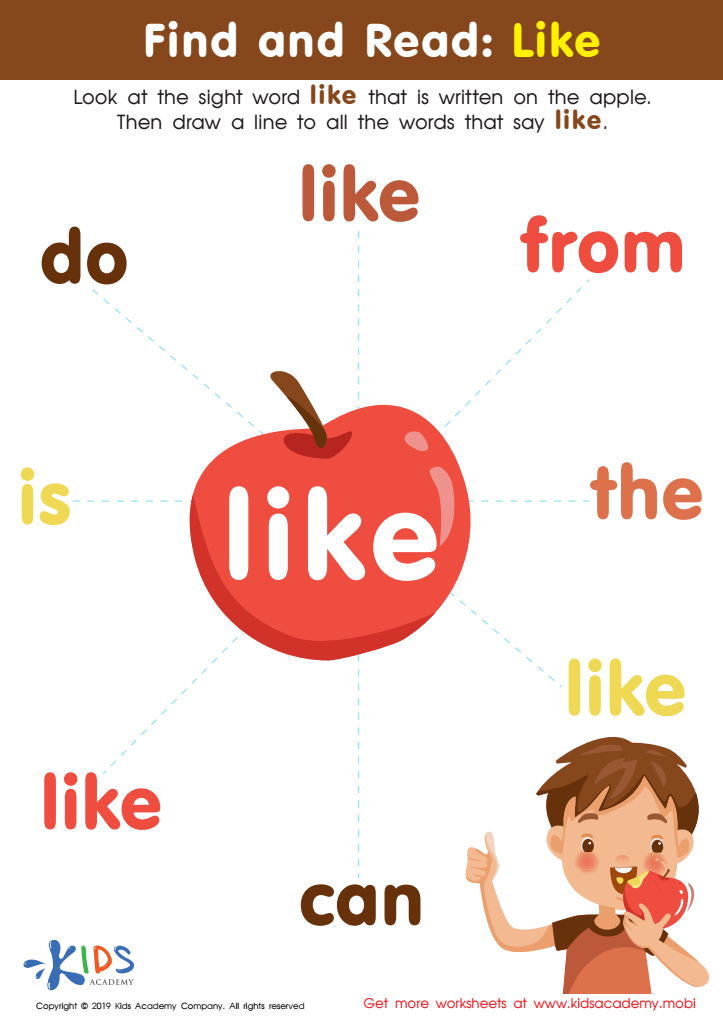
Find and Read: Like Worksheet
Reading starts with learning sight words. This free PDF worksheet helps kids learn the word "like" in various ways. It encourages their visual discrimination skills with its colorful design and traceable lines. It's a great way to help them recognize and differentiate this common sight word from other words that look similar.
Find and Read: Like Worksheet
Worksheet
Join Kids Academy for Free
Who is primarily going to use this learning content?







Vocabulary development in preschool is crucial for children's overall language and cognitive growth. During the early years, children start to build the foundation for effective communication, critical thinking, and literacy skills, making it essential for parents and teachers to prioritize vocabulary acquisition.
First, a strong vocabulary enhances reading comprehension. When children understand more words, they can grasp the meaning of texts, which allows them to enjoy reading and fosters a lifelong love for books. This is particularly significant as they transition to more complex material in later grades.
Second, vocabulary contributes to academic success. Children who enter school with a robust vocabulary are often better prepared for learning, as they can express their thoughts clearly and engage in discussions. This skill can lead to higher performance in subjects beyond language arts.
Moreover, vocabulary development encourages social skills. Children with rich vocabularies can communicate their feelings, needs, and ideas more effectively, promoting confidence in social interactions.
Ultimately, investing time in vocabulary development offers lasting benefits, ensuring children are equipped with essential skills for learning, socialization, and future academic endeavors. Both parents and teachers play vital roles in nurturing this growth through interactive reading, conversations, and play.