Categorization skills Preschool World Around Us Worksheets
3 filtered results
Difficulty Level
Grade
Age
-
From - To
Subject
Activity
Standards
Enhance your preschooler's understanding of the world with our engaging Categorization Skills Worksheets! Designed specifically for young learners, these worksheets encourage children to classify and sort various objects, animals, and people based on attributes such as size, color, and type. Developing categorization skills not only boosts critical thinking and problem-solving abilities but also fosters a deeper connection with their surroundings. Our interactive activities make learning fun and easy, ensuring your child stays engaged while mastering these essential skills. Explore our curated collection to support your child's growth and prepare them for future learning adventures. Start their educational journey today!
Favorites
With answer key
Interactive
 Assign to My Students
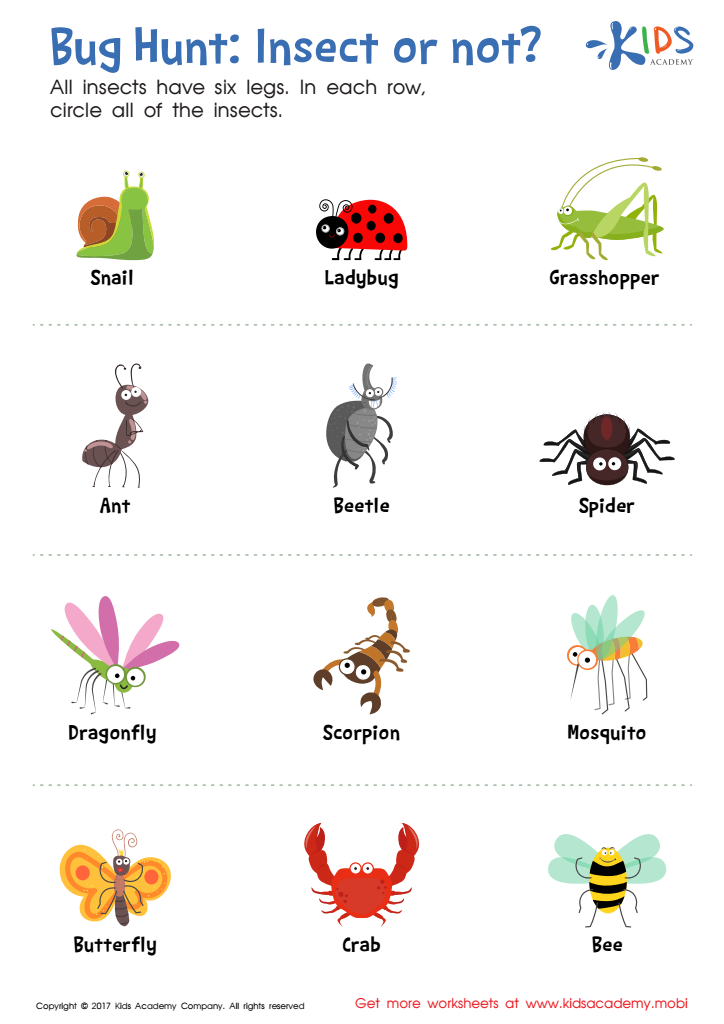
Insect or Not? Worksheet
Worksheet
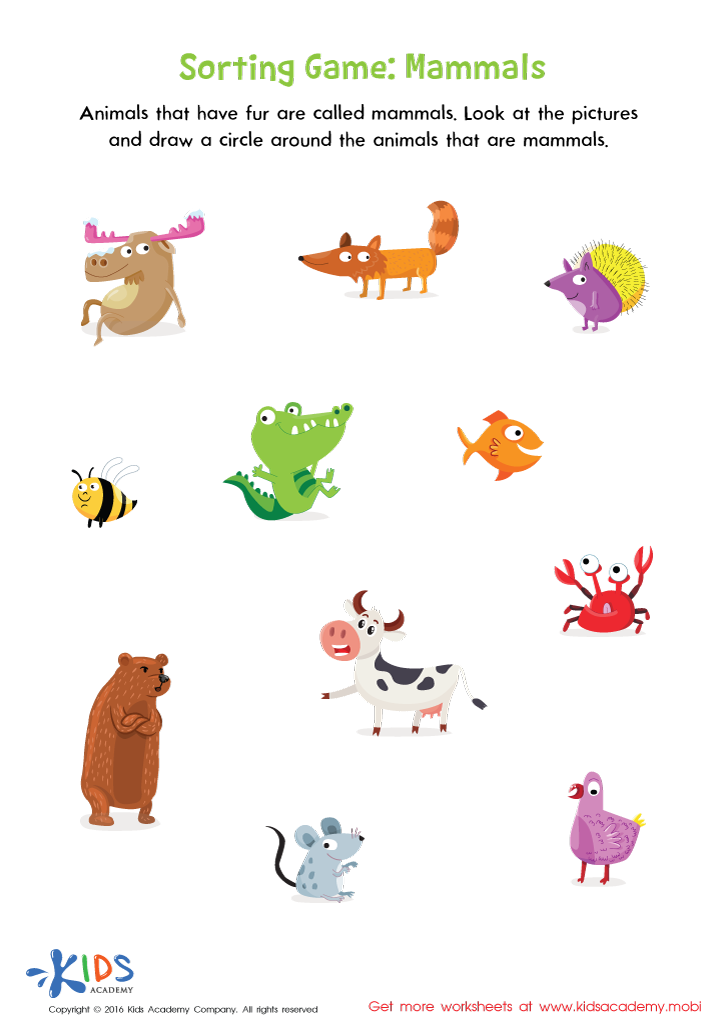
Mammals Sorting Worksheet
They'll practice sorting animals and learn their features with this fun worksheet.
Kids can test their scientific knowledge with this fun worksheet! They'll view pictures of animals, identify mammals based on their fur, and practice sorting them. This colorful worksheet is a great way for kids to learn about the differences between mammals and other animals.
Mammals Sorting Worksheet
Worksheet
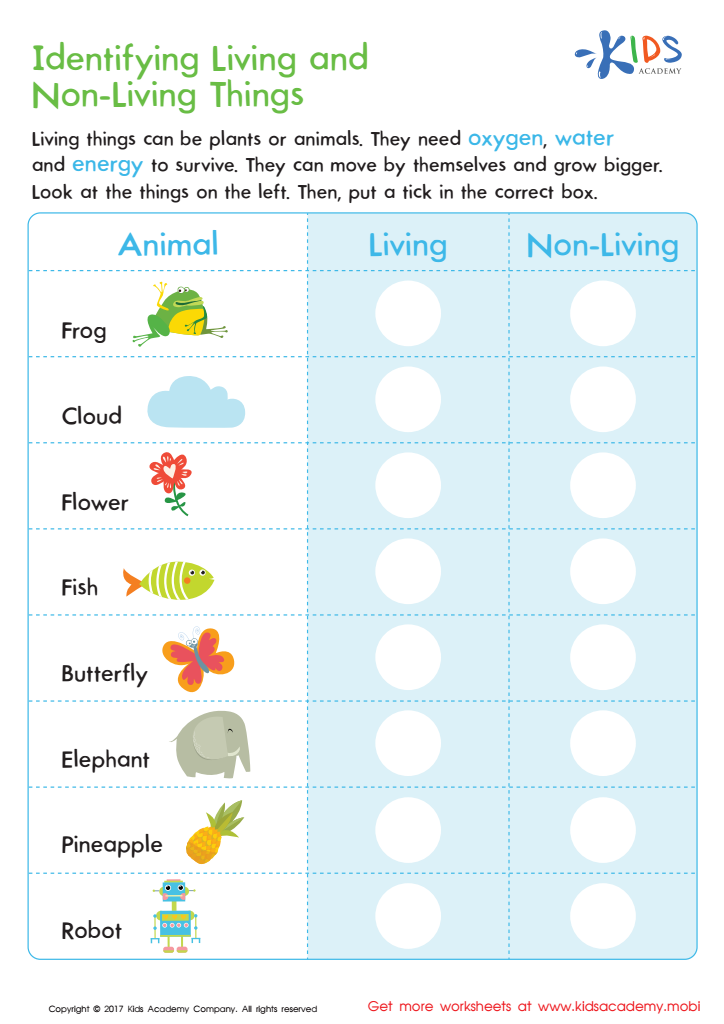
Identifying Living or Non–living Worksheet
Help your child learn to sort and categorize in a new way! Teach them to classify things as living or non-living using this worksheet. It's the perfect way to build their scientific understanding, and to have some learning fun! Print this worksheet and watch them discover the world of science!
Identifying Living or Non–living Worksheet
Worksheet
Join Kids Academy for Free
Who is primarily going to use this learning content?







Categorization skills are crucial in preschool as they lay the foundation for children's cognitive development. When children engage in categorization—sorting objects or ideas based on shared characteristics—they enhance their ability to recognize patterns, similarities, and differences. This critical thinking ability is essential for problem-solving and making connections in various contexts.
Parents and teachers should care about categorization skills because they directly affect a child’s everyday interactions with the world. For example, children use categorization to group animals, identify colors, or sort toys, which helps them understand their environment. Mastering these skills contributes to language development, as categorizing enhances vocabulary by exposing children to new words associated with different categories.
Additionally, categorization fosters social and emotional learning. When children learn to categorize their feelings or behavior, they become more self-aware and can better communicate their emotions. Encouraging categorization in playful ways enhances engagement and motivation in young learners, making education both enjoyable and impactful.
By nurturing categorization skills, parents and teachers empower children with essential tools to explore, understand, and navigate the world around them, setting a strong basis for lifelong learning.