
Animal knowledge Reading Non-Fiction Worksheets
3 filtered results
Difficulty Level
Grade
Age
-
From - To
Subject
Activity
Standards
Discover engaging Animal Knowledge Reading Non-Fiction Worksheets designed to enhance your child's reading comprehension and critical thinking skills. Perfect for early grade students, these worksheets focus on various fascinating animals and their unique habitats, behaviors, and characteristics. Each worksheet features age-appropriate texts paired with interactive exercises that stimulate curiosity and learning. With a blend of fun facts and challenging questions, kids will develop a deeper understanding of the animal kingdom while improving their literacy skills. Explore the wonders of nature with your students, fostering a love for reading and learning through our captivating and educational materials. Ideal for classroom and home use!
Favorites
With answer key
Interactive
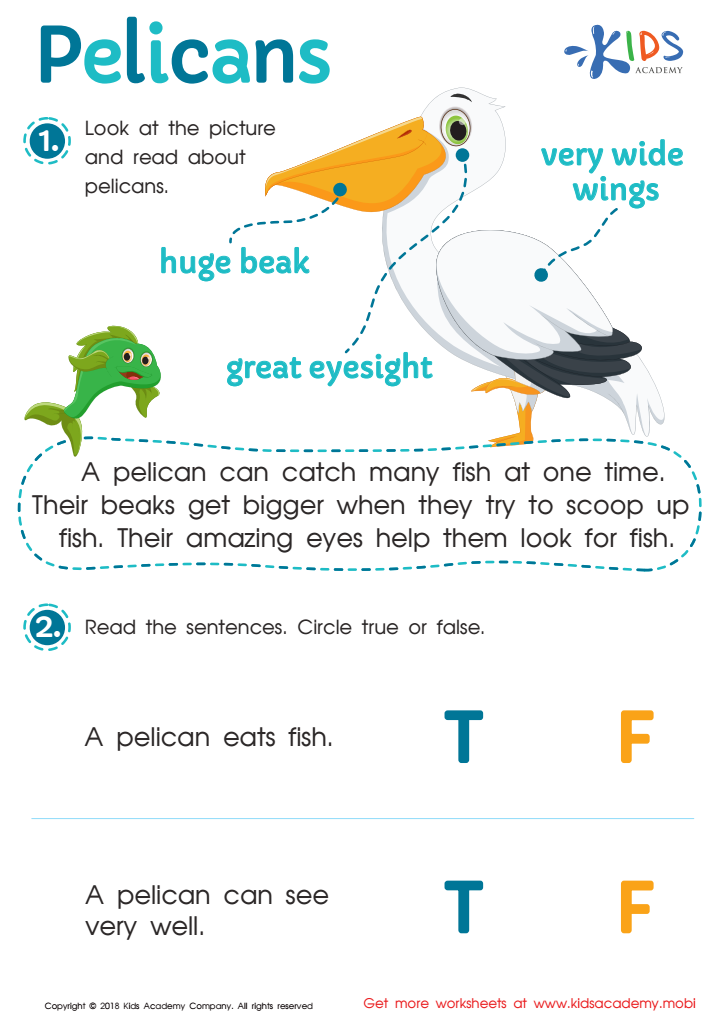
Pelicans Worksheet
This printable worksheet will help your child learn to read and analyze informational passages. It's fun and educational, featuring an animal science topic about pelicans. Read the passage and view the graph, then answer the questions by indicating if the statements are true or false.
 Assign to My Students
Pelicans Worksheet
Worksheet
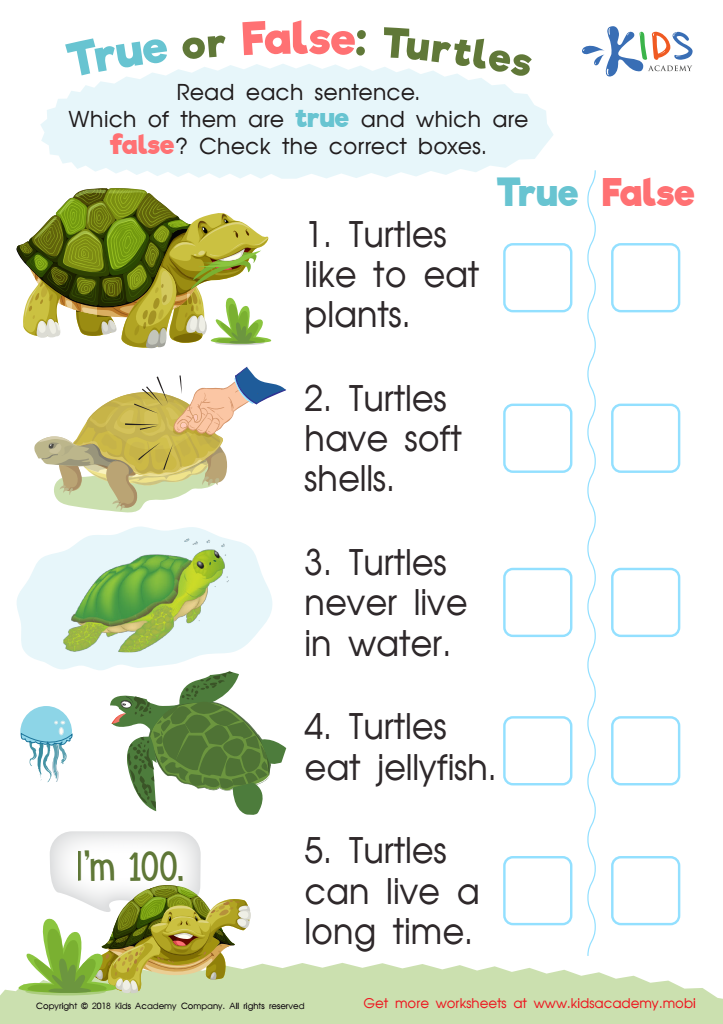
True or False: Turtles Worksheet
Print this free downloadable worksheet to strengthen your child's reading comprehension. Assist them to read each sentence and recall facts about turtles. Check true or false for each statement to verify their knowledge. Perfect for early learners!
True or False: Turtles Worksheet
Worksheet
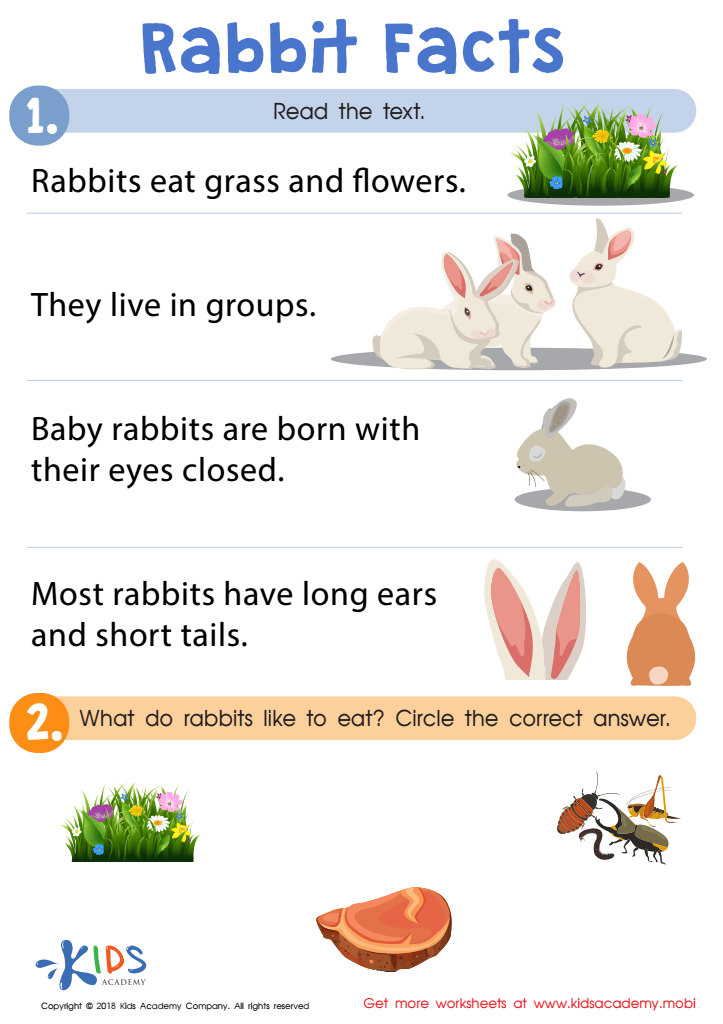
Rabbit Facts Worksheet
Informational texts offer great learning opportunities. Kids Academy's reading worksheet helps children read and recall important details from a text about bunnies. Kids will love it! Simply read the rabbit facts and circle the correct pictures to answer the questions.
Rabbit Facts Worksheet
Worksheet
Join Kids Academy for Free
Who is primarily going to use this learning content?








Parents and teachers should prioritize animal knowledge through reading non-fiction because it enriches children's understanding of the natural world and promotes essential literacy skills. Engaging with non-fiction texts about animals helps young learners develop critical thinking and analytical skills as they learn to differentiate between fact and fiction. This understanding is foundational in enhancing their overall comprehension and general knowledge.
Moreover, exposing children to diverse animal habitats, behaviors, and conservation issues fosters curiosity and empathy towards living creatures. This awareness can cultivate a sense of responsibility and stewardship for the environment among young readers. As kids learn about the interconnectedness of ecosystems, they become more attuned to issues such as biodiversity loss, extinction, and habitat preservation, cultivating environmental consciousness from an early age.
In addition, reading about animals can ignite a passion for science and exploration, inspiring future careers in wildlife biology, veterinary science, or environmental activism. Ultimately, integrating animal knowledge into literacy programs supports holistic education—combining reading skills, emotional development, and environmental ethics—unable to prepare children for a compassionate and informed adulthood. By emphasizing non-fiction animal literature, parents and teachers can nurture curious, educated, and responsible global citizens.








