Historical Knowledge Reading Non-Fiction Worksheets
5 filtered results
-
From - To
Enhance your students' understanding of history with our "Historical Knowledge Reading Non-Fiction Worksheets." These engaging worksheets are designed for young learners, providing them with a fun and interactive way to explore significant historical events, figures, and cultures. The worksheets promote critical thinking and comprehension skills as students read informative texts followed by thought-provoking questions. Perfect for classroom activities or homework assignments, these resources cater to varying educational levels and help foster a love for learning about the past. Dive into history and ignite curiosity in your students with our curated selection of printable non-fiction reading materials today!
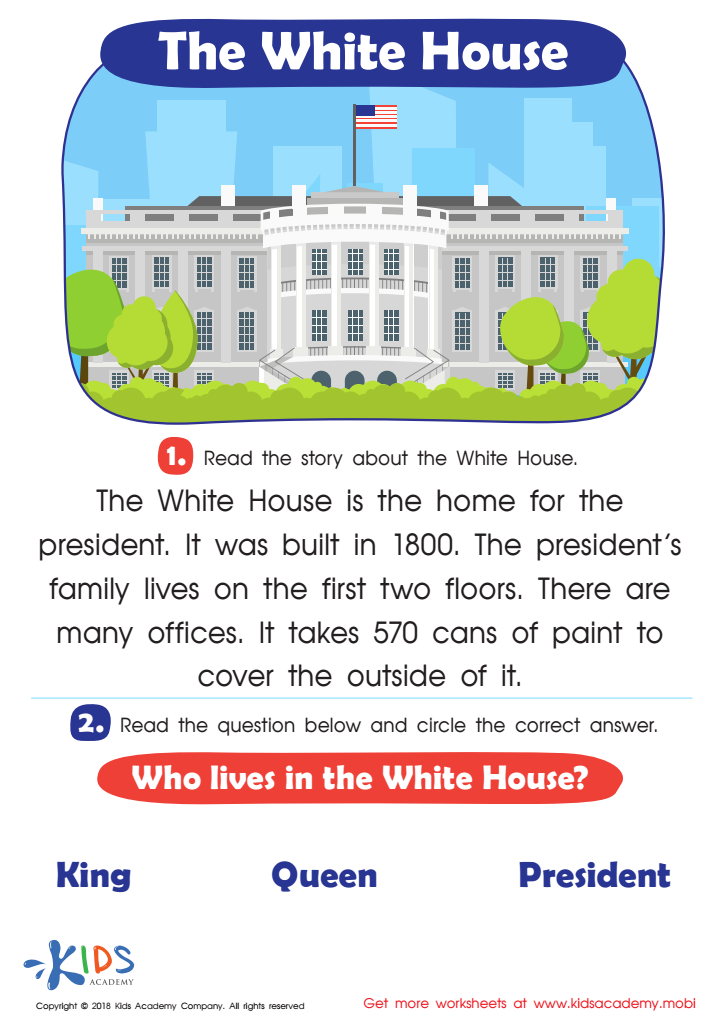
White House Worksheet
 Assign to My Students
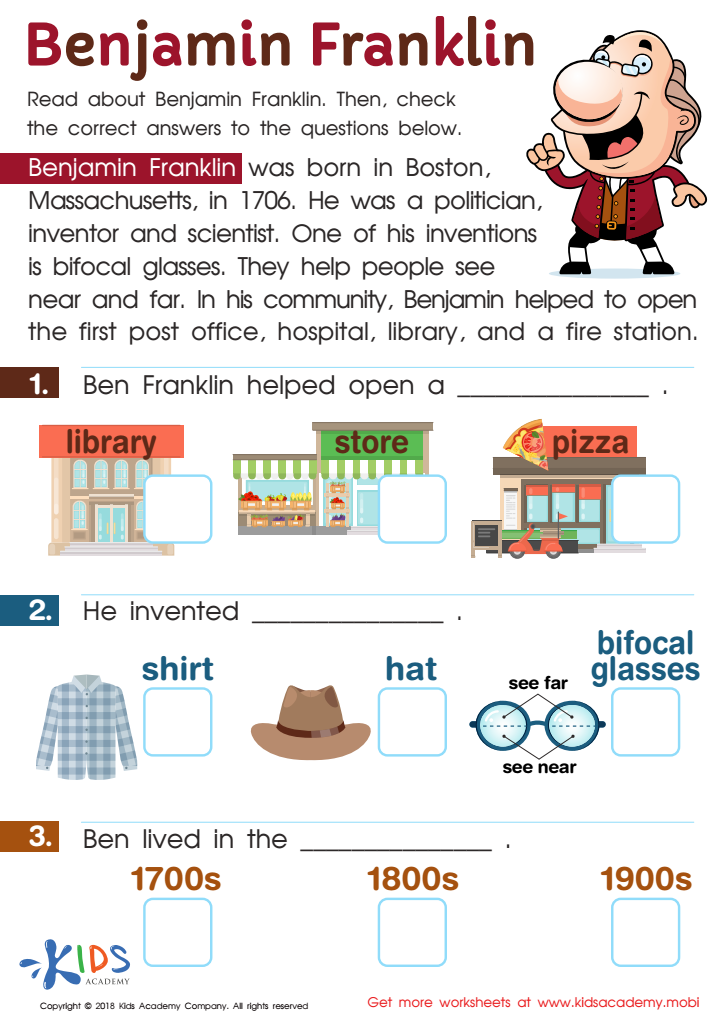
Benjamin Franklin Worksheet
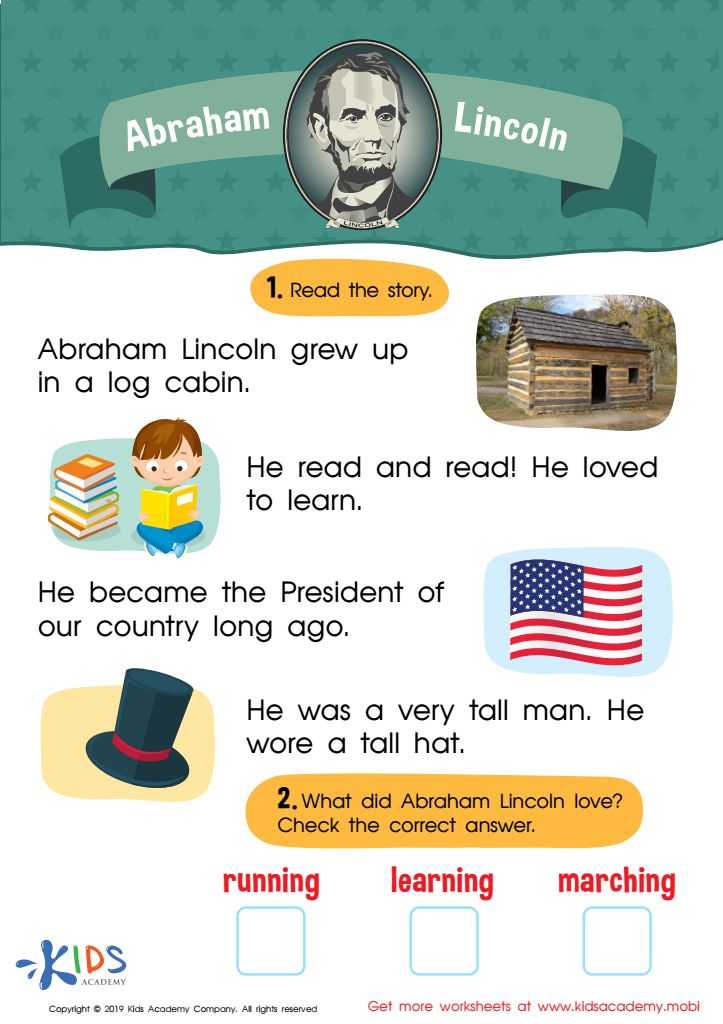
Abraham Lincoln Worksheet
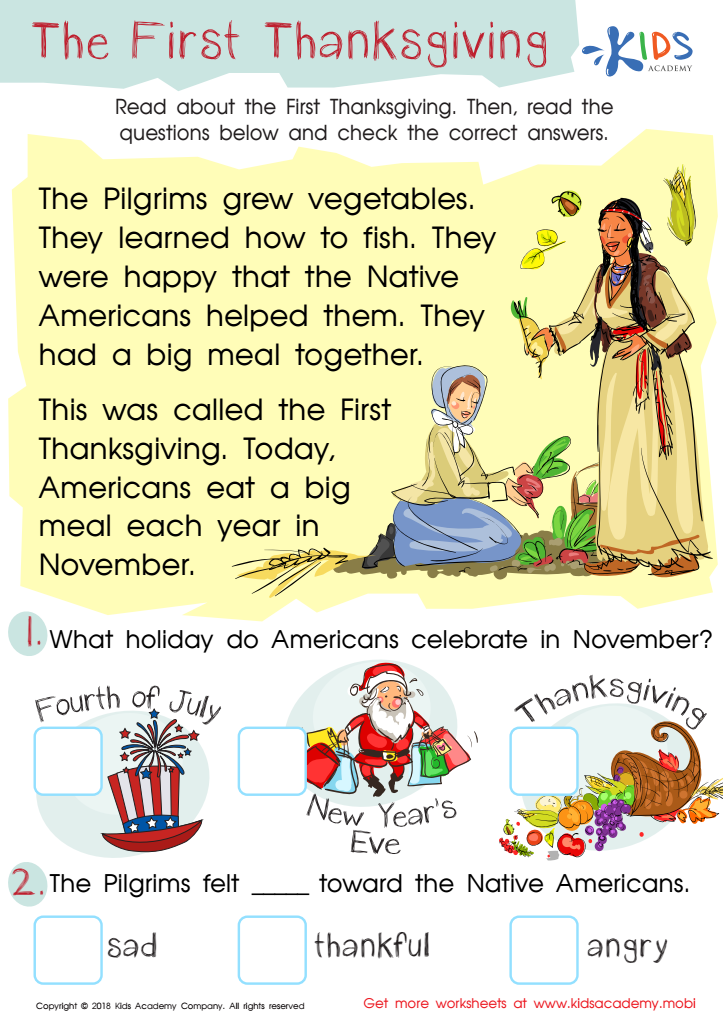
Assessment: First Thanksgiving Worksheet
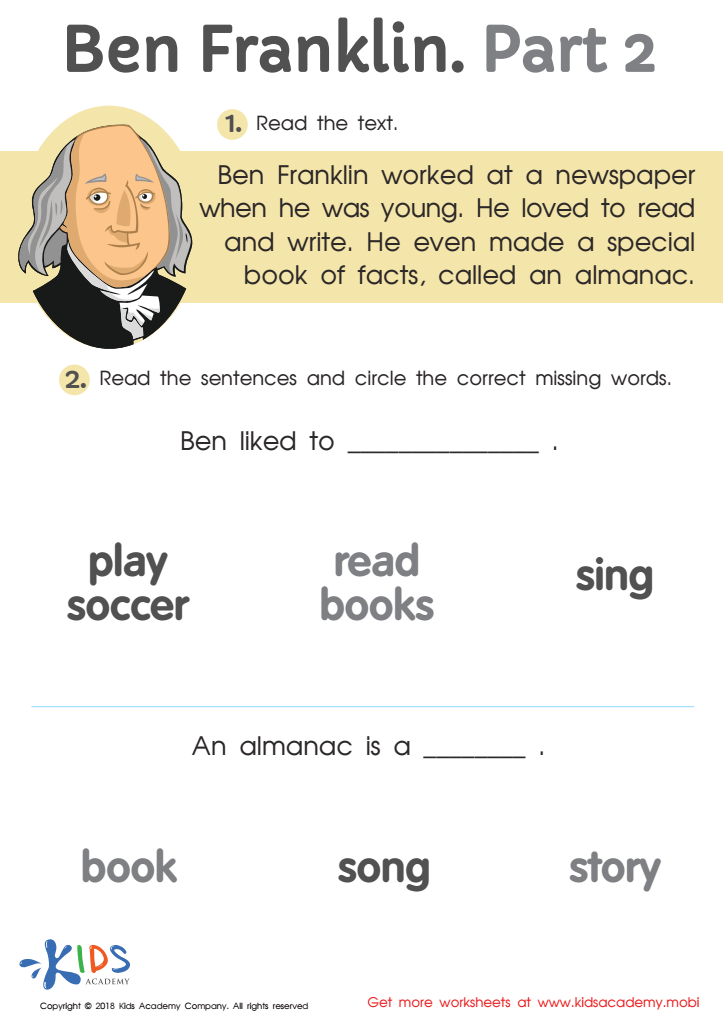
Ben Franklin Part 2 Worksheet








Parents and teachers should prioritize Historical Knowledge in reading non-fiction for several compelling reasons. Firstly, understanding history helps children grasp the context and significance of the world they live in. It fosters critical thinking, allowing students to analyze past events, recognize patterns, and draw connections to contemporary issues. By engaging with non-fiction historical materials, children learn to question sources, differentiate between fact and opinion, and develop their own informed perspectives.
Additionally, historical knowledge cultivates empathy and cultural awareness. When readers explore diverse historical narratives, they become more attuned to various societal experiences and struggles, fostering a sense of compassion and global citizenship. This broadens their understanding of different cultures, viewpoints, and the complexities of human behavior.
Moreover, non-fiction reading enhances literacy skills by exposing students to a range of vocabulary, sentence structures, and formats. This bestows lifelong benefits as they become proficient in comprehending multifaceted texts. Prioritizing historical reading not only enriches academic understanding but also ignites curiosity and engagement with the world. Ultimately, a solid grasp of historical knowledge through non-fiction equips children with the tools they need to navigate their future, contribute meaningfully to society, and instill a sense of responsibility for their roles within it.








