Improve reading comprehension Reading Non-Fiction Worksheets
6 filtered results
-
From - To
Enhance your child's reading skills with our "Improve Reading Comprehension: Non-Fiction Worksheets." Designed to foster a deep understanding of informational texts, these worksheets engage students with a variety of fun and interactive activities. Focusing on key concepts such as summarizing, identifying main ideas, and analyzing details, the exercises are tailored to strengthen critical thinking and comprehension abilities. Ideal for early grades, these resources are perfect for classroom or at-home learning. Empower your child with the confidence to tackle non-fiction literature, and watch them thrive as enthusiastic, proficient readers. Explore our collection today for effective, educational fun!
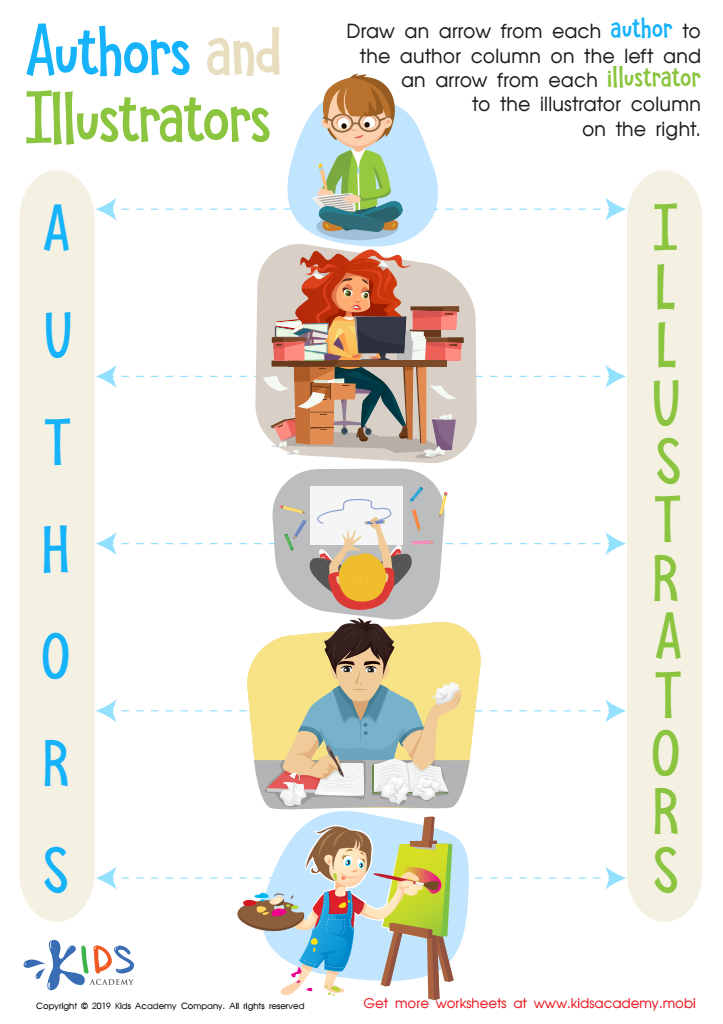
Authors and Illustrators Worksheet
 Assign to My Students
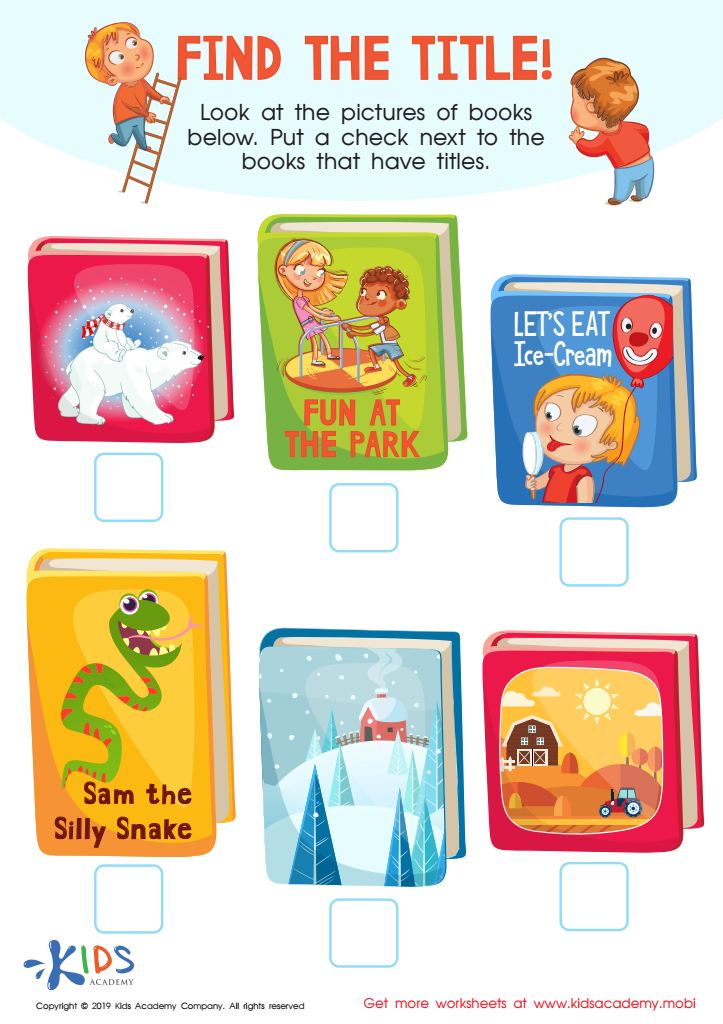
Find the Title Worksheet
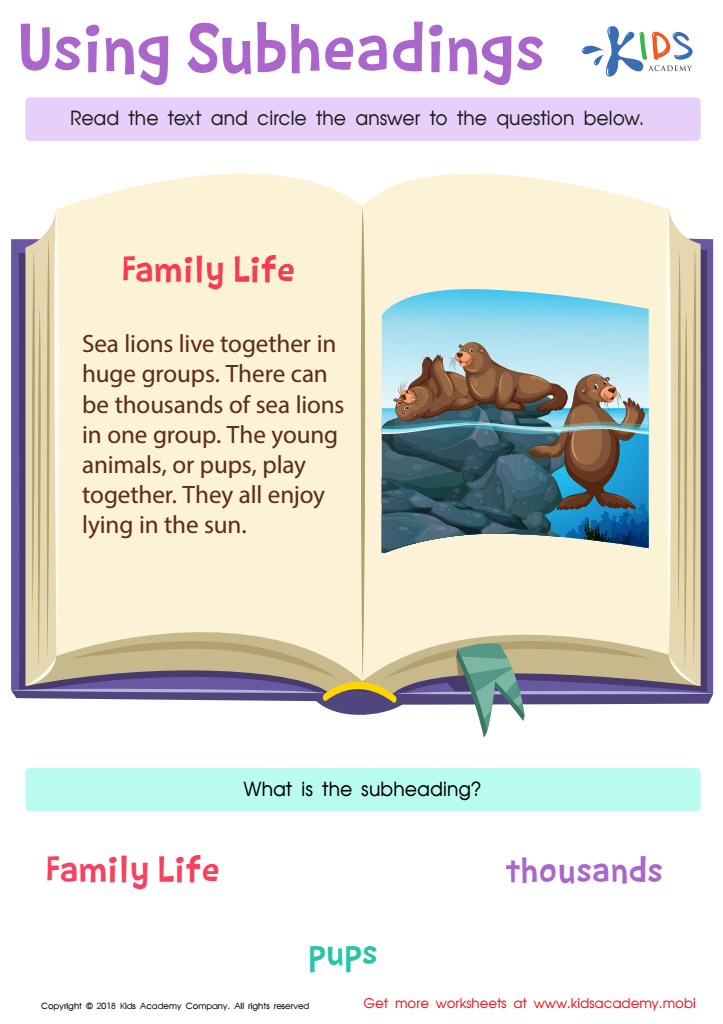
Using Subheadings Worksheet
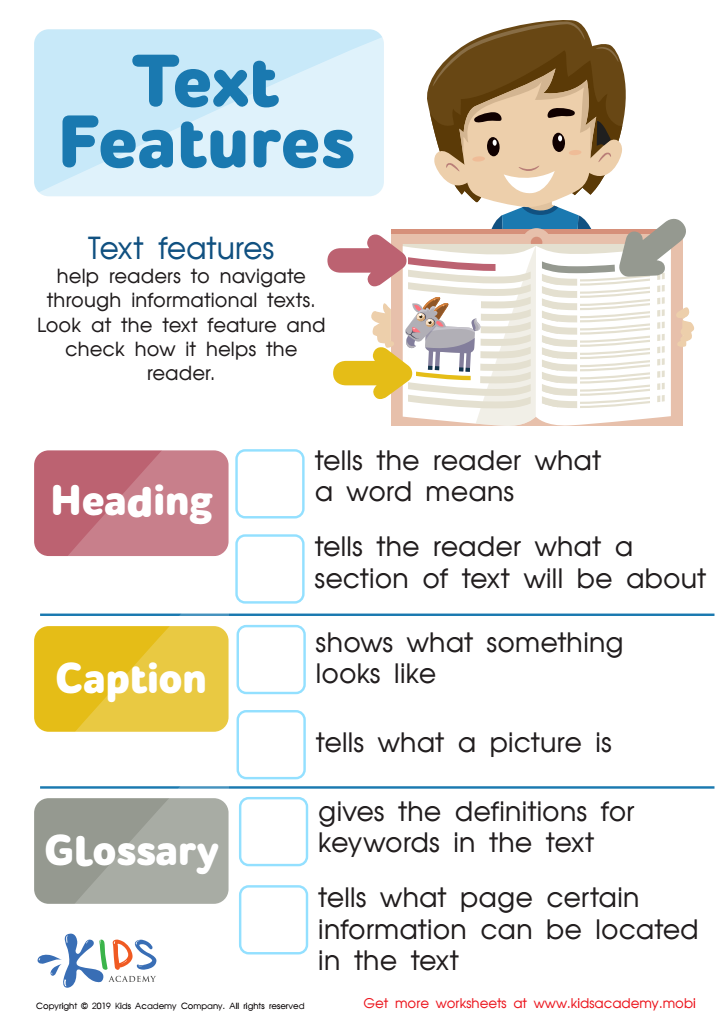
Text Features Worksheet
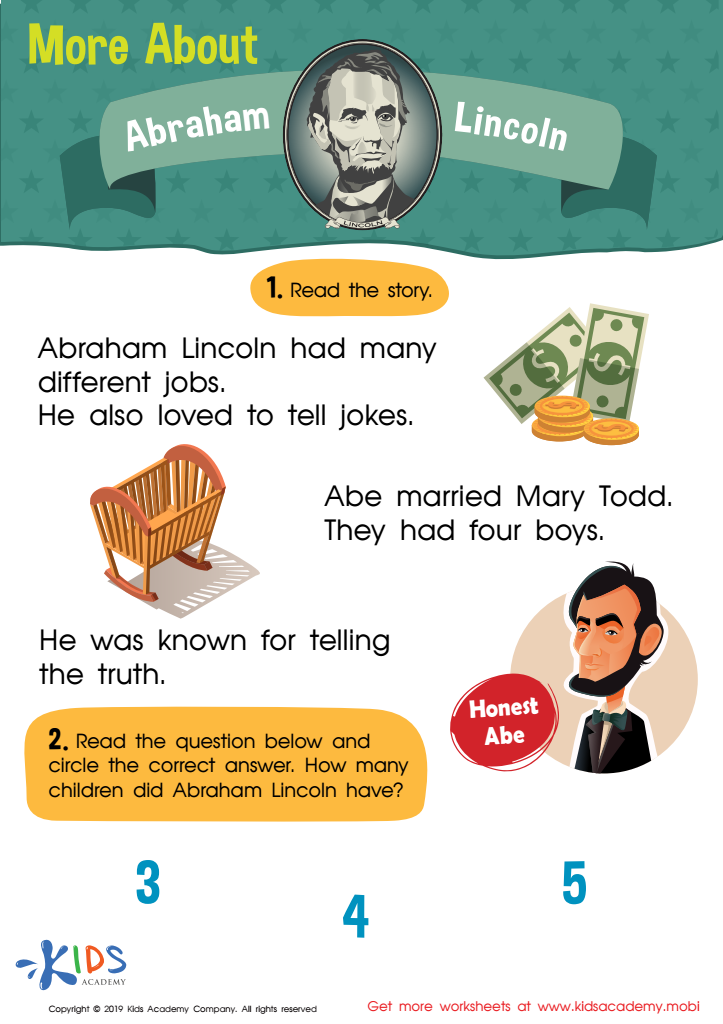
More About Abraham Lincoln Worksheet
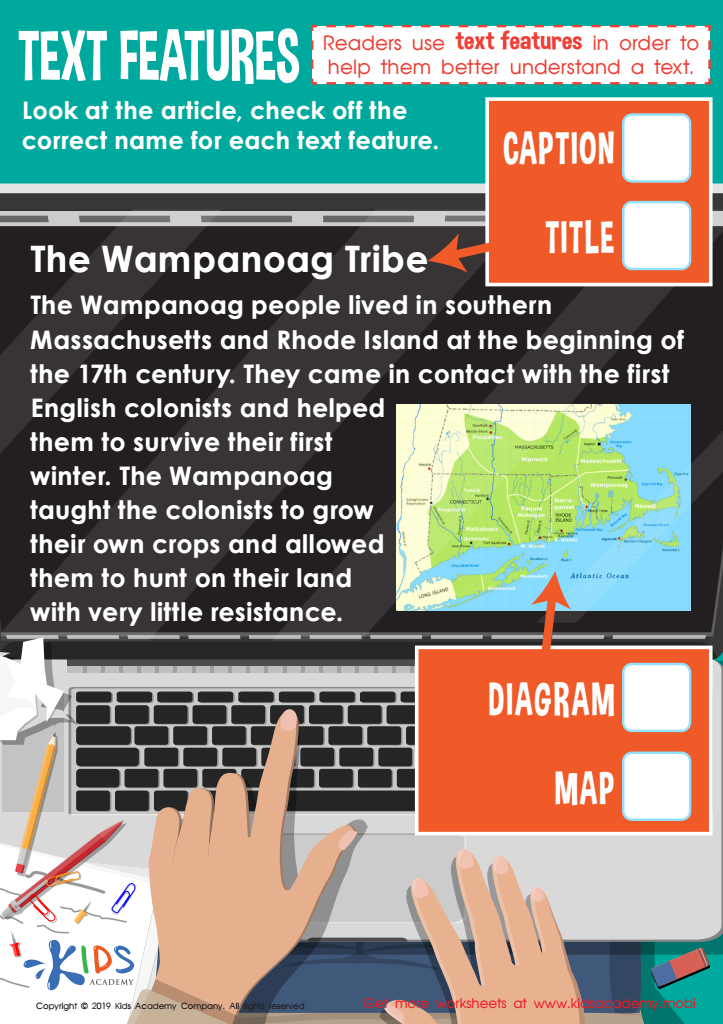
Text Features Worksheet








Understanding non-fiction texts is crucial for students, as it forms the foundation for critical thinking and real-world application of knowledge. Parents and teachers should care about improving reading comprehension in non-fiction for several reasons. First, as students progress through their education, they encounter increasingly complex non-fiction texts across subjects like science, history, and mathematics. A strong ability to comprehend these materials not only enhances academic performance but also promotes lifelong learning.
Non-fiction reading fosters critical analytical skills and the ability to discern fact from opinion, essential in our information-saturated world. When students engage with non-fiction, they learn to synthesize information, evaluate sources, and identify biases, which empowers them to form informed opinions and make decisions.
Moreover, strong comprehension skills build confidence. When children can grasp and discuss non-fiction content, they become more engaged learners and can participate in meaningful discussions at home and in school.
Finally, improving non-fiction reading comprehension prepares students for future careers and citizenship. As adults, they will need to understand complex information to contribute effectively to society. By prioritizing non-fiction comprehension, parents and teachers equip students for both academic success and active, informed participation in their communities.








