Logical Reasoning Reading Non-Fiction Worksheets
4 filtered results
-
From - To
Discover our engaging "Logical Reasoning Reading Non-Fiction Worksheets" designed to enhance critical thinking and comprehension skills for young learners. These printable resources encourage students to analyze, interpret, and evaluate non-fiction texts, promoting deeper understanding of various subjects. Each worksheet challenges them to think critically, fostering their ability to draw conclusions and make connections. Perfect for classroom use or at-home learning, these worksheets cater to diverse learning styles, making lessons both fun and effective. Help your students develop essential skills through captivating content that inspires curiosity and a love of learning. Unlock their potential with our thoughtfully crafted non-fiction reading worksheets today!
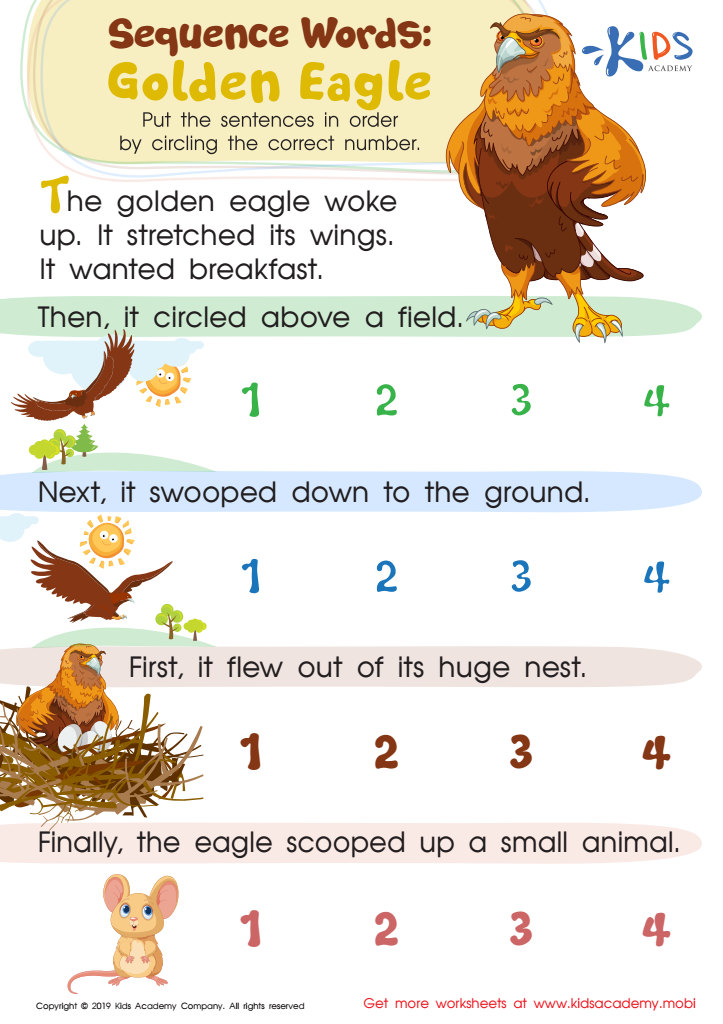
Sequence Word Eagle Worksheet
 Assign to My Students
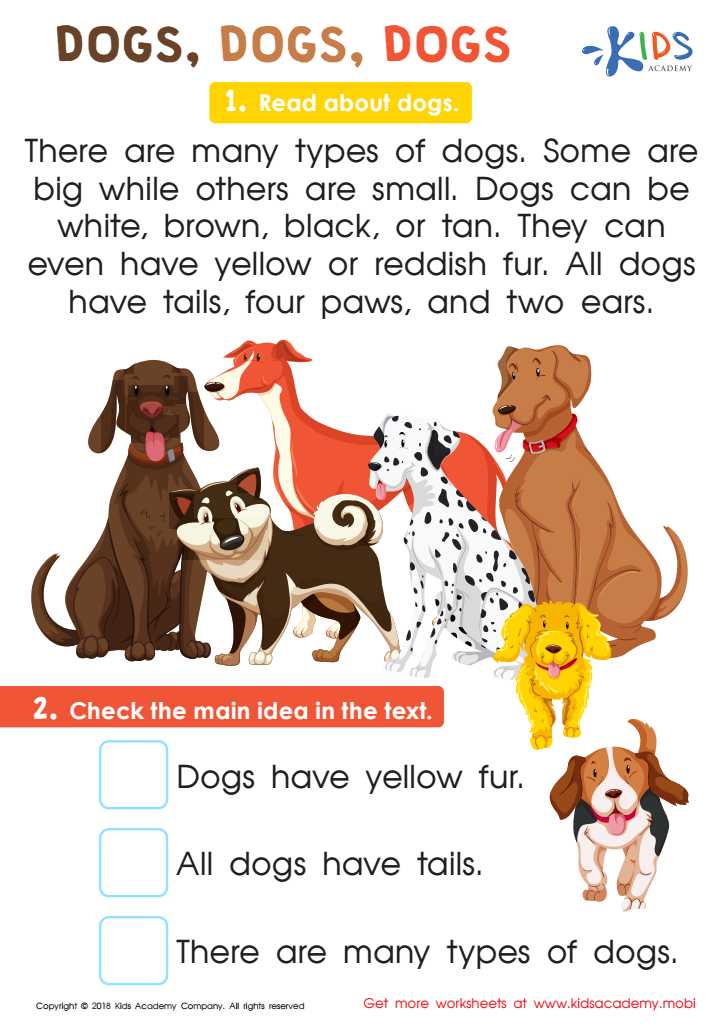
Dogs, Dogs Worksheet
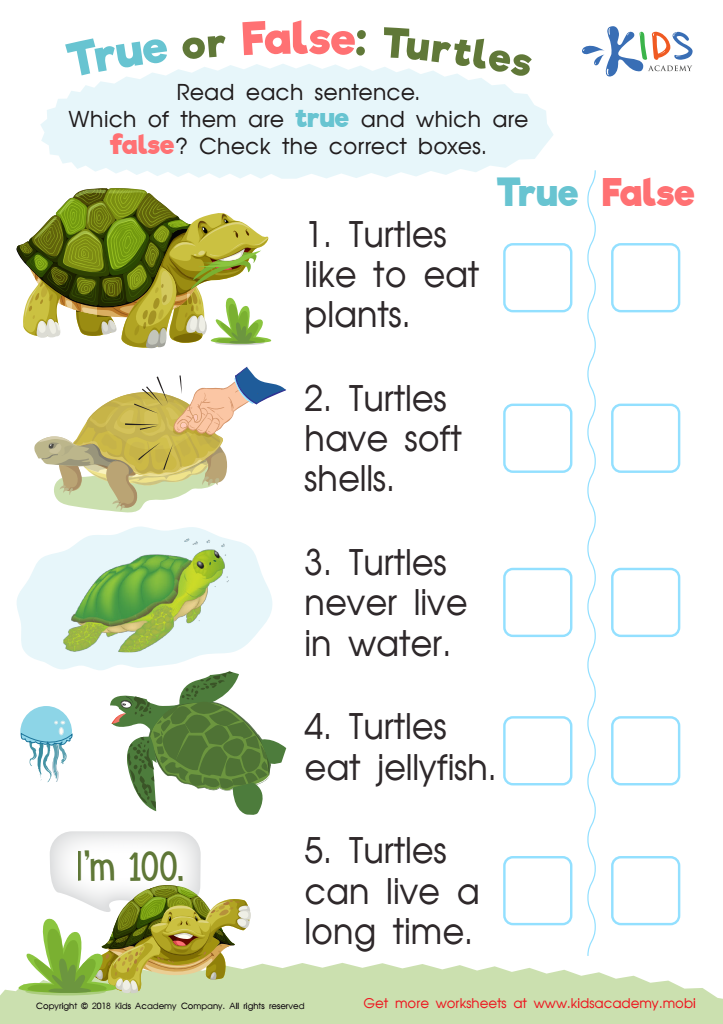
True or False: Turtles Worksheet
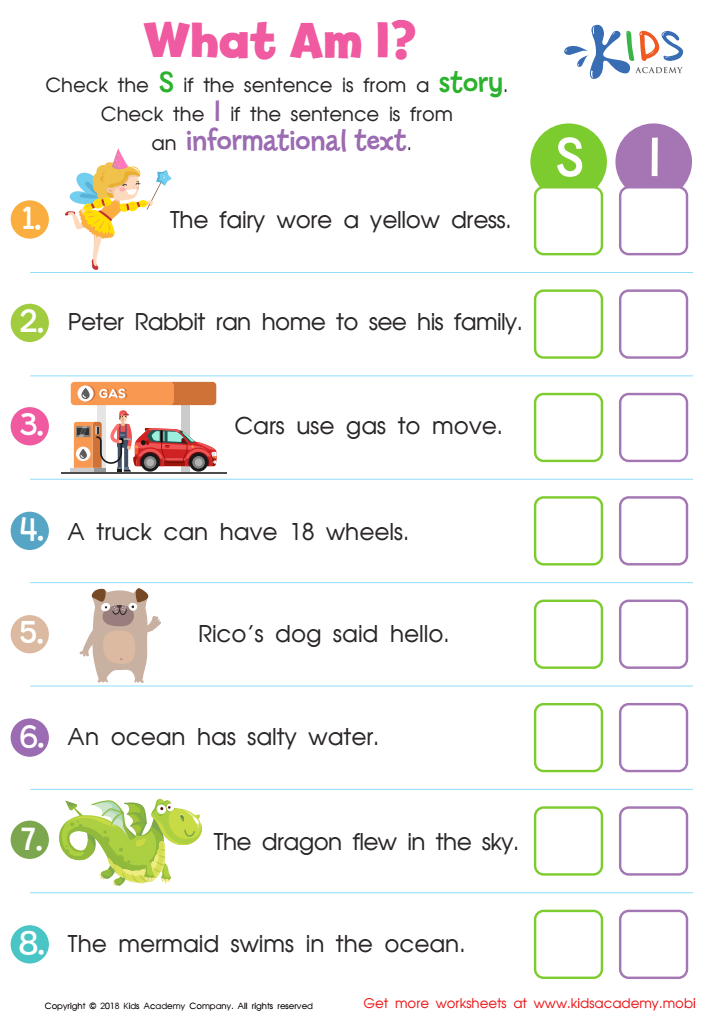
What Am I? Worksheet








Logical reasoning is a critical skill that enhances reading comprehension, especially when dealing with non-fiction texts. Parents and teachers should prioritize this ability because it equips students to understand complex ideas and arguments that are often present in informational texts. Non-fiction reading is abundant in our daily lives, from textbooks to articles, and logical reasoning helps students analyze evidence, identify biases, and draw meaningful conclusions from the material they encounter.
Teaching logical reasoning cultivates essential skills such as critical thinking, problem-solving, and analytical abilities. These skills are not only important for academic success but also for informed citizenship and personal decision-making. When students learn to interrogate data and discern facts from opinions, they become more effective learners and communicators.
Furthermore, fostering logical reasoning at an early age helps develop a lifelong love for inquiry and exploration. It encourages curiosity and a desire to seek knowledge, as students become adept at questioning and analyzing the world around them. Thus, parents and teachers must engage young learners in logical reasoning activities through discussions, debates, and analytical tasks to prepare them for both academic challenges and real-life situations. Ultimately, this investment in logical reasoning and non-fiction reading can significantly benefit children's educational journeys and their future.








