Understanding life cycles Reading Non-Fiction Worksheets
3 filtered results
-
From - To
Discover the wonders of nature with our "Understanding Life Cycles" Reading Non-Fiction Worksheets! These engaging and educational printables are designed to help young readers explore the stages of different life cycles, from plants and animals to insects and amphibians. With beautifully illustrated content, these worksheets will foster a love for science and enhance reading comprehension skills. Perfect for early grade students, they include thought-provoking questions and activities that encourage critical thinking and curiosity. Ideal for classroom use or at-home learning, these worksheets bring the fascinating process of life cycles to life, inspiring young minds to become nature enthusiasts. Explore now!
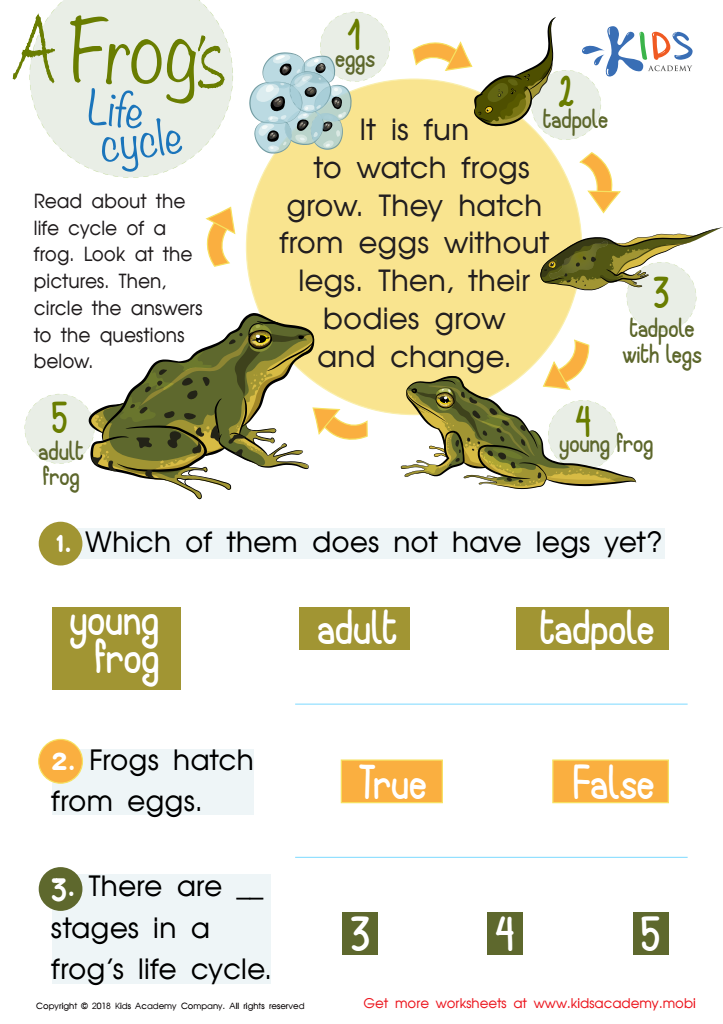
A Frog’s Life Cycle Worksheet
 Assign to My Students
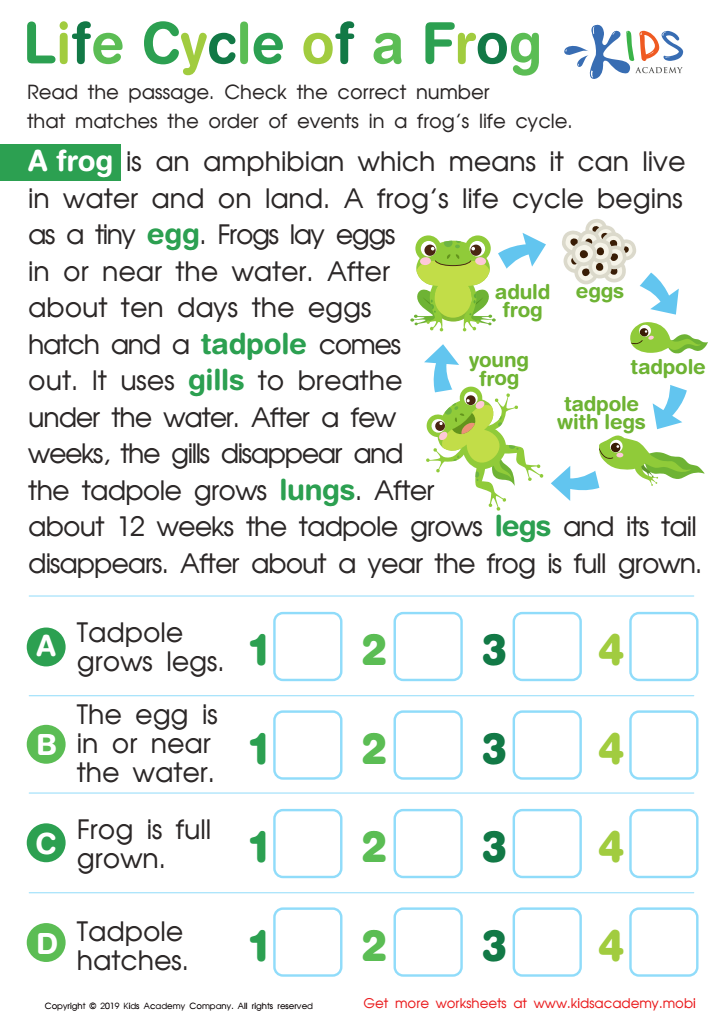
Life Cycle of a Frog Worksheet
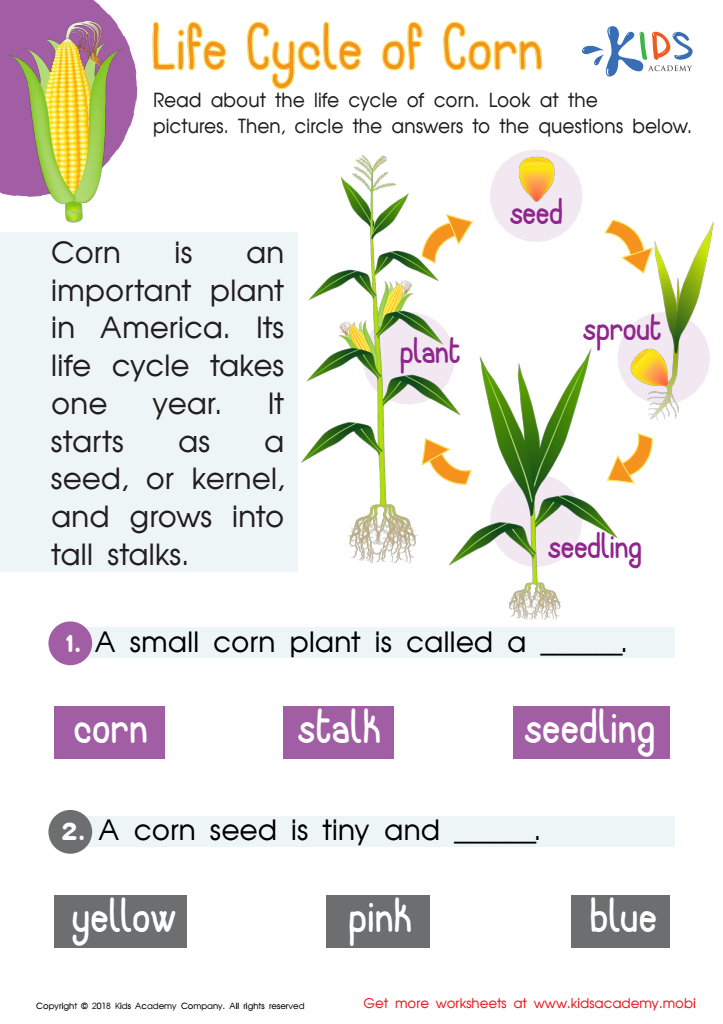
Life Cycle of Corn Worksheet








Understanding life cycles through reading non-fiction is essential for both parents and teachers, as it provides foundational knowledge that enhances children’s comprehension of the natural world. Life cycles, such as those of plants, animals, and insects, are fundamental scientific concepts that lay the groundwork for further biological understanding. Reading non-fiction about life cycles helps children identify different developmental stages and recognize patterns that occur in nature, fostering critical thinking and inquisitiveness.
Moreover, engaging with non-fiction texts encourages children to become fact-finders and develop a love for learning. These books often contain real-life images and accurate information that stimulate a child’s curiosity and provide them with a clearer grasp of scientific realities as compared to fictional accounts. This early exposure to scientific literacy lays the foundation for more complex education in the future, supporting subjects such as ecology, conservation, and biology.
For parents and teachers, incorporating non-fiction reading into a child's routine also builds vocabulary and reading comprehension skills. It allows meaningful conversations that connect what children read to real-world experiences. Consequently, children become better prepared to understand their environment, develop empathy for living organisms, and consequently engage in responsible environmental stewardship. Understanding life cycles through non-fiction thereby nurtures well-rounded, knowledgeable learners ready to explore and care for their world.








