Understanding patterns Sight Words Worksheets
8 filtered results
-
From - To
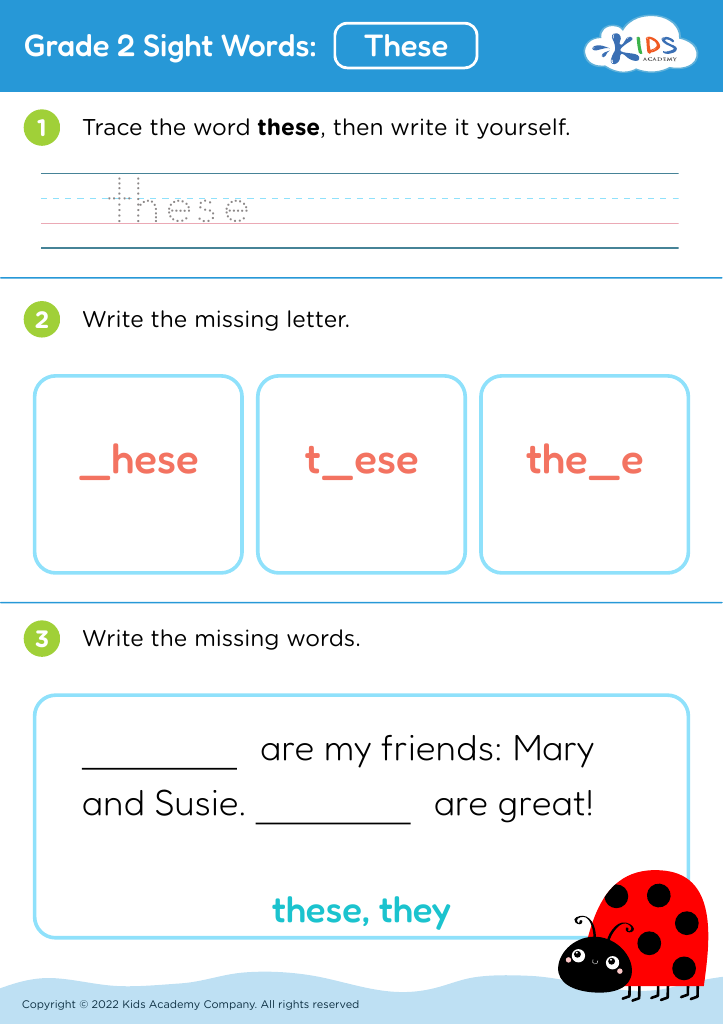
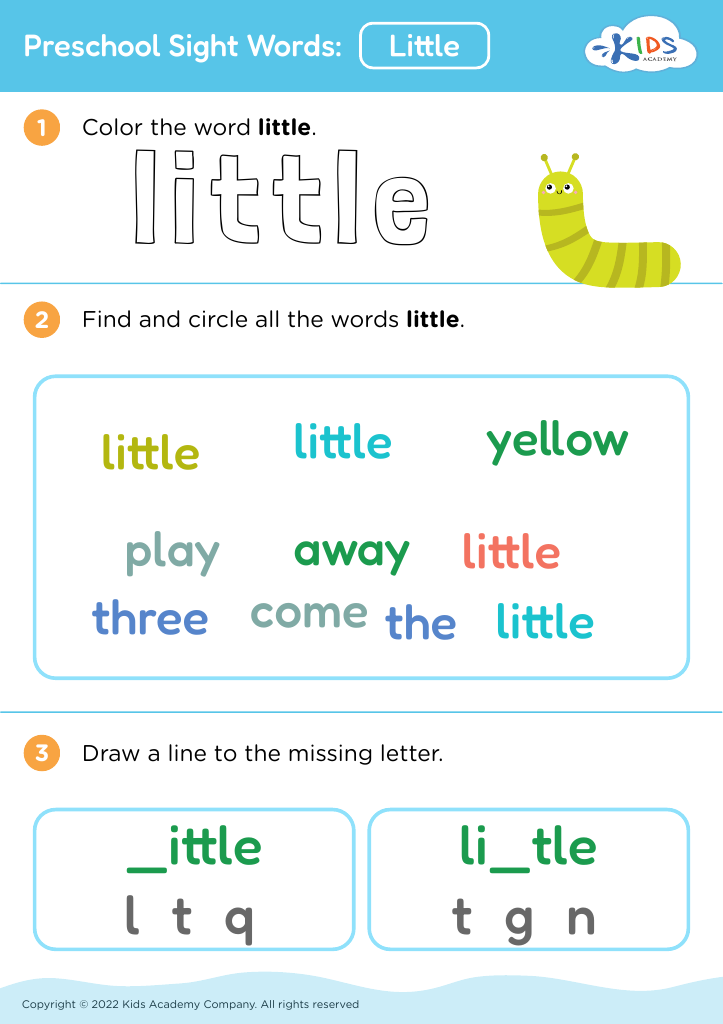
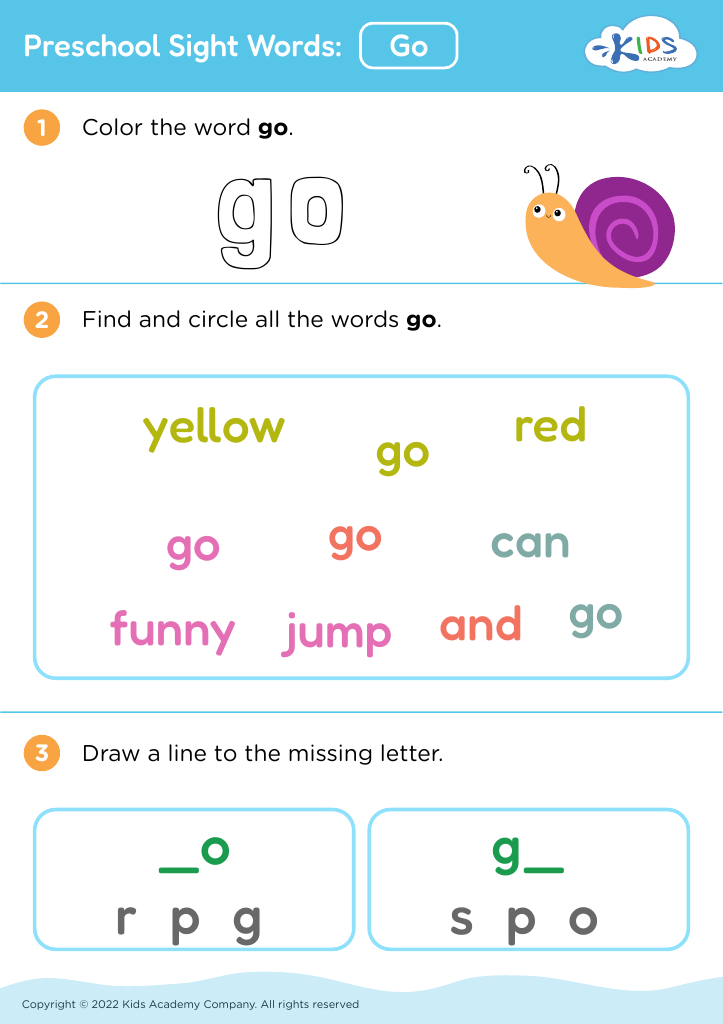
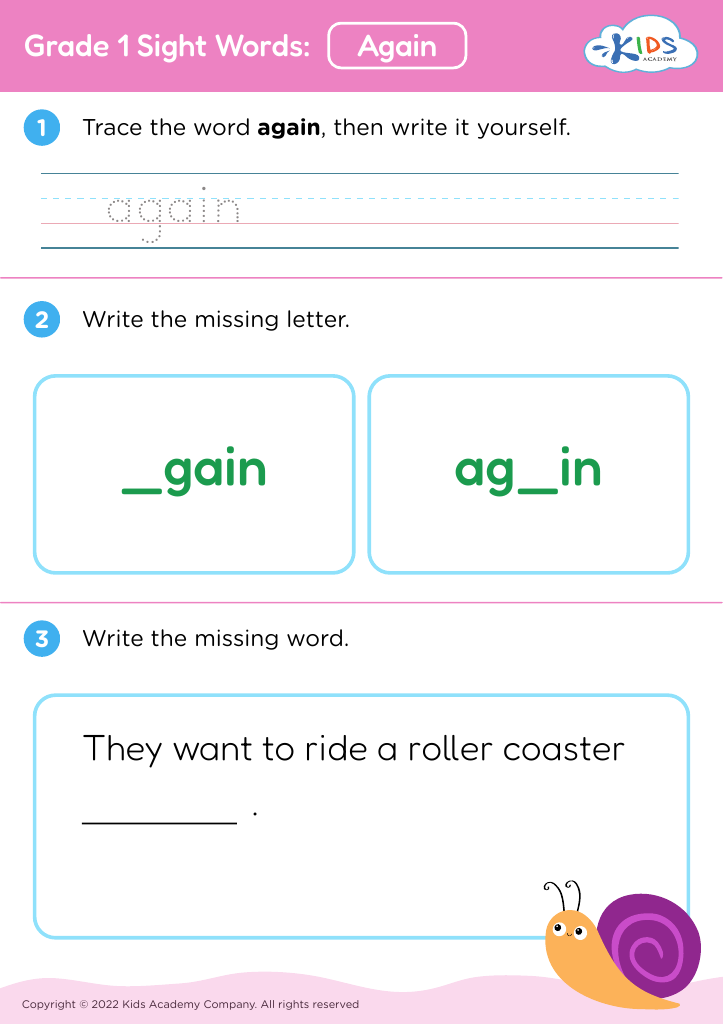
Unlock the power of early literacy with our "Understanding Patterns Sight Words Worksheets." Designed for young learners, these engaging worksheets help children recognize and use recurring sight words, boosting their reading fluency and comprehension. Through pattern recognition exercises, kids practice identifying common sight words, which are critical for smooth, efficient reading. These resources are perfect for both classroom and home use, offering fun and interactive ways to solidify essential reading skills. Ideal for preschool, kindergarten, and first grade students, our worksheets turn learning into an enjoyable and rewarding experience. Discover a smarter path to reading success today!





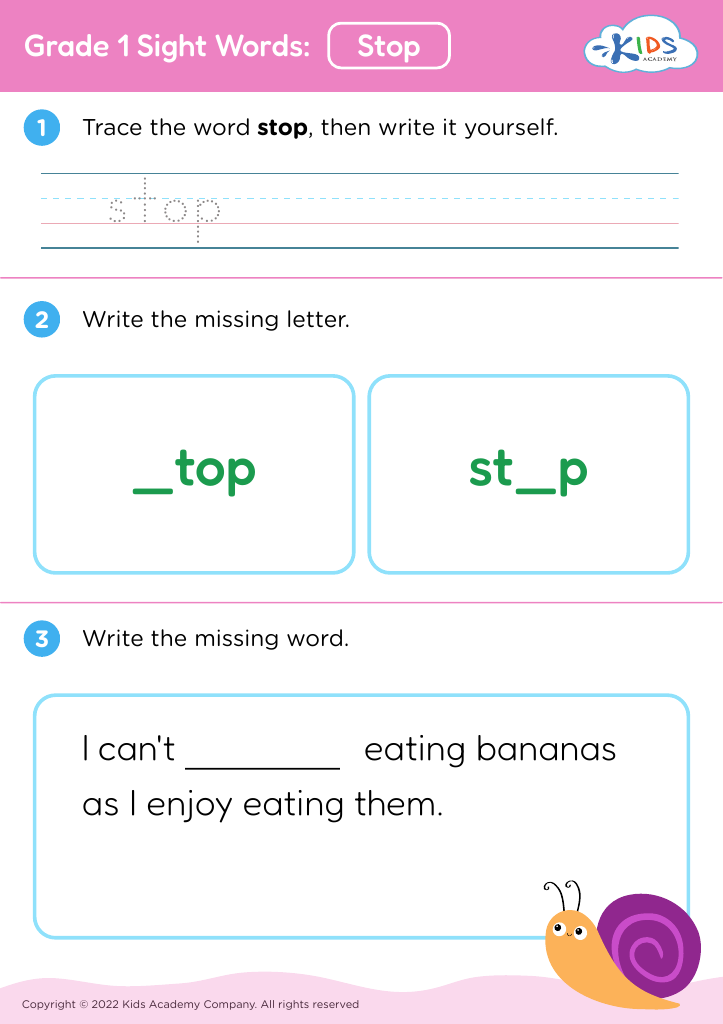
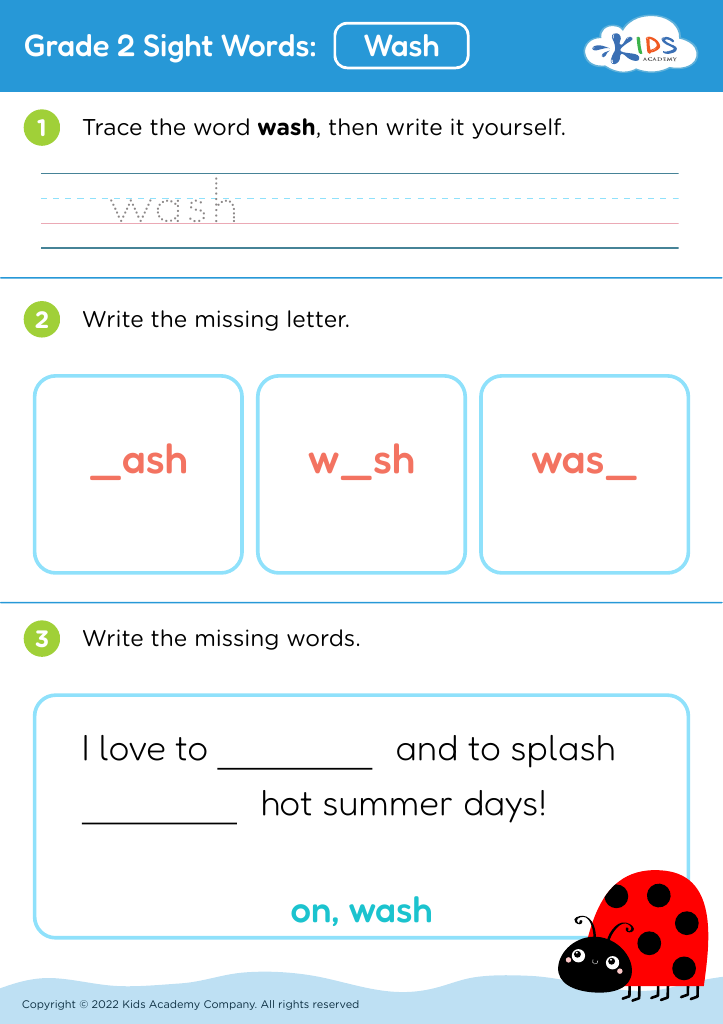
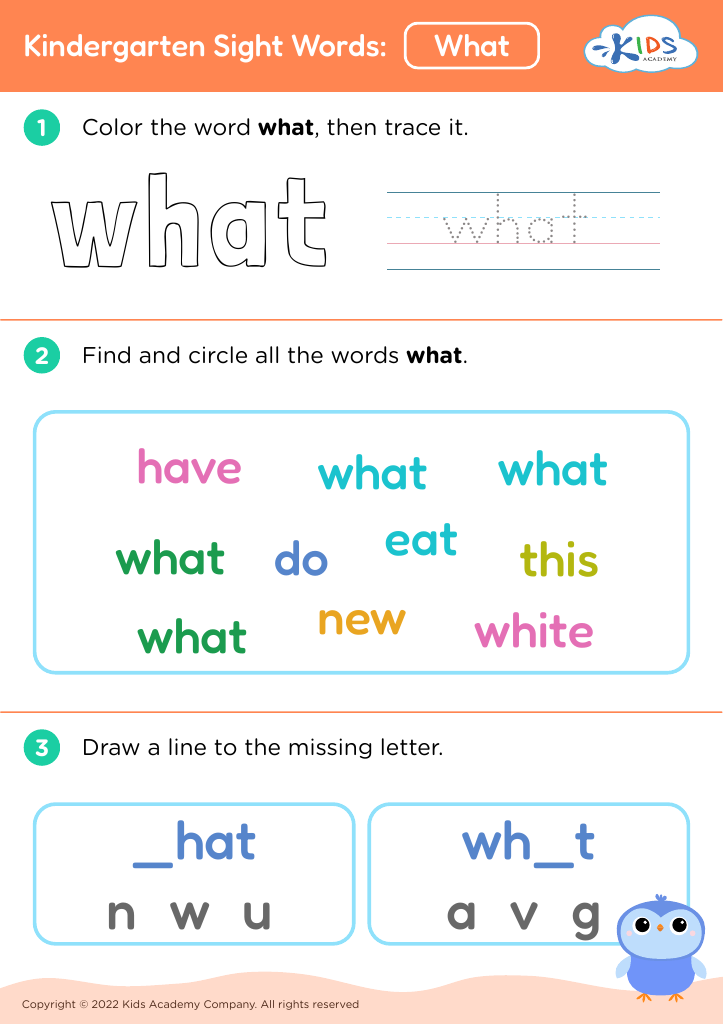








Parents and teachers should care about children understanding sight words because these words are fundamental building blocks in early literacy development. Sight words are commonly used words that children are encouraged to recognize instantly without having to pause and decode them. This immediate recognition supports smoother reading fluency, which is essential as young learners begin to tackle more complex texts.
Learning sight words helps children gain confidence and reduces frustration when they encounter repeated words in their reading materials. It facilitates easier comprehension of sentences and stories, allowing them to focus more on the content and meaning rather than spending effort on decoding each word.
Additionally, understanding patterns within these sight words can significantly boost a child's ability to decode new words. Recognizing common spelling patterns and word families (like "and" in "land" or "sand") builds familiarity and enables children to predict and read new words more efficiently.
For parents and teachers, this means prioritizing and reinforcing the learning of sight words through engaging activities, repetition, and practice. It prepares children for a smoother transition into independent reading, fostered by the strong literacy foundation laid down by these essential skills. This early nurturing of reading habits is instrumental in shaping a child's academic success and love for reading.