Phonics skills improvement Grade 2 Vowels Worksheets
4 filtered results
-
From - To
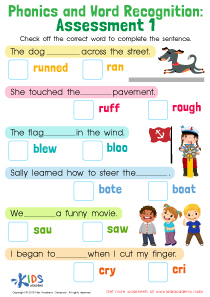
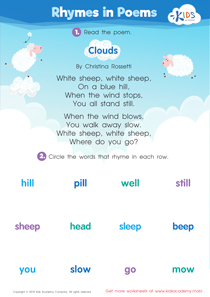
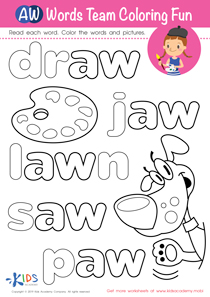
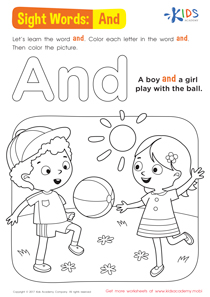
Enhance your child's reading journey with our engaging "Phonics Skills Improvement Grade 2 Vowels Worksheets". Designed for second graders, these worksheets offer interactive exercises to master vowel sounds, recognize vowel patterns, and boost phonemic awareness. Through a variety of fun activities including matching, fill-in-the-blank, and reading practice, children will strengthen their understanding of short and long vowels. Perfect for classroom use or at-home practice, our resources provide the essential foundation for reading fluency. Help your child excel with these expertly crafted vowel worksheets, setting the stage for confident, lifelong readers. Download today and watch their skills soar!
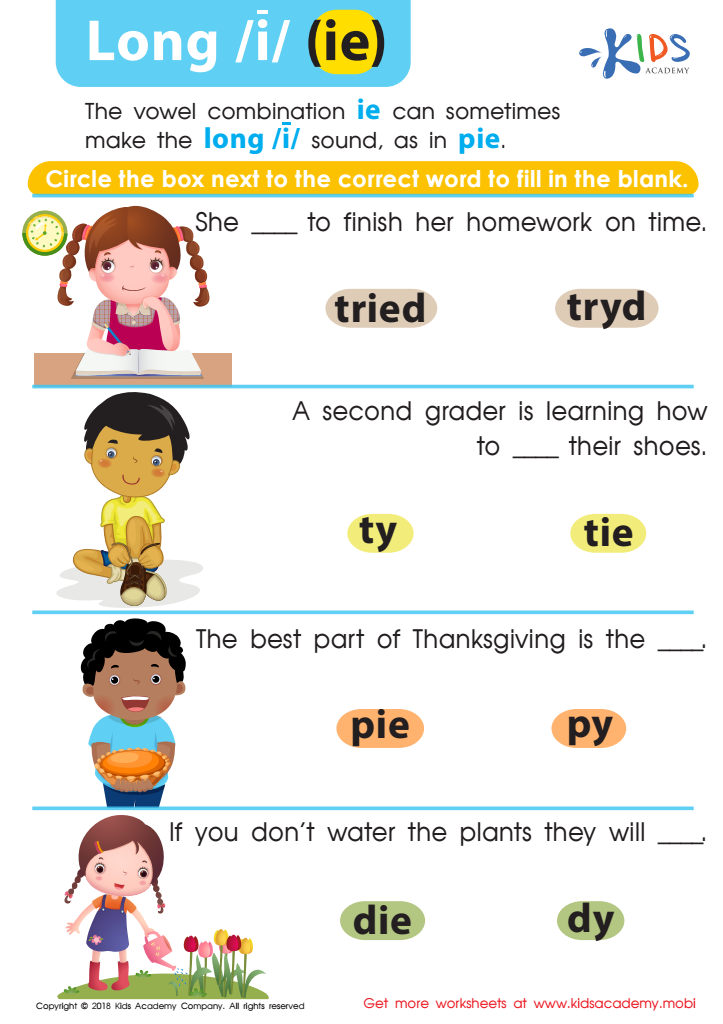
Reading: Long I and IE Worksheet
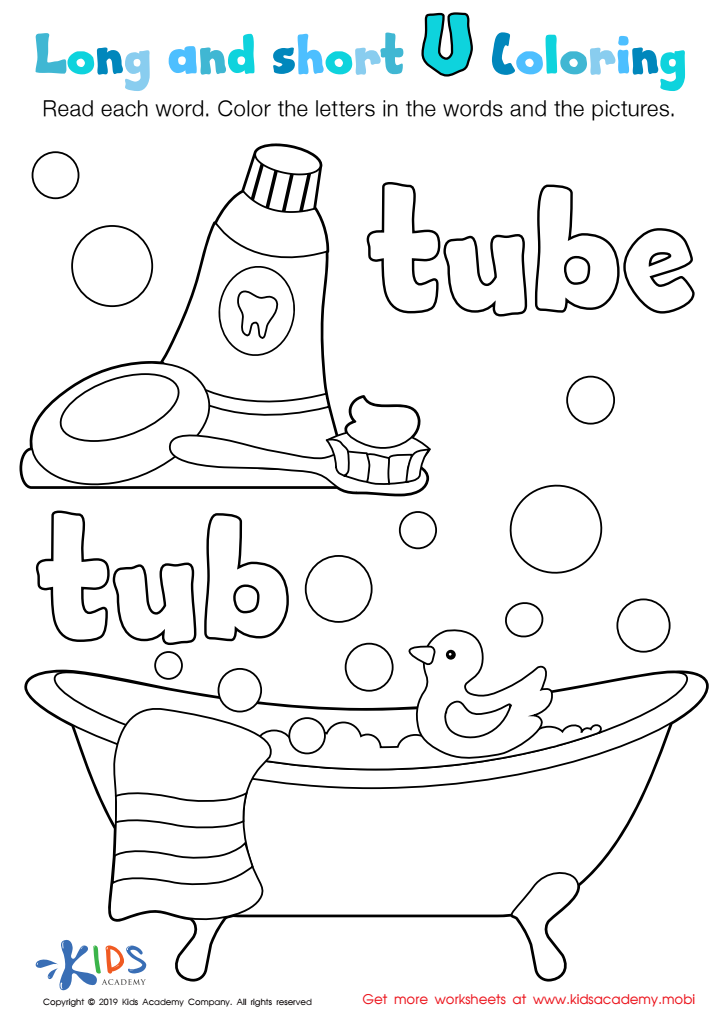
Long and Short U Worksheet
 Assign to My Students
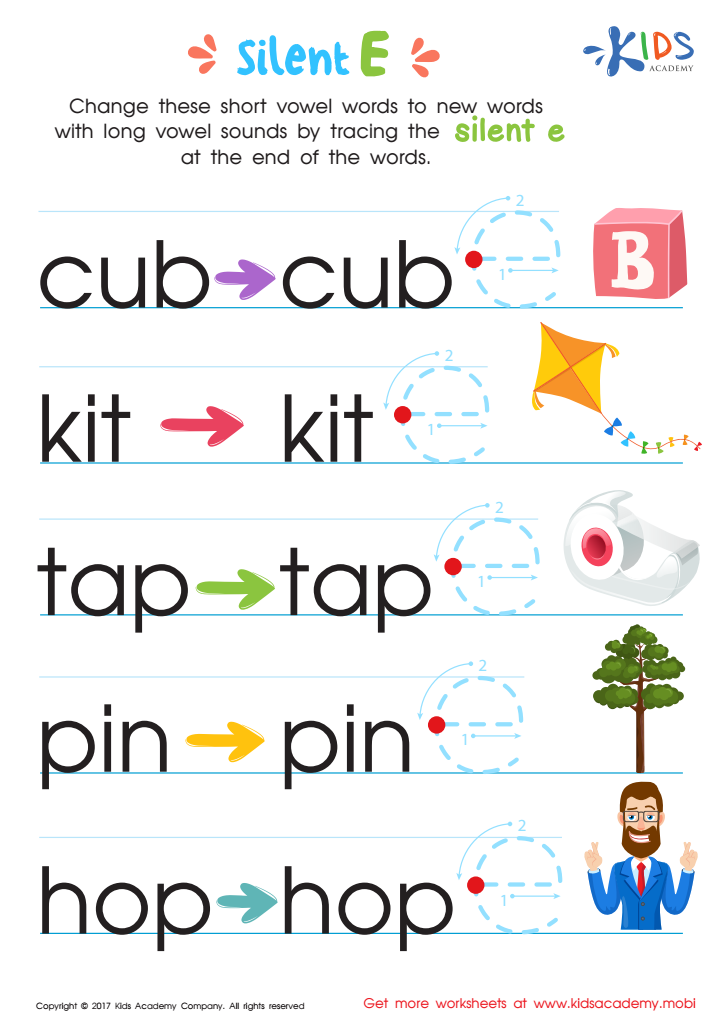
Silent E Words Worksheet
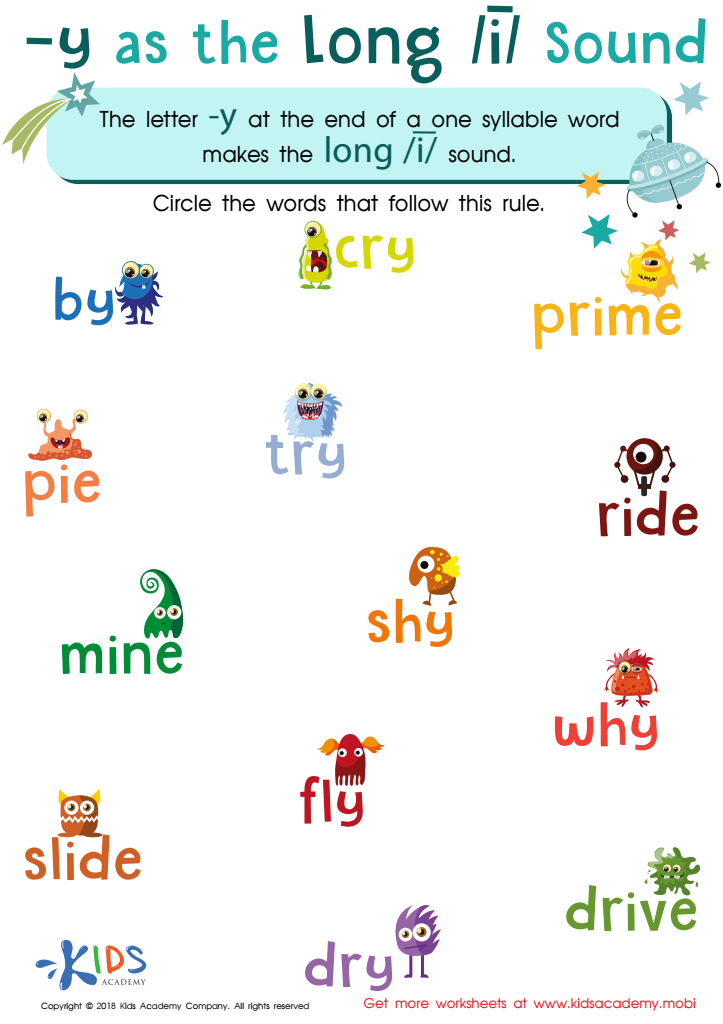
Reading: Y as Long I Worksheet



Phonics skills improvement, particularly in Grade 2 and with a focus on vowels, is crucial for young learners’ reading and writing development. Vowels play a fundamental role in the phonetic structure of the English language; mastering them early on aids in decoding words efficiently, which is essential for reading fluency. As second graders transition from learning to read to reading to learn, strong phonetic abilities, including a thorough understanding of short, long, and variant vowel sounds, enable them to tackle more complex words and comprehend stories and instructions better.
Moreover, improved phonics skills bolster spelling proficiency and enhance vocabulary since children become adept at breaking down unfamiliar words independently. Parents and teachers need to prioritize these skills to instill a solid literacy foundation in children. Doing so not only supports academic success but also boosts children’s confidence and enthusiasm for learning. Early intervention in phonics can prevent future reading difficulties and cultivate a love for books, encouraging lifelong learning habits. By caring about phonics skills improvement with specific attention to vowels, parents and teachers can significantly contribute to a child's overall cognitive and language development, preparing them adequately for future academic challenges.