Hand-eye Coordination Grade 2 English for Beginners Worksheets
15 filtered results
Difficulty Level
Grade
Age
-
From - To
Subject
Activity
Standards
Unlock new learning potential with our "Hand-eye Coordination Grade 2 English for Beginners Worksheets." Specially crafted for second graders, these engaging resources enhance fine motor skills while building essential language abilities. Designed for young ESL students, each worksheet blends fun activities like tracing, matching, and drawing with language exercises to develop vocabulary and comprehension. Our visually appealing and interactive materials ensure children improve their hand-eye coordination, crucial for reading and writing, while simultaneously advancing their English proficiency. Perfect for classroom use or at-home practice, these worksheets offer a comprehensive approach to early education.
Favorites
With answer key
Interactive
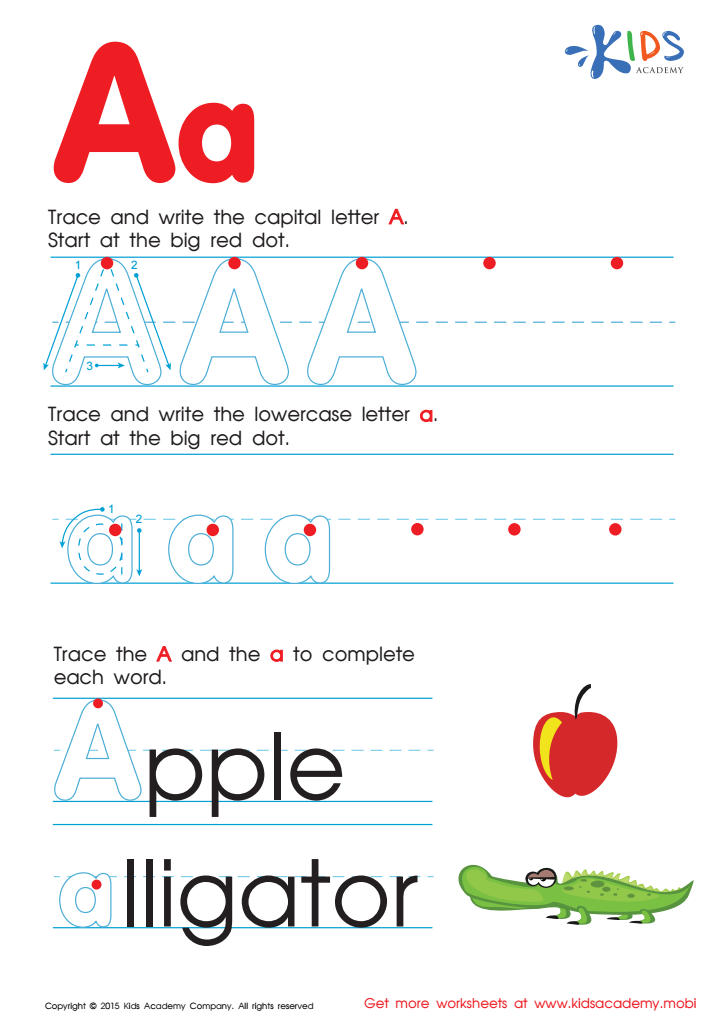
Letter A Tracing Page
Trace and write the letter "A"! Start with the big red dot, then do the capital and lowercase versions. Then write it again with two words - apple and alligator. Download more tracing worksheets at Kids Academy.
Letter A Tracing Page
Worksheet
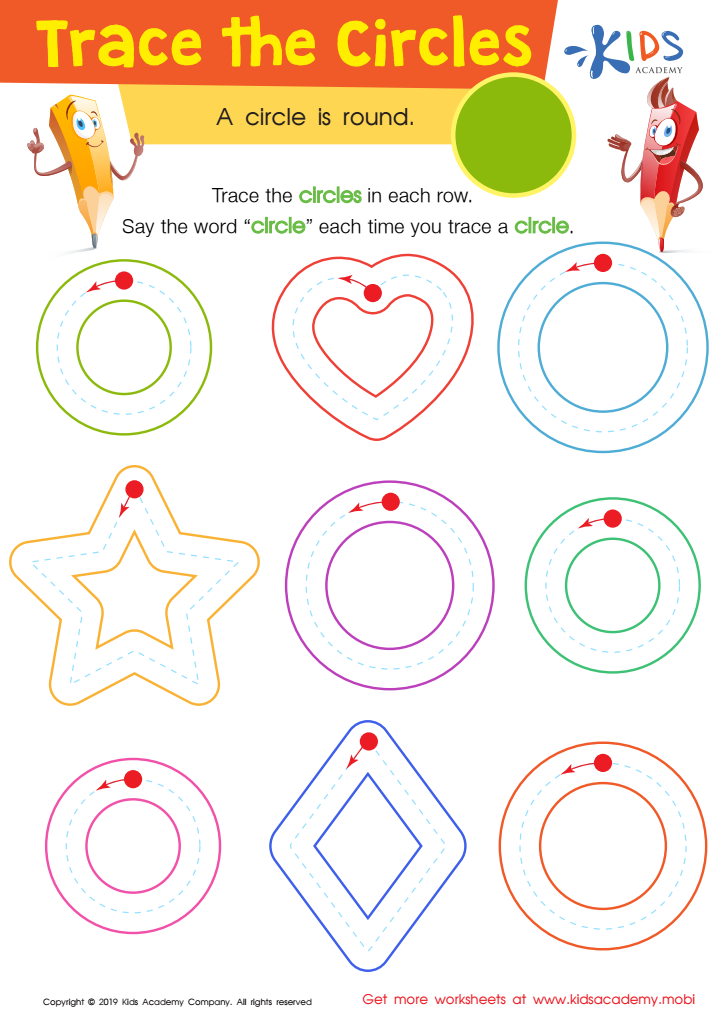
Trace The Circles Worksheet
Preschoolers and kindergarteners love learning shapes! This worksheet provides practice in naming and tracing circles. Students say "circle" each time they trace one. It's a fun way to help kids learn math vocabulary and develop fine motor skills. Enjoy this printable and get ready to master circles!
Trace The Circles Worksheet
Worksheet
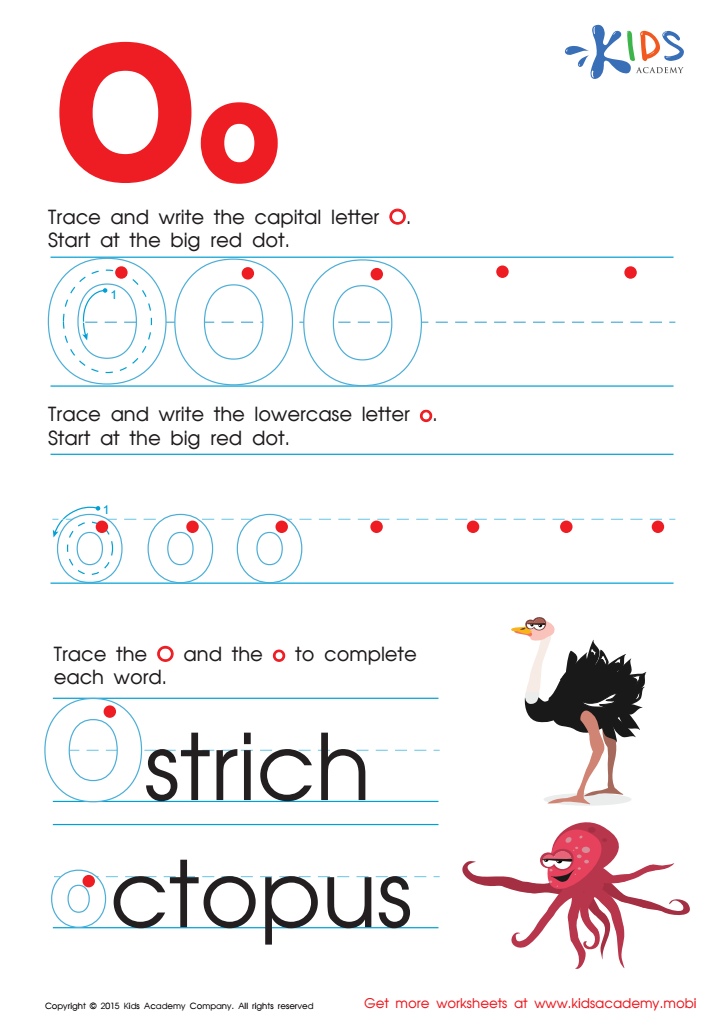
Letter O Tracing Page
Practice writing the letter "O" with our new worksheet. Trace and write the letter several times, starting at the red dot. First do the uppercase letter, then the lowercase. Use the pictures to complete the words "Ostrich" and "octopus". Kids Academy offers more fun alphabet worksheets.
Letter O Tracing Page
Worksheet
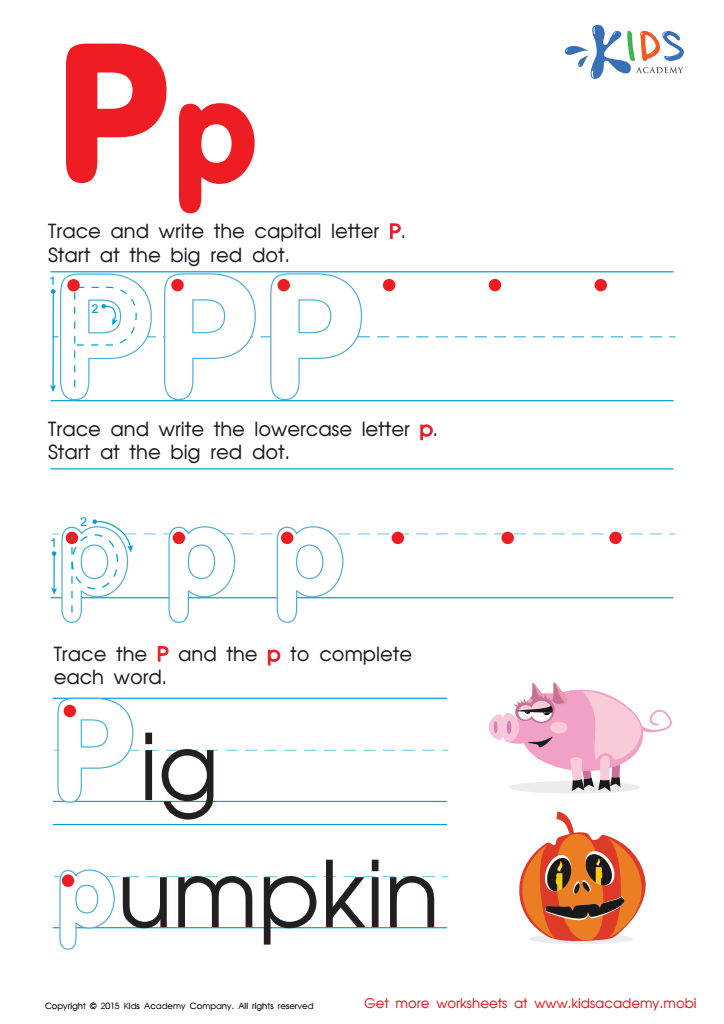
Letter P Tracing Page
Trace the lines from the red dot to learn to write "P"! Then practice this letter with the fun activities: complete the word "Pig" and "Pumpkin". Check out Kids Academy to get more free ABC worksheets.
Letter P Tracing Page
Worksheet
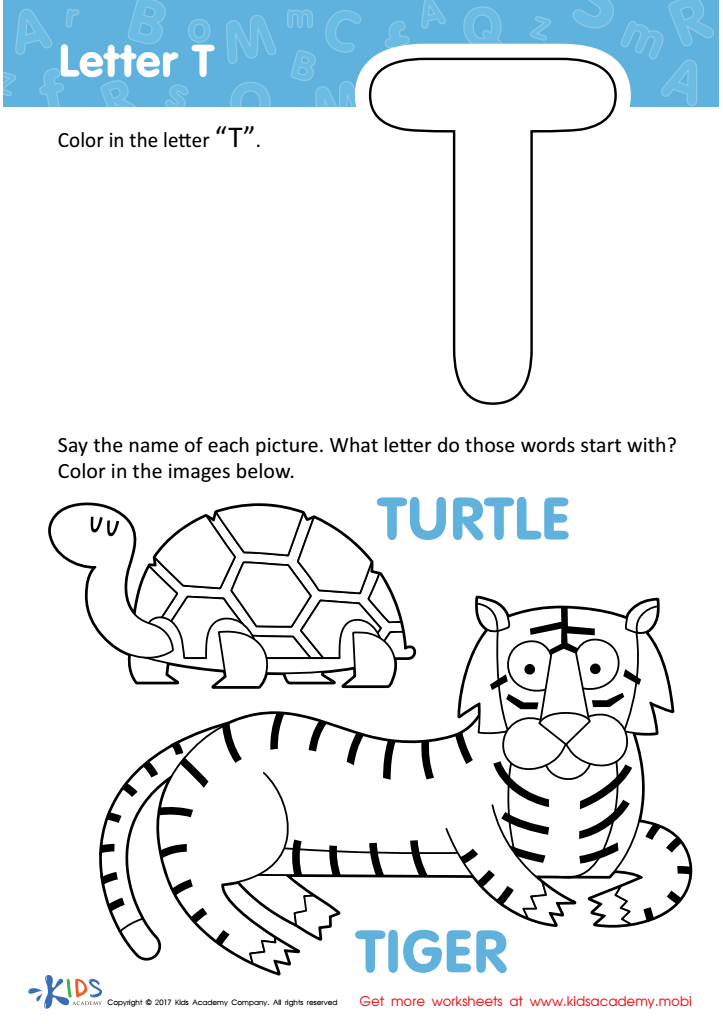
Letter T Coloring Sheet
Introduce your child to the letter "T" and its animals – turtles and tigers! With this coloring page, you can stimulate your child's imagination and creativity, while helping them recognize the letter "T". Have fun with your child and get coloring!
Download (PDF)
 Assign to My Students
Assign to My Students
Letter T Coloring Sheet
Worksheet
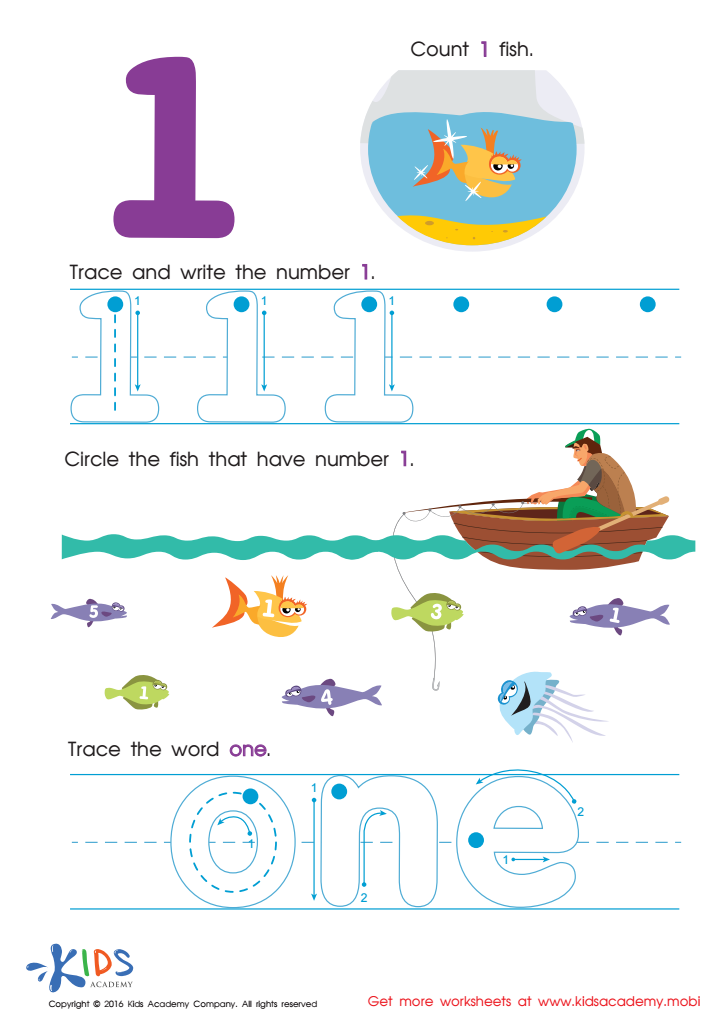
Learning to Write 1 Worksheet
Learning to write numbers can be easy and fun! Get this new number worksheet to help your child excel. Practice counting, tracing and writing the number “one”, then circle the fish with “1” on them. Revise spelling and have fun! Get more tracing numbers worksheets at Kids Academy and enjoy the learning process.
Learning to Write 1 Worksheet
Worksheet
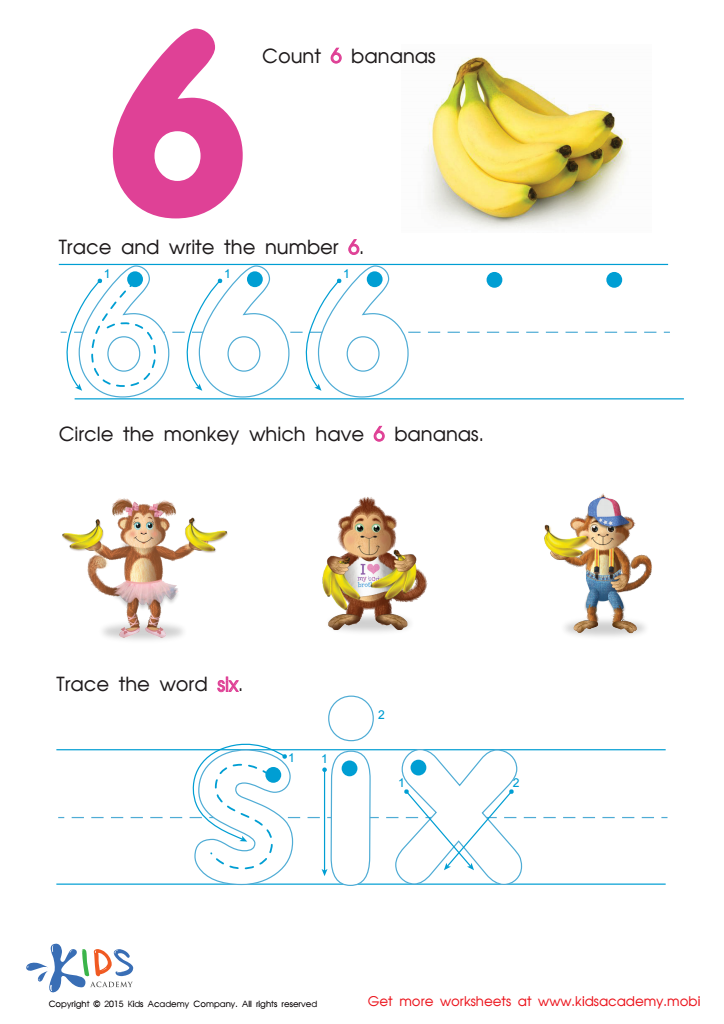
Tracing And Writing Number 6 Worksheet
Learn numbers in a fun way with our preschool number worksheets. Count six bananas, trace and write the number, find the monkey with six bananas, and trace the word "six." Explore more activities at Kids Academy.
Tracing And Writing Number 6 Worksheet
Worksheet

Letter H Tracing Page
Trace the letter "H", then practice writing its lowercase form. Finally, choose your favorite form of transport and ride away! Get our worksheets to make learning fun and easy.
Letter H Tracing Page
Worksheet
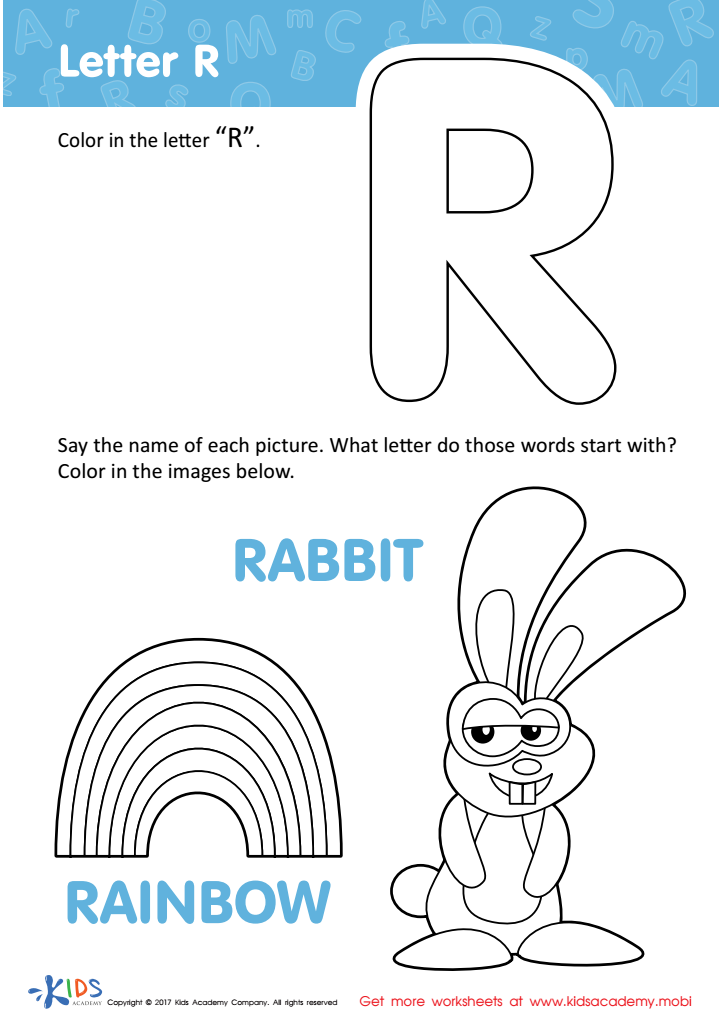
Letter R Coloring Sheet
Let your child explore the rainbow with this fun letter "R" coloring page! They can learn to recognize the letter and make connections to words, all while having fun! Make alphabet learning enjoyable with joyful coloring pages.
Download (PDF)
Assign to My Students
Assign to My Students
Letter R Coloring Sheet
Worksheet
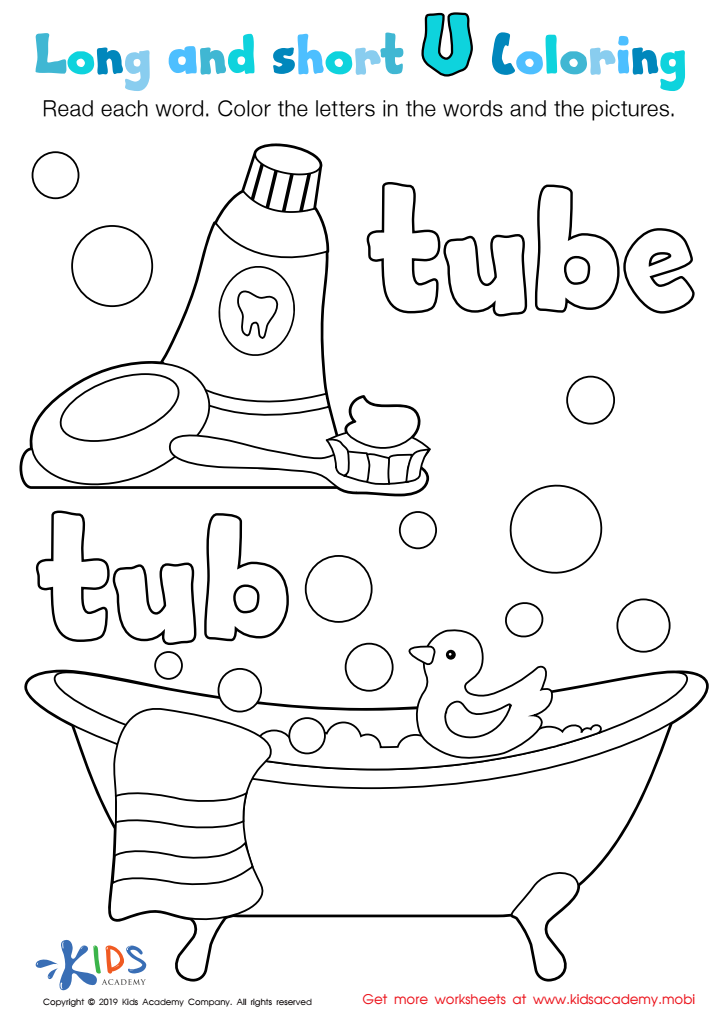
Long and Short U Worksheet
Revised: Spice up your lesson on long and short vowels with this fun printout! Kids read the words "tube" and "tub," then reinforce the sound by coloring in the words and pictures. It's a great way to make phonics class enjoyable!
Download (PDF)
Assign to My Students
Assign to My Students
Long and Short U Worksheet
Worksheet
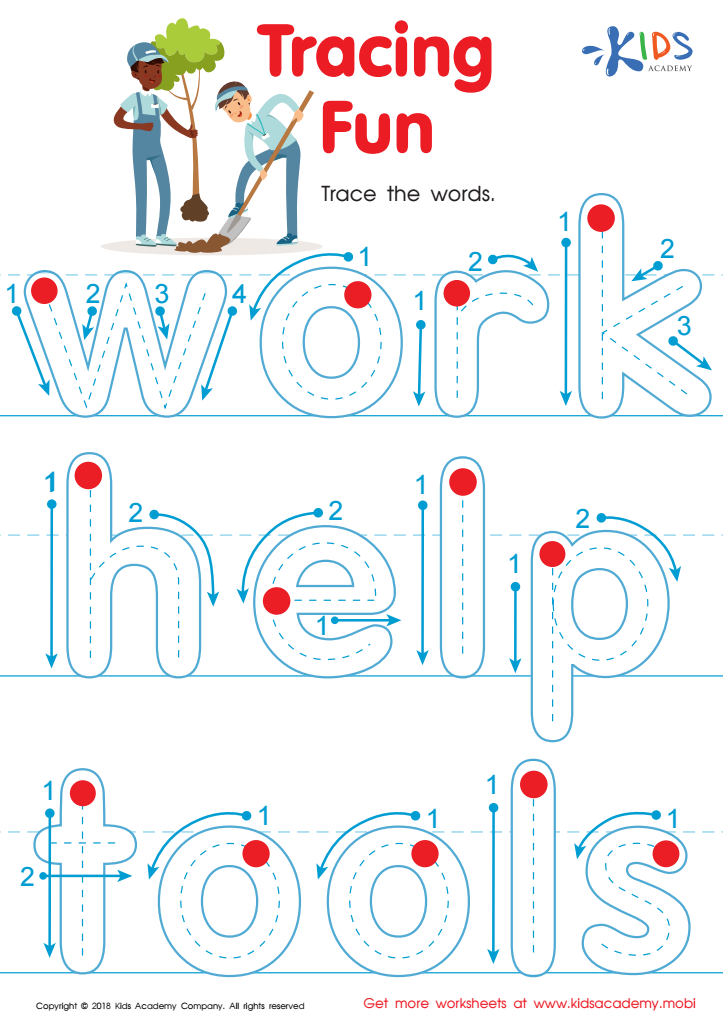
Tracing Fun Worksheet
Believe it or not, good handwriting helps with reading! Starting at the top left and writing legibly builds reading skills. This free worksheet helps little learners practice basic sight words. Red dots show them where to start and the words provide reinforcement without them realising. An enjoyable way to boost their reading and writing.
Tracing Fun Worksheet
Worksheet
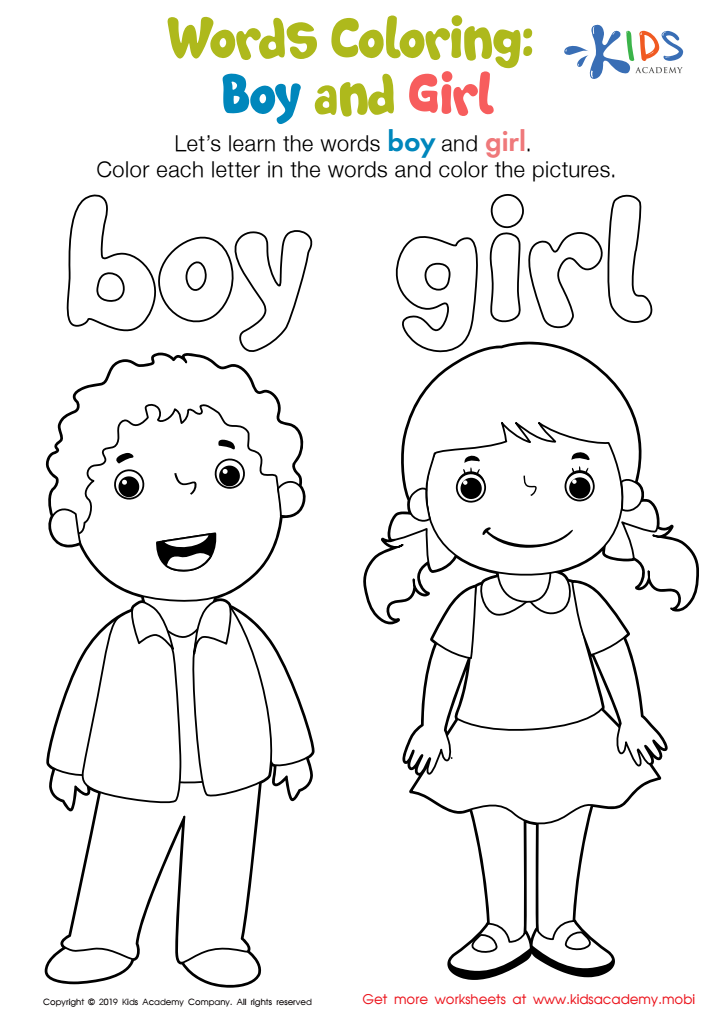
Boy and Girl Words Coloring Worksheet
Help your students build their sight word vocabulary! Early readers may not be able to sound out all words, so this worksheet teaches them to read two important sight words: boy and girl. They will color the letters and a picture of each, making it a fun and educational way to learn. Download the PDF now.
Download (PDF)
Assign to My Students
Assign to My Students
Boy and Girl Words Coloring Worksheet
Worksheet
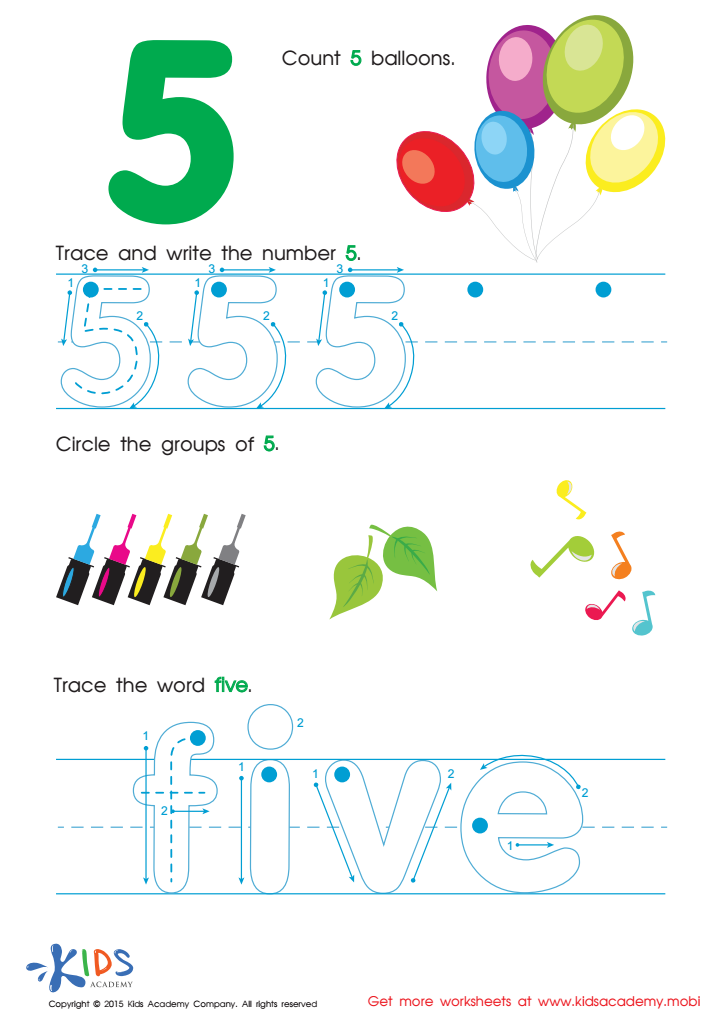
Practice Writing Number 5 Worksheet
Make learning numbers fun! Let your kids count the balloons, trace numbers, and circle the groups with five items. Also, have them trace the word "five" for letter revision. Get the full collection of preschool number worksheets from Kids Academy for a fun and interactive learning experience.
Practice Writing Number 5 Worksheet
Worksheet

Long and Short E Worksheet
This fun printout makes learning phonics enjoyable for Grade 3 students. Get them to read the words “tree” and “bed” to recognize the different sounds of the letter “E”. After hearing the words they can color the words and the pictures to understand differences between long and short vowels.
Download (PDF)
Assign to My Students
Assign to My Students
Long and Short E Worksheet
Worksheet
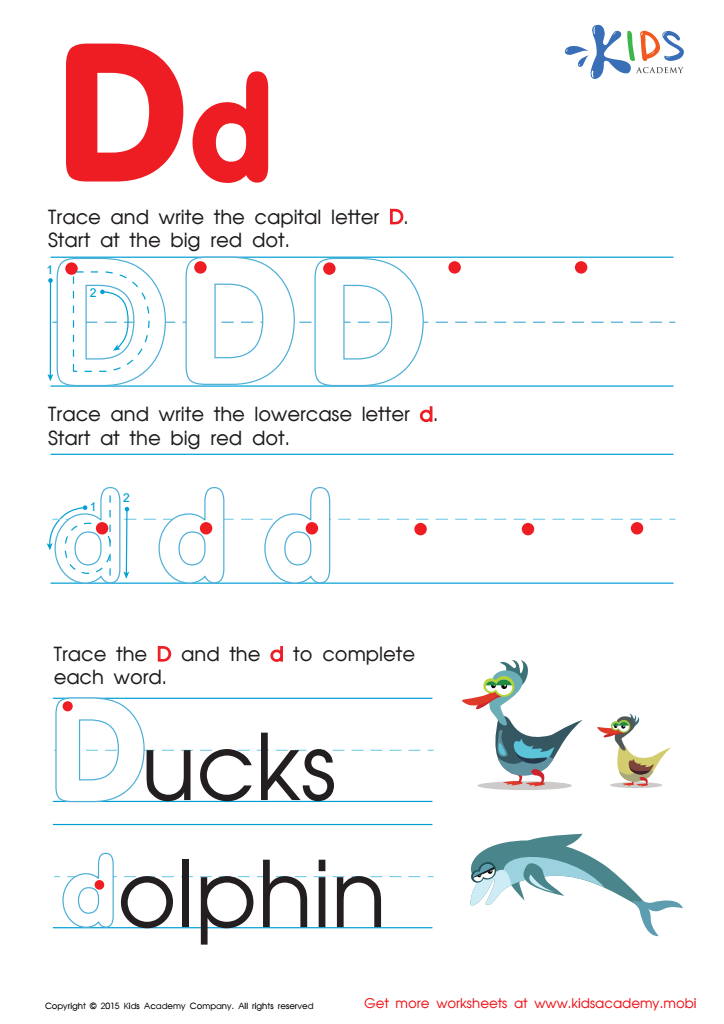
Letter D Tracing Page
Trace and write capital and lowercase letter "D" with our free printable alphabet worksheet! Be careful not to mix up "b" and "d" - just look at the ducks and write their first letter. The dolphin wants to join the fun too - do you like dolphins? Get more fun worksheets and activities at Kids Academy!
Letter D Tracing Page
Worksheet
Join Kids Academy for Free
Who is primarily going to use this learning content?


Hand-eye coordination is a fundamental skill crucial for children's overall development, particularly in early education. For Grade 2 students beginning English, this skill significantly impacts learning. Teachers and parents must understand that good hand-eye coordination fosters better handwriting, which in turn supports language development. As kids learn to write, read, and express themselves in English, their ability to smoothly control their hand movements while focusing on text or images ensures clearer, more precise work. This coordination is essential not only for writing but also for basic tasks like turning pages or using educational tools.
Moreover, integrating fine motor activities into lessons, such as tracing letters or copying words, can greatly enhance their reading and writing skills in English. These activities help bridge the gap between understanding spoken language and expressing it in written form. Beyond academic benefits, strong hand-eye coordination aids in building confidence and independence in young learners. It supports the successful execution of recreational activities, contributing to the child's overall physical and cognitive growth. For these reasons, educators and parents should proactively encourage activities that develop hand-eye coordination, ensuring that children receive a well-rounded, effective educational foundation in their formative years.