Numerical problem solving Grade 2 Worksheets
3 filtered results
Difficulty Level
Grade
Age
-
From - To
Subject
Activity
Standards
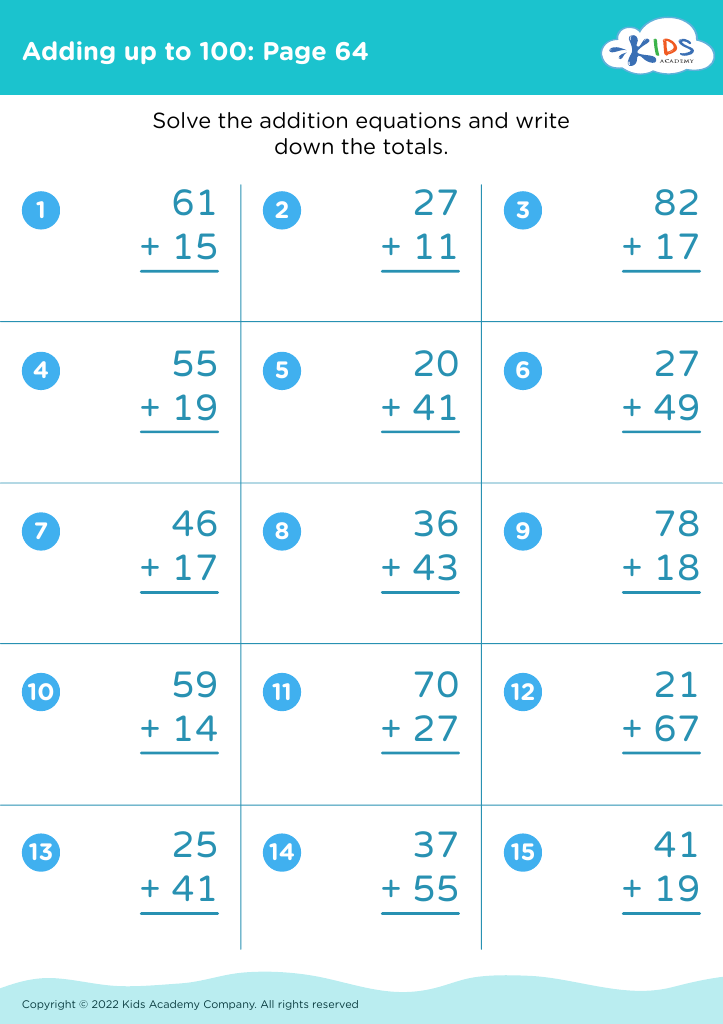
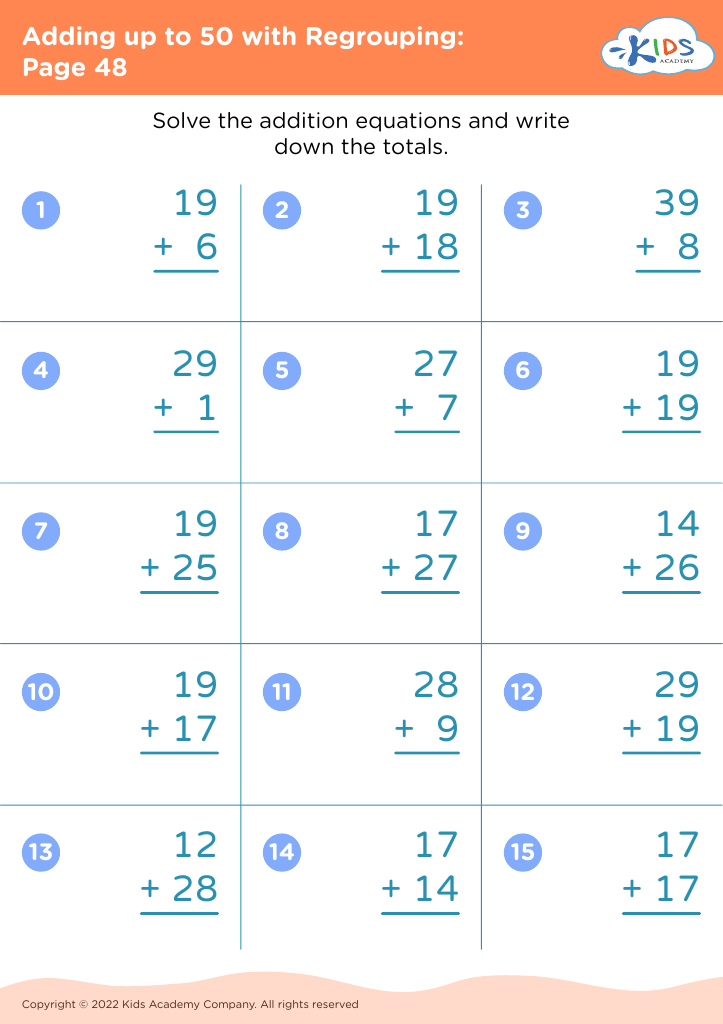
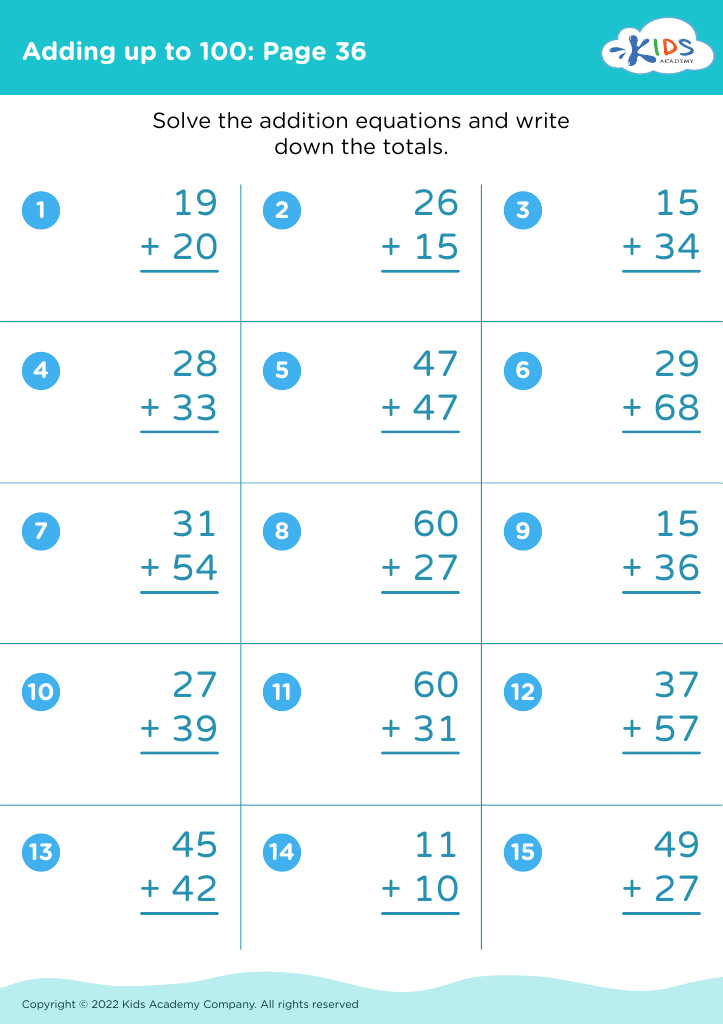
Engage young minds with our Numerical Problem Solving Grade 2 Worksheets! These expertly designed resources help second graders develop essential mathematical skills through fun and interactive activities. Covering addition, subtraction, multiplication, and division, our worksheets are crafted to enhance problem-solving abilities and nurture logical thinking. Step-by-step problems and visually appealing graphics make learning enjoyable and accessible, ensuring students grasp key concepts while building confidence. Perfect for classroom use or additional home practice, our worksheets align with educational standards to support your child's academic growth. Boost proficiency in math with Kids Academy's comprehensive approach to numerical problem solving.
Favorites
With answer key
Interactive
Join Kids Academy for Free
Who is primarily going to use this learning content?








Numerical problem-solving skills in Grade 2 lay a crucial foundation for a child's future academic success and everyday life skills. At this stage, children are transitioning from basic counting and number recognition to applying these concepts in practical situations. Parents and teachers should care deeply about nurturing these skills for several key reasons.
Firstly, mastering problem-solving with numbers enhances critical thinking. It encourages children to think logically, make connections, and develop strategies to find solutions. These skills are not only vital for mathematics but are transferable to other subjects and real-world situations.
Secondly, confidence in numerical problem-solving at an early age can significantly boost a child's confidence in their overall academic abilities. Early success in math fosters a positive attitude towards the subject, reducing anxiety and making future mathematical concepts easier to grasp.
Furthermore, strong numerical problem-solving skills are integral to daily life. From managing money to telling time, these abilities help children navigate through everyday tasks effectively and independently.
Lastly, engaging in problem-solving exercises strengthens other cognitive abilities like memory, attention to detail, and perseverance. By caring about their child's or students' numerical problem-solving skills, parents and teachers provide them with essential tools for lifelong learning and problem-solving.