Recognizing Patterns Grade 2 Adding 2-digit Numbers Worksheets
3 filtered results
-
From - To
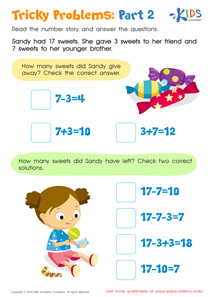
Boost your second grader's math skills with our engaging "Recognizing Patterns Grade 2 Adding 2-Digit Numbers Worksheets." Designed to help young learners master the fundamentals of addition, these worksheets focus on identifying numerical patterns and enhancing calculation abilities. By exploring various addition strategies, students will gain confidence as they tackle problems involving two-digit numbers. Perfect for classroom or home use, our worksheets provide clear instructions and visually appealing formats to keep kids motivated. Empower your child’s learning journey and watch them thrive in math with these enjoyable and educational activities that make recognizing patterns fun and effective!
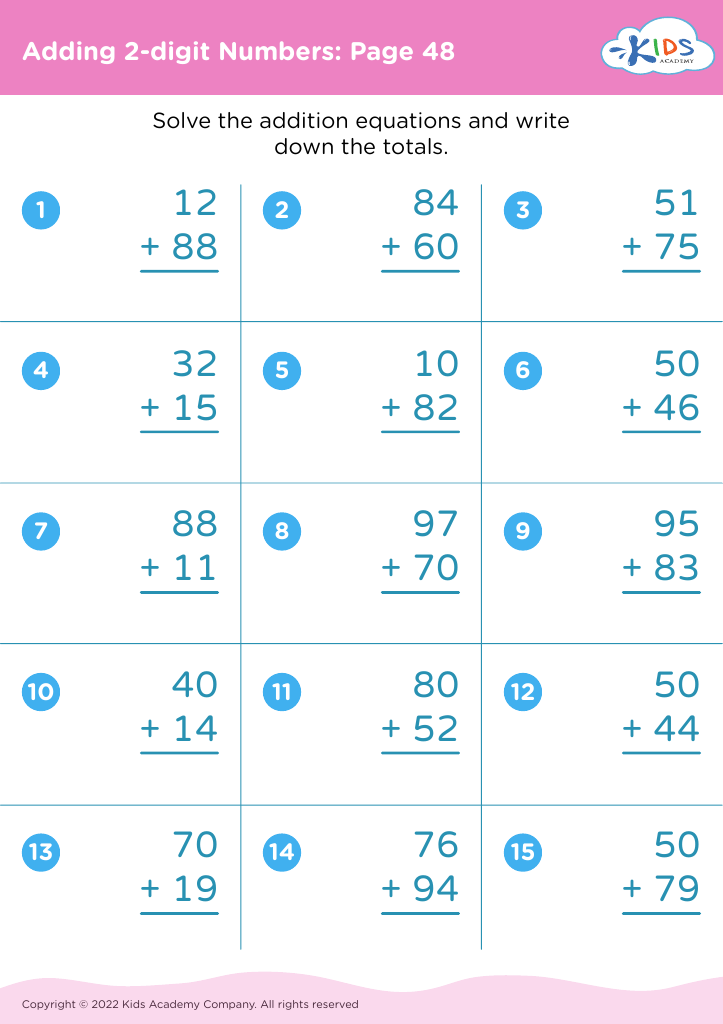
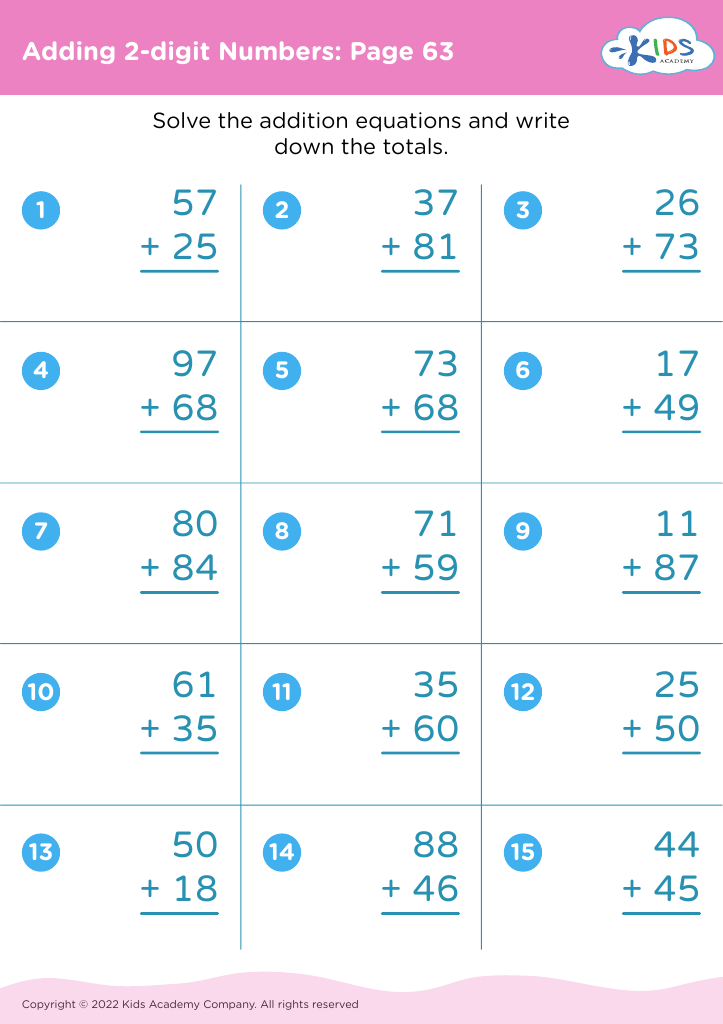
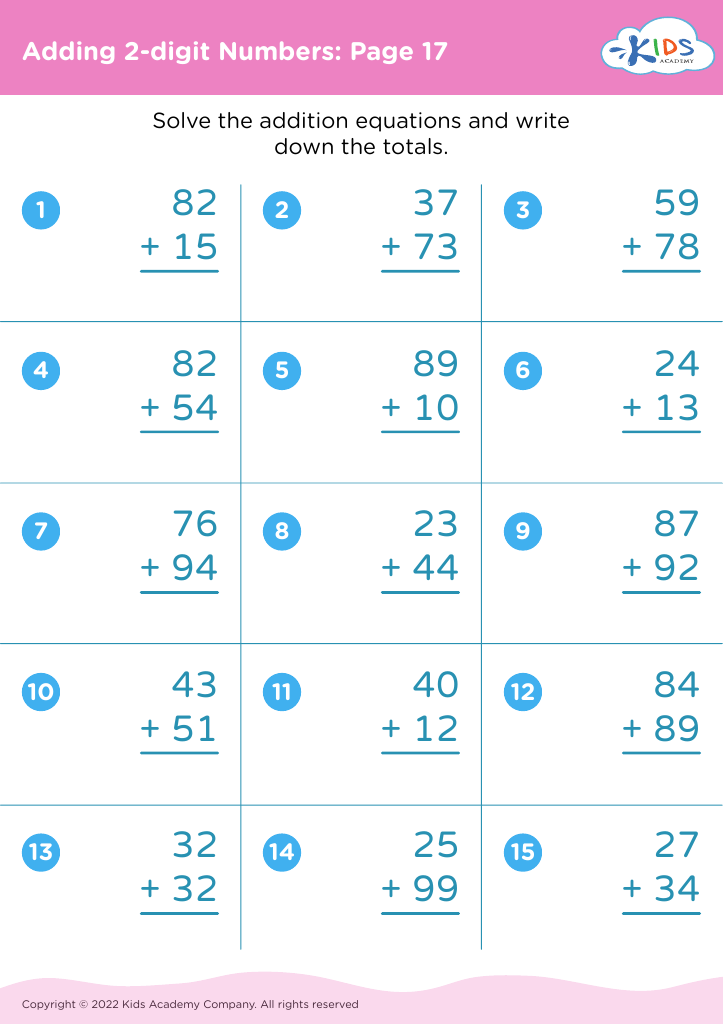







Recognizing patterns in adding 2-digit numbers is a fundamental skill that lays the groundwork for students' future mathematical understanding. For parents and teachers, focusing on this skill is essential for numerous reasons.
Firstly, recognizing patterns helps students develop number sense. When children see that adding two numbers ending in zeros results in a number ending in zero, for example, they can apply this understanding to more complex calculations later on.
Secondly, learning to identify patterns builds confidence in young learners. As students notice consistent results and relationships in mathematics, they feel a sense of mastery, encouraging them to take on more challenging problems with a positive attitude.
Additionally, pattern recognition promotes critical thinking and problem-solving skills. It encourages children to look for relationships between numbers, fostering a deeper understanding of addition beyond rote memorization of facts.
Furthermore, integrating these pattern lessons into everyday activities can enhance real-world mathematics awareness—helping students see math as relevant and applicable.
Ultimately, when parents and teachers prioritize recognizing patterns in 2-digit addition, they equip students with essential tools for academic success and lifelong learning in mathematics. This foundational knowledge can pave the way for understanding more complex mathematical concepts in the future.