Understanding symmetry Grade 2 Adding 2-digit Numbers Worksheets
5 filtered results
-
From - To
Discover our expertly designed "Understanding Symmetry and Adding 2-Digit Numbers Worksheets" tailored for Grade 2 learners. These engaging and educational worksheets aim to strengthen your child's math skills by exploring symmetry concepts and mastering 2-digit addition. Through fun and interactive exercises, kids will enhance their understanding of symmetrical shapes while becoming proficient in adding two-digit numbers without regrouping. Our printable worksheets provide a balanced blend of visual learning and practice problems, ensuring that young learners build confidence and precision in their mathematical abilities. Ideal for classroom use or at-home practice, these resources are perfect for fostering foundational math skills.
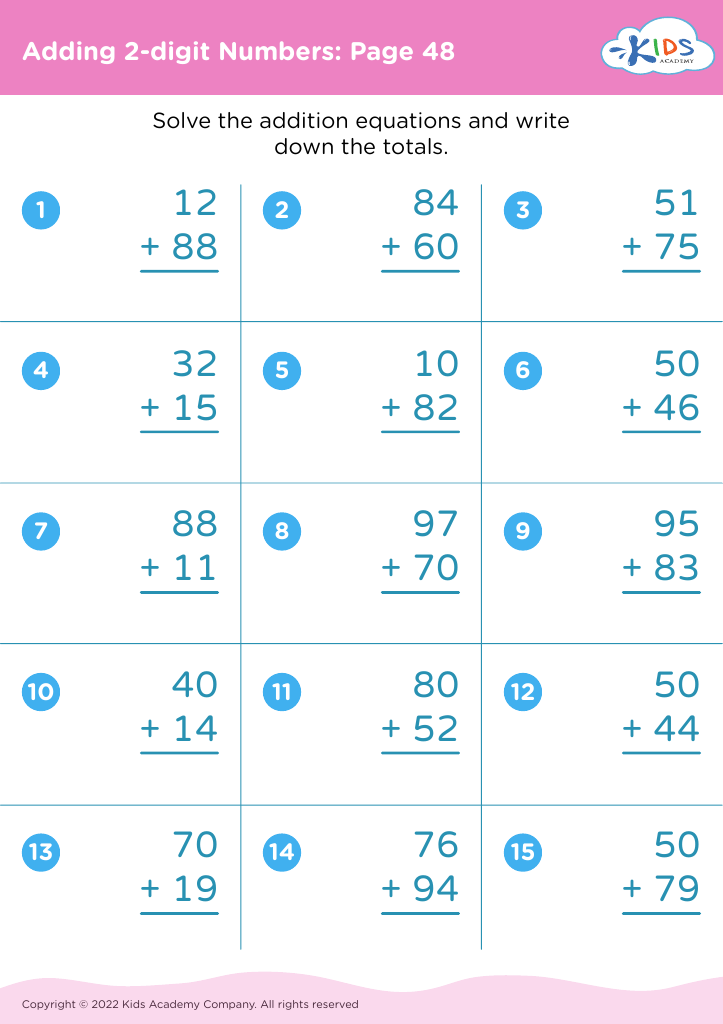
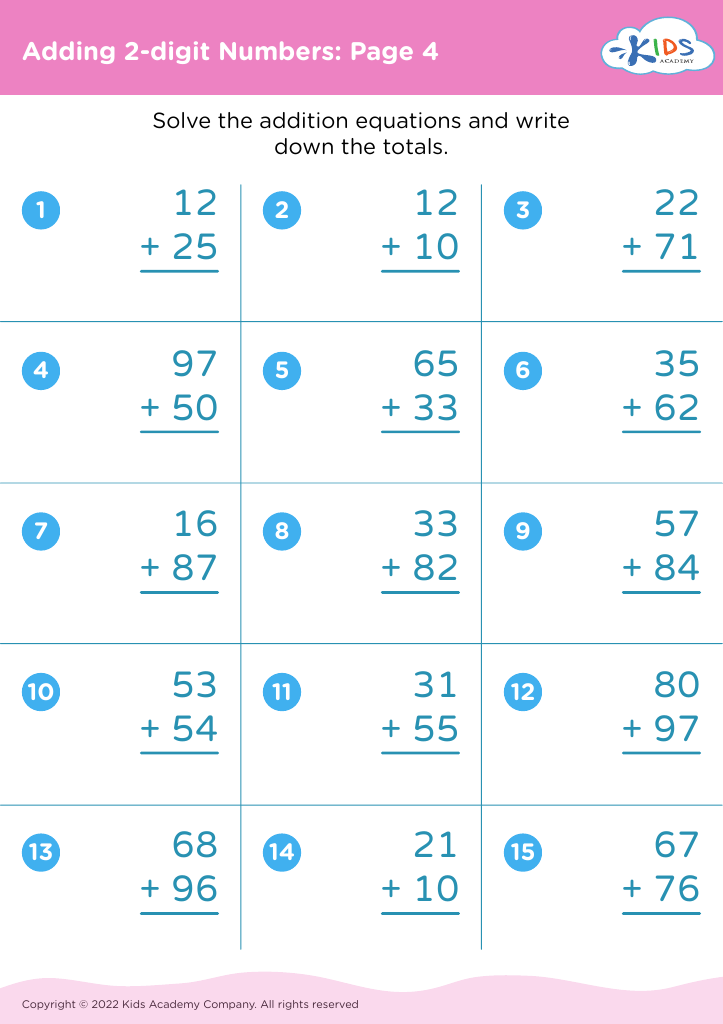
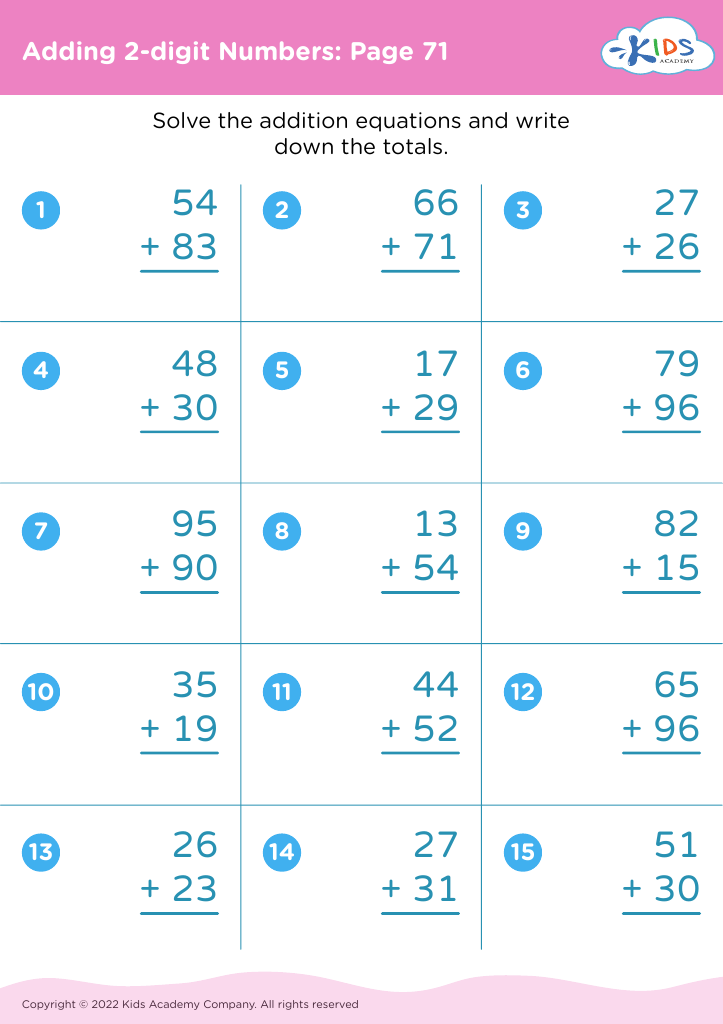
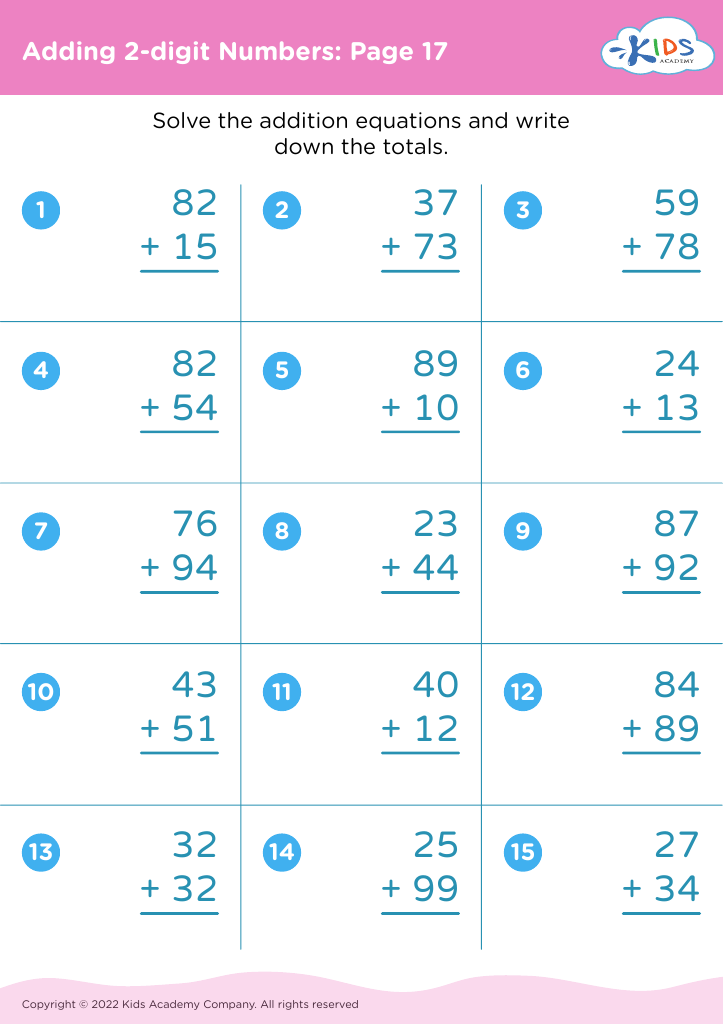
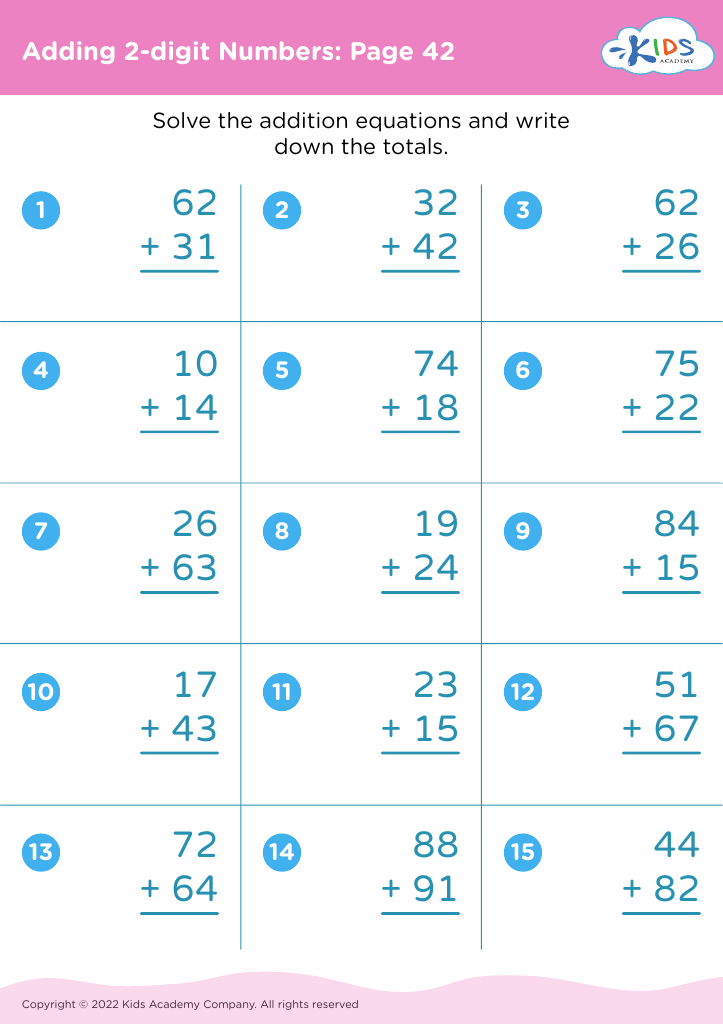







Understanding symmetry and being able to add 2-digit numbers are foundational skills for second graders that play a critical role in their overall cognitive development and their future success in mathematics.
Symmetry is a basic concept that helps children develop spatial awareness and visual skills. It teaches them to recognize and create patterns, improving their ability to organize and analyze information. This skill is not only fundamental in math but is also applicable in various subjects like art, science, and even everyday life. For example, understanding symmetry can help children in identifying shapes, solving puzzles, and appreciating nature, as most living organisms and objects tend to have symmetrical properties.
Adding 2-digit numbers, on the other hand, builds the foundation for more advanced arithmetic operations. It enhances a child's number sense, helping them understand place value and the decimal system better. Mastery of 2-digit addition is critical as it is a stepping stone to learning more complex math concepts such as subtraction, multiplication, and division.
Moreover, these skills foster a sense of achievement and boost confidence, encouraging a positive attitude towards math. When parents and teachers prioritize these competencies, they are not only preparing kids for higher academic pursuits but also equipping them with essential problem-solving skills that are invaluable in everyday life.