Basic Addition Skills Grade 2 Adding up to 100 with Regrouping Worksheets
3 filtered results
-
From - To
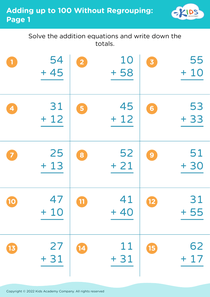
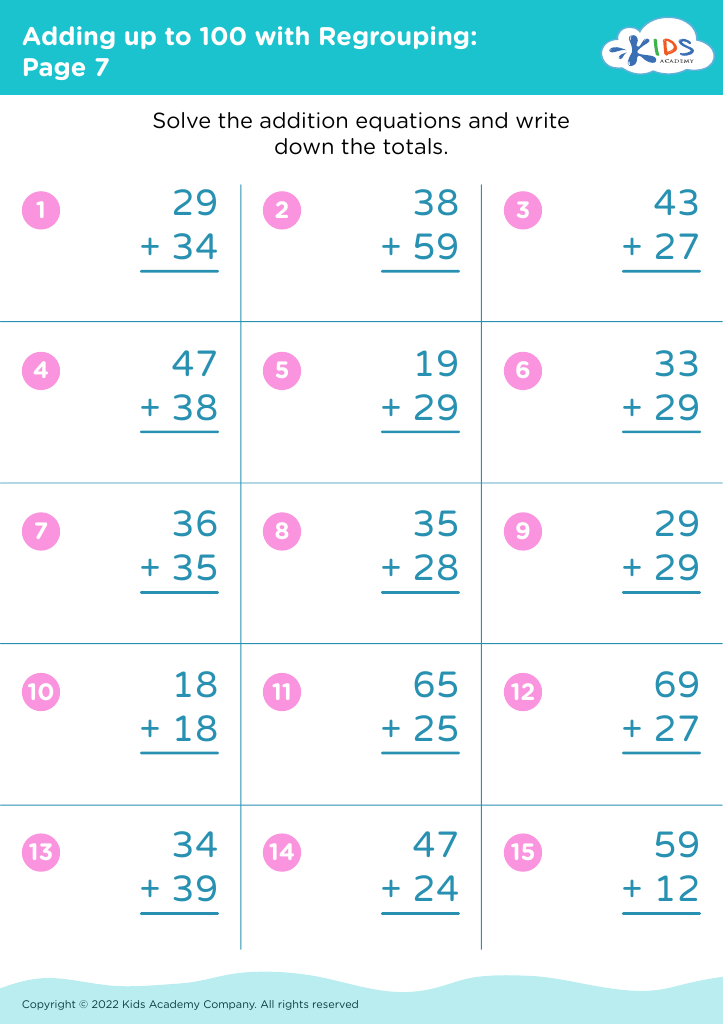
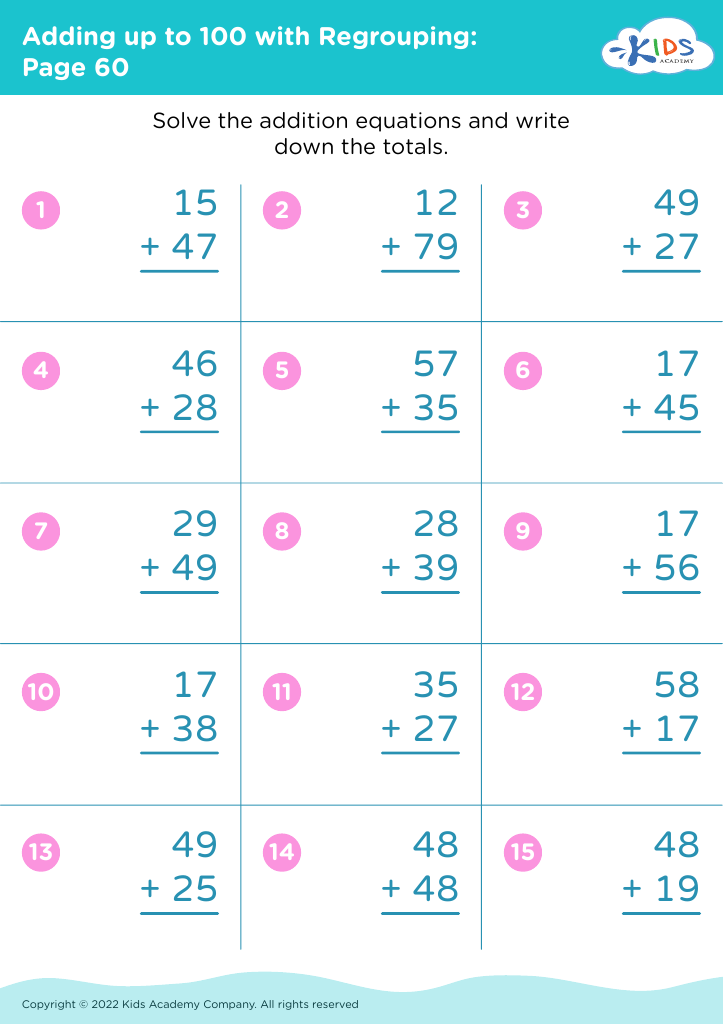
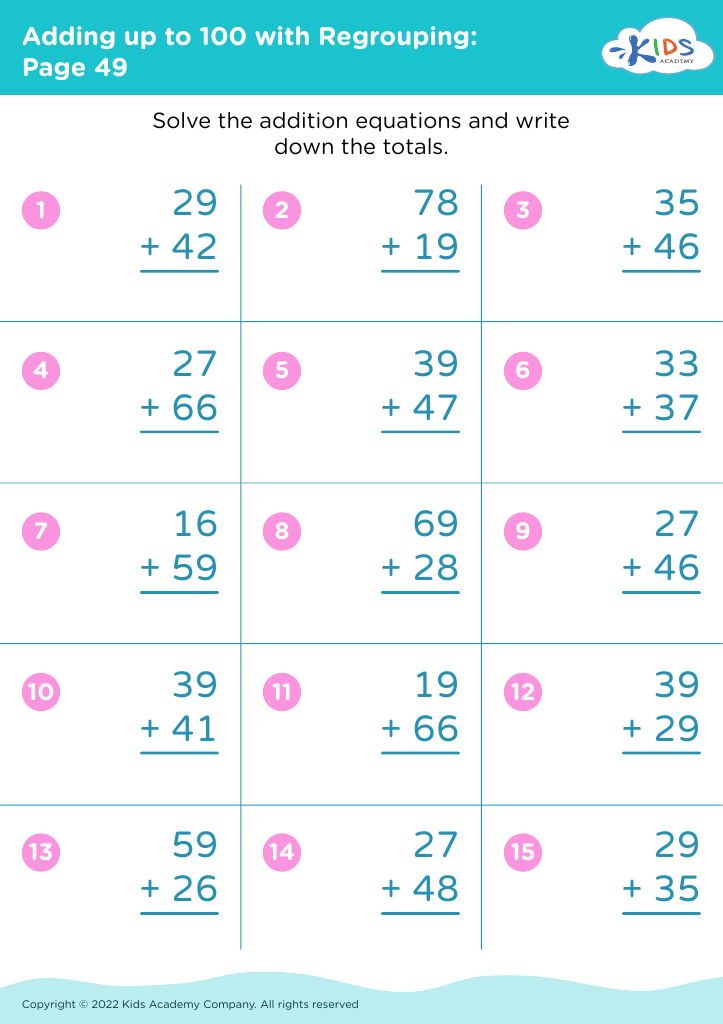
Enhance your second grader’s understanding of addition with our engaging "Basic Addition Skills: Adding Up to 100 with Regrouping Worksheets." Designed to help young learners master addition techniques, these worksheets focus on sums that require regrouping, laying a strong foundation for future math concepts. Each worksheet features fun themes that stimulate interest while providing essential practice. These resources promote key problem-solving skills, boost confidence, and encourage independent learning. Perfect for classroom use or extra practice at home, our worksheets align with curriculum standards, ensuring your child builds both proficiency and enthusiasm for mathematics. Start your child's math journey today!




Parents and teachers should care about basic addition skills, especially when it comes to Grade 2 competencies like adding up to 100 with regrouping, for several important reasons. First, mastering these skills lays the foundation for a student's future success in mathematics. At this level, students begin to encounter more complex math concepts, and a strong grasp of addition helps them transition smoothly into subtraction, multiplication, and division.
Additionally, understanding regrouping, also known as carrying, is crucial. It teaches students the place value system, enhancing their number sense. This foundation not only boosts their confidence in math but also develops critical thinking skills as they learn to approach problems systematically.
Moreover, these skills are essential in everyday life. Parents often observe children struggle with basic financial concepts or measurements, which are related to addition. Thus, a solid grasp of basic addition enables students to handle money, time, and other real-world situations more effectively.
Lastly, confident math skills foster a positive attitude towards learning. By supporting students in developing these foundational skills, parents and teachers are empowering them for both academic and personal growth, ultimately setting them on a path for future success in various aspects of their lives.