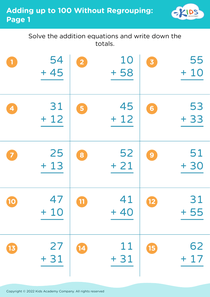
Basic Math Skills Grade 2 Adding up to 100 with Regrouping Worksheets
3 filtered results
-
From - To
Explore our "Basic Math Skills Grade 2: Adding Up to 100 with Regrouping Worksheets" to help your second graders enhance their math abilities! These engaging worksheets are designed to reinforce the concept of regrouping while adding two-digit numbers. Through various exercises, students will practice crucial math skills, improve their number sense, and develop problem-solving strategies. Perfect for classroom use or at-home practice, our comprehensive resources ensure that young learners grasp the fundamentals of addition clearly and confidently. Dive in and watch your child's math confidence soar as they master adding up to 100 with regrouping!
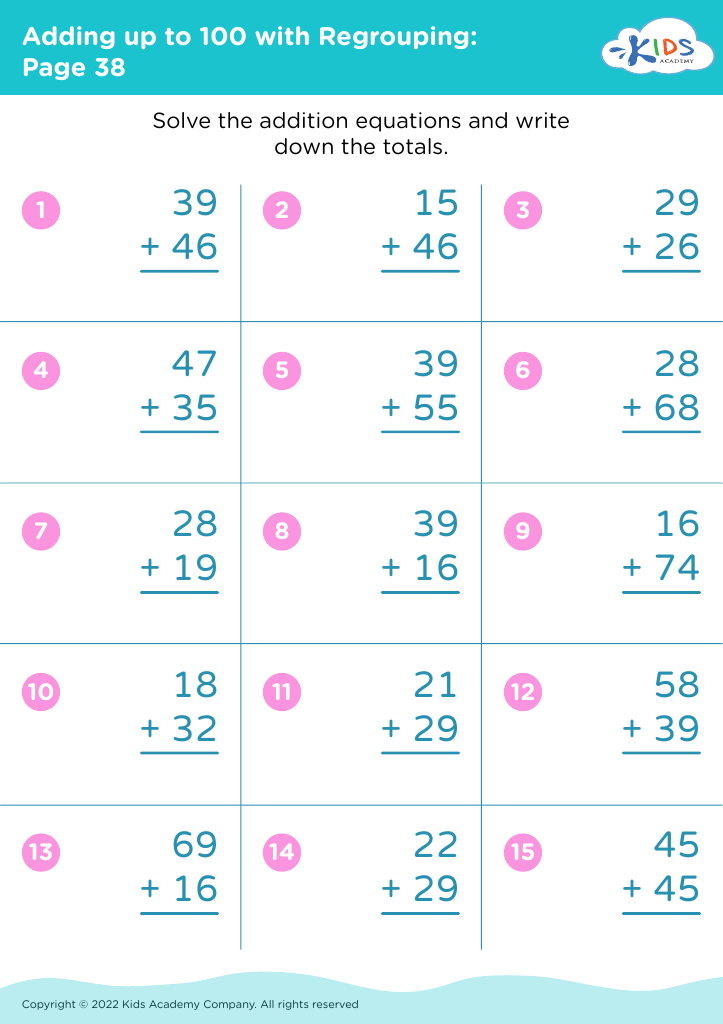
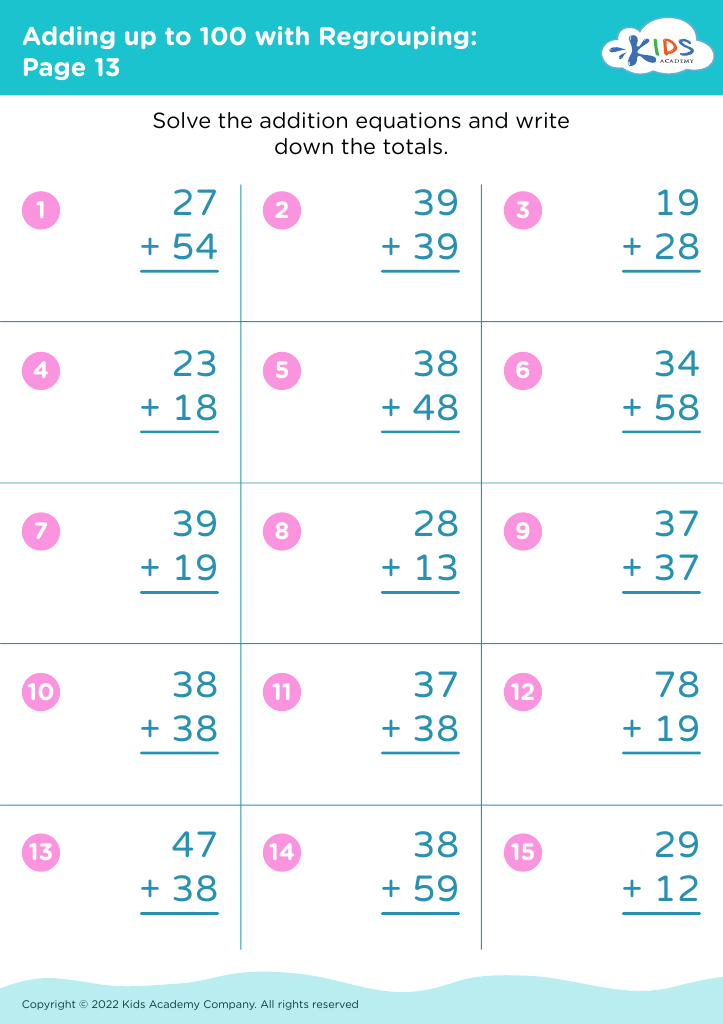
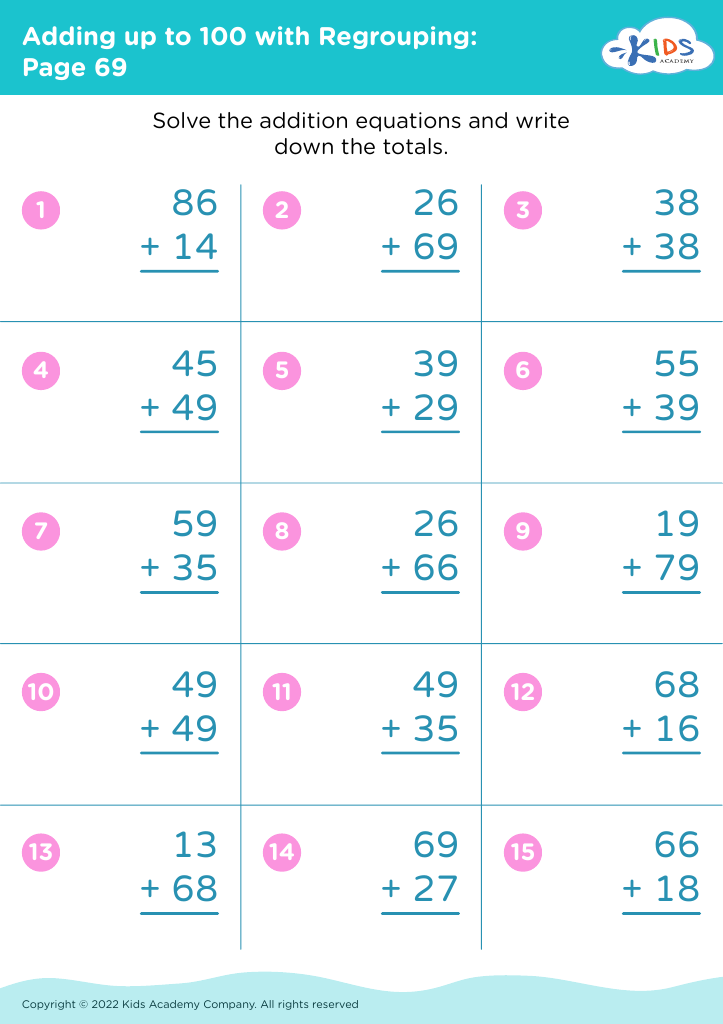




Parents and teachers should prioritize developing basic math skills, particularly the ability to add up to 100 with regrouping, in second graders for several important reasons. First, mastery of these skills forms the foundation for more complex mathematical concepts that students will encounter in later grades. Regrouping, or carrying over numbers, is a critical strategy that enables students to perform two-digit addition effectively, fostering their confidence in tackling larger numbers.
Second, strong basic math skills enhance problem-solving abilities in various real-world scenarios, enabling children to apply math concepts in everyday situations—like calculating time, money management, or measurements during activities.
Additionally, an early focus on these foundational skills can significantly affect students' attitudes toward math. Children who experience success with basic math are more likely to develop a positive view of math as a subject, which can persist throughout their educational journey.
Lastly, collaboration between parents and teachers can reinforce these skills through targeted practice and encouraging positive discussions around math. By fostering a supportive environment where children feel safe to explore and ask questions, both parents and educators play critical roles in shaping proficient and confident math learners.