Counting practice Grade 2 Adding up to 100 with Regrouping Worksheets
5 filtered results
-
From - To
Boost your second graders' math skills with our Counting Practice worksheets, specifically designed for adding up to 100 with regrouping! These engaging worksheets help young learners master addition with ease while building a strong foundation in essential math concepts. Each activity promotes critical thinking and encourages students to apply their knowledge through fun and interactive exercises. Perfect for classroom use or at-home practice, these carefully crafted resources enhance confidence and independence in solving addition problems. Help your child become a math whiz while enjoying the process of learning! Explore our collection today to support your child’s educational journey.
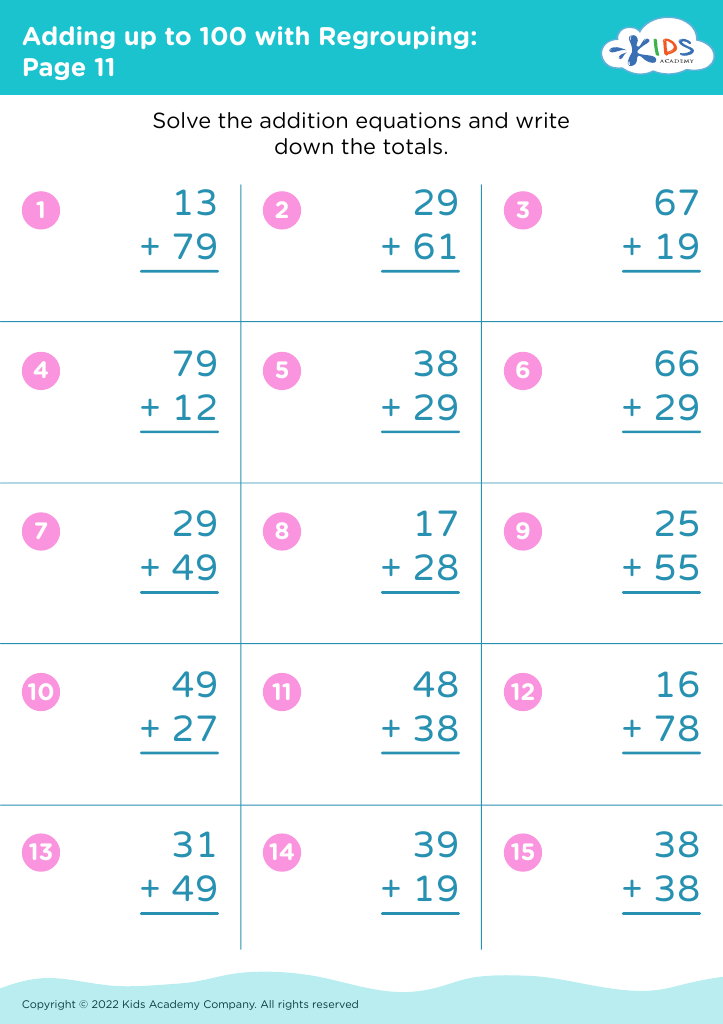
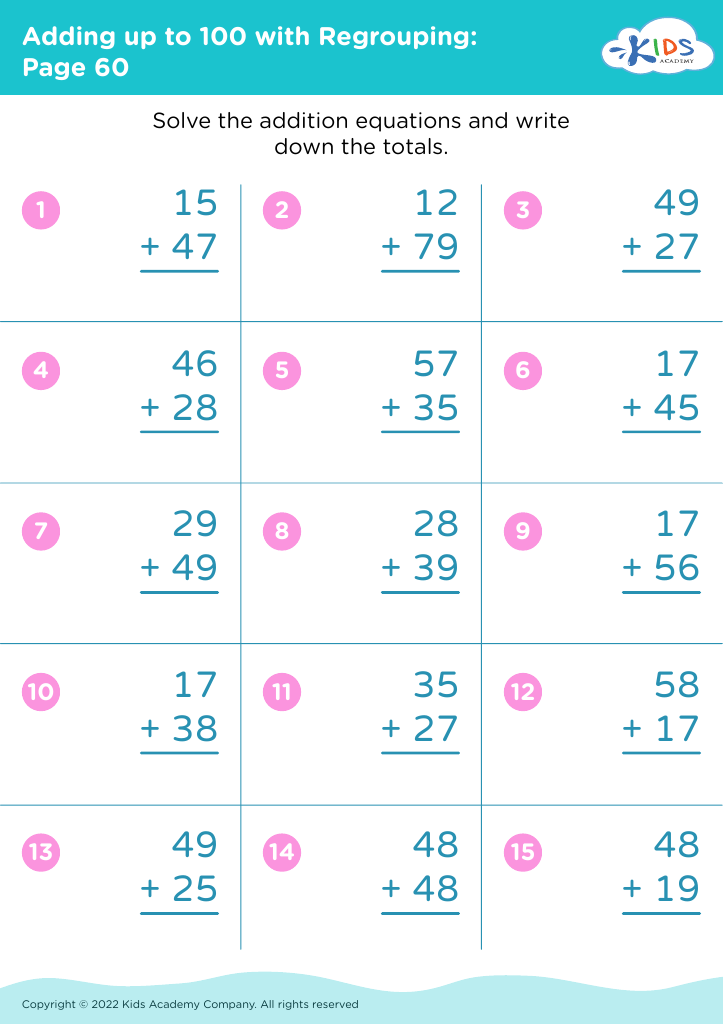
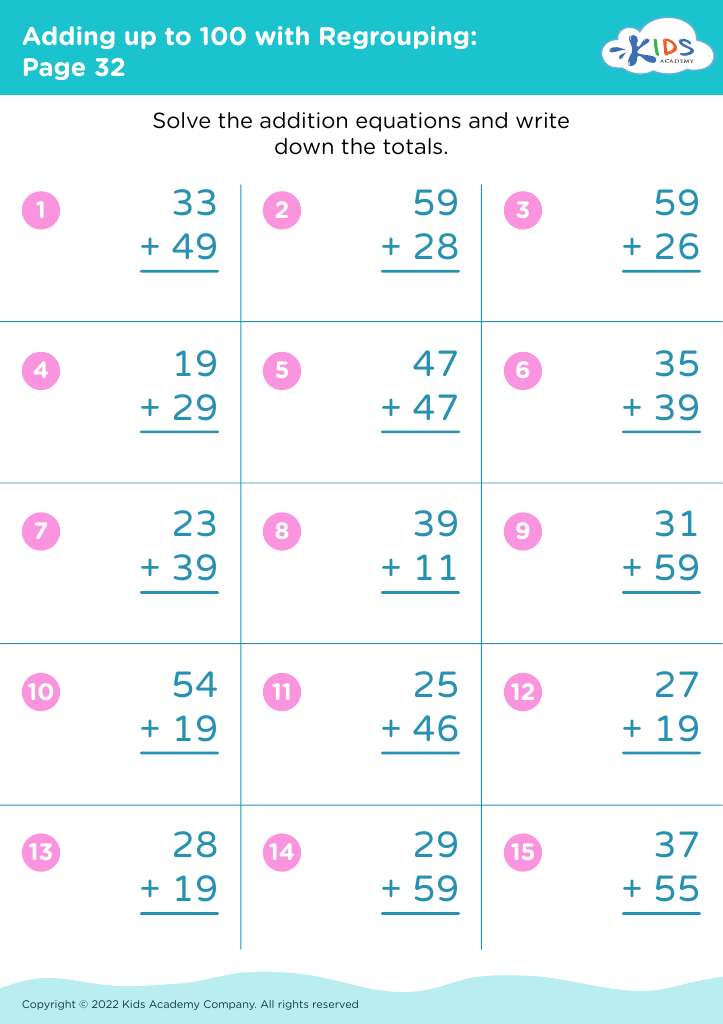
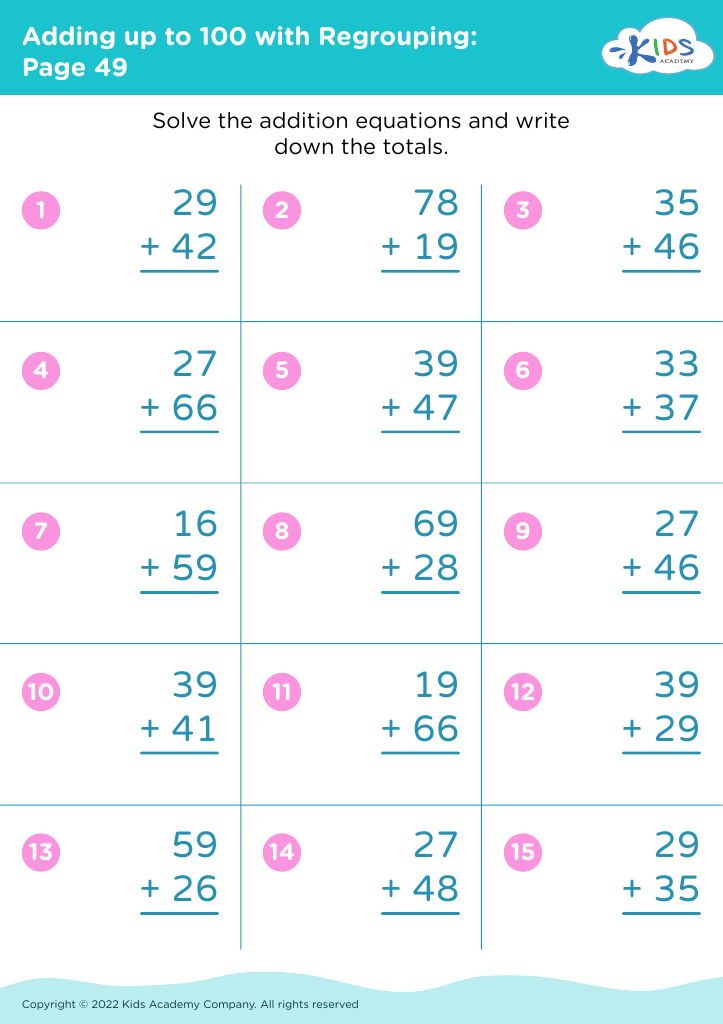
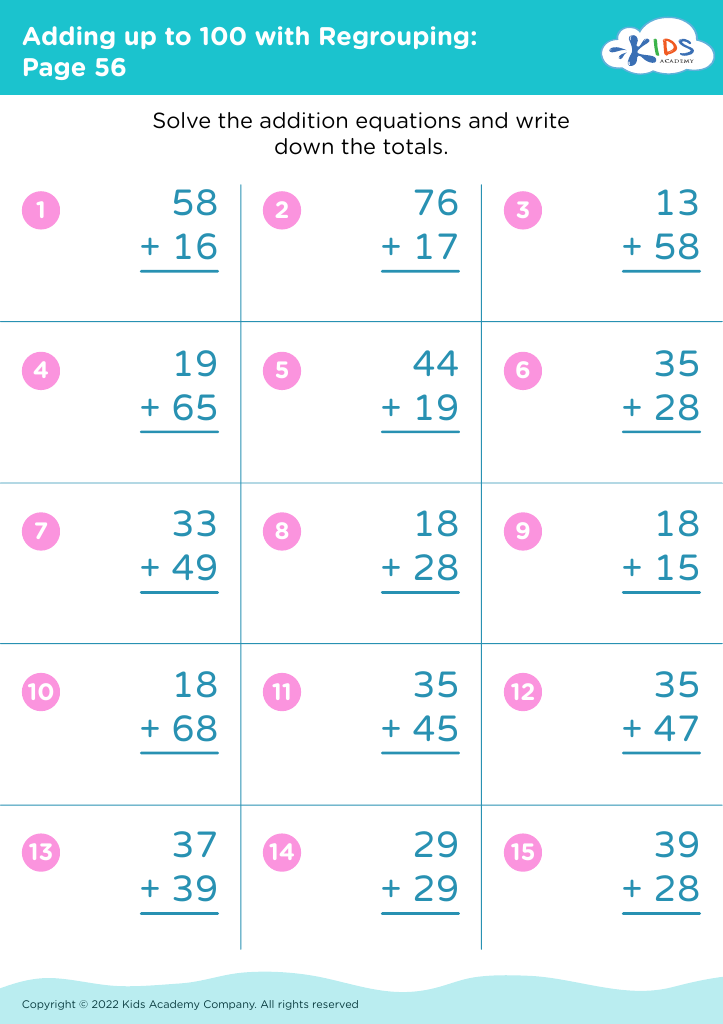




Counting practice in Grade 2, particularly adding up to 100 with regrouping, is crucial for several reasons. First, it lays a solid foundation for mathematical understanding. Mastering regrouping introduces students to essential concepts of place value, which are vital for progressing in arithmetic. When parents and teachers prioritize this practice, they help students build confidence in their number sense, which is integral not just for future math topics but also for everyday problem-solving.
Additionally, counting and adding with regrouping enhances critical thinking skills. Students learn to break down numbers into more manageable parts, fostering a flexible approach to math that is beneficial in both academic and real-world contexts. This skill aids in tackling more complex problems in later grades, thus making math less intimidating.
Moreover, a strong grasp of these fundamentals contributes positively to students’ overall academic performance, as math skills are intertwined with competencies in other subjects. Finally, when parents and teachers engage with their children in this practice, it reinforces the importance of learning and teamwork, creating a positive attitude toward math in a supportive environment. Together, they can ensure children develop essential skills that will benefit them throughout their educational journey and beyond.