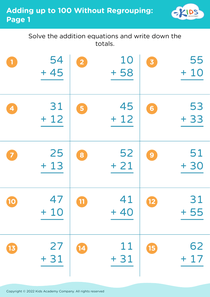
Fraction comparison Grade 2 Adding up to 100 with Regrouping Worksheets
3 filtered results
-
From - To
Enhance your Grade 2 students' math skills with our engaging worksheets on fraction comparison while adding up to 100 with regrouping. These carefully designed resources aim to reinforce students' understanding of fractions and their relationships. By practicing with fun and interactive activities, learners will develop confidence in comparing fractions through visual representations and hands-on exercises. Our worksheets promote critical thinking and problem-solving, ensuring your students grasp essential math concepts in a straightforward manner. Ideal for both classroom and home use, these resources cater to diverse learning styles and provide ample opportunities for mastery in fraction comparison and regrouping. Start your journey to mathematical proficiency today!
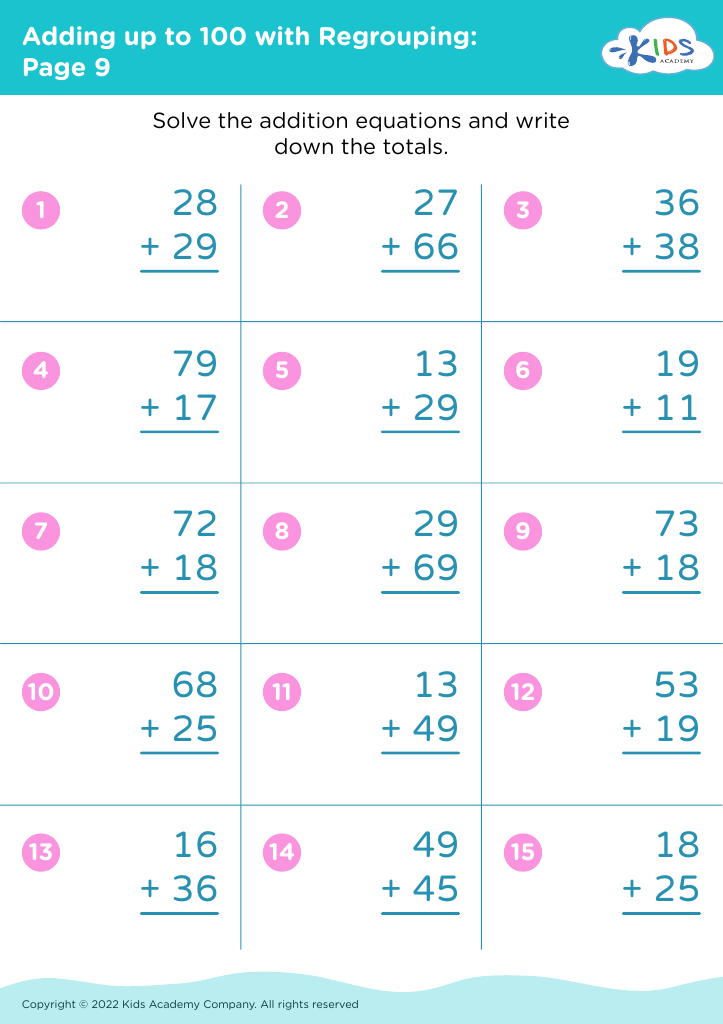
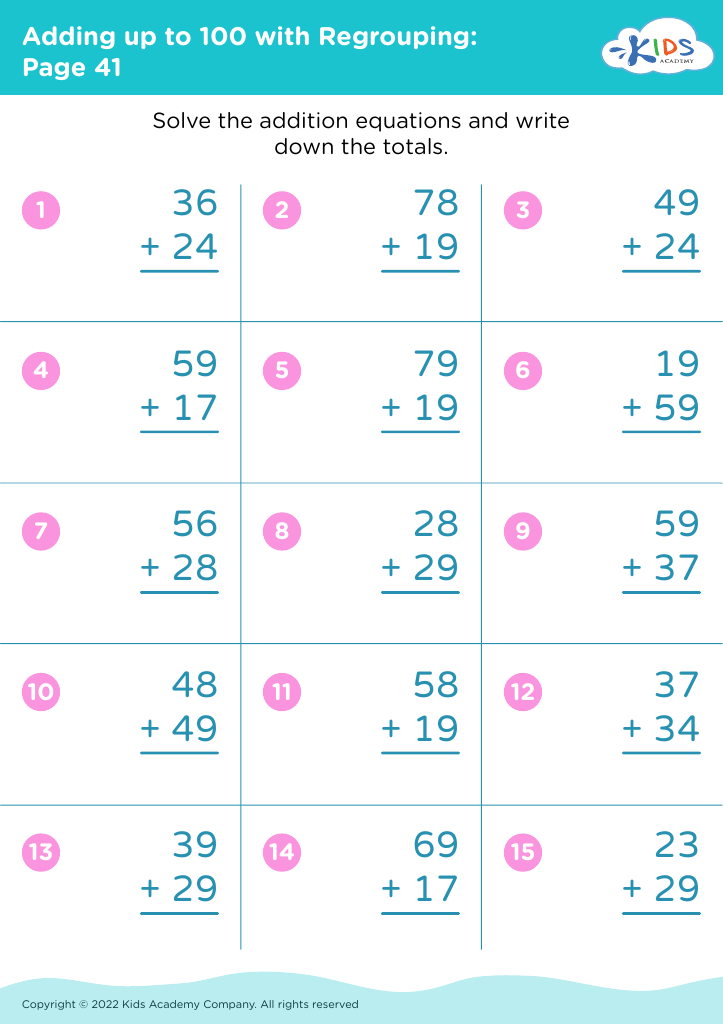
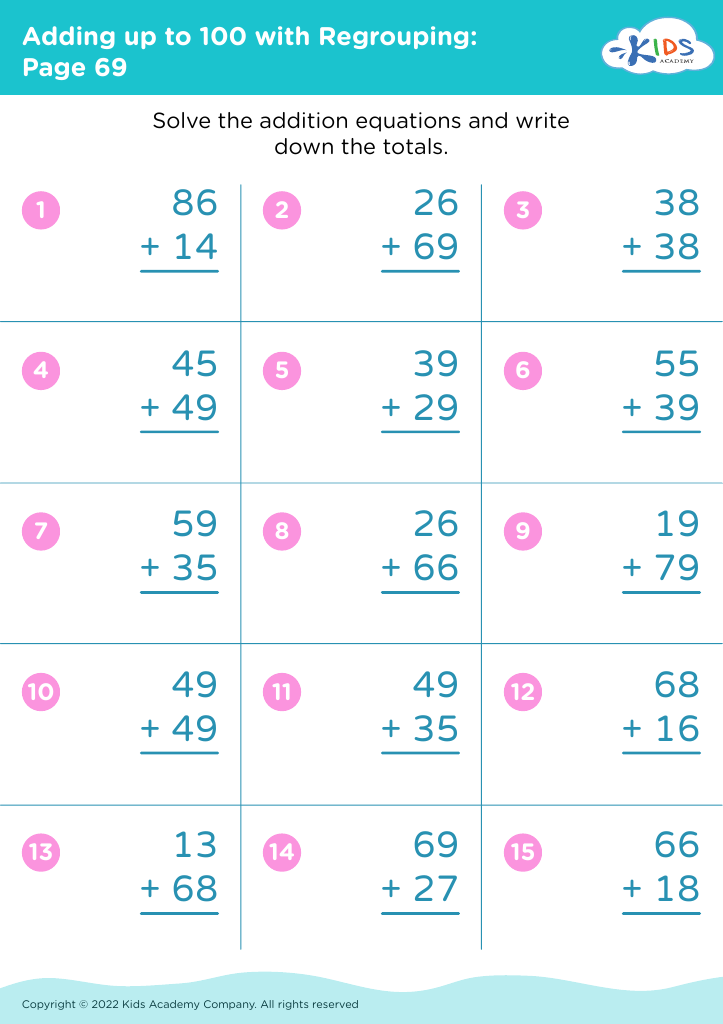




Understanding fraction comparison in Grade 2 is crucial for both parents and teachers because it serves as a foundation for students' future mathematical skills. At this age, children transition from concrete operations to more abstract thinking, making it essential for them to grasp the concept of fractions and how to compare them.
When students learn to compare fractions, especially in the context of adding numbers up to 100 with regrouping, they develop critical thinking skills and numerical fluency. This skill helps them understand not only fractions but also contributes to their overall understanding of addition, place value, and grouping—concepts vital for succeeding in higher-level math.
Furthermore, when children can visualize and manipulate numbers, they become more confident in their abilities, leading to a love for math. Engagement from parents and teachers supports this confidence by providing encouragement, resources, and real-life applications of these concepts. The collaborative interest fosters a supportive learning environment, making math not just an academic subject but a lifelong skill. Ultimately, comparisons and regrouping consolidate a child’s comprehension and appreciation of numerical relationships, making it a pivotal topic for foundational development.