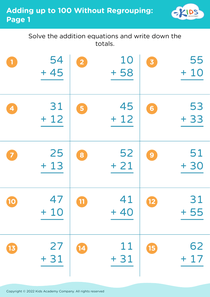
Shape Recognition Grade 2 Adding up to 100 with Regrouping Worksheets
5 filtered results
-
From - To
Improve your second grader's math skills with our Shape Recognition Grade 2 Adding up to 100 with Regrouping Worksheets. Our expertly designed worksheets combine essential skills of shape recognition with the fundamental concept of addition up to 100 using regrouping. Each printable worksheet provides engaging problems that enhance children's understanding of geometric shapes while reinforcing arithmetic skills through carefully structured addition exercises. Ideal for classroom use or at-home practice, our worksheets offer an exciting, multifaceted approach to learning, making math both fun and effective for young learners. Boost your child’s confidence and proficiency in math today!
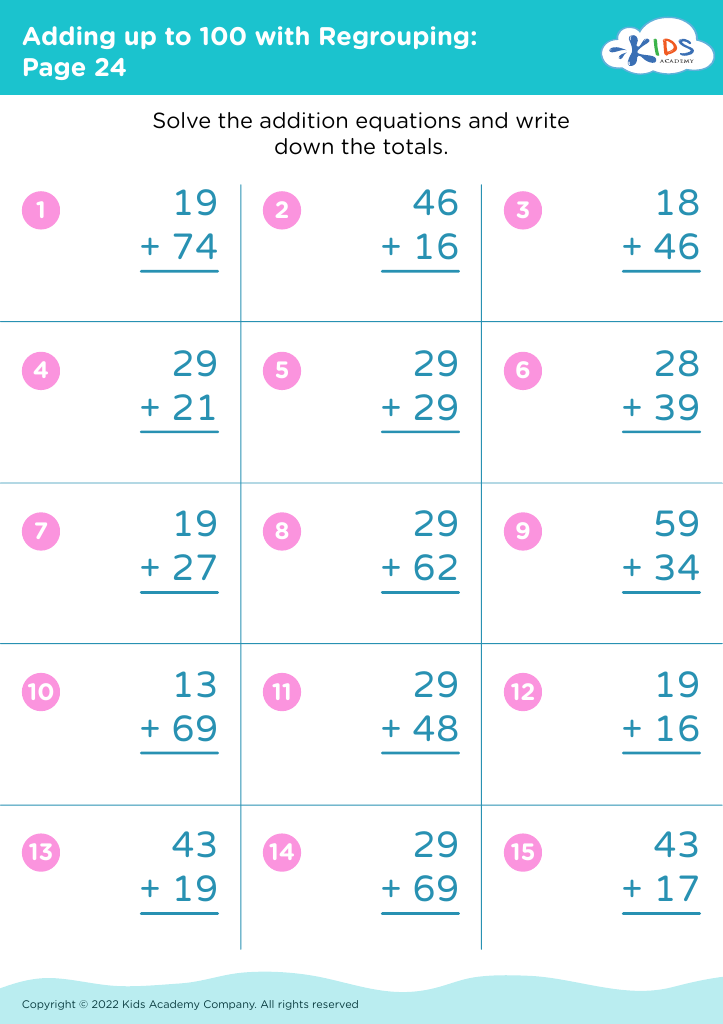
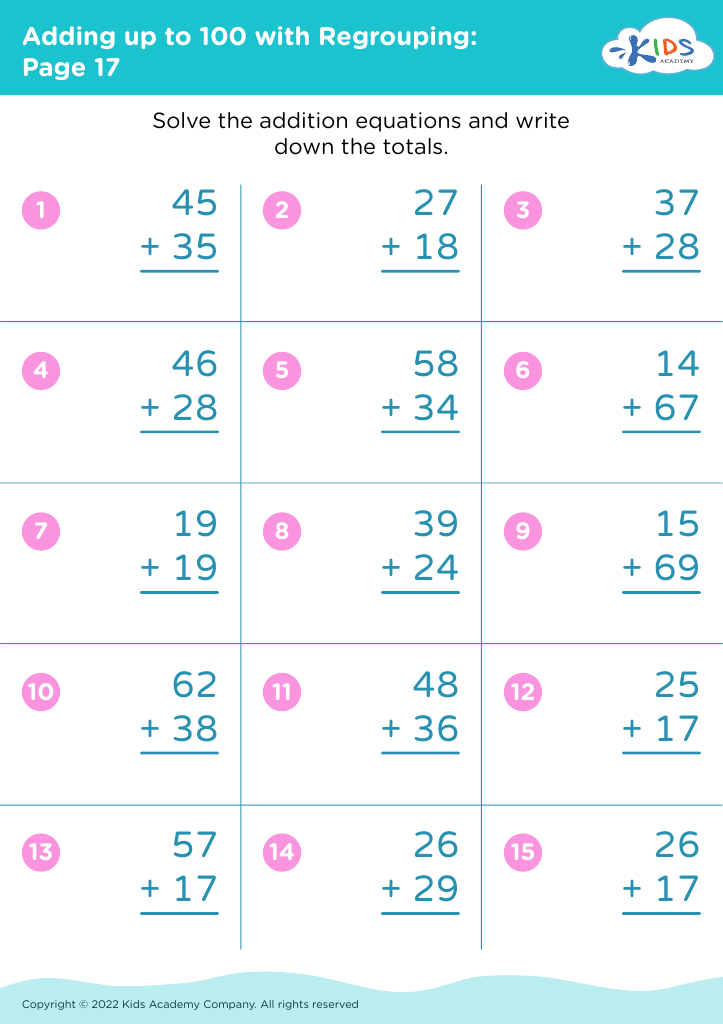
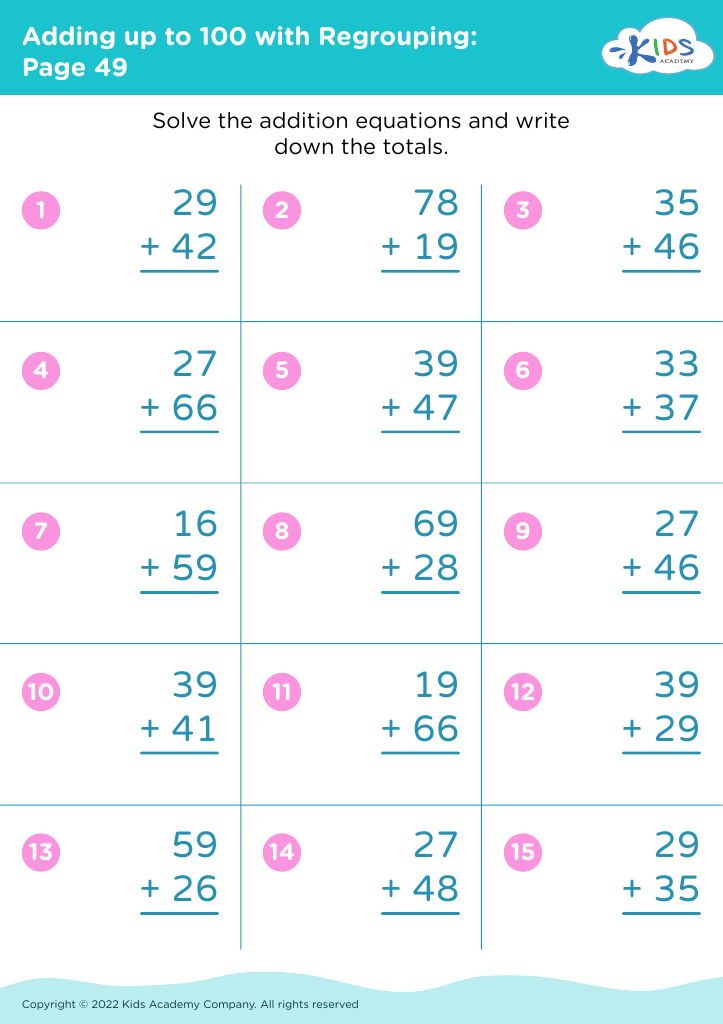
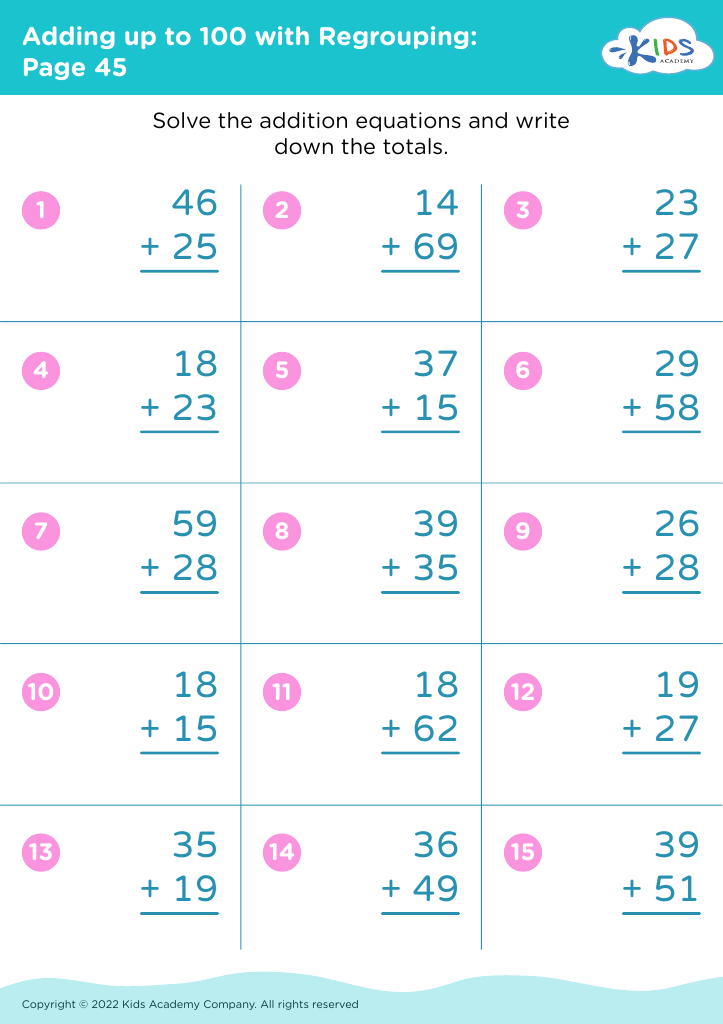
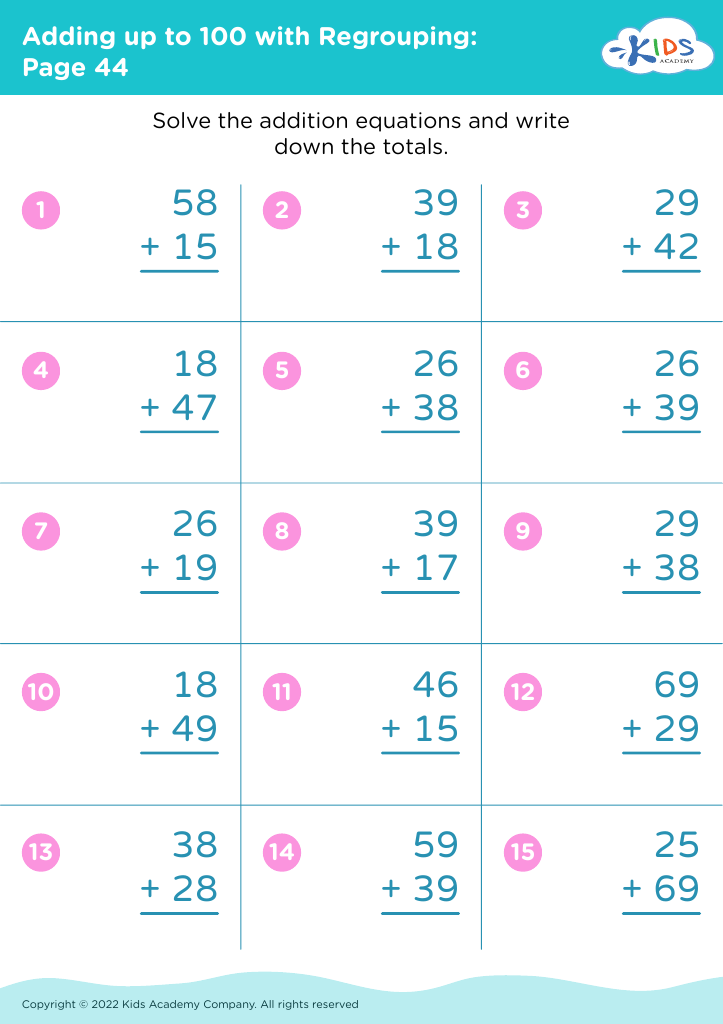




Shape recognition, addition up to 100, and regrouping are integral components of a strong foundation in early learning, particularly in Grade 2. For parents and teachers, fostering these skills is essential for multiple reasons.
Shape recognition facilitates cognitive development as children distinguish, compare, and understand various geometric forms. This understanding supports spatial reasoning, which is crucial for problem-solving and understanding mathematical concepts. Recognizing shapes also ties into visual literacy, helping children interpret and organize visual information, an essential life skill.
Moreover, being able to add up to 100 with regrouping lays the groundwork for arithmetic fluency. This skill is a stepping stone to more complex mathematical operations like multiplication, division, and fractions. Regrouping, often termed 'carrying over,' further encourages logical thinking and problem-solving abilities. It necessitates an understanding of numbers and their relationships, which is crucial for mathematical reasoning.
Parents and teachers should recognize these foundational skills because they collectively contribute to a child's academic success and confidence. Proficient early math skills correlate with higher achievement levels in later grades. Therefore, ensuring that children are adept in shape recognition and addition with regrouping not only supports immediate educational outcomes but also sets the stage for lifelong learning and critical thinking skills.