Develop critical thinking Grade 2 Adding up to 100 Without Regrouping Worksheets
3 filtered results
-
From - To
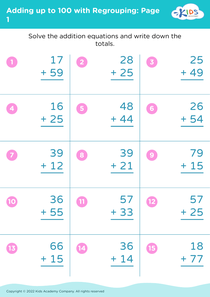
Introduce your second graders to the essential skill of critical thinking with our "Adding Up to 100 Without Regrouping" worksheets! Designed to foster mathematical understanding, these engaging worksheets challenge students to think analytically as they solve addition problems. By practicing addition without regrouping, kids enhance their number sense and develop strategies for problem-solving. Our thoughtfully crafted activities encourage exploration and reasoning, ensuring that students build a solid foundation for future math concepts. Perfect for classroom or home use, these worksheets make learning fun while promoting critical thinking skills essential for academic success. Download now and support your child's math journey!
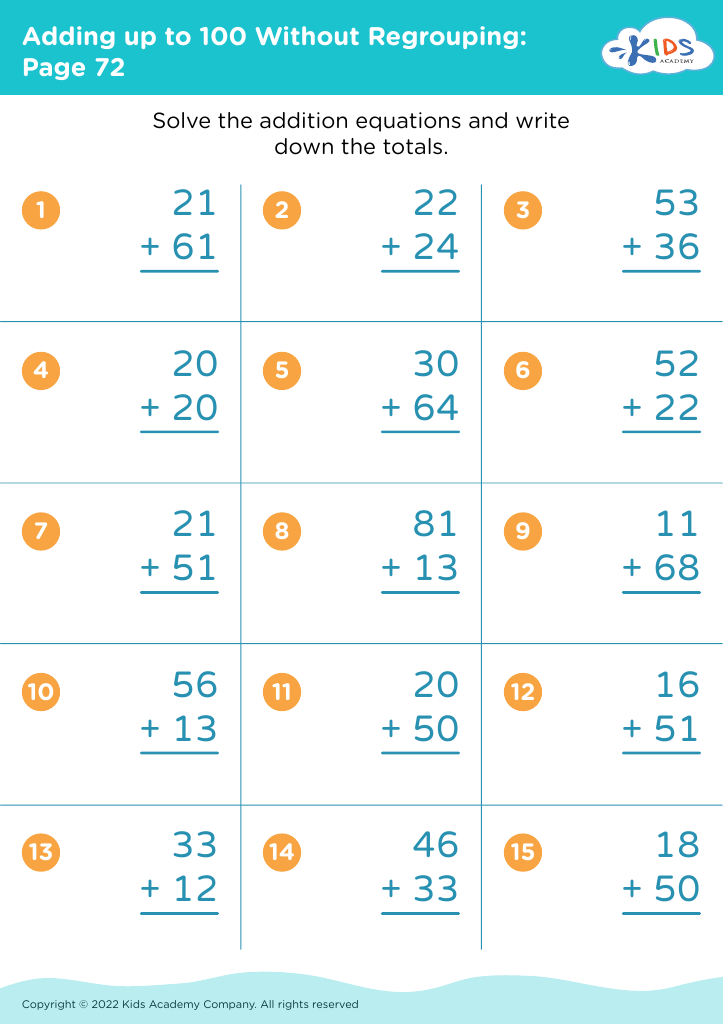
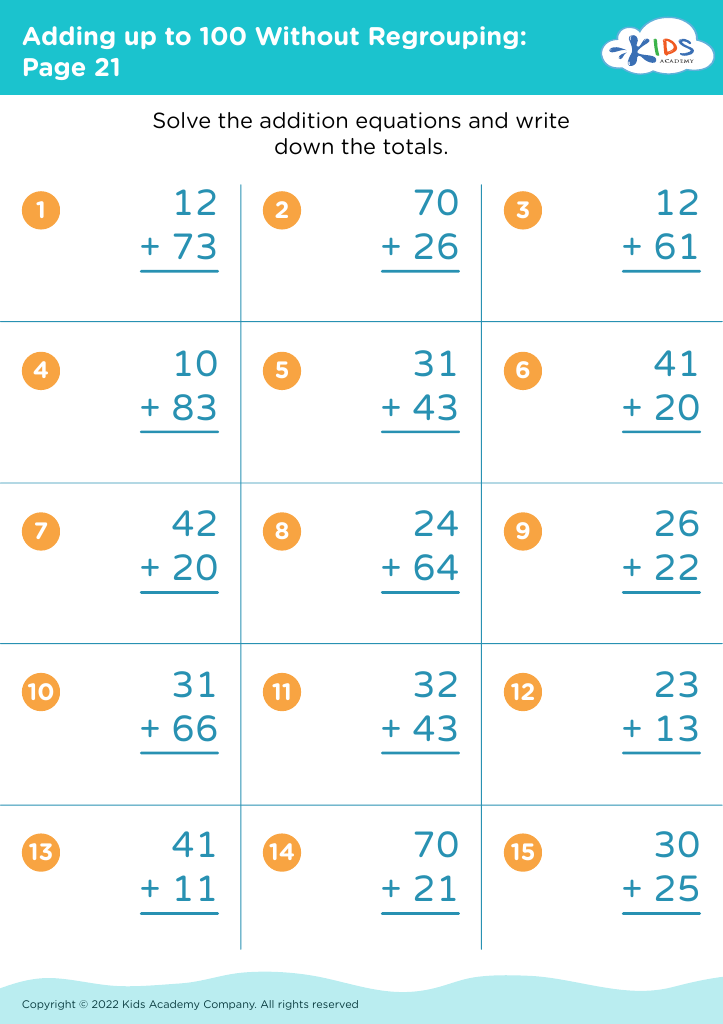
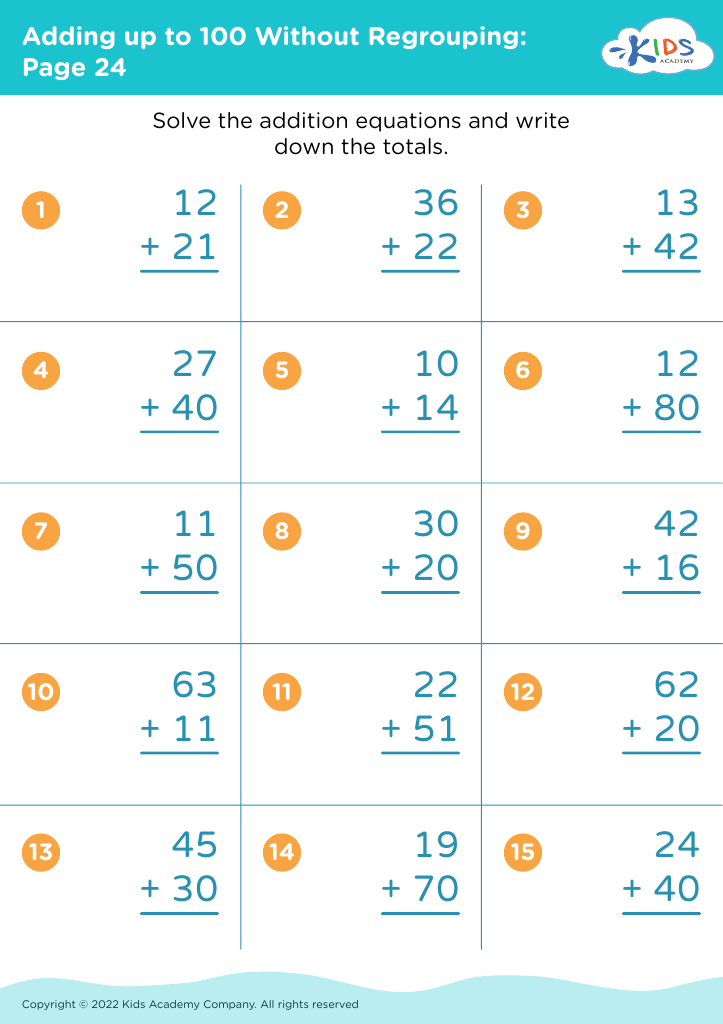




Developing critical thinking skills in second graders, particularly in tasks like "adding up to 100 without regrouping," is essential for several reasons. First, this foundational math skill builds students' confidence and ability to engage in more complex problem-solving scenarios later on. When students learn to add numbers strategically without regrouping, they foster a deep understanding of place value and number relationships, which are critical for mathematical proficiency.
Second, integrating critical thinking into math encourages children to approach problems with curiosity and an analytical mindset. By teaching students to visualize numbers and think about different combinations, we enable them to explore various pathways to the correct answer. This, in turn, enhances their reasoning abilities and promotes persistence, as they engage in trial and error to find solutions.
Moreover, cultivating strong critical thinking skills prepares children for life beyond the classroom. Young learners develop the ability to question, analyze information, and make informed decisions, essential skills in today's dynamic world. For educators and parents, nurturing these capabilities is key to supporting children's overall cognitive development and fostering a lifelong love for learning. Ultimately, investing time in such foundational practices paves the way for a more robust educational journey.