Fine Motor Skills Grade 2 Adding up to 100 Without Regrouping Worksheets
4 filtered results
-
From - To
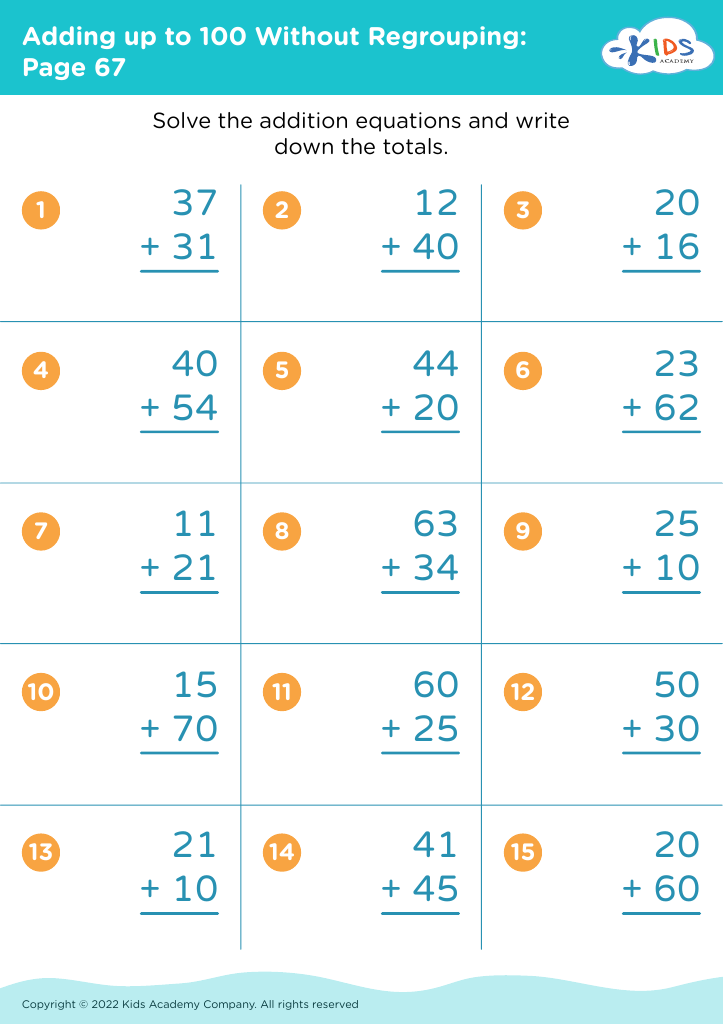
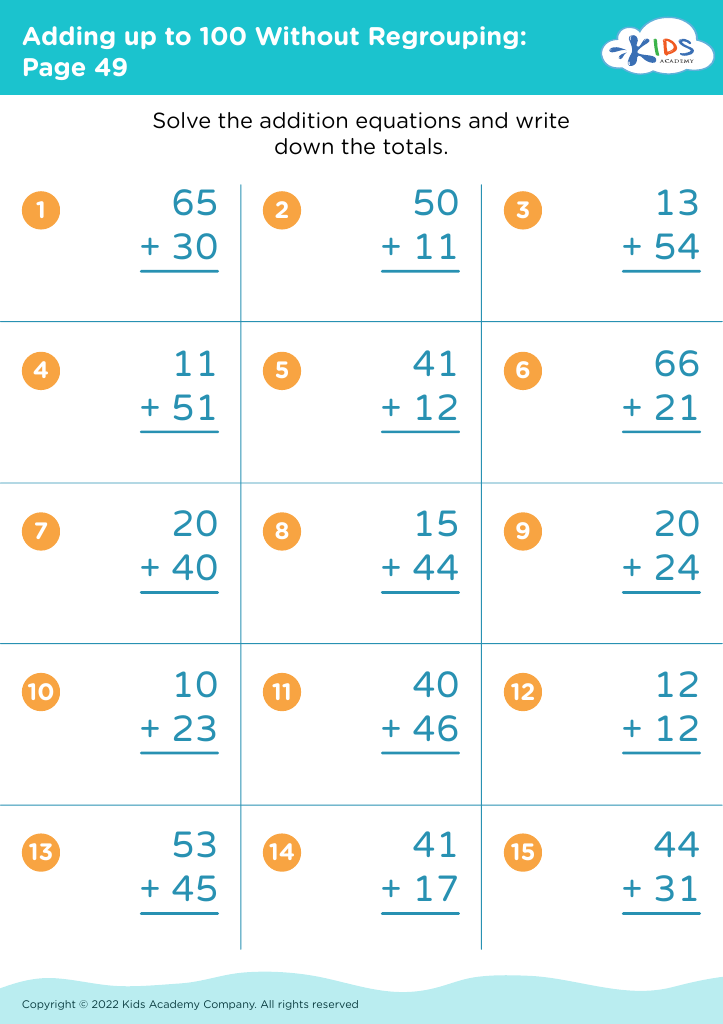
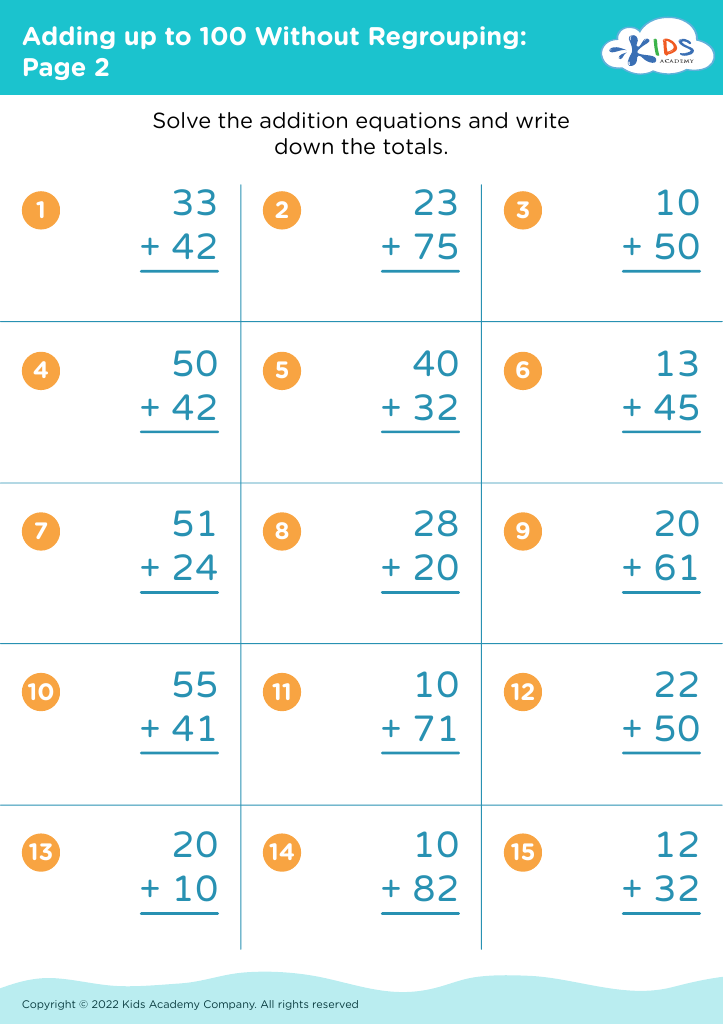
Enhance your second grader's fine motor skills while mastering addition with our "Fine Motor Skills Grade 2 Adding Up to 100 Without Regrouping Worksheets." These engaging and interactive worksheets combine foundational math concepts with activities that promote dexterity and coordination. Designed for young learners, our worksheets provide a fun way to practice addition without regrouping, helping students build confidence in their math abilities. As they solve problems, children will also refine their handwriting and hand-eye coordination, laying the groundwork for future learning. Perfect for classroom or home use, these worksheets offer an effective and enjoyable learning experience for all students.
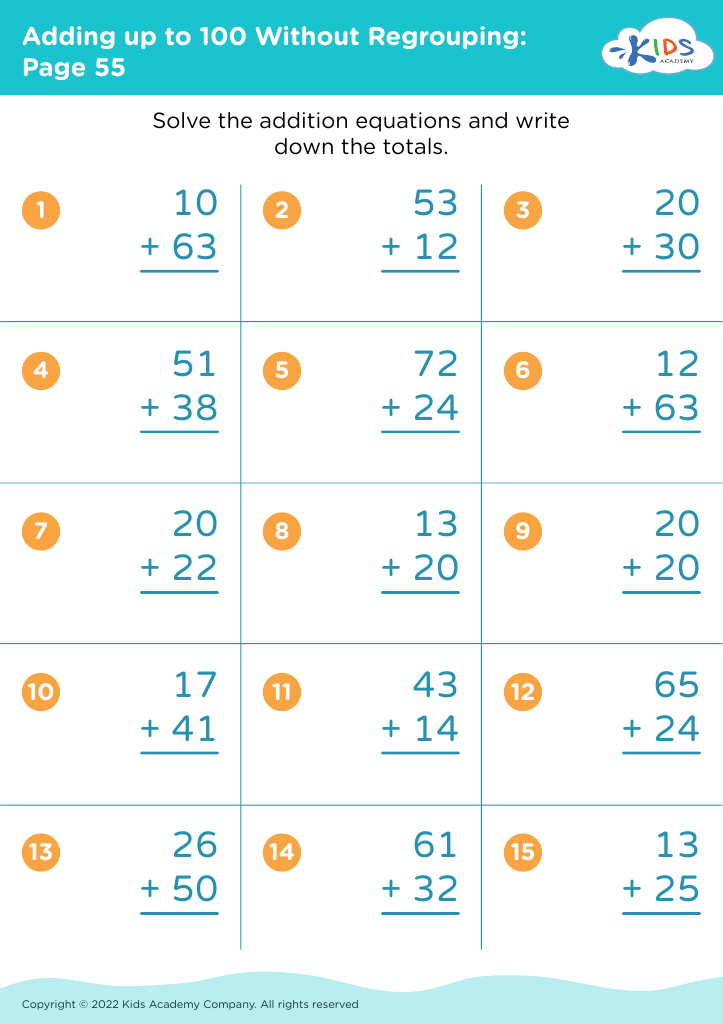




Parents and teachers should prioritize fine motor skills in Grade 2, especially as students learn to add numbers up to 100 without regrouping. Fine motor skills are essential as they link physical abilities with cognitive development. When children develop these skills, they gain better control of their fingers and hands, improving their ability to write, draw, and manipulate tools such as pencils and calculators.
During this stage, students not only learn how to perform addition but also how to articulate and communicate their mathematical reasoning. Mastery of fine motor skills helps them to efficiently execute problem-solving techniques without excessive frustration. Moreover, when children can physically manipulate numbers—through tying string into groups to represent tens and ones—they engage in kinesthetic learning, making abstract concepts more tangible.
Encouraging fine motor skills along with mathematical fluency builds confidence and fosters a love for learning. As students become proficient in adding sums without regrouping, they lay a sturdy foundation for future math challenges. Teachers and parents play a crucial role in creating environments that promote these skills, providing tools and activities that are both enjoyable and educational. Ultimately, developing fine motor abilities at this stage empowers children for long-term success in academics and everyday life.