Fraction simplification Grade 2 Adding up to 100 Without Regrouping Worksheets
9 filtered results
-
From - To
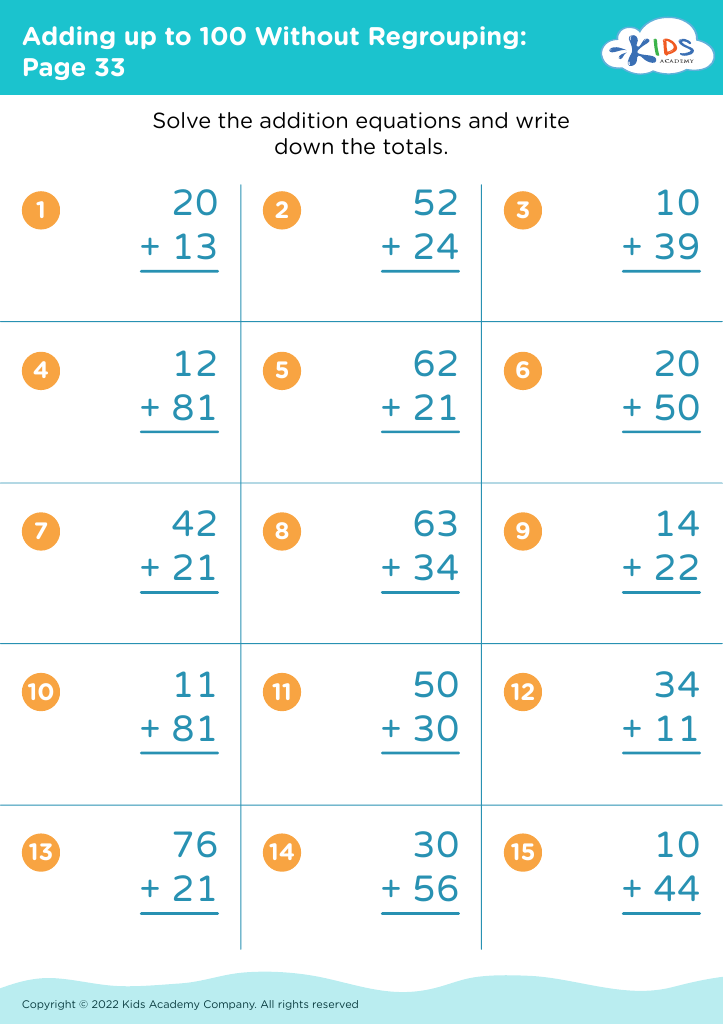
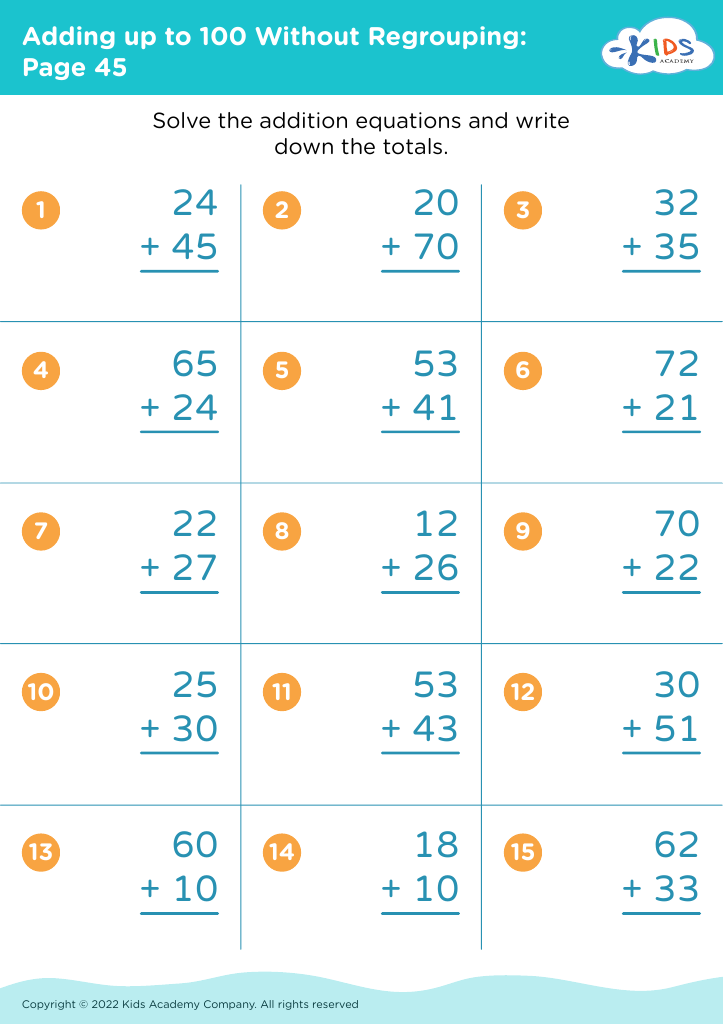
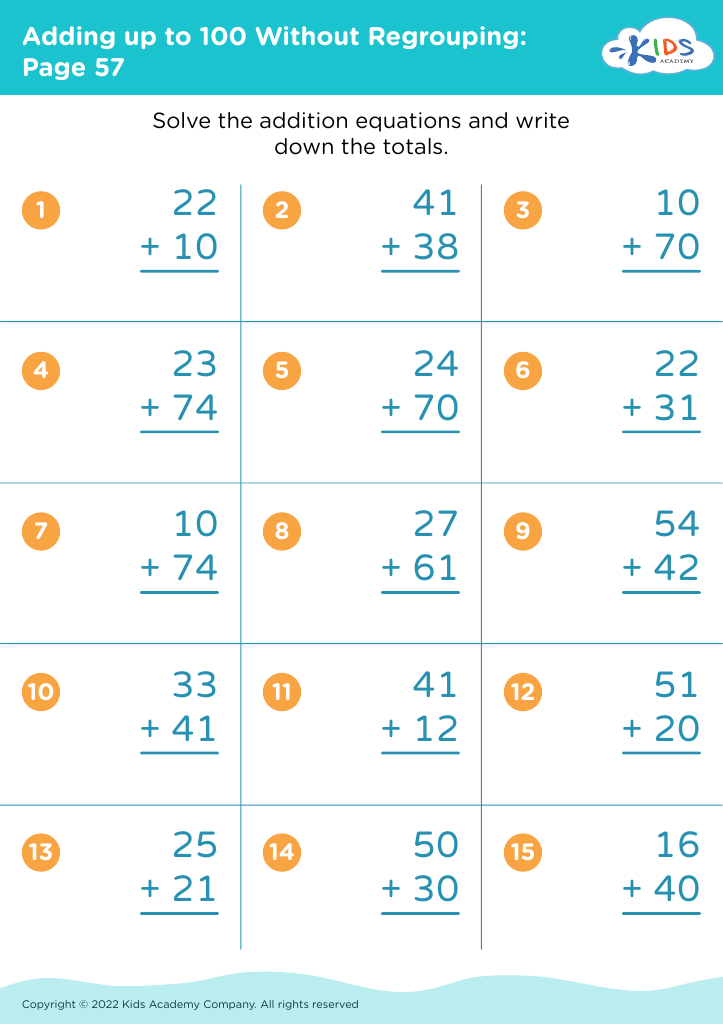
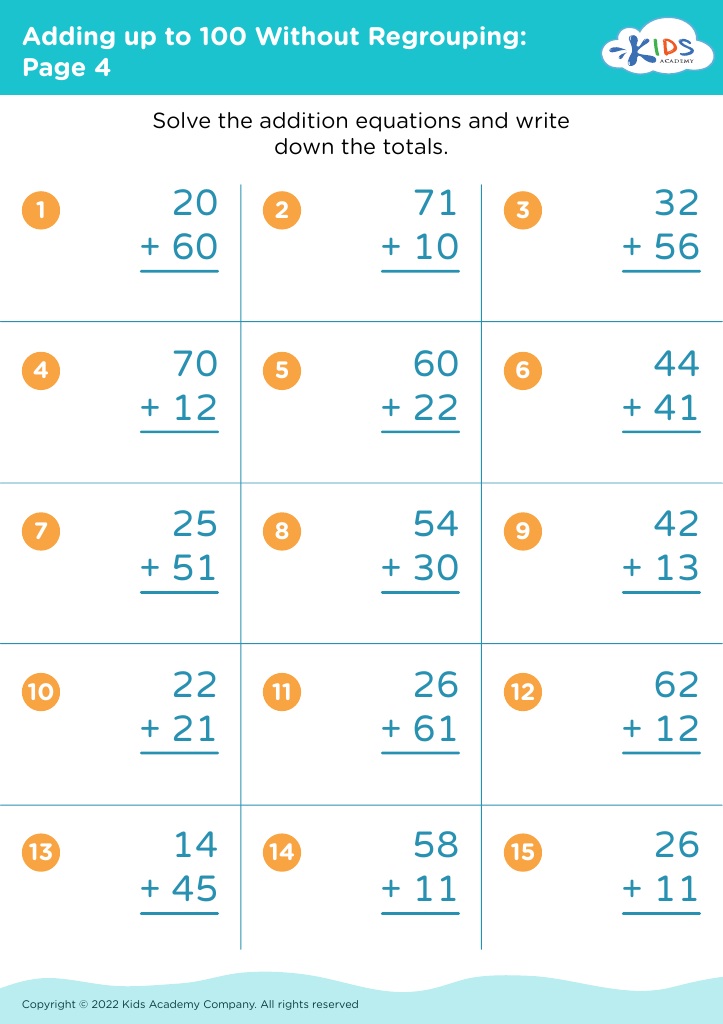
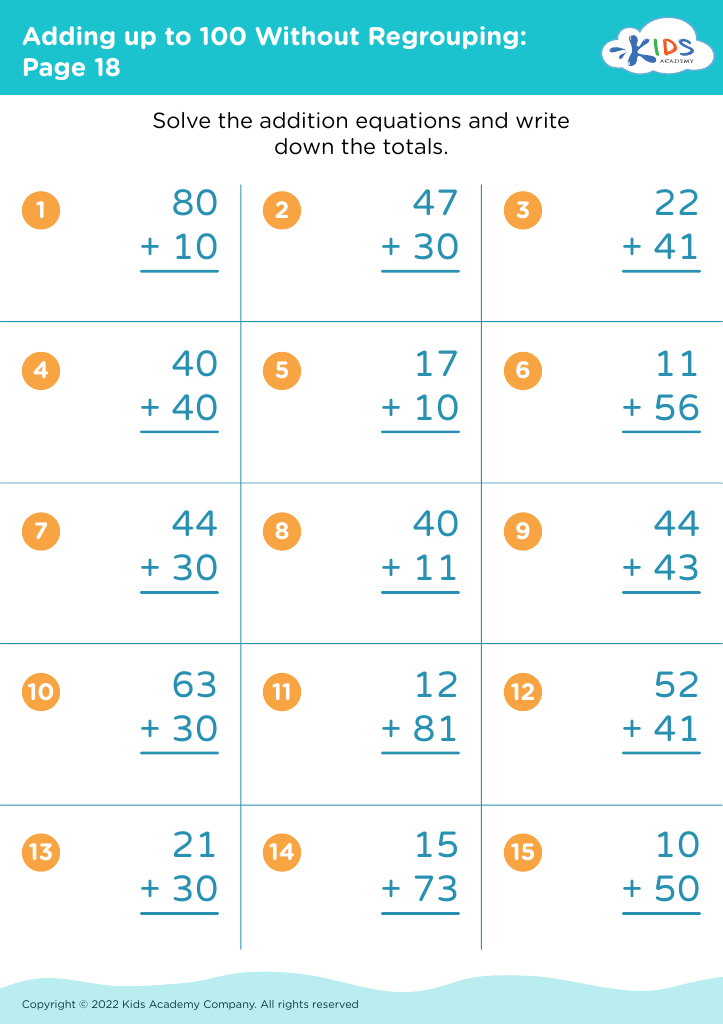
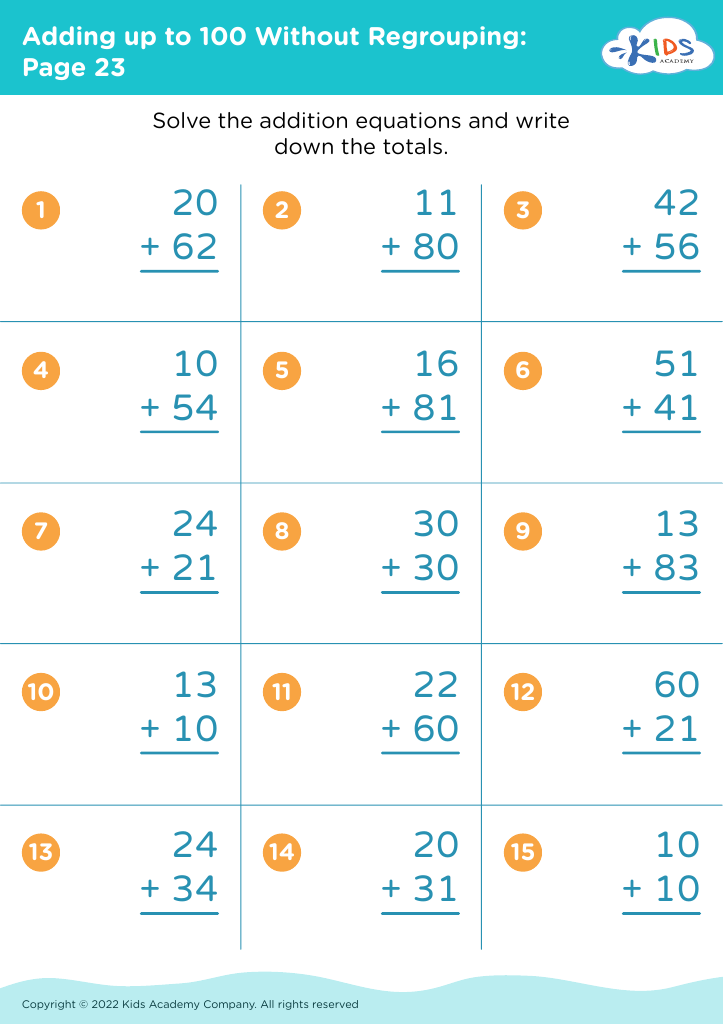
Introduce young learners to the basics of fractions with our "Fraction Simplification Grade 2 Adding up to 100 Without Regrouping" worksheets. These engaging and visually appealing sheets help second graders build foundational math skills. Kids will learn to simplify fractions effortlessly while mastering addition up to 100 without the need for regrouping. Each worksheet is designed to reinforce core concepts through fun and interactive problems, making learning both enjoyable and effective. Perfect for classroom use or at-home practice, our printable resources ensure children gain the confidence and skills needed for future math success. Download now to enhance your child's math journey!
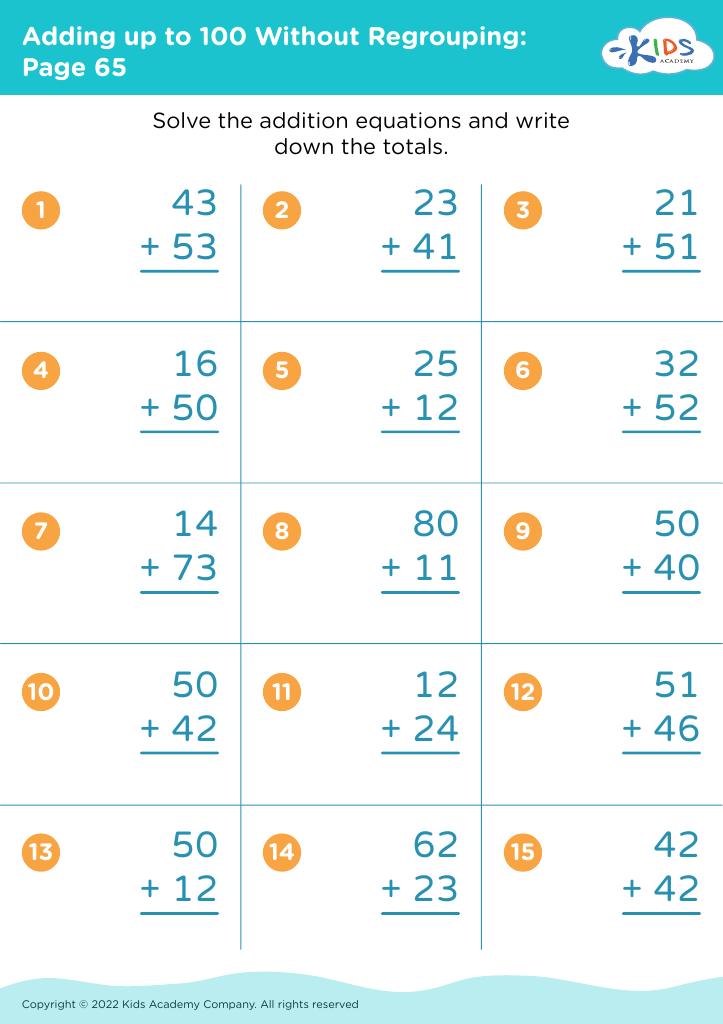
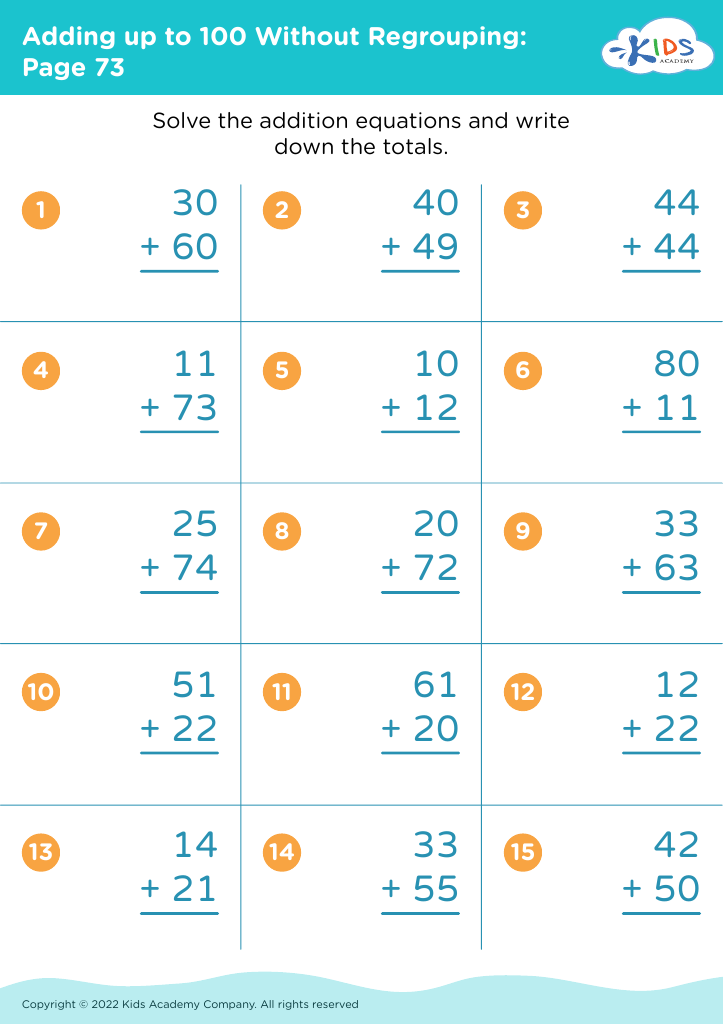
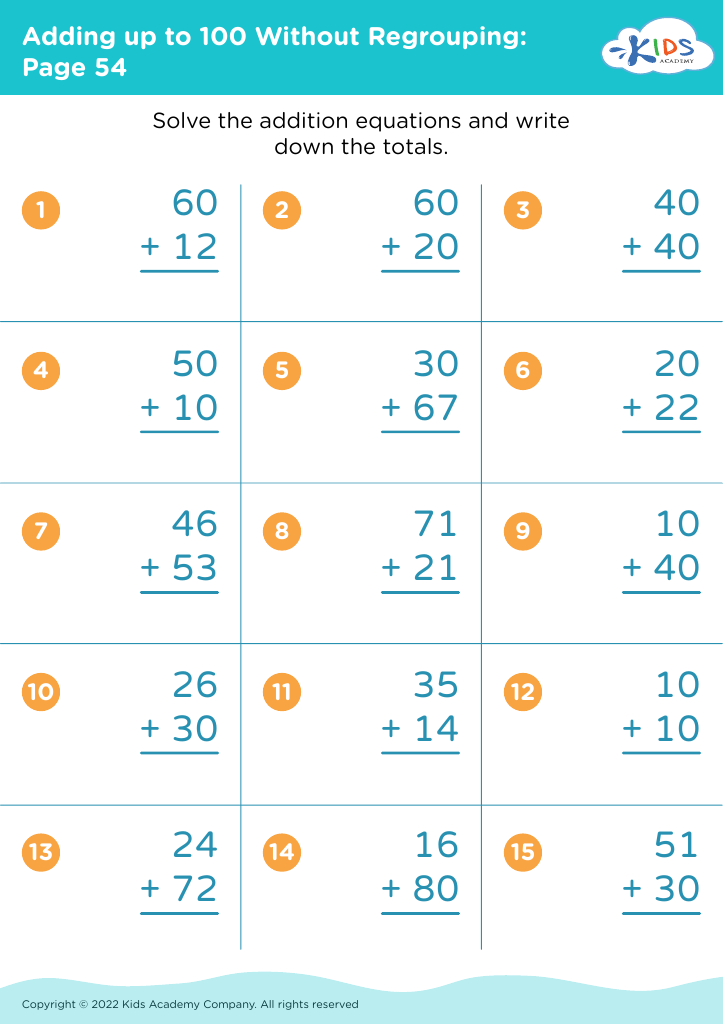




Understanding the concept of fraction simplification and basic addition is crucial for young learners in Grade 2, as these foundational skills bolster future success in more complex mathematics. Simplifying fractions helps kids grasp how parts make up a whole, fostering their ability to handle proportion, ratio, and more advanced topics later on. This early introduction cultivates number sense and problem-solving abilities.
Addition up to 100 without regrouping, on the other hand, reinforces computational fluency. By practicing these sums, students build confidence in handling numbers and develop mental arithmetic skills, laying a solid groundwork for future regrouping concepts and multidigit calculations. Mastery of addition facts allows children to approach advanced problems with efficiency and skill.
Moreover, these skills are interlinked with other areas of learning and daily life. Competent mathematical reasoning at a young age improves logical thinking and perseverance—traits important for both academic and personal development. For parents and teachers, focusing on these aspects ensures children are not only meeting curriculum standards but are also empowered to think logically and creatively. Overall, investing time and effort in teaching fraction simplification and simple addition builds lifelong mathematical literacy.