Mathematical reasoning Grade 2 Adding up to 100 Without Regrouping Worksheets
3 filtered results
-
From - To
Unlock your child's mathematical potential with our Mathematical Reasoning Grade 2 Adding Up to 100 Without Regrouping Worksheets! These expertly designed worksheets focus on enhancing second graders' ability to add numbers up to 100 seamlessly without the need for regrouping. Through engaging exercises and mindful practice, kids solidify their understanding of basic addition concepts, fluency, and accuracy. Perfect for both classroom and at-home practice, these worksheets provide an excellent foundation for future math success while making learning fun and effective. Start boosting your child's confidence and mathematical skills today with these invaluable resources!
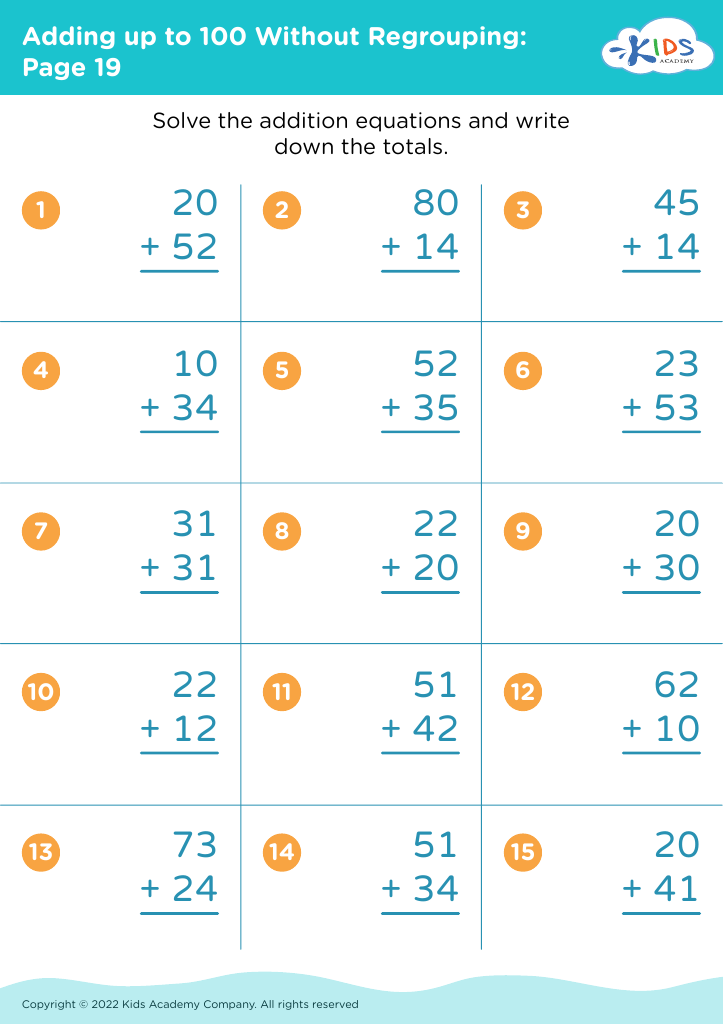
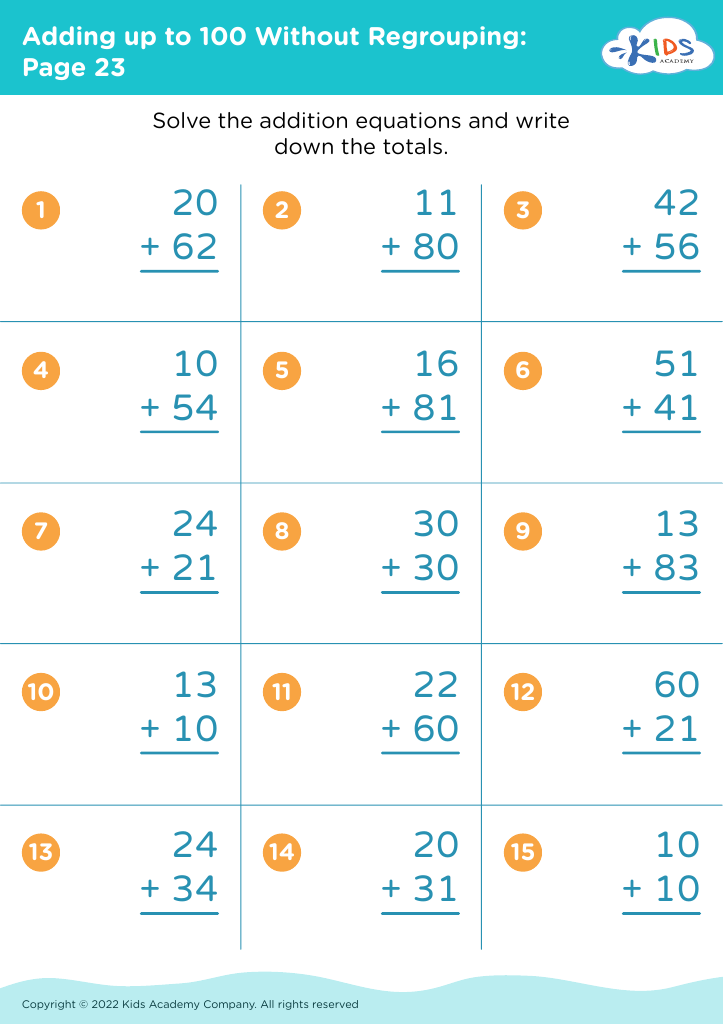
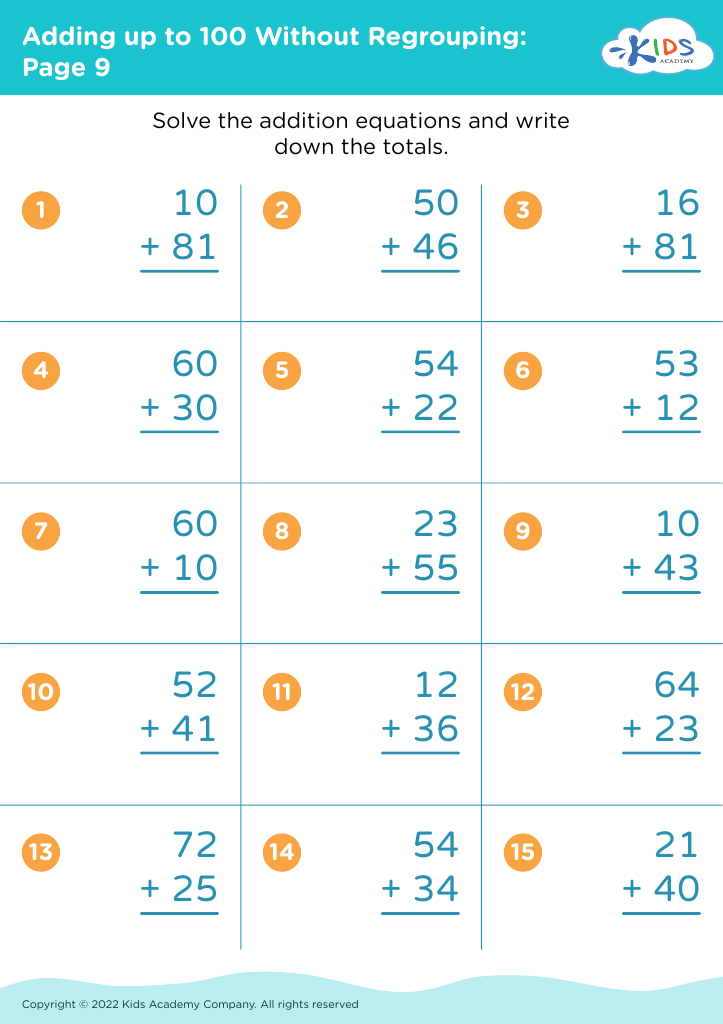




Mathematical reasoning is a foundational skill that early grade students, such as those in Grade 2, must develop as it significantly impacts their problem-solving abilities and overall academic success. Adding up to 100 without regrouping is a crucial skill within this framework.
Parents and teachers should care about fostering this ability for several compelling reasons. Firstly, it enhances numerical fluency, enabling children to perform basic arithmetic operations swiftly and accurately. This forms the bedrock for more complex mathematical concepts encountered in later grades. A child proficient in addition up to 100 can also build confidence, fostering a positive attitude towards learning mathematics.
Moreover, mastering such fundamental skills at an early age aids in developing critical thinking. When students engage in addition tasks, they begin to recognize patterns, establish relationships between numbers, and strengthen their logical reasoning. This reasoning extends beyond math, benefitting problem-solving scenarios in real-life situations.
Furthermore, developing early mathematical skills aligns with broader educational standards and helps meet learning milestones. Ensuring these students don't lag in foundational skills averts future struggles, enabling a smoother academic journey. Therefore, caring about a student's ability to add up to 100 without regrouping equips them with essential tools for lifelong learning and problem-solving agility.