Reading comprehension Grade 2 Adding up to 100 Without Regrouping Worksheets
3 filtered results
-
From - To
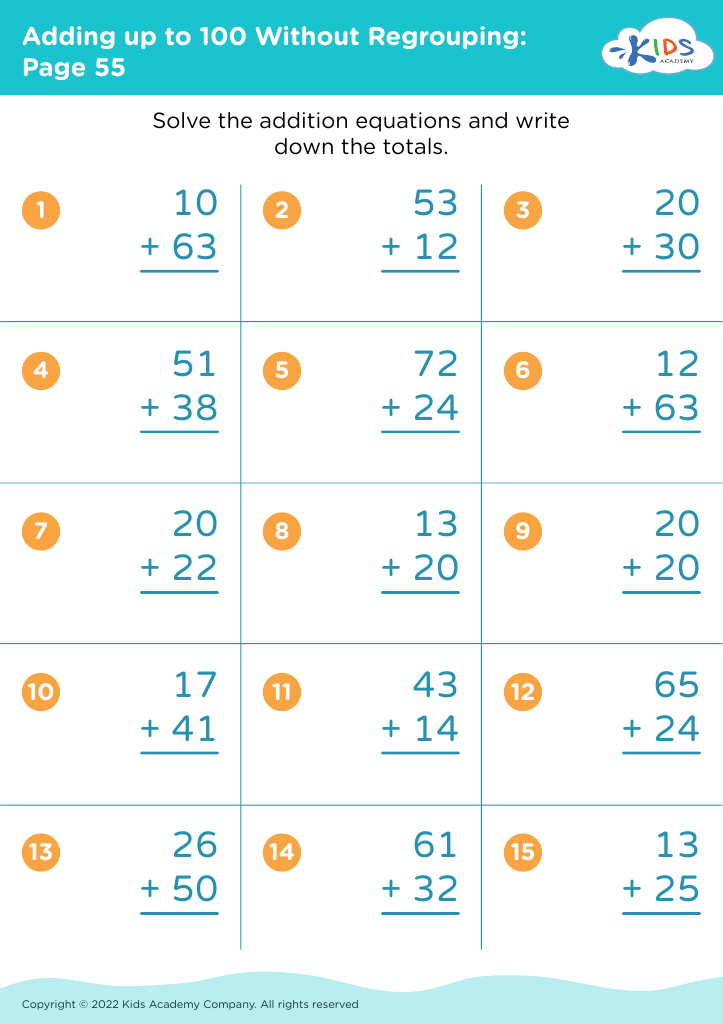
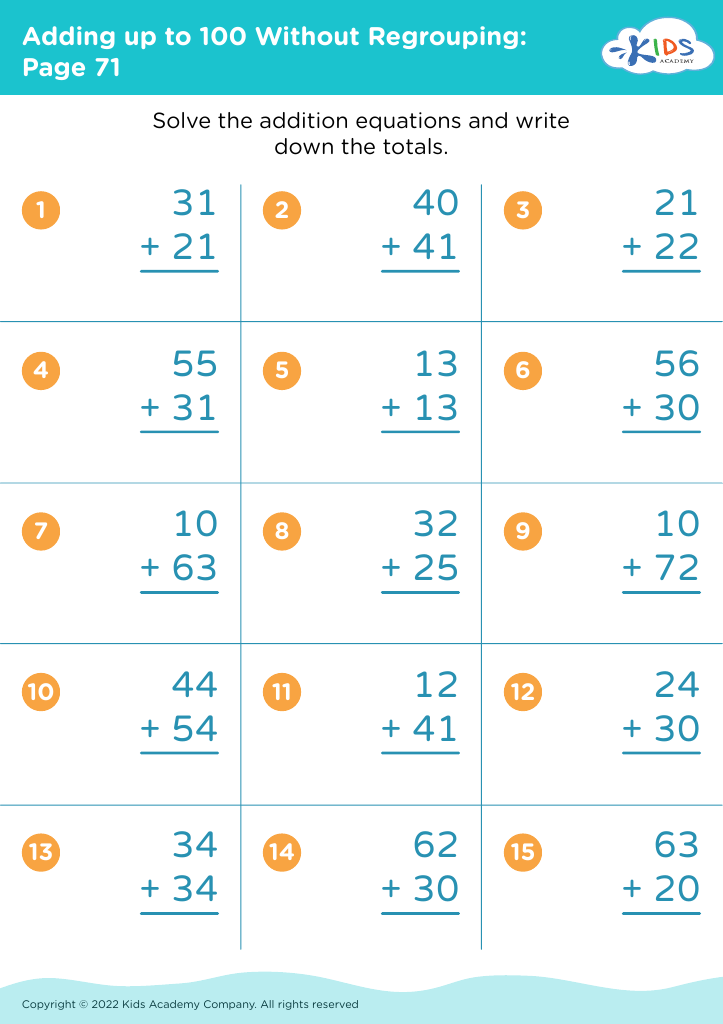
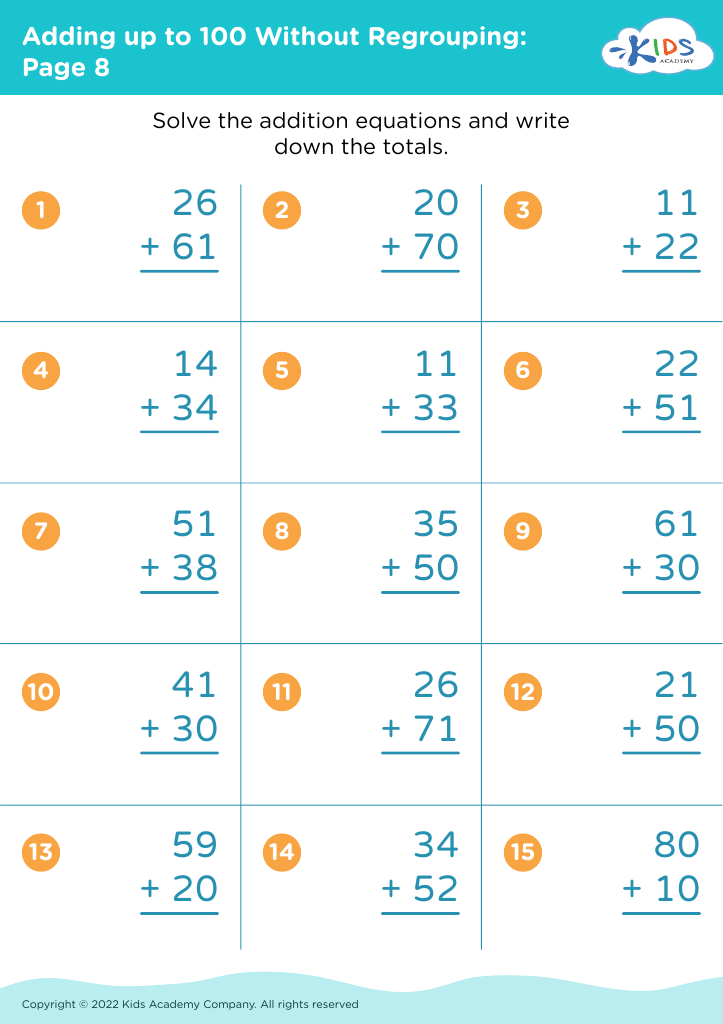
Enhance your second graders' reading comprehension skills with our "Adding Up to 100 Without Regrouping Worksheets." These engaging worksheets combine math practice with reading, helping students connect numerical concepts to written problems. Designed for grade 2 learners, each activity encourages critical thinking as students read through word problems before solving addition equations totaling up to 100. This integrative approach not only strengthens math skills but also boosts their ability to comprehend and analyze texts. Explore a variety of exercises that make learning both fun and effective, ensuring your child builds a solid foundation in math and reading comprehension simultaneously!




Understanding reading comprehension in Grade 2 is crucial for both parents and teachers, as it forms the foundation for a child's academic success. At this stage, children begin to make connections between the text and their own experiences, developing critical thinking skills. Strong reading comprehension helps enhance vocabulary, improve writing abilities, and fosters a lifelong love of learning.
Similarly, mastering addition up to 100 without regrouping is equally important for second graders. This skill not only helps students build confidence in their mathematical abilities but also lays the groundwork for more advanced operations. Understanding basic addition enhances problem-solving skills and logical reasoning.
By integrating reading comprehension with numerical reasoning, educators can create a well-rounded educational experience. This approach facilitates cross-curricular connections, allowing students to tackle problems in various contexts. As parents and teachers collaborate to support these skills, they provide children with the essential tools for navigating academic challenges.
Thus, promoting both reading comprehension and foundational math skills ensures that students not only grasp content but also develop the confidence to explore more complex ideas as they progress in their education. Engaging in these areas ultimately shapes capable, curious, and enthusiastic learners.