Color Identification Grade 2 Adding up to 100 Worksheets
8 filtered results
-
From - To
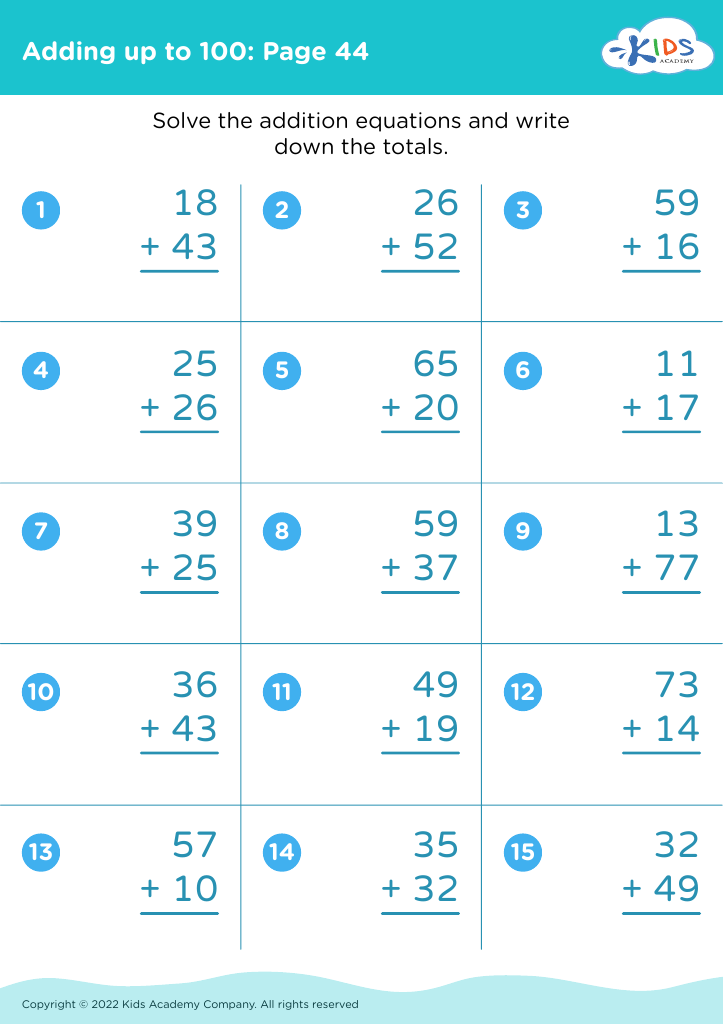
Enhance your second graders' math skills with our "Color Identification Grade 2 Adding Up to 100 Worksheets!" These engaging worksheets are designed to make learning fun as students practice addition while distinguishing colors. Each activity combines visual recognition with numerical practice, allowing children to add up to 100 in a vibrant and interactive way. Perfect for classrooms or at-home learning, these worksheets encourage critical thinking and reinforce essential math skills. Help your students build confidence in their academic abilities while they explore the exciting world of colors and numbers. Download these worksheets today and inspire a love of learning in your child!
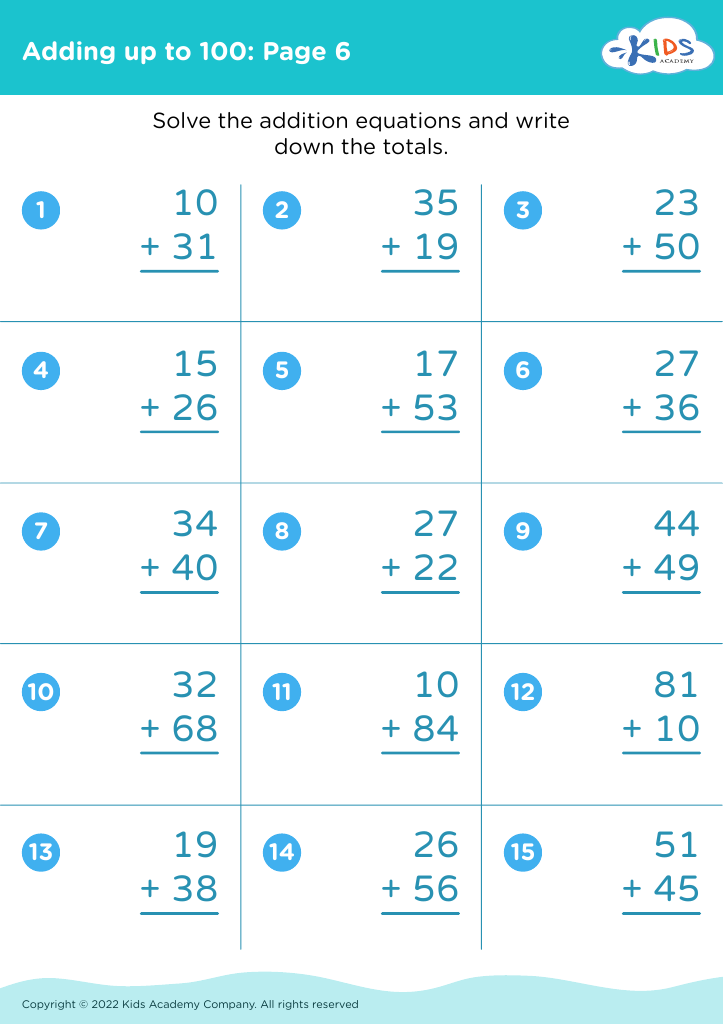
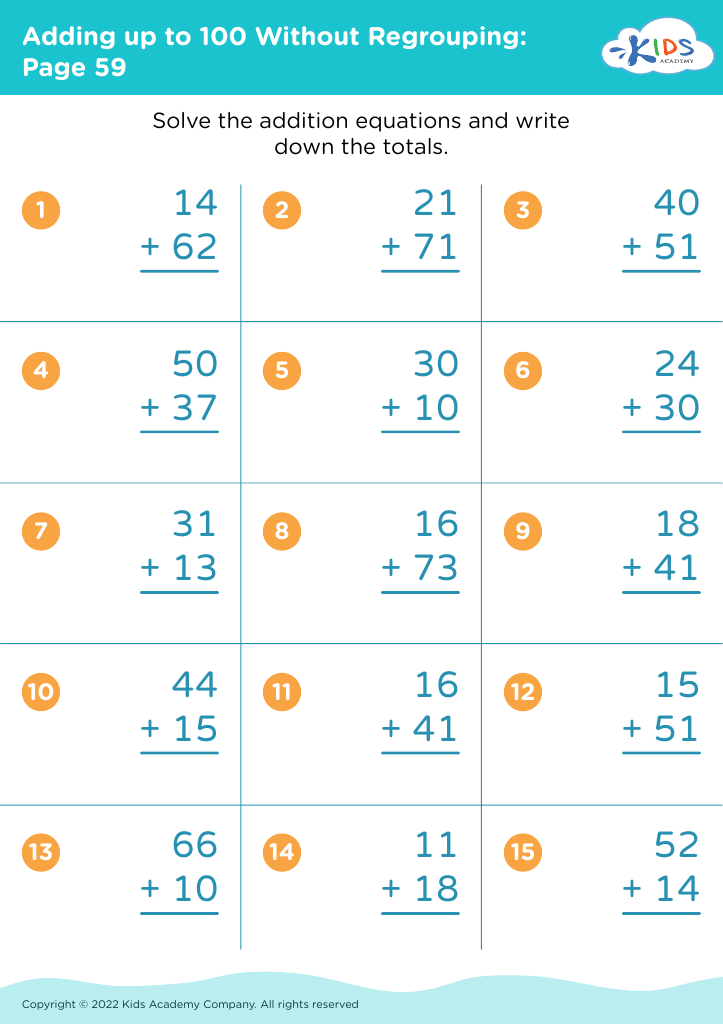
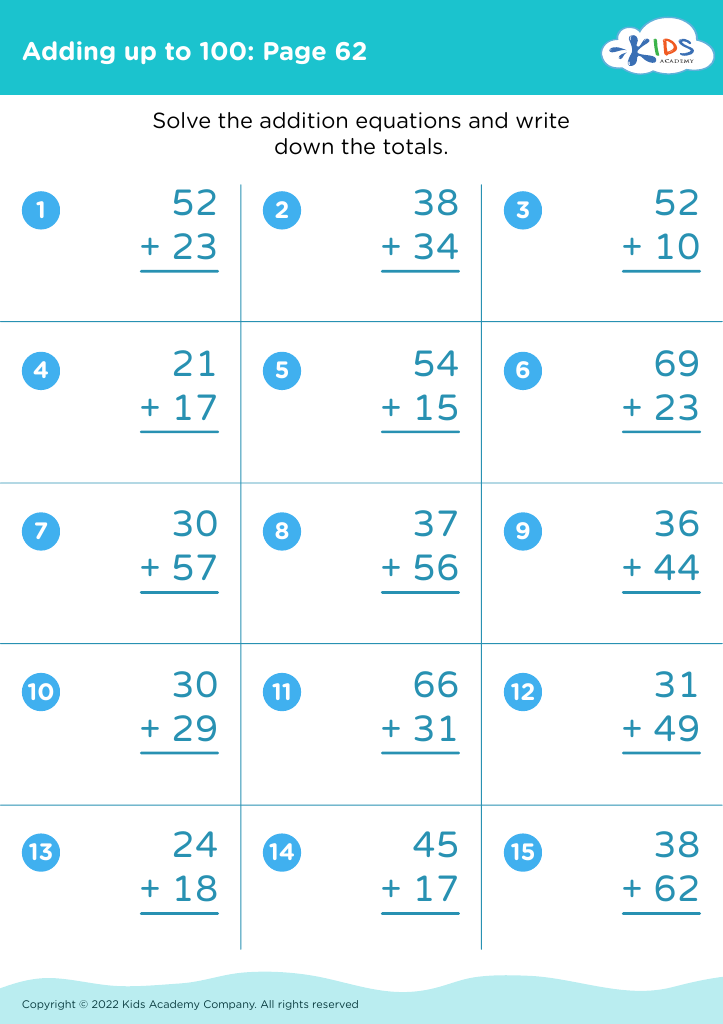
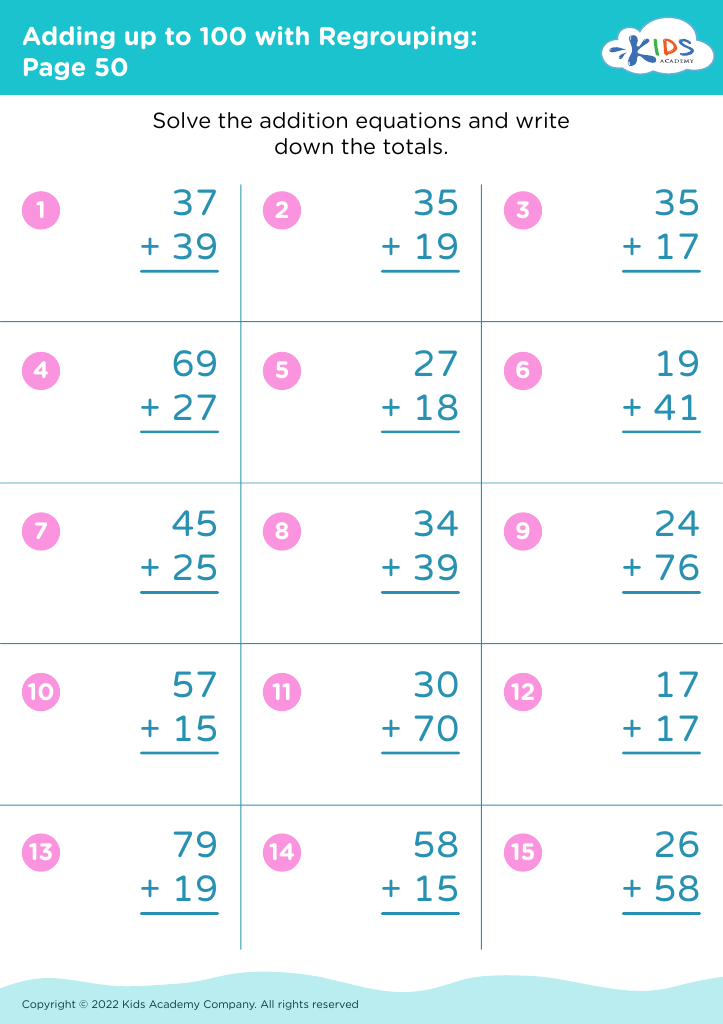





Color identification is an essential skill that lays the foundation for various cognitive and social development areas, particularly for second graders. At this stage, children are often expanding their perspectives and experiences in classrooms filled with rich visual stimuli. Teaching them to identify and articulate colors enhances their language and observational skills, which are crucial for effective communication and learning.
In conjunction with mathematical concepts like "Adding up to 100," color identification can advance problem-solving and critical thinking. By using colored objects, educators and parents can create engaging lessons where students add and group items visually, making abstract numbers more tangible. Integrating color into math helps visual learners grasp addition concepts more concretely, fostering a better understanding of numerical relationships.
Moreover, the joyful aspect of color facilitates a more positive learning environment. When children can decode and express the world around them vibrantly, they engage more fully with the subjects at hand. Parents and teachers should care about these skills because they develop not only academic abilities but also the confidence and enthusiasm necessary for lifelong learning. Encouraging students to identify and use colors fosters a comprehensive educational approach, aiding their overall growth and success in diverse areas.