Critical Thinking Grade 2 Adding up to 100 Worksheets
5 filtered results
-
From - To
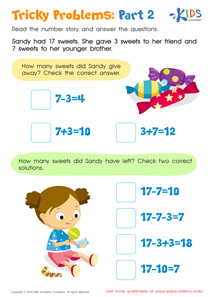
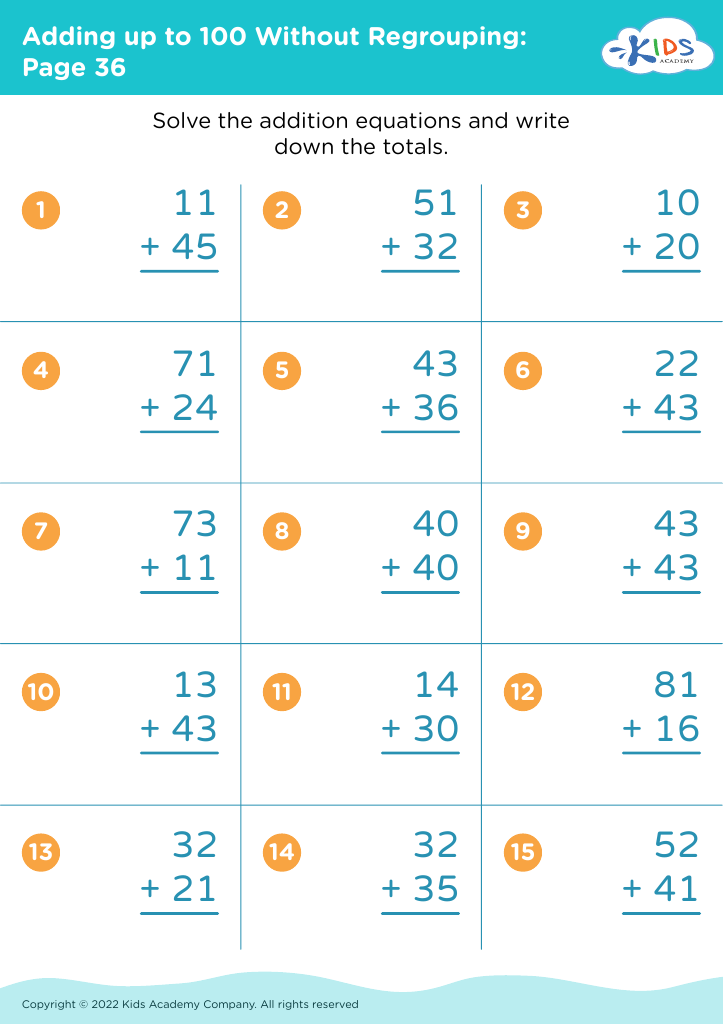
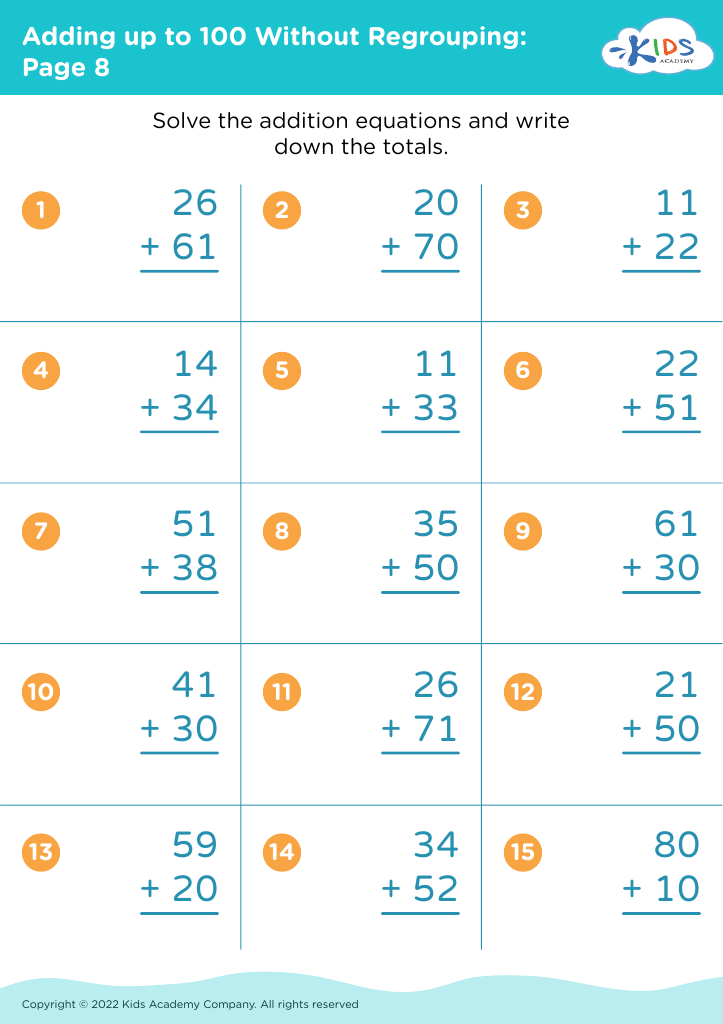
Enhance your second grader's math skills with our "Critical Thinking Grade 2 Adding up to 100 Worksheets." These thoughtfully designed worksheets encourage students to think critically as they tackle addition problems, pushing their understanding beyond simple computation. Challenging puzzles, engaging scenarios, and real-world examples ignite students' problem-solving abilities, making math both enjoyable and educational. Ideal for classroom or home use, these worksheets help reinforce fundamental concepts while fostering creativity and analytical thinking. Discover the perfect blend of fun and learning as your child masters adding up to 100, preparing them for future mathematical challenges. Download your worksheets today!
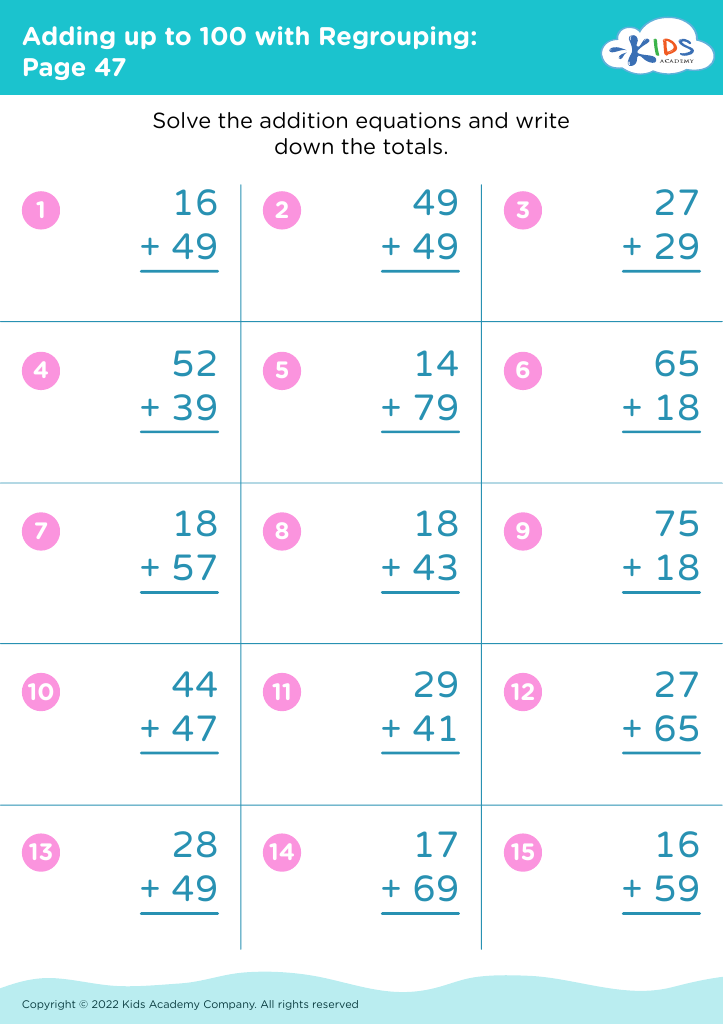
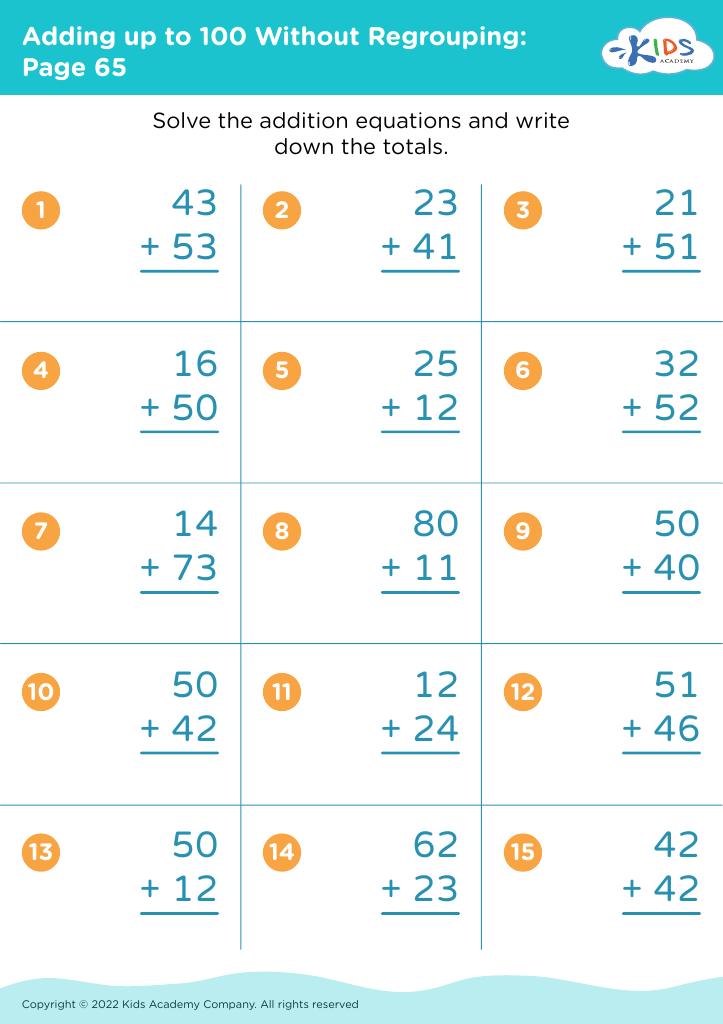
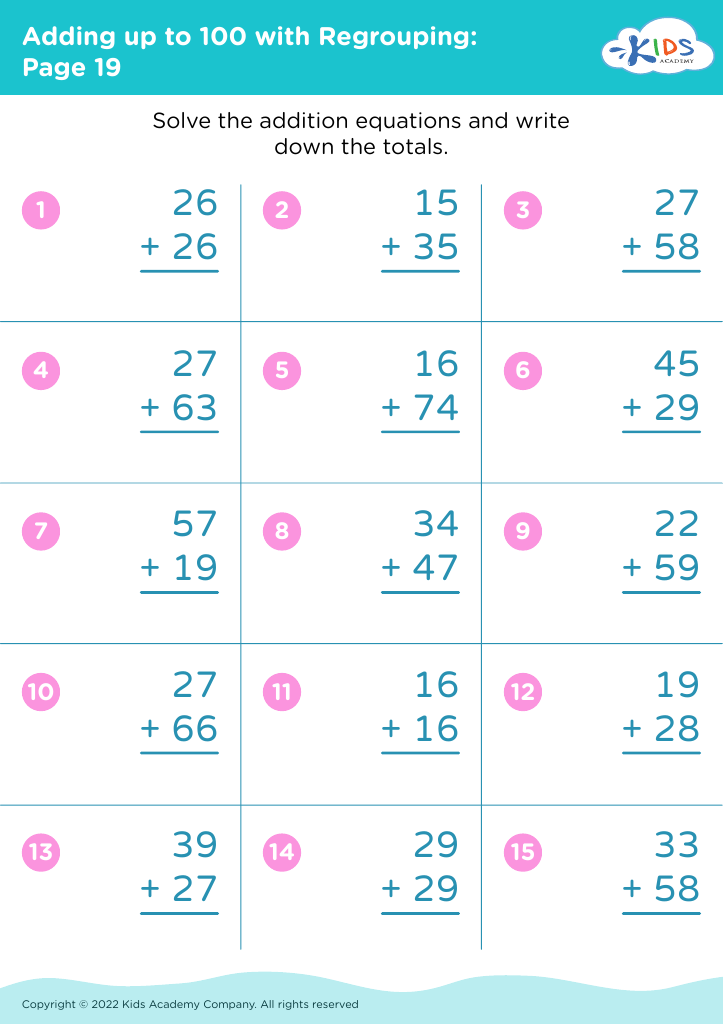





Critical thinking is essential for second graders, especially when learning concepts like adding up to 100. At this age, children are developing foundational skills that will serve them throughout their academic journey and into adulthood. When students learn to strategically solve problems, they enhance their ability to analyze information, make decisions, and think creatively.
Focusing on addition up to 100 encourages students to explore numbers and relationships between them, rather than just memorizing facts. Teachers and parents should emphasize the importance of understanding various strategies, such as decomposing numbers or using visual aids, since these techniques foster deeper comprehension. Children who engage in critical thinking become more resilient problem-solvers, better equipped to tackle more complex mathematical concepts in higher grades.
Additionally, promoting critical thinking now cultivates essential life skills, such as independence and confidence. Children learn to ask questions and seek solutions, skills that can transfer to various scenarios beyond math, including in reading comprehension and everyday decision-making. As they practice these skills, you'll likely see increased motivation and a positive attitude toward learning. By prioritizing critical thinking in areas such as adding up to 100, parents and teachers set students up for long-term success both inside and outside the classroom.