Develop number recognition Grade 2 Adding up to 100 Worksheets
4 filtered results
-
From - To
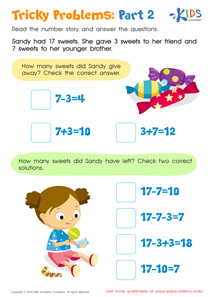
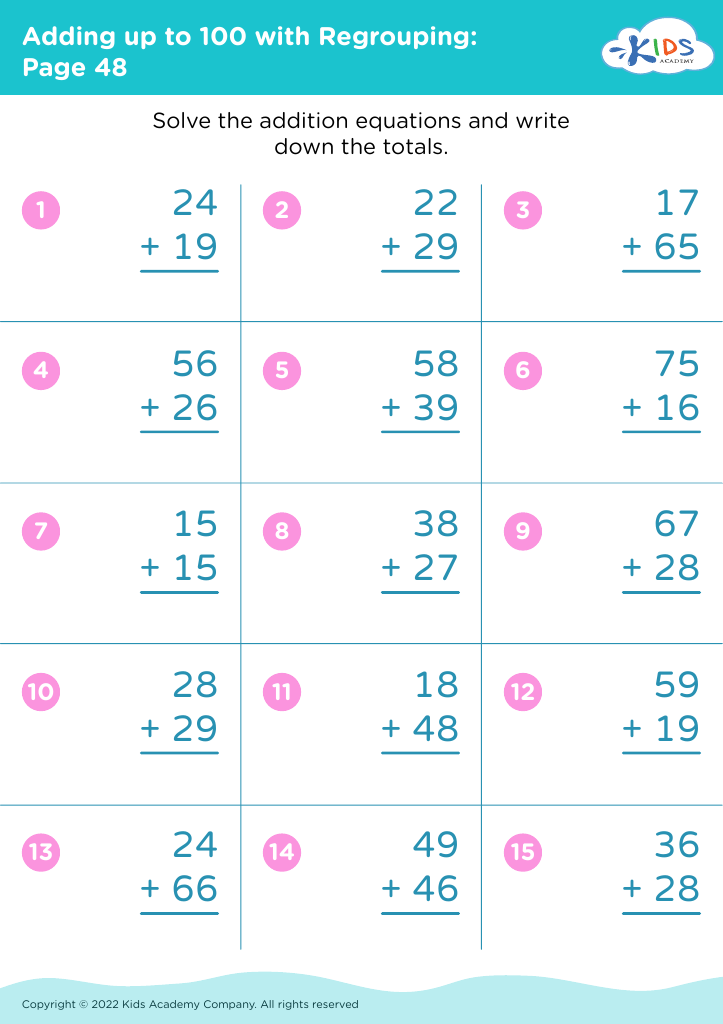
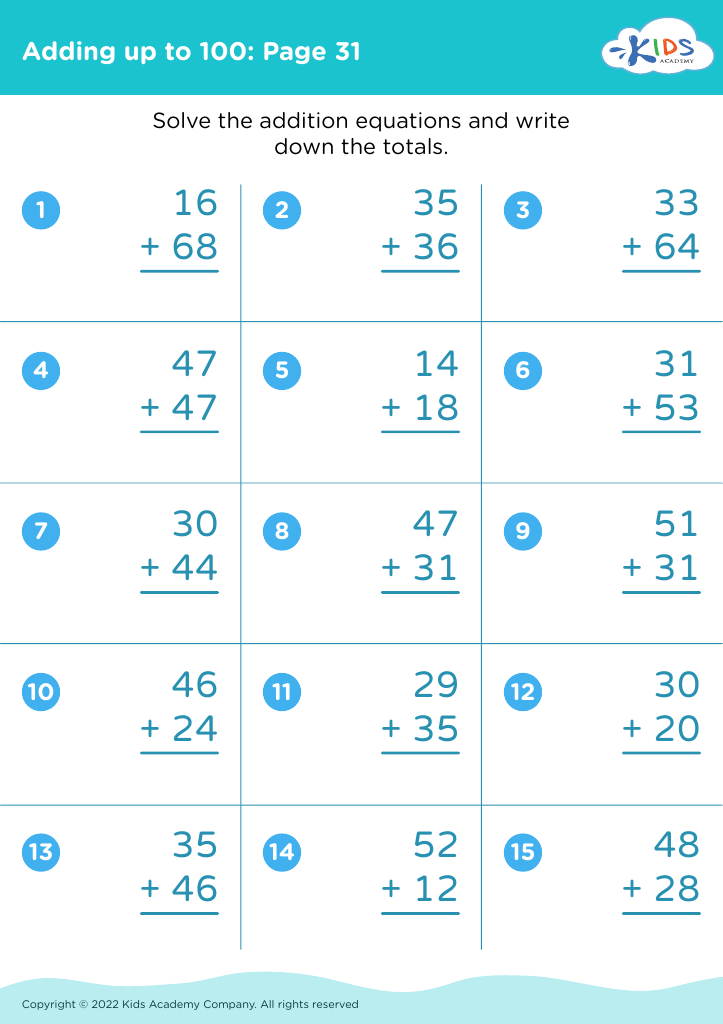
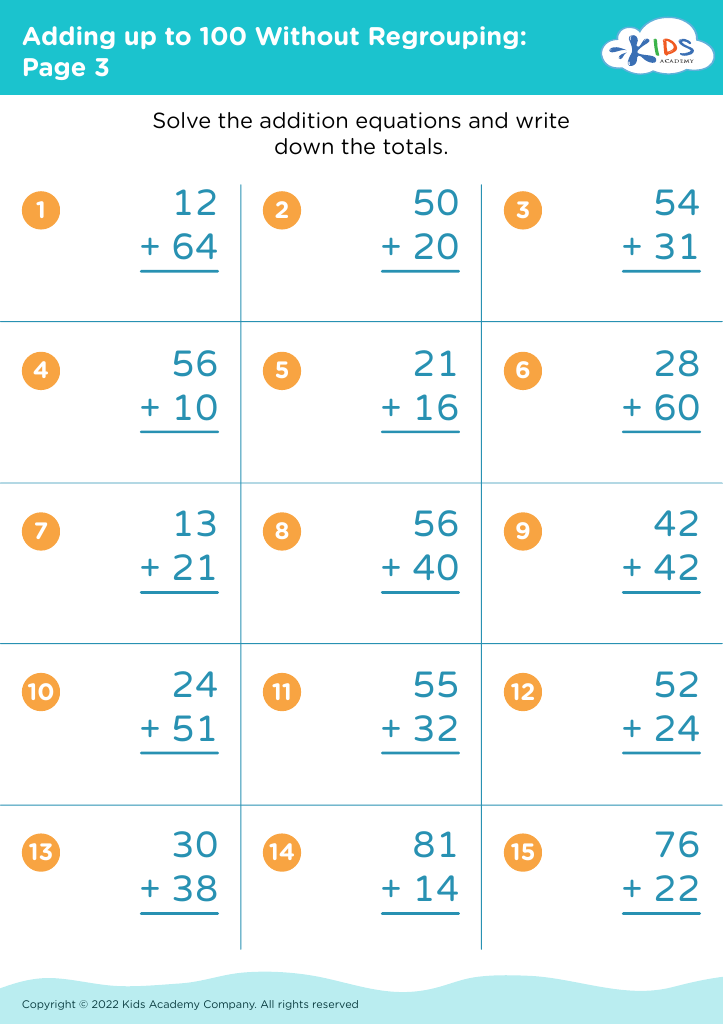
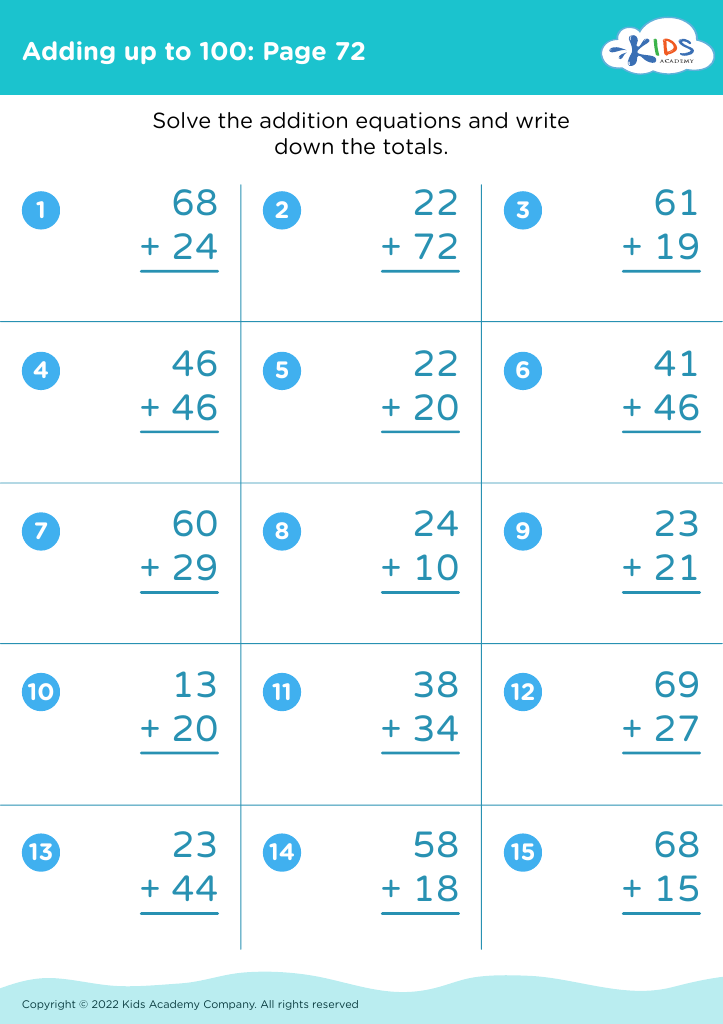
Boost your child's mathematical skills with our "Develop Number Recognition Grade 2 Adding up to 100 Worksheets." These worksheets are designed to help second graders master addition problems up to 100 while enhancing their number recognition. Engaging activities and colorful illustrations make learning fun and effective. Each worksheet focuses on building essential math skills in a gradual, easy-to-understand way, ensuring that young learners build confidence along the journey. Perfect for both classroom and home use, these worksheets provide clear, step-by-step guidance to support independent learning. Develop strong arithmetic skills and enjoy the magic of numbers today!





Number recognition and basic arithmetic skills are fundamental building blocks in early education, serving as the foundation for more advanced mathematical concepts. For grade 2 students, developing number recognition and the ability to add up to 100 is particularly crucial due to several reasons.
Firstly, solid number recognition skills enable students to understand the relationship between numbers, comprehend place value, and perform accurate calculations. By distinguishing between different numbers and recognizing patterns, children can approach math problems with greater confidence and competence.
Secondly, addition skills are essential in everyday life and future academics. Learning to add up to 100 equips students with practical abilities needed for subsequent school years and beyond. More complex operations such as multiplication, subtraction, and division rely on a thorough understanding of addition.
Thirdly, fostering these skills at an early age encourages a positive attitude toward math. Early success in number recognition and addition helps build self-esteem and a growth mindset, making students more likely to take on challenging mathematical concepts with an optimistic outlook.
Teachers and parents play a critical role in promoting these skills by providing engaging and supportive environments. Interactive games, real-life applications, and celebratory recognition of progress can all contribute to a well-rounded and confidence-building experience in math education. This early intervention paves the way for continued academic achievement and practical life skills.