Enhance critical thinking Grade 2 Adding up to 100 Worksheets
3 filtered results
-
From - To
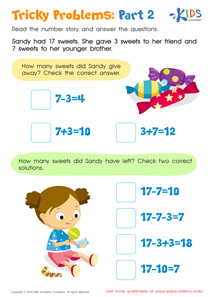
Unlock your child’s potential with our "Enhance Critical Thinking Grade 2 Adding Up to 100 Worksheets." Tailored specifically for second graders, these engaging worksheets cultivate critical thinking skills while reinforcing addition up to 100. Each activity promotes problem-solving, strategy development, and creativity, encouraging students to approach math with curiosity and confidence. The worksheets incorporate fun themes and real-life scenarios to make learning relatable and enjoyable. Designed by educators, they align with grade-level standards, ensuring your child receives a comprehensive understanding of mathematics. Empower your young learner to excel in critical thinking and build a strong foundation in math today!
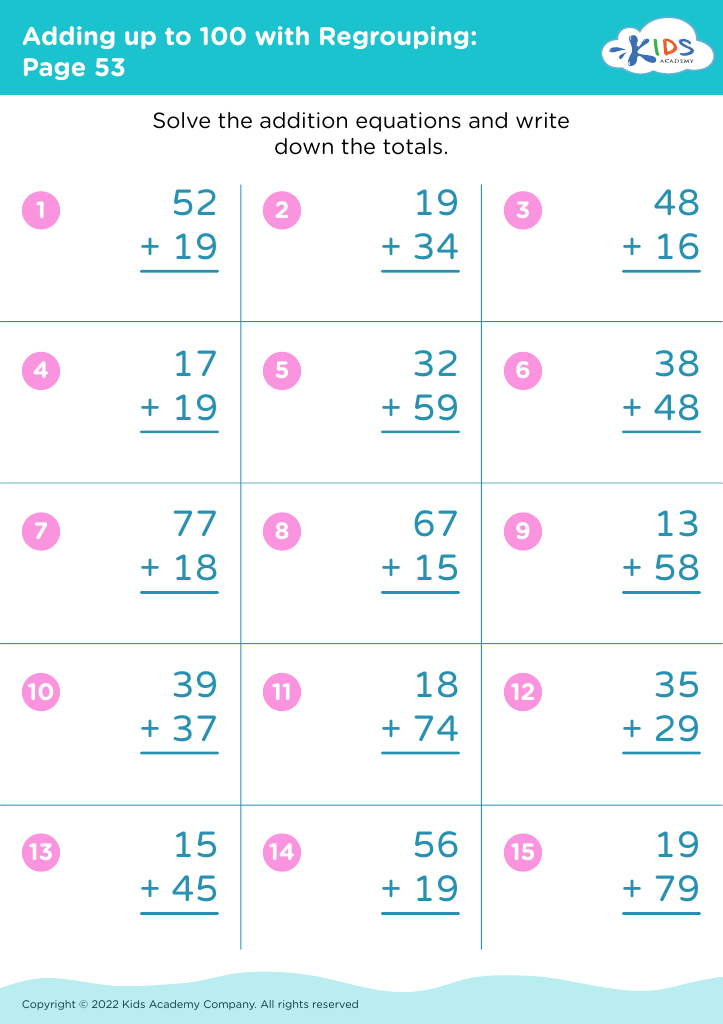
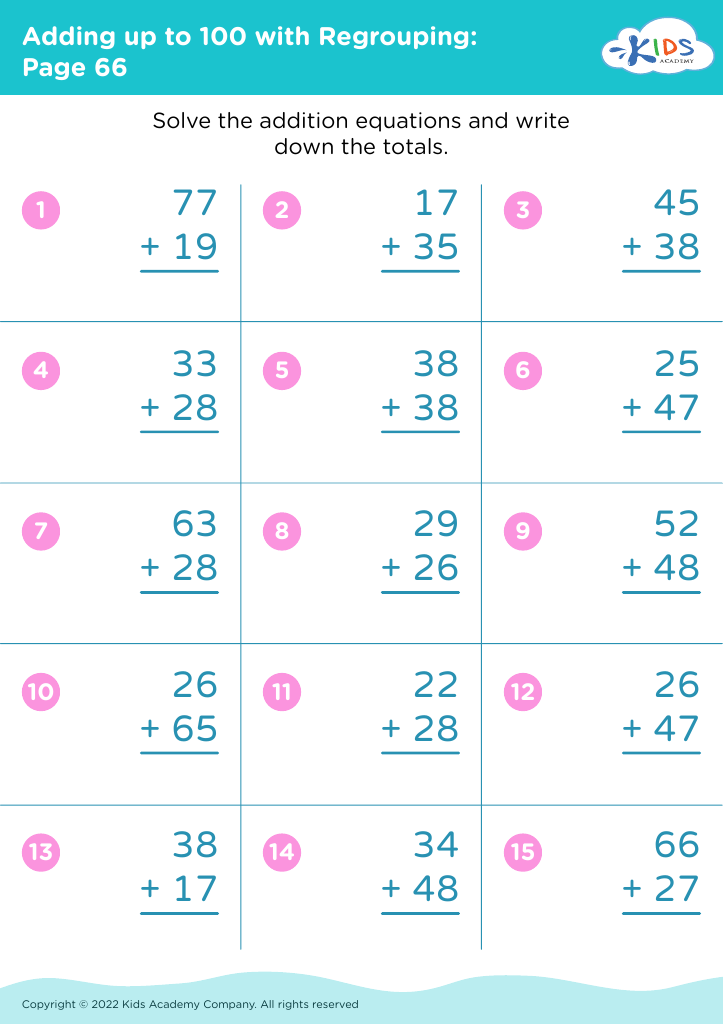
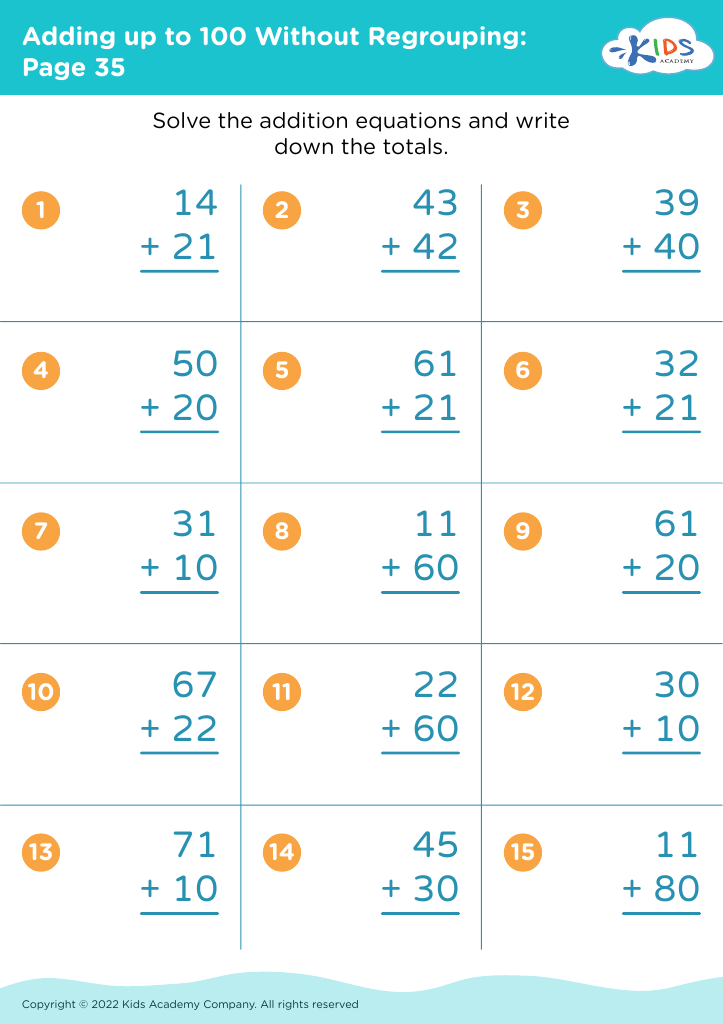





Parents and teachers should prioritize enhancing critical thinking skills in Grade 2 students, particularly in concepts like "Adding up to 100," for several key reasons. Firstly, critical thinking serves as the foundation for problem-solving abilities. By teaching children to analyze and assess various strategies for addition, we equip them with tools for tackling not only mathematical problems but also real-life challenges.
Furthermore, developing critical thinking through math fosters a deeper understanding of numbers and relationships. When students explore different combinations to reach 100—such as 50 + 50 or 75 + 25—they learn to recognize patterns, make connections, and develop numerical fluency. This strengthens their confidence and enthusiasm for math, encouraging a growth mindset.
Moreover, the skills acquired while mastering these concepts extend beyond mathematics. Critical thinking enhances decision-making, creativity, and the ability to evaluate information critically—skills that are invaluable throughout a child's life and education.
Finally, parental involvement and teacher guidance in this area can create a positive learning environment that values inquiry and thoughtful discussion, further reinforcing the importance of critical thinking. By nurturing these skills early on, we set the stage for a generation of thoughtful, capable individuals ready to navigate a complex world.