Enhancing problem-solving skills Grade 2 Adding up to 100 Worksheets
3 filtered results
-
From - To
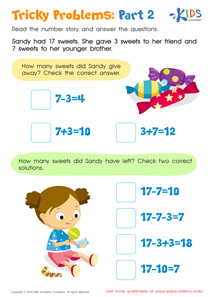
Discover our "Enhancing Problem-Solving Skills: Grade 2 Adding Up to 100 Worksheets," designed to boost your child's mathematical abilities while making learning fun! These engaging worksheets help students develop critical thinking strategies as they solve addition problems that total up to 100. Through varied exercises, children practice logical reasoning, learn to break down complex problems, and gain confidence in their math skills. Ideal for classroom or home use, these worksheets encourage independent learning and foster a positive attitude towards math. Perfect for enhancing problem-solving skills, our resources ensure that young learners are well-prepared for future mathematical challenges!
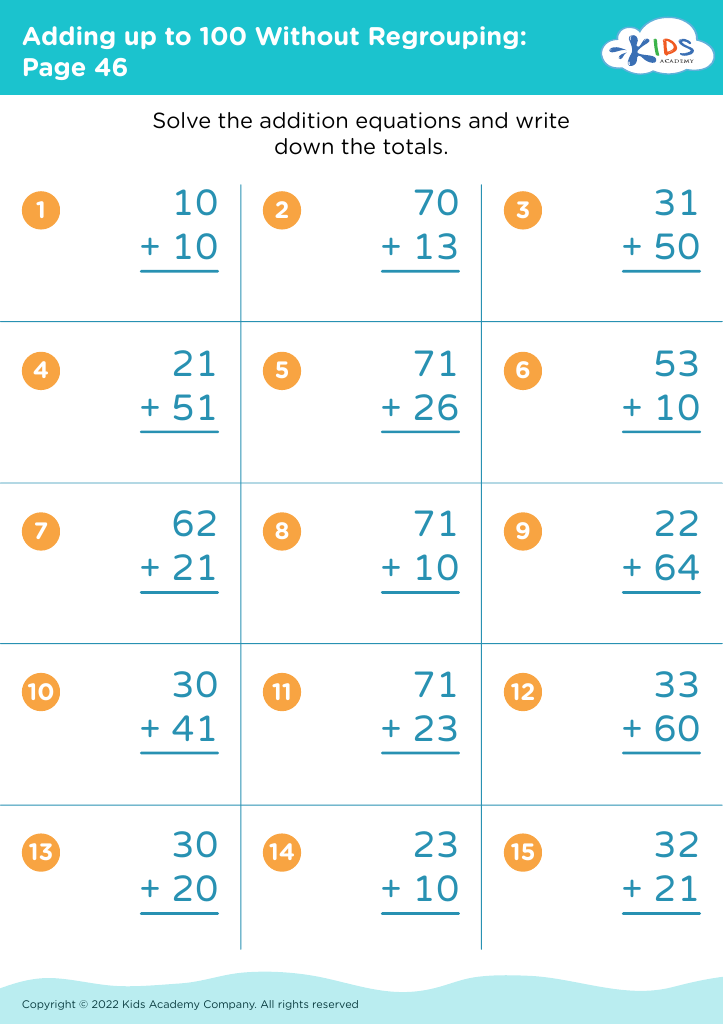
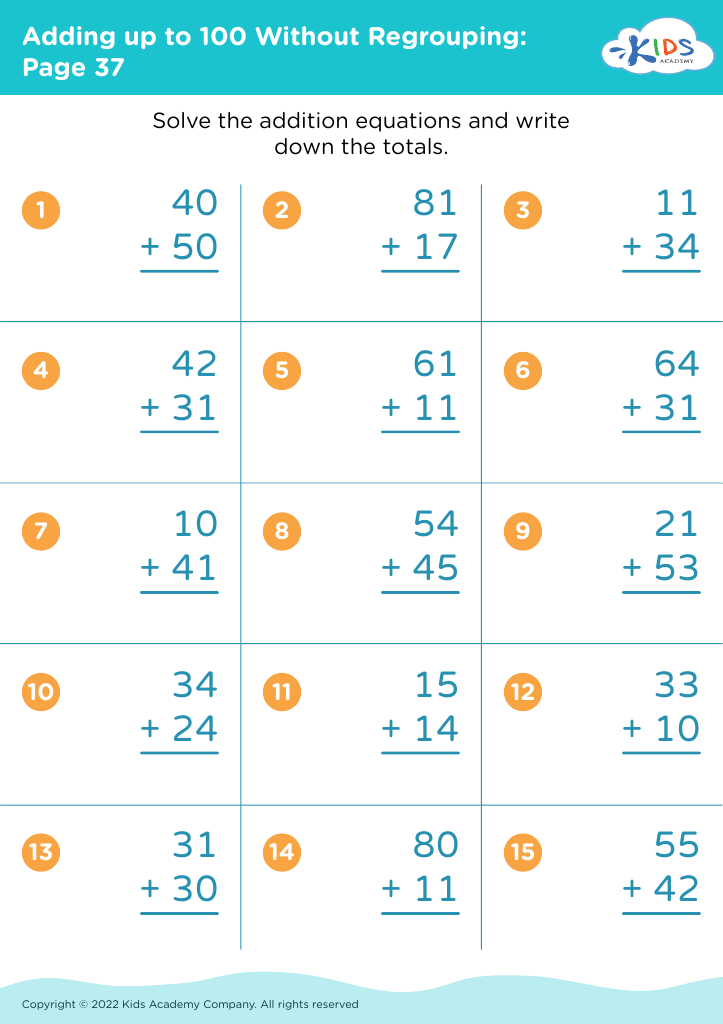
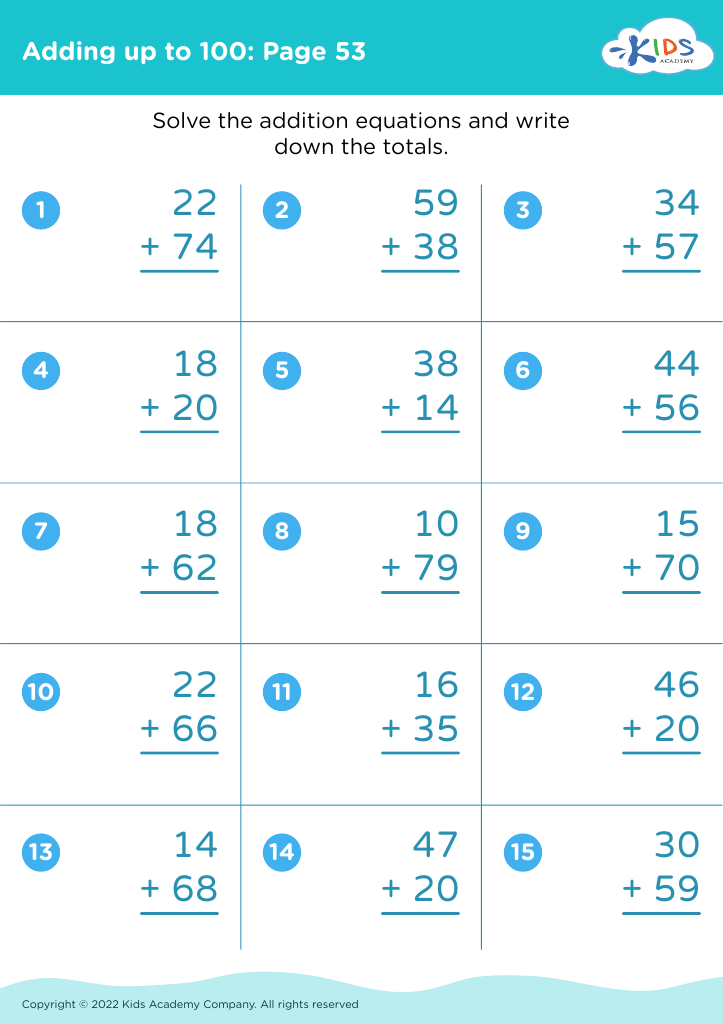





Enhancing problem-solving skills in second graders, particularly in concepts like "adding up to 100," is crucial for several reasons. First, mastering basic math skills fosters a strong foundation for future learning. Understanding addition through practical exercises helps children grasp more complex mathematical concepts down the line, providing a scaffold for their mathematical education.
Second, problem-solving encourages critical thinking. Engaging children in activities that involve adding up to 100 teaches them how to analyze problems, consider various solutions, and apply strategies systematically. This skill transcends mathematics, equipping children to tackle real-world challenges in everyday life.
Moreover, facilitating a spirit of collaboration and communication among peers during problem-solving exercises promotes social skills and teamwork. When children discuss their thought processes and solutions, they learn the value of sharing ideas and learning from others.
Lastly, instilling confidence through successful problem-solving experiences fosters a positive attitude toward math. Children who feel competent in their abilities are more likely to embrace challenging tasks, leading to greater academic achievements. Overall, prioritizing problem-solving skill development in Grade 2 lays the groundwork for academic success, critical thinking, and a lifelong love of learning.