Fraction comparison Grade 2 Adding up to 100 Worksheets
6 filtered results
-
From - To
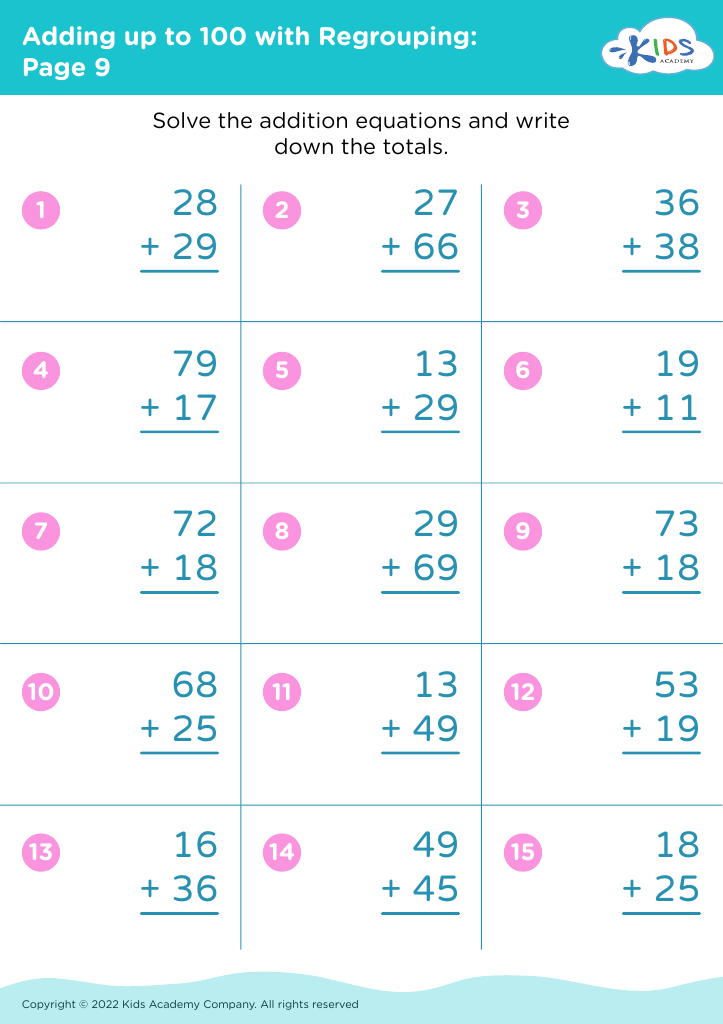
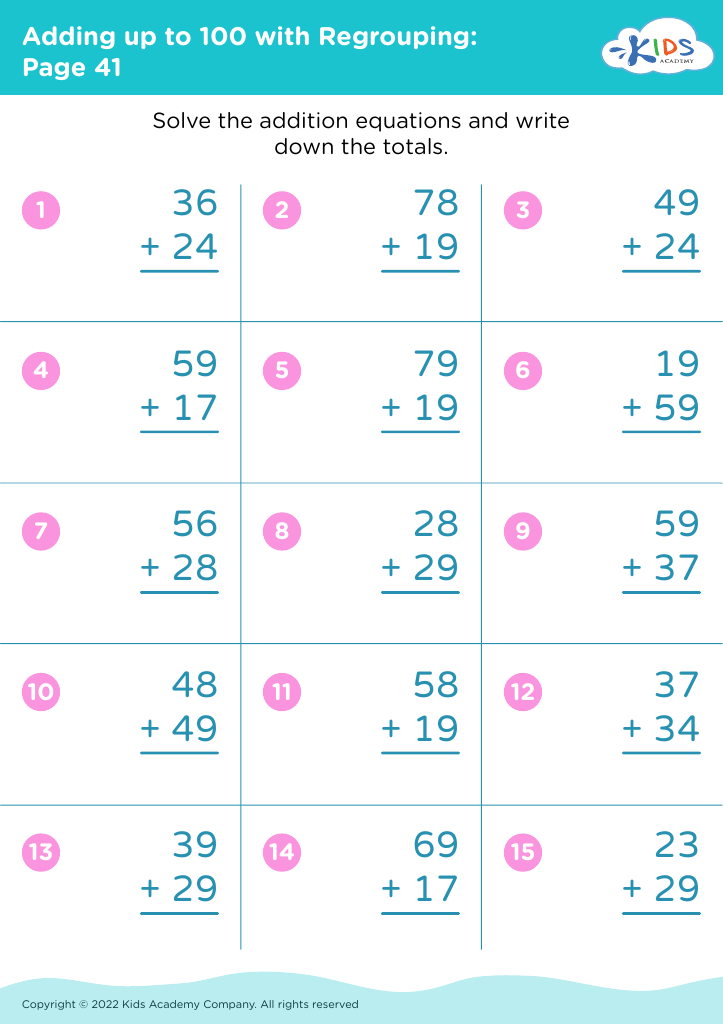
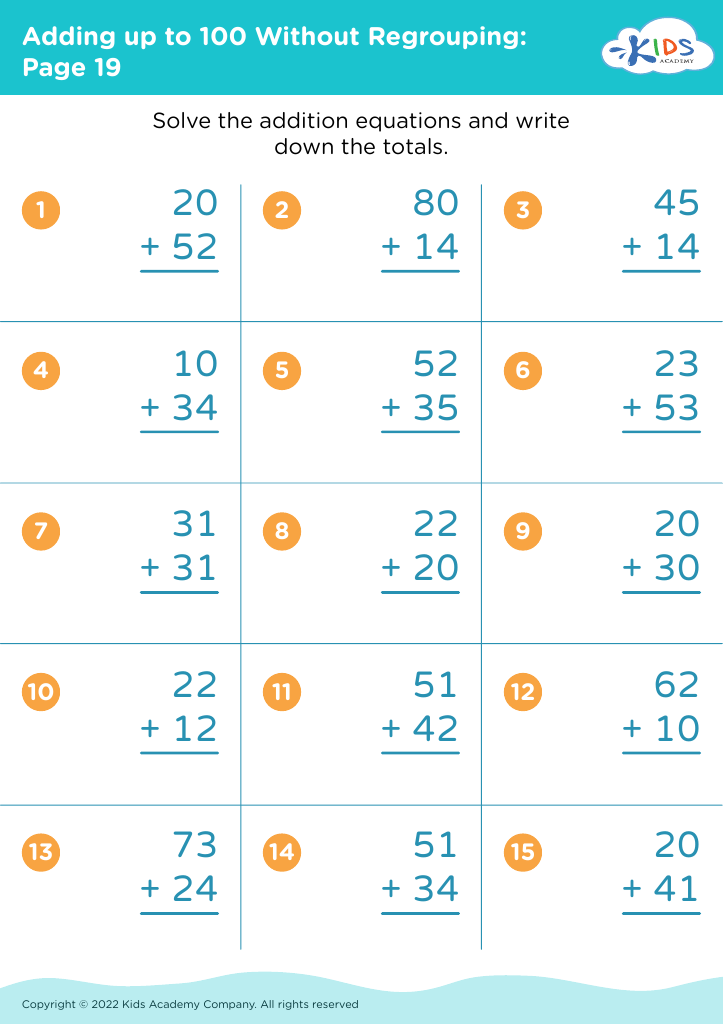
Welcome to our engaging "Fraction Comparison Grade 2 Adding Up to 100 Worksheets"! Designed specifically for young learners, these interactive worksheets help students master the concept of fraction comparison. Your child will enjoy fun exercises focused on identifying, comparing, and understanding fractions while building essential math skills. Each worksheet encourages critical thinking and problem-solving, making learning enjoyable and effective. Plus, with the focus on adding up to 100, students gain a solid foundation in both fractions and addition. Perfect for classroom use or at-home practice, these worksheets are an invaluable resource for nurturing mathematical confidence and proficiency in second graders.
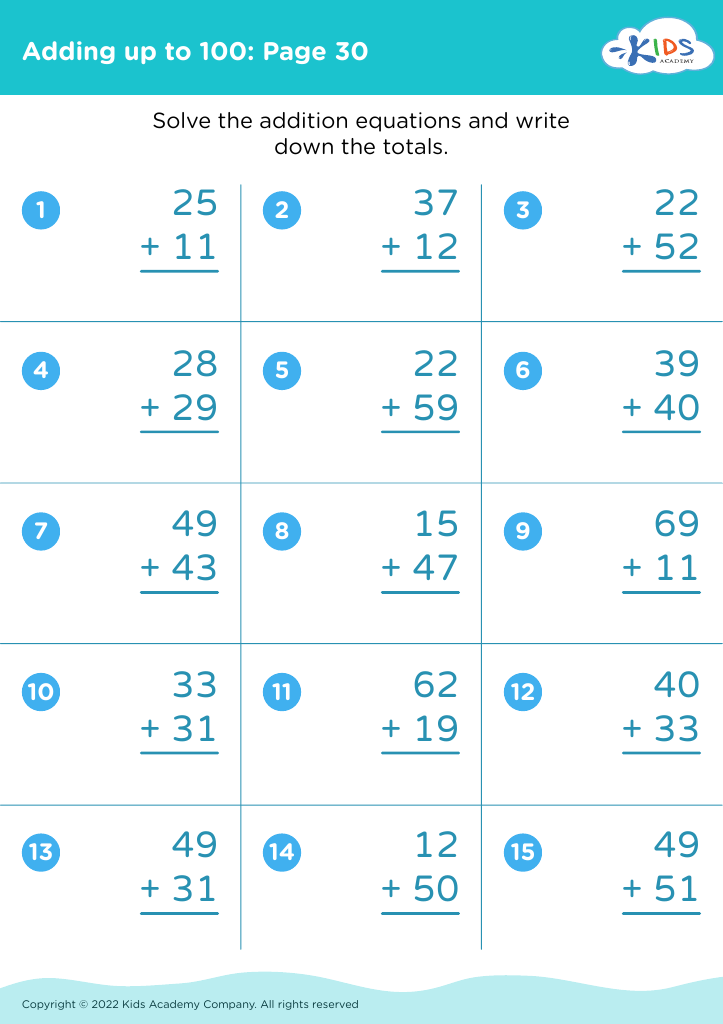
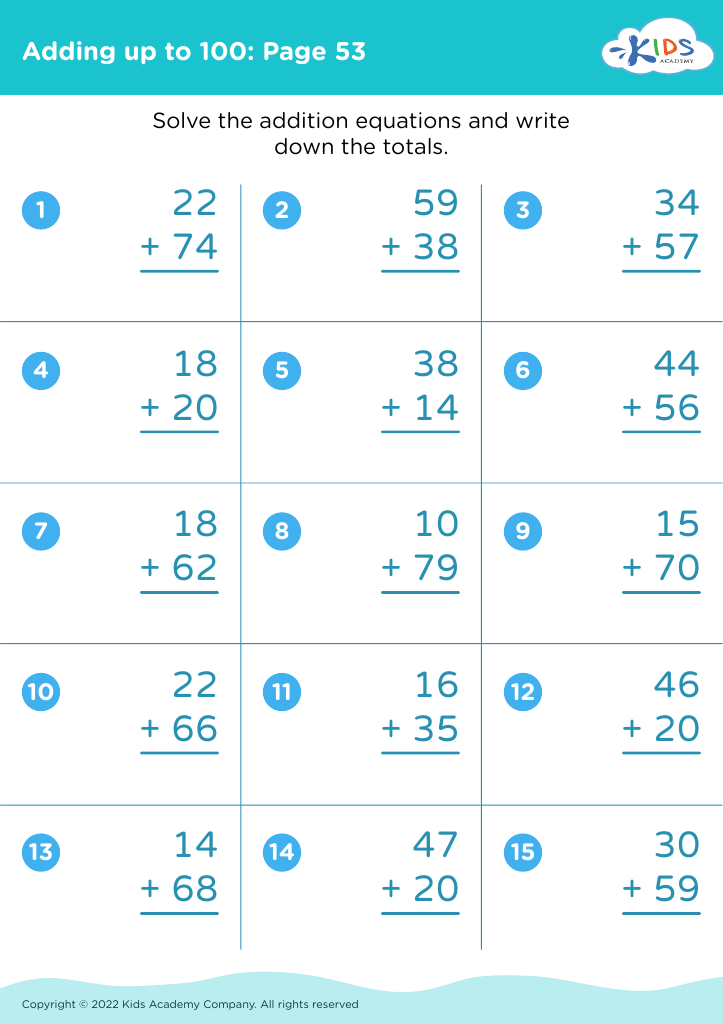
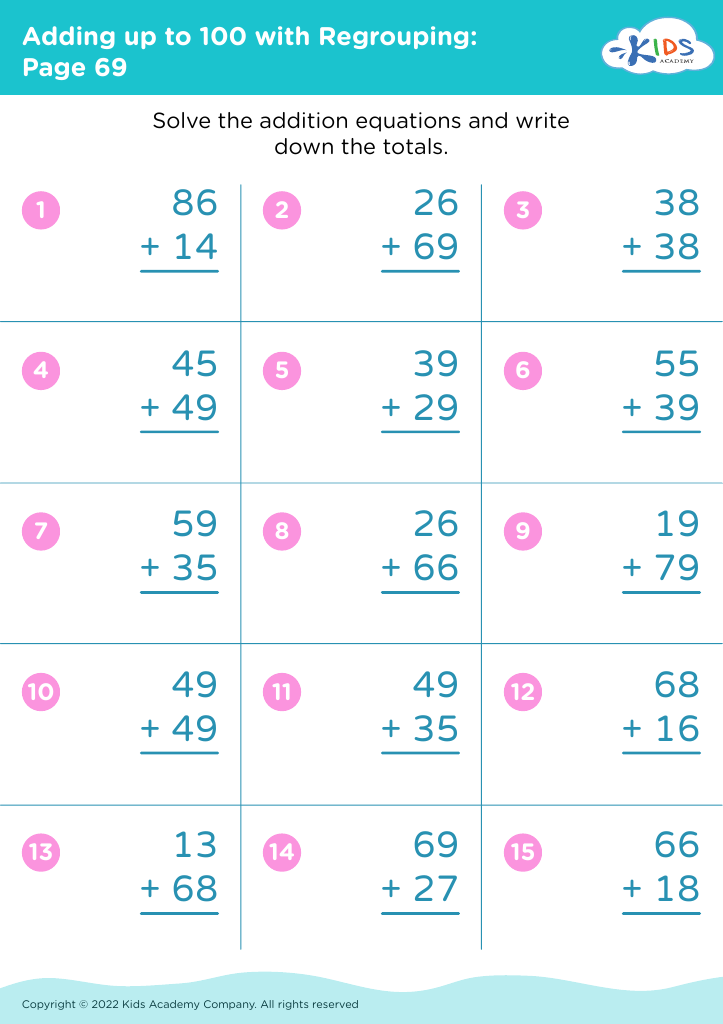





Understanding how to compare fractions is crucial for Grade 2 students as it lays the foundation for more complex mathematical concepts they will encounter in later grades. When children learn to compare fractions, they develop critical thinking and problem-solving skills. These skills are essential for their overall academic success, as they encourage logical reasoning and enhance their ability to approach various math-related tasks thoughtfully.
Fraction comparison also aligns with real-life applications. Whether dividing a pizza, sharing toys, or measuring ingredients for a recipe, children need to recognize how parts relate to wholes. This understanding enriches their comprehension of quantity and proportion, fostering a positive attitude toward math.
Focusing on fractions summing up to 100 further solidifies students' number sense and promotes fluency in adding and subtracting numbers, preparing them for multi-digit addition and subtraction. Parents and teachers play a pivotal role in motivating students, making math enjoyable, and providing them with practical experiences that contextualize this learning. With a strong grasp of fractions, children are more confident in their mathematical abilities, leading to greater engagement in their education and ultimately setting the stage for future academic achievements.