Hand-eye Coordination Grade 2 Adding up to 100 Worksheets
3 filtered results
-
From - To
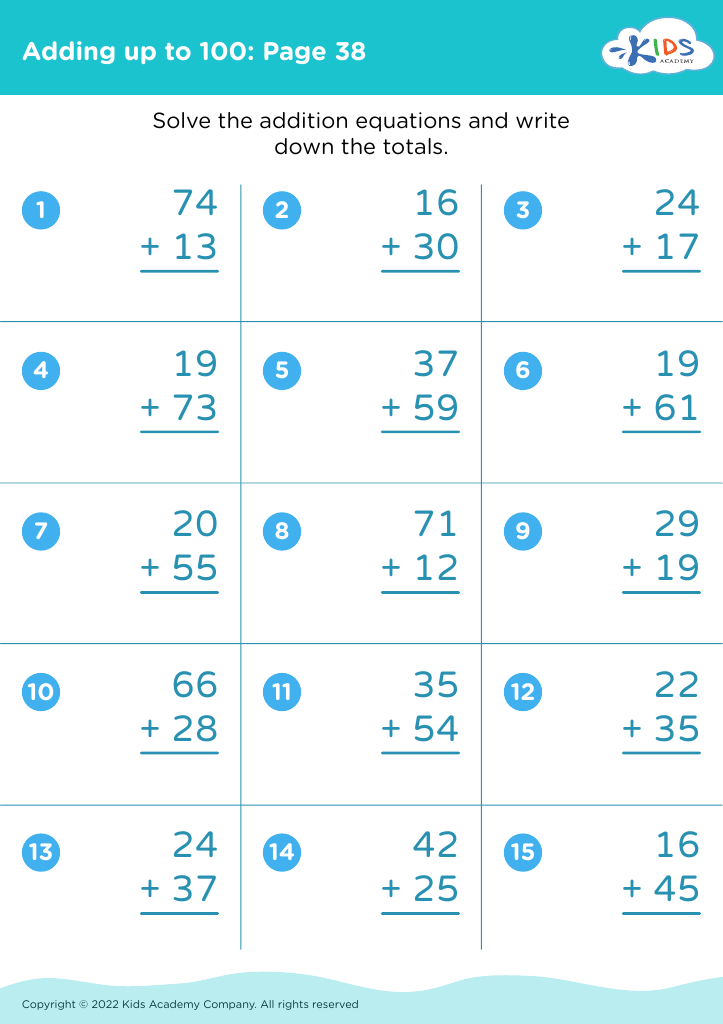
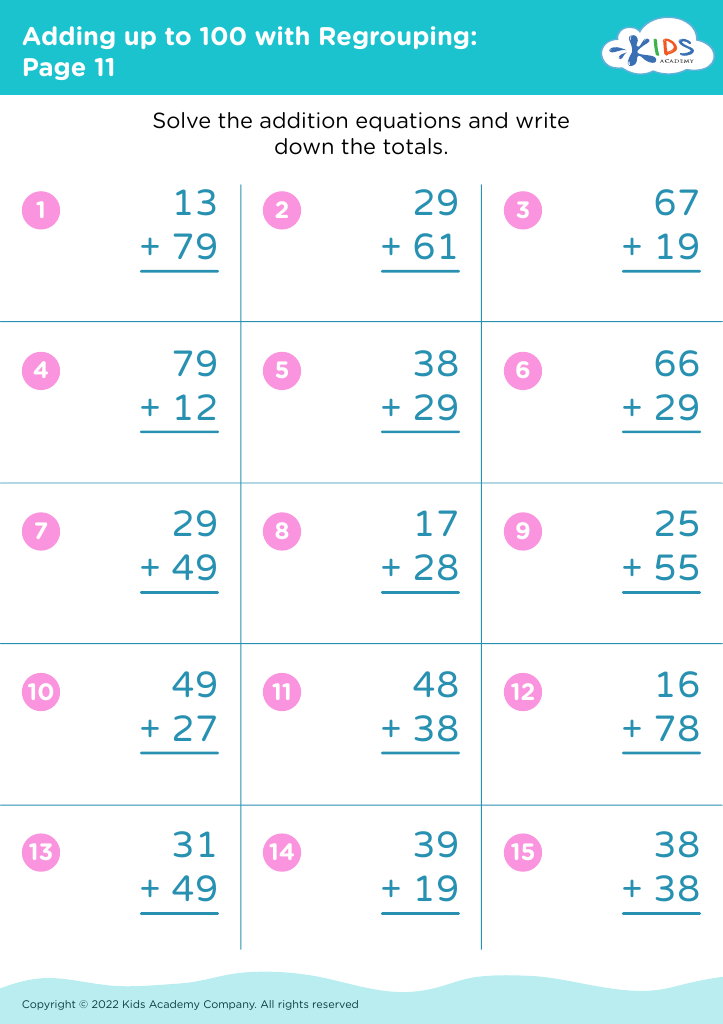
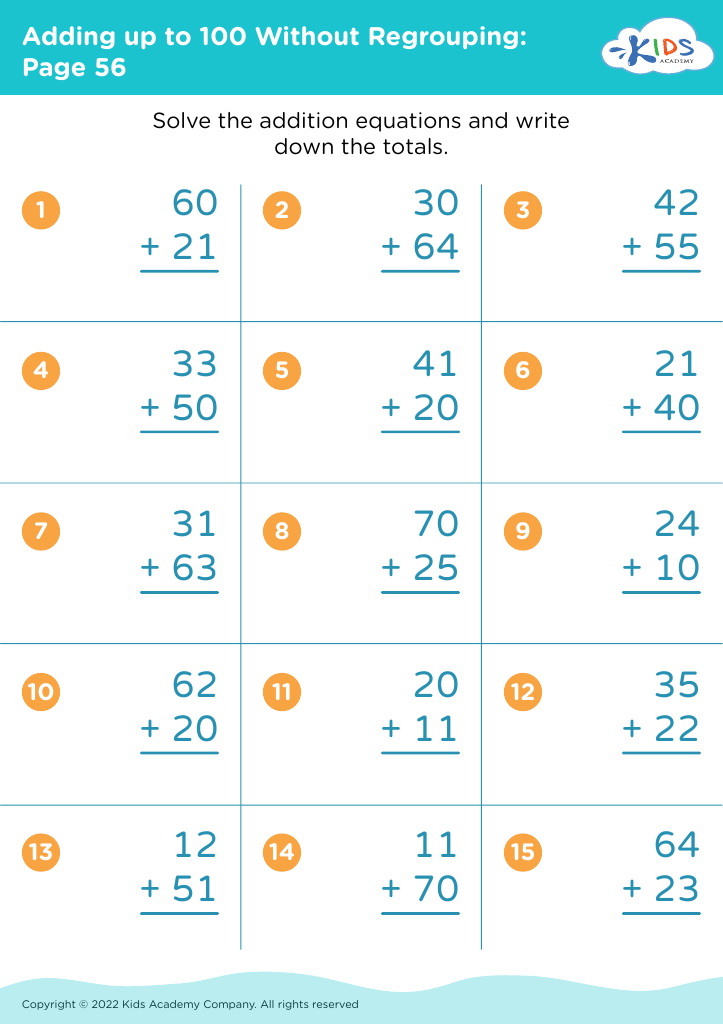
Enhance your second grader's hand-eye coordination while mastering addition with our "Hand-eye Coordination Grade 2 Adding Up to 100 Worksheets." These engaging resources blend fun activities and math practice, helping students improve their fine motor skills as they navigate through a variety of colorful worksheets. Each exercise is designed to challenge their abilities, making learning an exciting adventure. From problem-solving puzzles to interactive games, these worksheets not only support mathematical understanding but also cultivate essential coordination skills required for writing and other tasks. Empower your child with the tools they need for success in math and daily life!





Hand-eye coordination is a crucial skill that merges visual input with physical action, greatly impacting children’s overall development. For parents and teachers, facilitating this skill, especially in second graders learning to add up to 100, is essential for several reasons.
Firstly, strong hand-eye coordination enhances a child's ability to perform everyday tasks, such as writing, drawing, and playing sports. By integrating activities that promote this skill while teaching math concepts, children can engage with the material more effectively.
Secondly, improving hand-eye coordination is linked to cognitive development. As children practice addition through engaging, hands-on activities—like using physical counters or games—they also build focus and problem-solving abilities. This focused attention aids in understanding and mastering mathematical concepts.
Finally, fostering hand-eye coordination can boost children's confidence and motivation in learning. As they see their physical skills grow alongside their math abilities, they develop a more positive attitude towards school and learning.
In conclusion, when parents and teachers prioritize hand-eye coordination in the context of Grade 2 math, particularly in activities that add up to 100, they facilitate not only academic success but overall growth in young learners.