Identifying equivalent fractions Grade 2 Adding up to 100 Worksheets
5 filtered results
-
From - To
Discover our engaging "Identifying Equivalent Fractions" worksheets, perfect for Grade 2 students! Designed to reinforce the understanding of fractions, these printable resources help kids explore and recognize fractions that are equal, enhancing their fractional knowledge in a fun and interactive way. Each worksheet is meticulously crafted to promote critical thinking and boost mathematical confidence, ensuring young learners can add up to 100 while mastering equivalent fractions. Whether used in the classroom or at home, these activities make math enjoyable and accessible. Help your child thrive in their math journey today with our thoughtfully designed assignments!
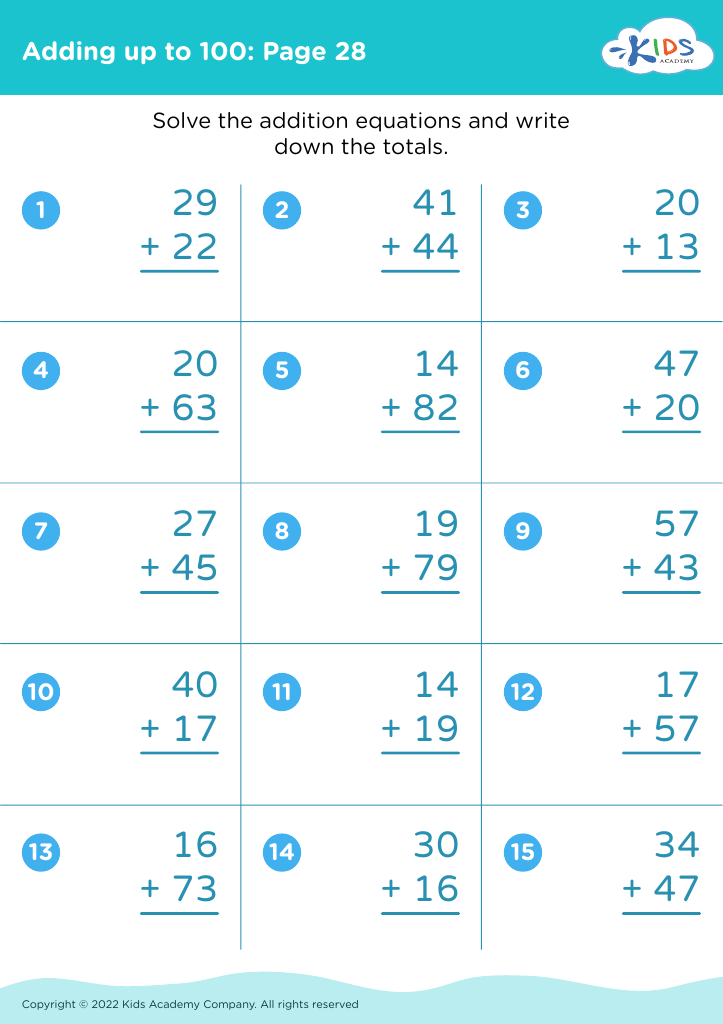
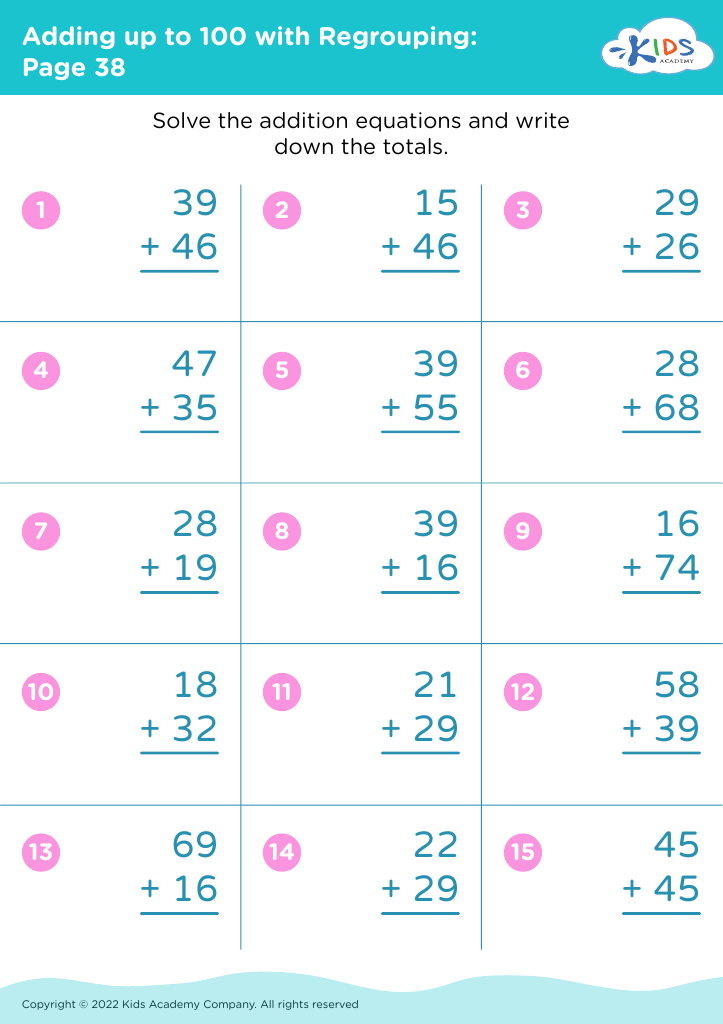
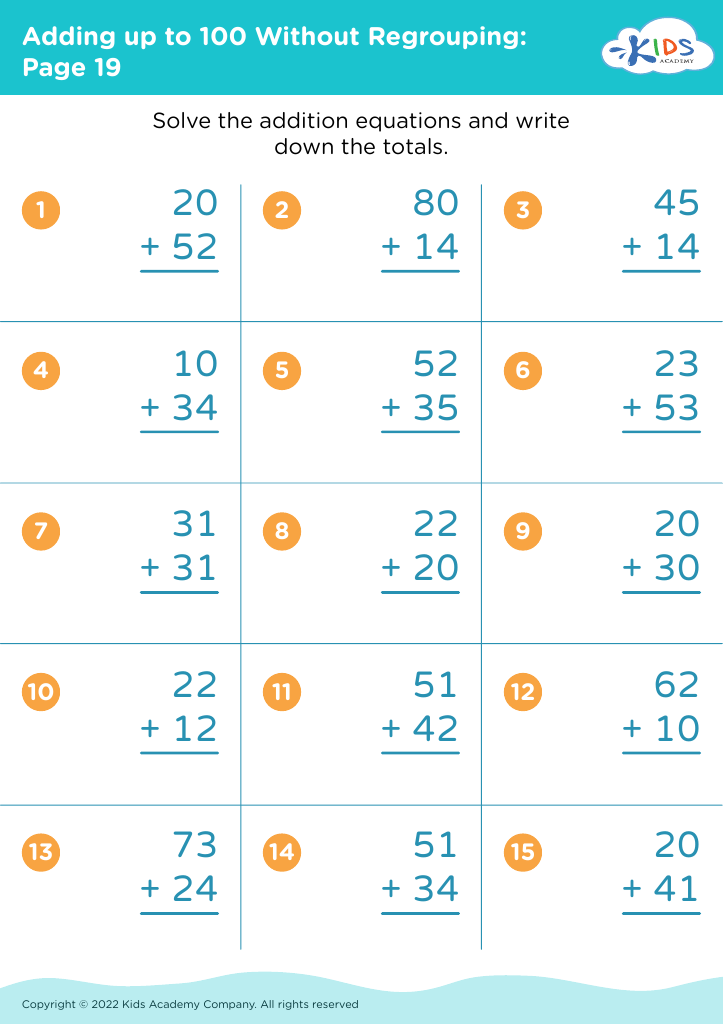
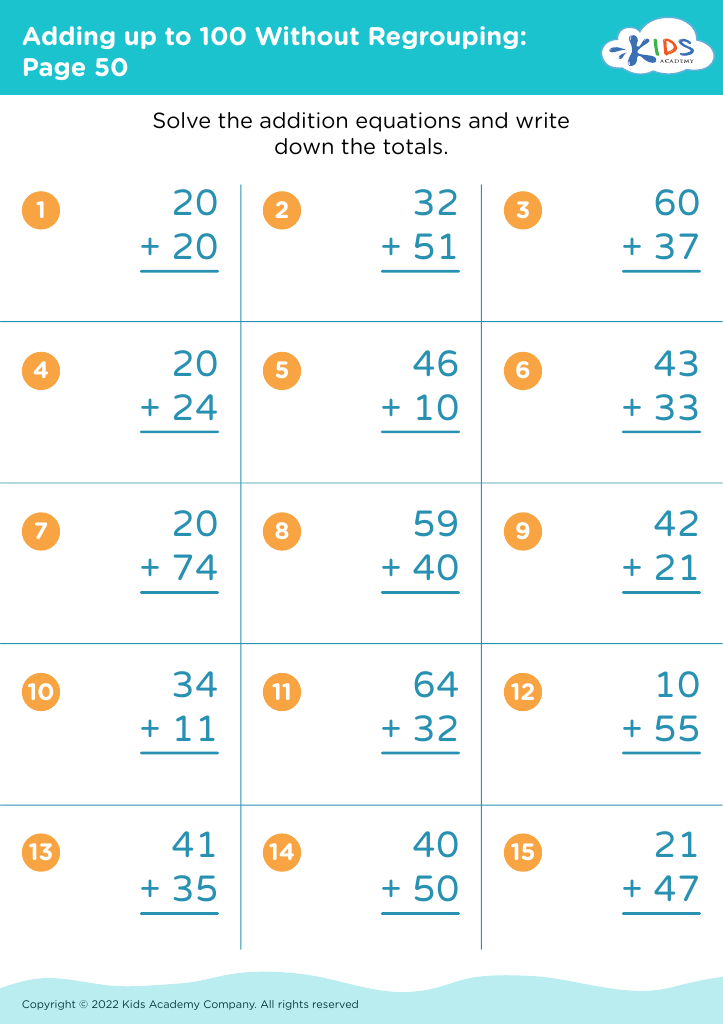
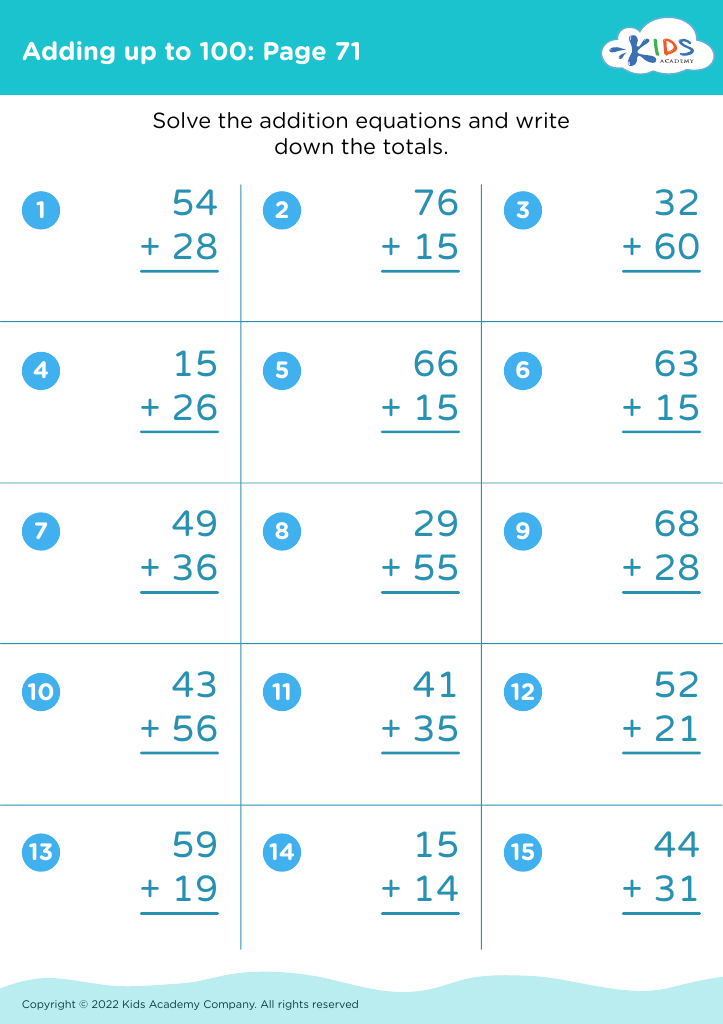





Identifying equivalent fractions in Grade 2 is crucial for building a strong mathematical foundation that enhances students’ understanding of more complex concepts later on. Understanding equivalent fractions supports students in grasping the fundamental idea that different fractions can represent the same value, fostering flexibility in their mathematical thinking. When children recognize that 1/2 is equivalent to 2/4, they learn to manipulate numbers effectively, making addition and subtraction of fractions much more manageable in future grades.
In addition, linking equivalent fractions to the concept of adding up to 100 introduces students to important skills like simplification and problem-solving. By breaking down fractions and understanding their relationships, they build a solid basis for grasping percentages, ratios, and ultimately algebraic concepts.
Moreover, teaching these skills promotes critical thinking and encourages collaboration. When students work with peers or receive guidance from parents, it cultivates a math-rich environment at home and in the classroom. Thus, recognizing and teaching equivalent fractions not only supports academic growth but also nurtures a positive attitude toward math, which can empower students throughout their educational journey and beyond. Ultimately, parents and teachers play a vital role in instilling these essential skills early on.