Mathematical reasoning Grade 2 Adding up to 100 Worksheets
3 filtered results
-
From - To
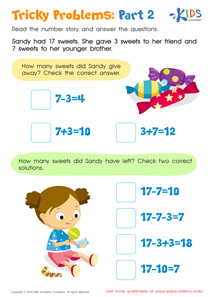
Enhance your second grade student's mathematical reasoning skills with our "Adding Up to 100 Worksheets." Designed specifically for Grade 2, these engaging worksheets provide students with a variety of practice problems that promote understanding of addition concepts while encouraging problem-solving strategies. Each worksheet emphasizes key skills such as number sense, mental math, and the ability to apply addition for real-world scenarios. Perfect for both classroom use and at-home practice, our resources foster confidence and proficiency in mathematics. Help your child master addition up to 100 in a fun and interactive way today! Explore our worksheets and watch them excel!
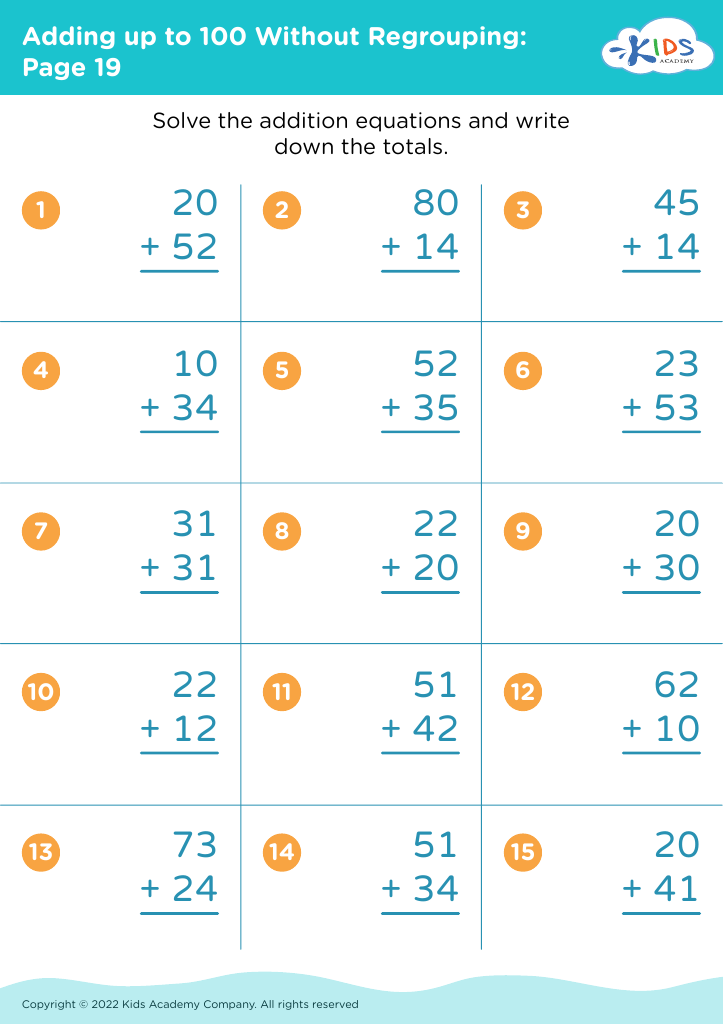
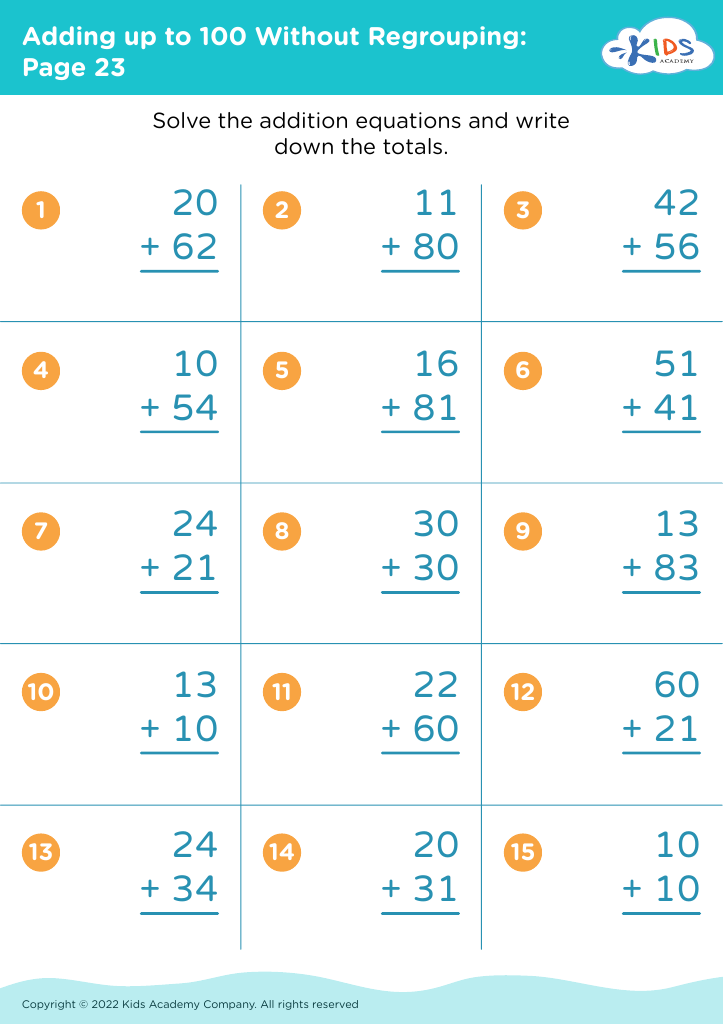
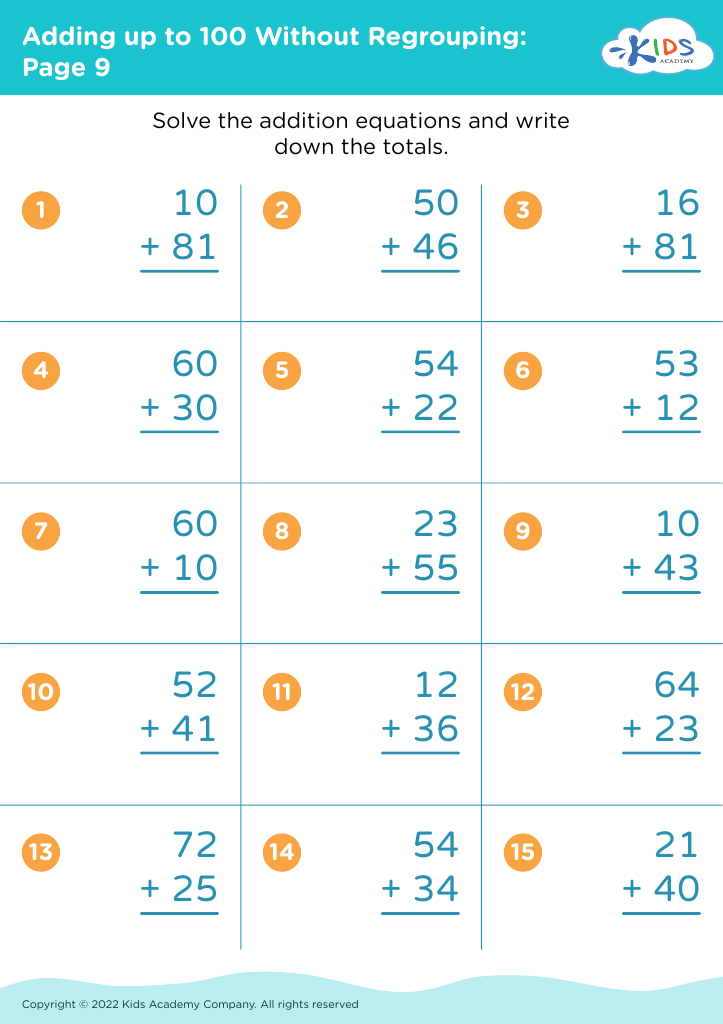





Mathematical reasoning at Grade 2, particularly adding up to 100, is a critical skill for young learners. Parents and teachers should prioritize this concept because it fosters a foundational understanding of mathematics that supports future academic success. By mastering addition up to 100, students develop number sense, which allows them to recognize patterns, compare quantities, and perform operations seamlessly.
Understanding how to add up to 100 encourages learners to use various strategies, such as counting on, decomposing numbers, or using number lines, enhancing their problem-solving skills. This cognitive process helps children internalize mathematical concepts, making them more confident learners.
Moreover, a solid grasp of addition sets the groundwork for more complex topics, such as subtraction, multiplication, and beyond. It also promotes critical thinking, as students learn to analyze and approach mathematical problems methodically.
Finally, when parents and teachers emphasize the importance of mathematical reasoning, they cultivate a positive attitude towards math. This early enthusiasm can lead to greater engagement, reduced math anxiety, and a love for learning. Overall, by focusing on adding up to 100, adults can help children build essential life skills centered around logical thinking and quantitative reasoning.